Make Work That Matters: 5 Photography Lessons from Parker Pfister on Service, Trust, and Art That Shows Up
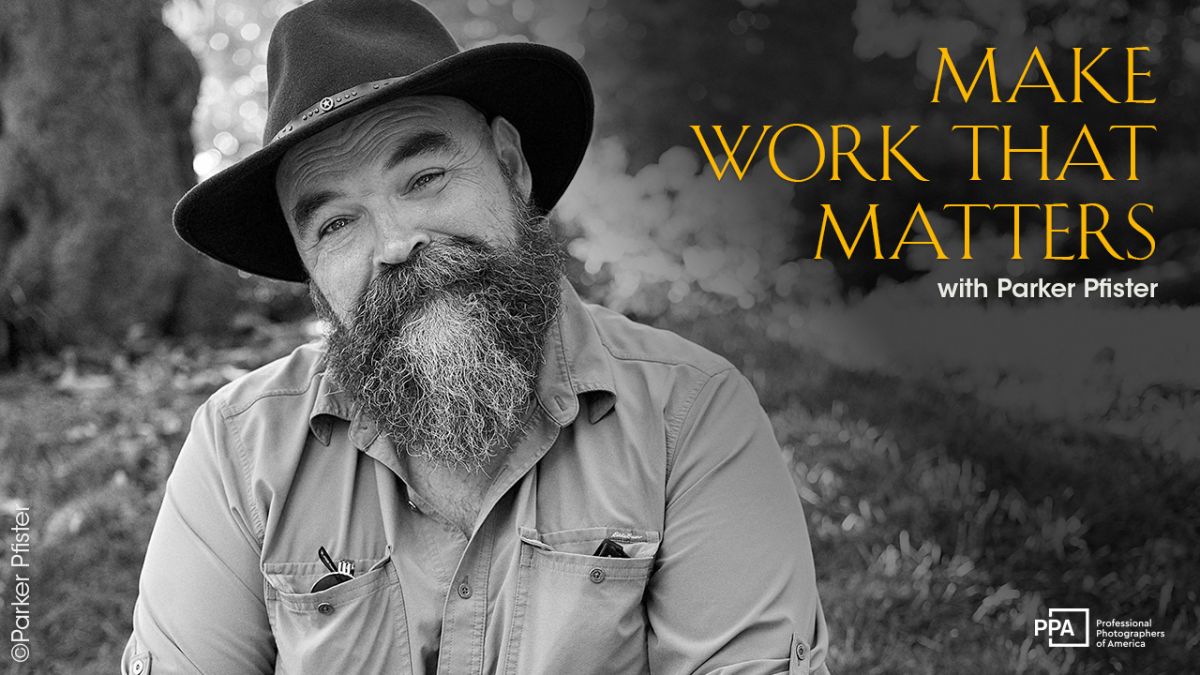
Parker Pfister’s creative process rarely begins with a finished plan. He may start with a jar of his grandmother’s buttons, a hand-painted mask, an unfamiliar camera, or family slides damaged by floodwater. Then he follows that inspiration with an idea, paying close attention to the person, place and feeling in front of him.
That willingness to experiment is part of Pfister’s appeal as an artist and educator, but beneath the playfulness is a serious belief in what photography can do. It can help you understand an experience. It can create space for another person to be seen. In difficult moments, it can become a way to serve.
After Hurricane Helene devastated communities across Western North Carolina, Pfister found himself questioning where he was needed most. “At first, I thought I had to choose between being an artist or being a volunteer,” he says. “I chose both.”
1. Show Up When Your Community Needs You
When crisis hits, making photographs may feel less important than meeting immediate needs. Pfister’s response to Hurricane Helene shows that the two roles of artist and volunteer do not always have to be separated.
Pfister volunteered while also documenting what was happening around him. Along the river, he found trees tangled with debris, family photographs damaged beyond recognition and materials that had been reshaped by the flood. Those observations eventually became the starting point for new work about loss, survival and resilience.
You do not need to wait for a major event to put this lesson into practice. Look at the needs already present in your community. Your contribution might be documenting an organization’s work, creating portraits for families who would not otherwise have them, sharing technical knowledge or simply giving your time.
The camera does not have to be the center of the effort, but it can be one of the tools you bring.
2. Let Art Be Your Response to Hard Things
Pfister does not look away from difficult material. He works with it.
For one Hurricane Helene project, he gathered plastic pulled from rivers and used it to construct a sculptural dress. A dogwood tree he had seen near the water—covered in debris but still producing blooms—became a symbol of growth under pressure. In another session, he projected flood-damaged family slides onto the human form, allowing images that had been physically altered by the storm to become part of something new.
The lesson is not that every hardship must become a photography project. Instead, it is that personal work can create a place to ask questions you may not be able to answer any other way.
Start with one detail that stays with you: an object, a color, a place or a memory. Photograph it without deciding too quickly what the finished project needs to say, allowing the meaning to develop as you work.
Art cannot undo a difficult experience. It can, however, help you spend time with it, and sometimes see it from a new perspective.
3. Build Photographs Through Trust and Collaboration
Pfister’s sessions are experimental, but they are not careless. The work depends on trust.
While photographing his friend Natalie, Pfister describes an “instantaneous click of trust and experimentation.” He begins with simple ideas, watches how she responds and gradually moves into more emotionally demanding territory. As the session develops, she uses chalk to express anger, sadness, safety and joy across the studio wall. The resulting portrait is not something Pfister could have created by posing her into a predetermined shape. It comes from an experience they build together.
Try bringing that same spirit into your portrait sessions. Start with enough direction to help your subject feel secure. Explain what you are exploring, check in on their comfort level and give them room to contribute. Once trust develops, you may need fewer instructions because both of you understand the emotional direction of the photograph.
Pfister describes that shared space as a moment when photographer and subject no longer need many words. That is when, he says, “you’ve hit gold.”
Your subject is far more than a visual element in your composition. When you treat them as a collaborator, the photograph can become more honest than either of you could have planned alone.
4. Choose Feeling Over Perfection
“It’s not about beauty,” Pfister says during an environmental portrait session. “It’s about feeling.”
That distinction runs through his work. He photographs with vintage lenses, paper negatives, large-format cameras, slow shutter speeds and materials that may scratch, shift, or behave unpredictably. Pfister understands the technique, but he does not use that knowledge to eliminate every surprise. He uses it to recognize which surprises are worth keeping.
“I am never striving for perfection,” he says. The flaws in an image can become evidence of experimentation—proof that he moved beyond the safest version of the photograph.
You can apply that approach without abandoning your professional standards. Get the frame your client needs, then keep going. Change your angle, slow your shutter, simplify the light or follow the idea that feels slightly impractical. Give yourself permission to take a photograph that may not work.
Pfister takes play seriously because experimentation keeps his vision active. Failure doesn't have to be the opposite of progress because it is often how you discover the next direction.
5. Use Photography to Better Understand Yourself and Others
Pfister photographs constantly, often without a client, assignment or immediate destination for the images. This practice keeps his curiosity moving.
His photographs, he says, have become a collection of his time on Earth—a record of what he has seen and how he has seen it. The finished image matters, but it is also a byproduct of the conversation, attention and discovery that happened while making it.
Personal work can give you the same space. Instead of beginning with “What should I photograph?” try asking, “What am I trying to understand?”
That question may lead you toward your family history, your neighborhood, a changing landscape or an emotion that keeps returning. Give the subject time. You do not need to know whether the work will become a portfolio, exhibition, competition entry or private archive.
For Pfister, understanding himself is connected to understanding others. “If I understand myself more,” he says, “maybe I can help the world understand itself more.”
Leverage Feedback to See Your Work More Clearly
Personal projects can also become a valuable way to stretch your craft through photographic competition. Entering work in PPA's International Photographic Competition (IPC) or submitting an image for Merit Image Review asks you to look closely at whether your choices are communicating what you intended.
Feedback from trained jurors can help you evaluate impact, technical excellence, composition and style. That structure does not limit experimentation. However, it can show you where technique is strengthening the feeling of an image, and where it may be getting in the way.
The goal is not simply recognition, but it is also the ability to see your work with greater clarity, refine your visual decisions and return to the next project with stronger instincts.
Keep Curiosity in the Driver's Seat
Pfister’s work is a reminder that meaningful photography does not always begin with certainty. Sometimes it begins by showing up, paying attention and following an idea far enough to discover what it holds.
Your photographs can serve a community, help someone feel seen or give form to an experience that is difficult to put into words. Your images can also change you. Keep experimenting, keep collaborating and keep making room for feeling. The work that matters most may begin before you know exactly where it will go.
Explore Parker Pfister's process, philosophy, and art in his videos on PhotoVision.