
Succeed in Uncertainty
Step out and up in a slow season
Economic uncertainty is not just an American experience. Scott Johnson, an award-winning wedding photographer based 30 miles north of London, says his clients and fellow photographers in England and the UK are feeling it too. “It’s that middle market, the people that are working 9 to 5, Monday to Friday, that may be living paycheck to paycheck,” he tells “Professional Photographer” podcast host Pat Miller on the episode “Ways Photographers Can Thrive During a Slow Season.” “They’re the ones that are struggling, and when they make a decision, they’re a lot more careful.”
Those decisions include when and how to spend their money on photography, which Johnson recalls learning during the COVID-19 pandemic. His wedding business had virtually dried up. So Johnson turned his camera on family and portrait subjects. It was a tricky transition that took almost two months to smooth out, he says.
“It was the biggest stress I think I ever had, Pat, because I can shoot, and I’ve shot a thousand weddings. I can do it with my eyes closed. Moving into family studio portraiture … I was in no way versed in the marketing, the process, the lighting,” Johnson says, adding that though he invested in the equipment, “You’re dealing with families in a closed space. It was so far out of my comfort zone, you have no idea.”
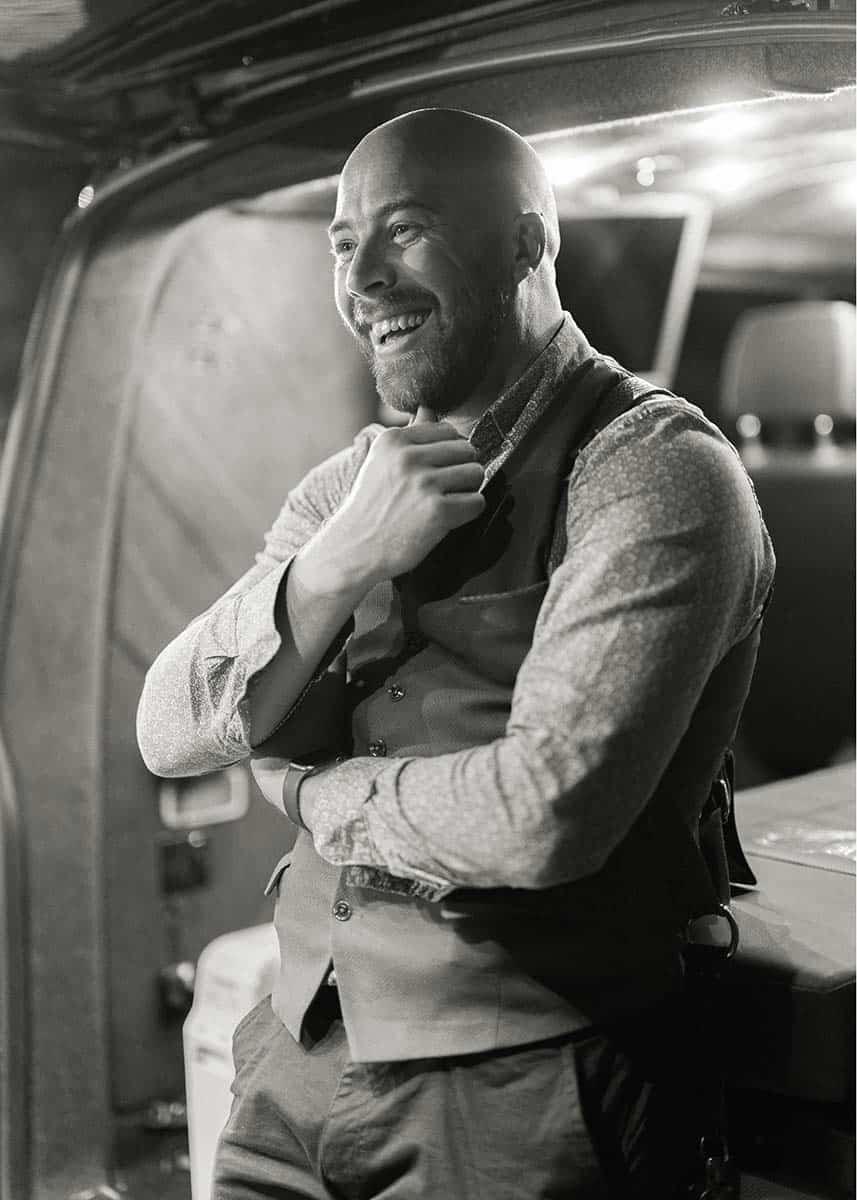
Scott Johnson
BE PATIENT
By stepping out of your comfort zone, you can not only survive during tough financial times but thrive, he explains. It takes patience to pivot, though. “I think photography and running a business is like raising a child,” Johnson says during the podcast. “The sooner you get into a routine, with financial practices, working practices, the easier it all becomes.” After being a professional photographer for 23 years, he was stuck in his ways, he adds. “I like the way I do things, so trying to do things differently was very hard to try to get my head around at the start,” he says, including marketing and in-person client meetings. “But I knew that if I didn’t do it, we were going to be in big trouble.”
How can a photographer know that “trouble” is potentially coming? Both Miller and Johnson cite some red flags:
- A drop in number of clients
- Fewer dollars spent by them
- Fewer inquiries, and
- Fewer assignments on the calendar.
In the fall of 2024, Johnson says he checked his calendar for 2025 dates. “I thought, Huh, OK, something’s different now. Something’s wrong. The inquiries were almost non-existent,” he says. He also noticed that when he replied to inquiries with his price structure, he was typically ghosted. “People were just now … throwing a fishing net, trying to get the cheapest possible price and going with that one, rather than picking someone like myself that charges more than the average photographer.”
Johnson has built a successful portrait business by relying on his reputation and by reaching out to years’ worth of previous wedding clients. “Through COVID, I learned to only focus on the things that I can control and not worry so much about the things that I can’t,” like the financial markets, he says. Instead, he adds, he rethought his market and he hustled, “and it’s been going really, really well.”
CHANGE UP YOUR MARKETING
As he ramped up his portrait and family photography business, Johnson diversified his marketing strategy. He added a new Instagram account with a variation on his wedding photography name, so current and potential clients knew they were connected. He kept the same branding and the same logo but with a different background, he explains. “So, people knew it was me but [would wonder] Oh, what’s that? You’re tweaking people’s curiosity by associating the brand logo with something that’s just a little bit different.” He also leaned heavily on Reels rather than posting just one image at a time. “You’ve got to be visual, you’ve got to be doing behind-the-scenes [videos], you’ve got to be doing so much more—which again is a little bit out of my comfort zone—to become more relevant, because people want to see me in action working,” Johnson says. “They just don’t want to see the one hero shot anymore.”
Johnson says he has a love-hate relationship with social media, which he has used since 2008. The bottom line: It is invaluable. “From a business point of view, as an image maker, it’s essential because if you’re not on social media now, you’re not anywhere,” he says. In fact, social media such as Instagram, TikTok, and Facebook are today the first places potential clients look for photographers, versus a website, he explains. “So, if you’re not on it, it’s almost career suicide.” Social media advertising, still tied heavily to his wedding brand, is also crucial. Johnson has “a very healthy budget that we throw at it,” he explains, “and we get a lot of traction out of it.” An average campaign is about $600 to $700 per month, which leads to 60,000 to 70,000 impressions across social media channels for that month, he says. It took about four advertising cycles to get the algorithm right, but now he is careful to advertise to people who realistically would book his services—not someone, for example, 200 miles away. “I want people within a 60-mile radius that are actually going to commit and turn up,” he says. “So, it’s about how you [advertise] and cast a wide net, but don’t be silly about it.”
Another shift Johnson has made during economic uncertainty is focusing more on in-person sales. As a wedding photographer, all client interactions (other than the event) were remote, he says: sending the couple their gallery, designing the album, emailing a proof. The client only came in to choose colors for their album. With portrait and family photography, Johnson books the in-person viewing appointment before the client leaves their session. When they return a few weeks later, they review their images on a giant projector with surround-sound music, “and we sell,” Johnson says, adding that a client recently spent $2,000. “The system works. You just have to trust the system,” he says. “You’re not going to get that kind of sale every single day. You have to kind of work to the average sale. Don’t work to the big sale. What is your average? That’s what you need to work towards. The big ones are going to come in [and] the small ones will be there. But as long as your average is progressively going up, that’s what you work towards.”

HELP YOUR CLIENTS, HELP YOURSELF
Johnson offers clients an informal payment plan, as long as they pay the full amount over three months. He does not deliver the product until it’s paid in full, but that offers clients a respite, he says. His portrait sales average around $700, “which is pretty good, especially given the climate at the minute,” he explains. “To us, it’s a good sale, it’s a big sale,” Johnson says, “but to them, it’s a smaller overall spend.” Rather than spending $70,000 on a wedding, they’re spending 1% of that on a session.
Help cull your own spending by going through your finances: Are you using every subscription? Must you pay for an annual subscription on a product or service that you haven’t used in six months, or only used once or twice? Log in to cancel it and let the subscription run out, Johnson advises. Miller adds a tip: “If you’re buying a product that’s powered by AI, never buy the annual ever,” he says. “Six months from now, there will be three or four other things that are doing what that one product does, and you’ll regret buying the annual.”
A key for both clients and small business owners is to recognize that the economy is a cycle. There are highs and lows, and having plans in place to change your business specialty or model for a time can ensure you ride out the lows. Johnson compares success during economic struggles to surfing. “You miss [a wave], you crash out, you get the next wave,” he says, “and you ride that as long as you can and you do as well as you can.”
Melanie Lasoff Levs is director of publications.
Tags: portrait photography sales