Expand Your Creative World Through Travel and Photography with PhotoVision Instructor, Kevin Dooley
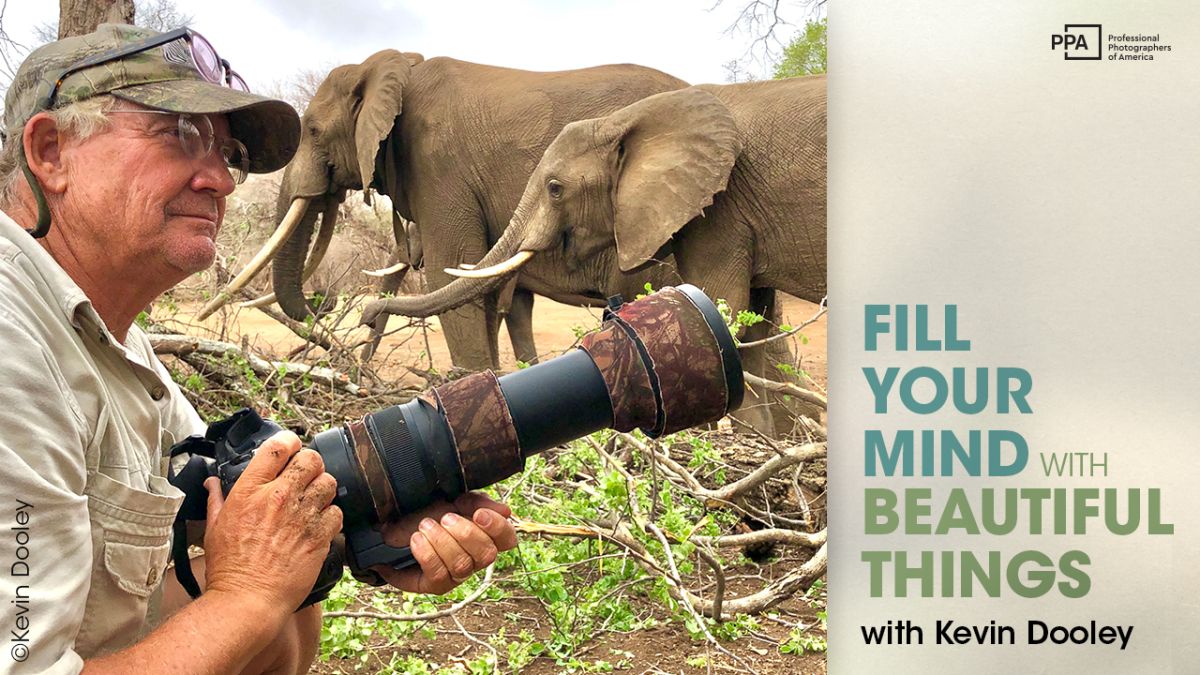
Nature and wildlife photography asks photographers to do more than master their gear. It demands patience, adaptability, observation, and a willingness to keep learning. In his PhotoVision content, Kevin Dooley shares an approach rooted in preparation, persistence, and creative curiosity—the kind of mindset that helps photographers create stronger images and stay inspired along the way.
Whether you’re photographing birds in flight, big cats on safari, or wildlife close to home, these lessons from Dooley can help you strengthen your technique and deepen your connection to the craft.
1. Prepare for the experience before you prepare for the shot
Great wildlife photography starts long before you press the shutter. One of the clearest takeaways from Kevin Dooley’s teaching is the value of preparation. Travel days, unfamiliar environments, and unpredictable conditions can all affect your ability to be fully present when the right moment appears.
For wildlife photographers, that means thinking ahead about comfort, mobility, and readiness. The more prepared you are physically and mentally, the easier it is to focus on the creative opportunities in front of you. When your energy goes into seeing instead of scrambling, your photography gets stronger.
2. Simplify your gear so you can stay ready
In wildlife photography, moments come and go fast. That’s why one of Kevin’s smartest lessons is to keep your setup as simple and intuitive as possible. Too much gear can slow you down, distract you, and even cause you to miss the image altogether.
Knowing your equipment well matters just as much as owning the right tools. When your camera is ready, your settings are familiar, and your kit is streamlined, you can react faster and work with more confidence in the field. For wildlife photographers, simplicity is often a competitive advantage.
3. Learn to observe instead of control
Unlike studio or portrait photography, wildlife photography doesn’t give you the luxury of directing the subject. You cannot pose an animal or ask it to move into better light. Instead, you have to study the scene, understand behavior, and adjust yourself to what is happening naturally.
That shift in mindset is essential. Strong wildlife photography often comes from reading the environment well—paying attention to light, background, movement, and timing. The more you practice observation, the better you become at anticipating moments instead of chasing them.
4. Patience is part of the craft
Wildlife photographers know patience is not optional. It is part of the process. Kevin Dooley’s perspective reinforces that point: when animals sense your presence, rushing rarely helps. Waiting, watching, and allowing the subject to settle can lead to more authentic behavior and stronger images.
Patience also helps photographers notice the details that make a photograph stand out. The slight turn of a head, a shift in light, or a moment of interaction can transform an ordinary frame into a compelling image. Sometimes the best thing you can do is stay still and stay ready.
5. Let wildlife photography renew your creativity
One of the most inspiring ideas in Kevin’s content is that wildlife photography is not just about documentation—it is also about creative renewal. Time in nature can help photographers step away from distractions, reconnect with curiosity, and rediscover the joy of making images.
That creative play matters. For many photographers, especially professionals balancing client work and business demands, wildlife photography can become a way to experiment, reset, and grow. It reminds us that photography is not only about outcomes. It is also about wonder.
A quote to keep in mind
“You get these dreams of photographs you want to capture. If you don’t get it one day, you’ll go to bed and dream that maybe tomorrow’s the day it will happen.”
— Kevin Dooley
How photographic competition can help you grow
Wildlife photography also offers a valuable path for photographers who want to challenge themselves creatively: competition. Entering competitions like PPA’s International Photographic Competition can push photographers to refine their technique, strengthen their storytelling, and think more intentionally about impact.
Competition encourages you to look at your work with fresh eyes. It can reveal where your images are strongest, where they can improve, and what kinds of choices elevate a photograph from good to memorable. Just as important, it gives photographers a reason to keep stretching, experimenting, and developing their voice. For artists who want to grow in craft and confidence, competition can be a powerful next step.
Keep learning with PhotoVision
Kevin Dooley’s approach to wildlife photography is a strong reminder that better images come from more than equipment alone. Preparation, patience, observation, and creative curiosity all play a role in creating photographs that resonate.
Want to learn more from photographers like Kevin Dooley? Explore PhotoVision for education designed to help you sharpen your technique, grow your creativity, and build stronger images with purpose.
Watch Kevin Dooley on PhotoVision and discover more educational content to help you grow as a photographer.