
When the Tough Get Going
Perform like an elite athlete to elevate your business

What separates the elite practitioners in your field? What distinguishes photographers who are booked solid and charge enviable rates from those struggling to define themselves and languishing in a crowded middle ground? There are many factors, of course, but one of the most important is a mindset that helps successful pros be more resilient and perform at a higher level when it matters most.
Most of us already have the tools to push ourselves in the right direction. That process can begin with mental toughness, an approach often used by elite athletes to overcome adversity and ensure they’re at their best during critical moments.
Brad Cooper, Ph.D., a behavior change specialist and CEO of Catalyst Coaching 360 in Ft. Collins, Colorado, spent years studying the science of this mindset. He created a framework called Functional Mental Toughness (fMT). Cooper, also host of “The Coaching Lab” podcast, is the author of a forthcoming book on mental toughness. The concepts work well for athletes, but apply to anyone looking to raise their performance levels, including entrepreneurs and small business owners.
Professional Photographer magazine talked with Cooper about how photographers can apply the tenets of fMT to their lives and businesses. This interview has been edited for length and clarity.
Jeff Kent: What is functional mental toughness?
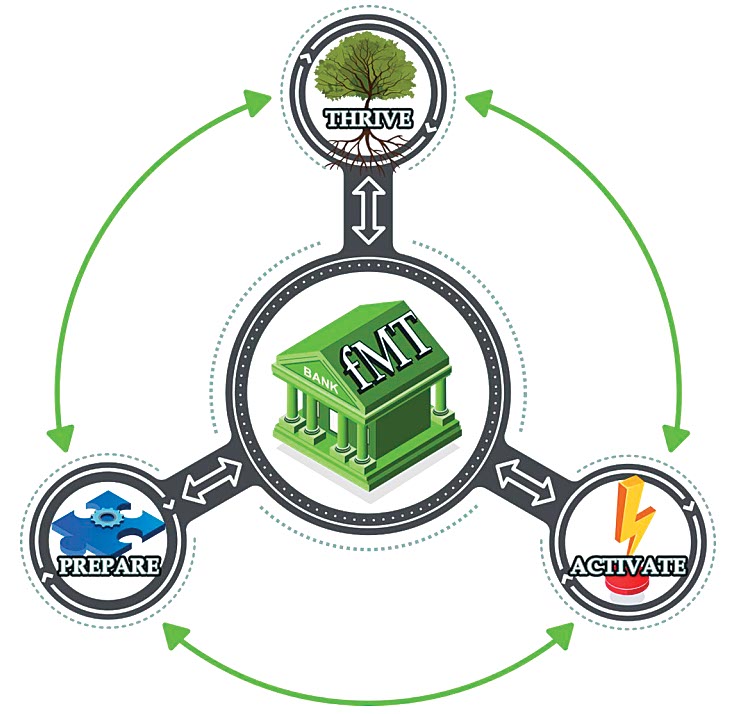
Brad Cooper: I wanted to figure out how we can give people real tools, instead of just saying, “Grit your teeth, suck it up, and just get it done.” So we created this model. The idea is to fill up your fMT “bank” so you can access it when you need it. Your bank is what provides the resources to drive positive outcomes. There are three main ways that one can fill the bank: thrive, prepare, and activate. Those three elements build on each other.
Thrive is about your lifestyle, establishing good habits that support the outcomes you want.
Prepare is the work you do in advance to set yourself up for success.
Activate is when you apply the tools and strategies you’ve developed to achieve your desired outcomes.
You don’t have to implement these stages all at once. But if you improve even one element, that will feed your fMT bank. The idea is to use these concepts to address the gap between desired outcomes and actual outcomes, the desired life and real life. How do we bring those closer together? There are no guarantees in life. You have to do the work to set yourself up for success. Bake the cake and fMT will put the icing on it.
JK: How can professional photographers begin to bridge that gap between their desired outcomes and actual outcomes?
BC: One example is a wedding photographer who wants to bring more energy to the job, improve their interactions with guests, or manage their schedule better. We all know that weddings can be very stressful, and wedding photographers have to be “on” the entire day. One of the key components of the fMT model is identifying your critical moments so you can spend from your bank at those times. Working a wedding involves several critical moments where you’ll want to draw on your fMT bank. Identify and focus on those versus wasting your fMT on silly things like where to park or what time to leave. Sure, those should be part of your advance planning, but not where you should be spending your primary energy. Your fMT should be devoted to critical moments when you have to be at your best. The first part is identifying those critical moments. Next, think about the outcome that you want to achieve at those times. Then, what are you going to do to get the result you want?
JK: Can you expand on the idea of the fMT bank and how entrepreneurs like professional photographers can get the most out of it?
BC: There are three ideas with the bank:
- We want to fill it up.
- We want to limit the leakage so we aren’t wasting resources on things that don’t need fMT.
- We need to be able to use it when we need it.
It’s just like money in a real bank. You want to fill up your savings account. You don’t want to drain it for little things like banking fees or subscriptions you don’t use. You need to be able to access fMT when it’s important. So, ask yourself, are you continually filling up your fMT bank with the three elements, so it’s full when you need it? Or are you letting your bank drain out for inconsequential things? For example, take the “thrive” concept. If you’re sleeping well, you’re more likely to be focused enough to prepare for an upcoming photo session. When you have prepared—researched the client, scouted a location or cleaned your studio, set up your lighting—you’re going to be more effective when you reach the “activate” stage. The different stages work together.
JK: How do people start developing their functional mental toughness?
BC: Tuning into these concepts is a great start. On your own, start thinking about Thrive, Prepare, and Activate. You can begin with Thrive and the four fundamental elements within that area: move, fuel, rest, and connect. Start taking small steps to improve those elements in your life and then build from there. Behavior change is hard, so you could consider working with a health and wellness coach. They’re trained in things like intrinsic motivation and motivational interviewing. A good coach comes alongside you, tunes into what makes you unique, and then helps you create a plan to move forward.
JK: How does one track ROI from all these efforts?
BC: This goes back to closing the gap between your desired outcomes and actual outcomes. In our wedding photography example, let’s say you want to improve your performance at your wedding jobs. This could include figuring out how to create a better experience for the couple, capturing more images during key moments, trying more artistic approaches, or boosting your stamina and energy throughout the day. In your clients’ mind, this could translate to a higher review on social media or a testimonial on your website. What is that worth to you? If every five-star review earned you an additional three referrals, what would that be worth to your business? And if you keep performing at that higher-quality level, there’s a compounding effect, with every event multiplying your referrals, bookings, and revenue. There’s also the differentiation of being known as an exceptional wedding photographer. That is your competitive edge. Most wedding photographers have access to the same equipment and the same software, but you’ve got access to that higher level of performance that makes you the in-demand photographer in your field, and that absolutely comes with real, quantifiable benefits.
Jeff Kent is editor-at-large.
Tags: bridging the gap