
The Art of the Bokeh
Looking beyond the subject, an exploration of the meaning and use of bokeh.
• March 2025 Issue
An acute awareness of the amount of bokeh to perfectly balance a photo will greatly enhance the end result. Dan Winters, the 2025 recipient of PPA’s Lifetime Achievement Award, thinks of a single photograph as two images: the subject and their surroundings. That chosen area of the latter is treated with varying degrees of aperture-created softness for a desired result.
For an assignment in Washington County, Texas, I decided to focus—or rather defocus—on the environments around my photo ops. This real-life exercise would enhance the most important aspect of each image, the subject.
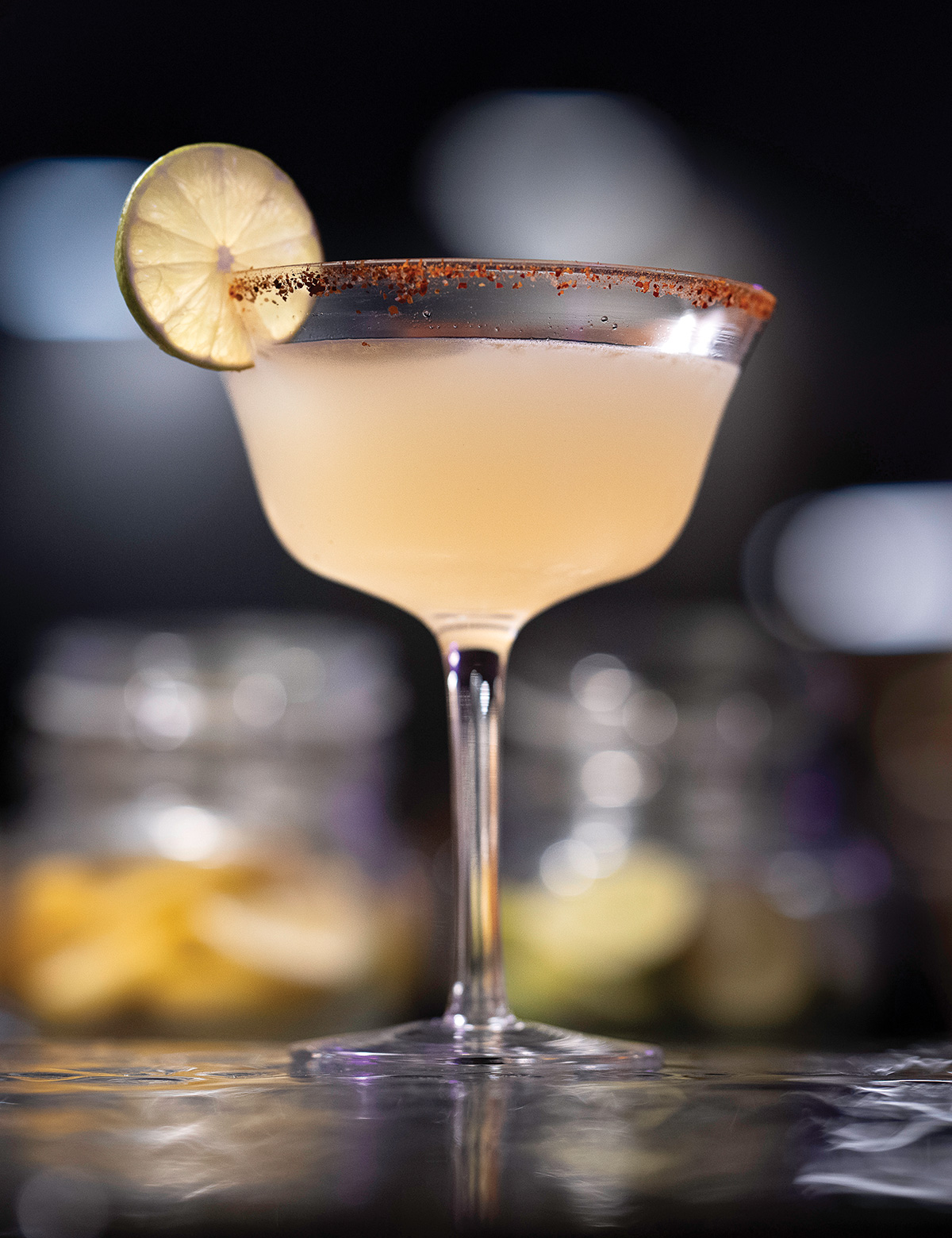
Nikkor Z 85mm f/1.2 set to f/2.2
Shutter speed can make or break a photograph, especially a setting that is too slow. But the artistic interpretation of an image is often best expressed through the most creative component of the exposure triangle: the aperture. Even though the Japanese word “bokeh” has become the most frequently used word relating to the aperture, it’s perhaps the most mispronounced. As a self-proclaimed Japanophile who speaks conversational Japanese, I will try to define both the word and its pronunciation.
If we take the Japanese characters ボケ and convert them to romaji (the Romanization of Japanese), it would translate to “bo” and “ke,” “bow,” as in bow and arrow, and “kay,” as in OK, in an even cadence.
In 1997, Mike Johnston, editor of the now-defunct Photo Techniques magazine learned of the term “boke” from photographer Carl Weese. Johnston commissioned articles by John Kennerdell, Oren Grad, and Harold Merklinger for the March/April issue of the magazine to introduce the concept to the West. Realizing that the Romanized spelling of “boke” led English speakers to pronounce it as one syllable, like “spoke,” Johnston changed its spelling to “bokeh.” For a deep dive into the optics of bokeh and beyond, track down a copy of Merklinger’s book, “The Ins and Outs of Focus” (Seaboard Publishing or available in an online version).
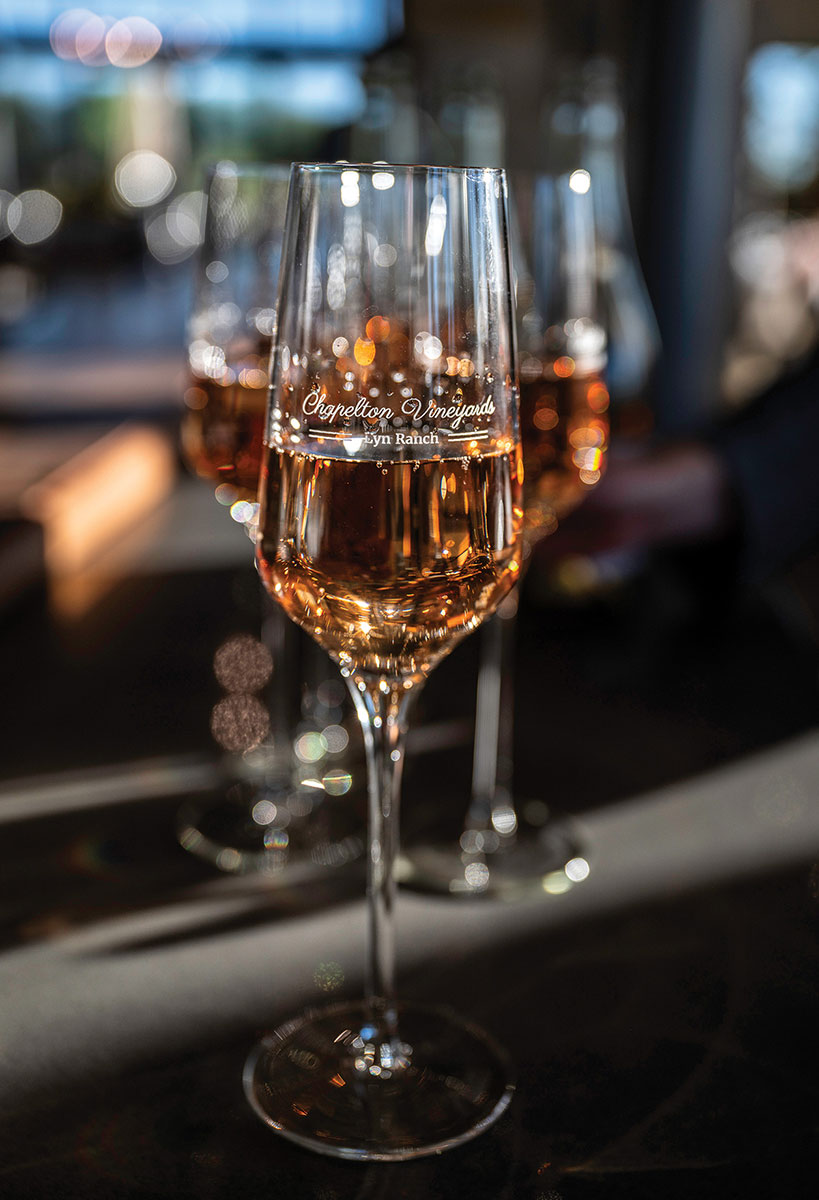
Nikkor Z 85mm f/1.2 set to f/3.2
In its native Japanese, bokeh is far more than a word to describe the out-of-focus areas of an image. In “manzai,” for instance, a comedy performed by a two people, the term is used to describe the person who is the “funny man” who plays off the “straight man.” When “jisa” (time difference) is added in front of the word to make “jisaboke,” it can be translated as “time difference fog” to mean jet lag. For this article, we’ll focus on the bokeh’s basic photography image-related translation as “blur” or “haze.”
For photographers, it’s more important to know when and how to use bokeh than how to pronounce it. Its major use is to soften distracting elements in an image so viewers can focus on its subject. All-in-one zooms are not ideal for intense bokehs because of their relatively slow apertures and losing f/stops as they are zoomed in. It’s one of the reasons that all my zooms are non-variable. For example, my Nikkor Z 24-70mm f/2.8 and Nikkor Z 70-200mm are f/2.8 throughout their ranges. They are both capable of producing beautiful bokehs. This can be said for similar non-variable lenses made by the major brands.
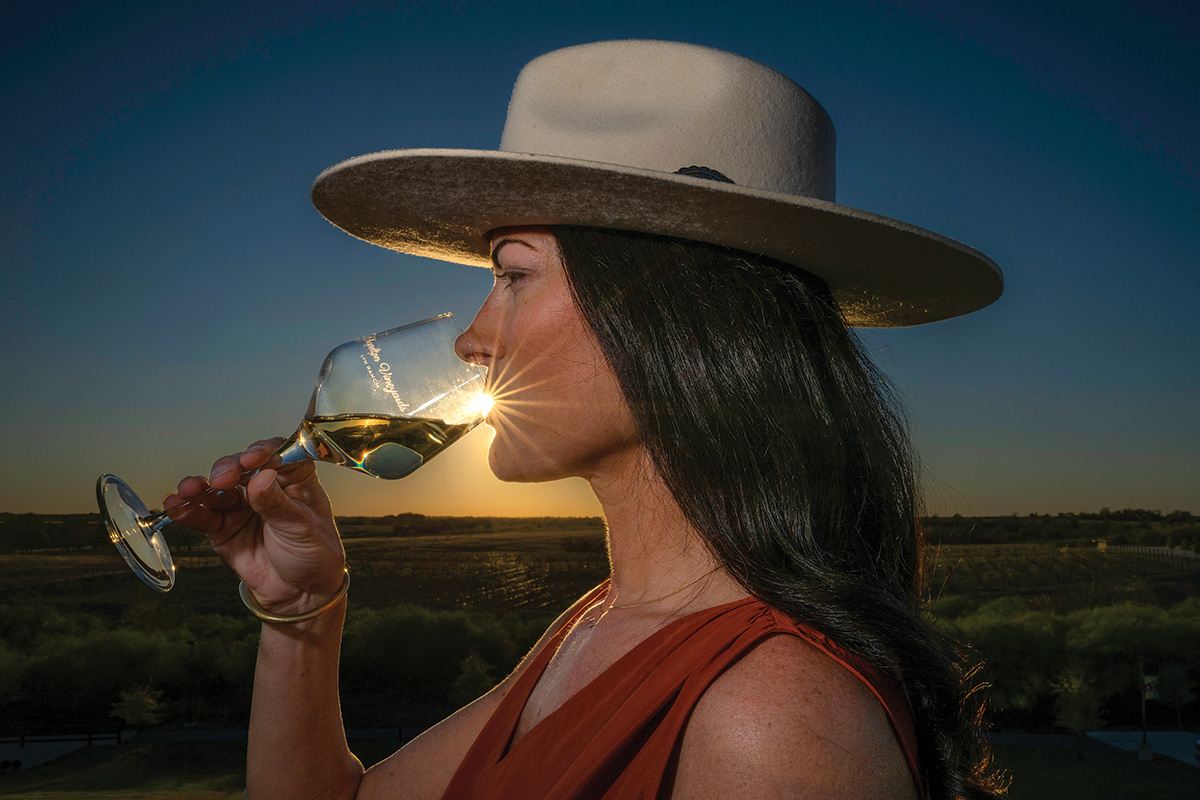
To achieve the ultimate bokehs, fast fixed lenses are the way to go. As part of my exploration of historic Washington County, a group of friends gathered for a tasting at the magnificent 75-acre Chapelton Vineyards, where we were greeted with glasses of sparkling wine. I did a still life (except for the bubbles) of the welcoming scene with a Nikkor Z 85mm f/1.2 set to f/3.2 (above). At sunset, I documented a patron enjoying one of the estate-grown Texas varietals on the winery’s deck, using much more depth of field to get a clearer idea of the environment as well as the starburst effect caused by the aperture of my Nikkor Z 24-70mm f/2.8 being set to f/22. Because of the lens’ proximity to the subject, the background was pleasingly soft while still being distinguishable as a vineyard (below).
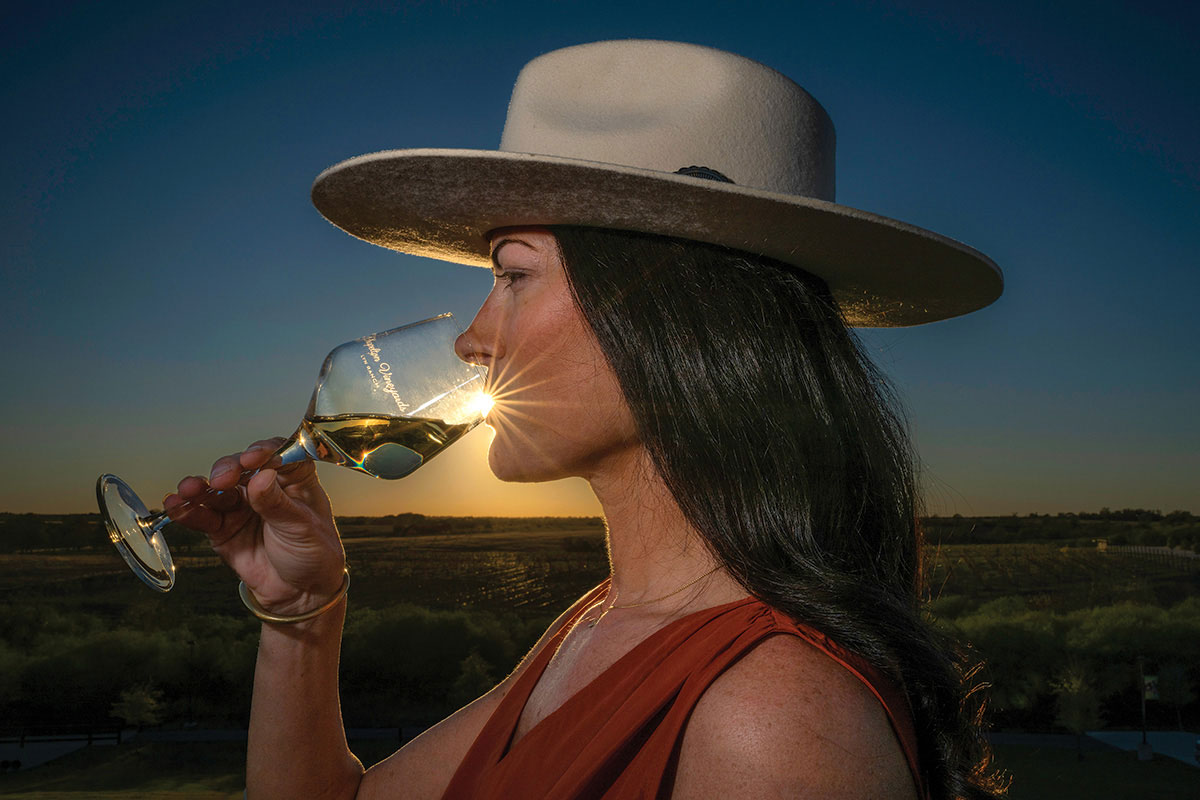
Nikkor Z 24-70mm f/2.8 set to f/22
I used the same lens combination again at the Milk & Honey Ranch in Burton, Texas, where I did an “eyes are the window to the soul” portrait of a roaming turkey with the Nikkor Z 85mm f/1.2 set to f/3.2 (below) and an “environmental portrait” of Jim and Kim Keeter, owners of the Antique Rose Emporium in the town of Independence, Texas, with the Nikkor Z 24-70mm f/2.8 at f/3.5 (below).
After a horseback ride at Rockin’ Star Ranch, I returned to my beautiful villa, kicked off my cowboy boots, and documented an interestingly designed Brazos Valley Brewing Company can of beer with my Nikkor 50mm f/1.2 lens set to f/1.6. For a cocktail shot at Floyd’s Lounge in Brenham, Texas, that evening, I used the Nikkor Z 85mm f/1.2 for a little more compression. I set it to f/2.2 to soften distracting elements and take advantage of the specular highlights/circles of confusion mirroring the aperture’s shape (top of article).
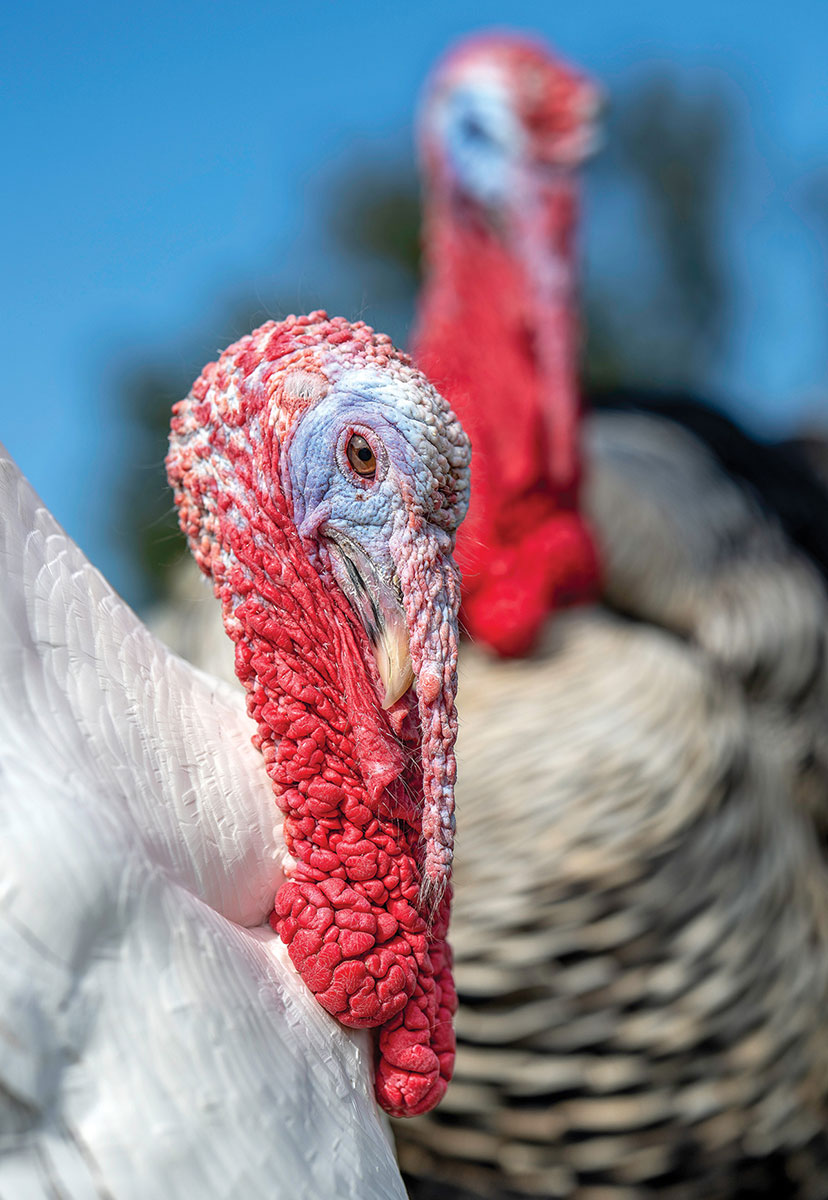
Nikkor Z 85mm f/1.2 set to f/3.2
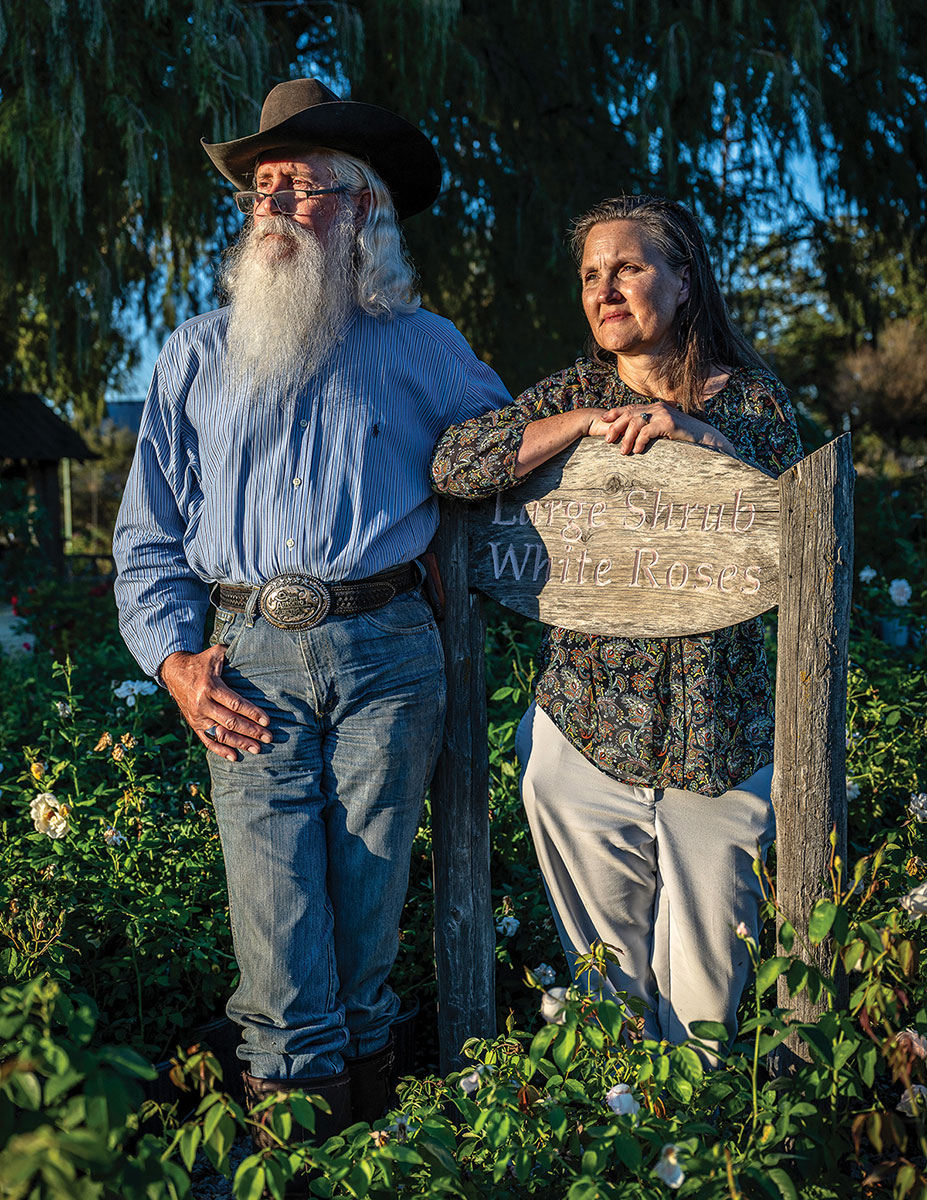
Nikkor Z 24-70mm f/2.8 set to f/3.5
While any lens can produce a bokeh effect to varying degrees, some yield more pleasant results than others due to the range of differences in lens aberrations and aperture designs. It’s a good idea to test out a lens at its widest aperture before handing over a credit card. Companies such as Lensrentals make it easy to try before you buy. For those who want to experiment with products specifically made with bokeh in mind, consider the many options manufactured by Lensbaby, as well as your own camera brand’s offerings. Nikon’s Nikkor Z 135mm f/1.8 S Plena, for instance, is a popular option for those who want the combination of compression and a shallow depth of field in a lens with edge-to-edge clarity.
Thinking of bokeh as the aesthetic quality of the blur produced in out-of-focus parts of an image will help the subject in a photograph stand out. Achieving the proper boke-aji (ボケあじ), “blur taste,” is analogous to cooking: simply season each image to taste.
Mark Edward Harris is an award-winning photographer and writer based in Los Angeles.