
The Art of Stillness
Take time to let a scene develop
Born in New York, raised in San Francisco and Los Angeles, and now frequently based in Tokyo for projects across Asia, I tend to move at a fast—and sometimes too fast—pace. I need to remind myself that often the best photos take time to develop. After all, what are the odds of everything being in the right place at the right moment every time you show up somewhere? Consciously slowing down helps avoid the “This photo would have been good if …” self-critique. Waiting for the “if” is often worth the investment in time. Slowing down to let a scene develop, or waiting for sunlight to find a more dynamic angle—especially with architecture—can be essential to a successful photograph.
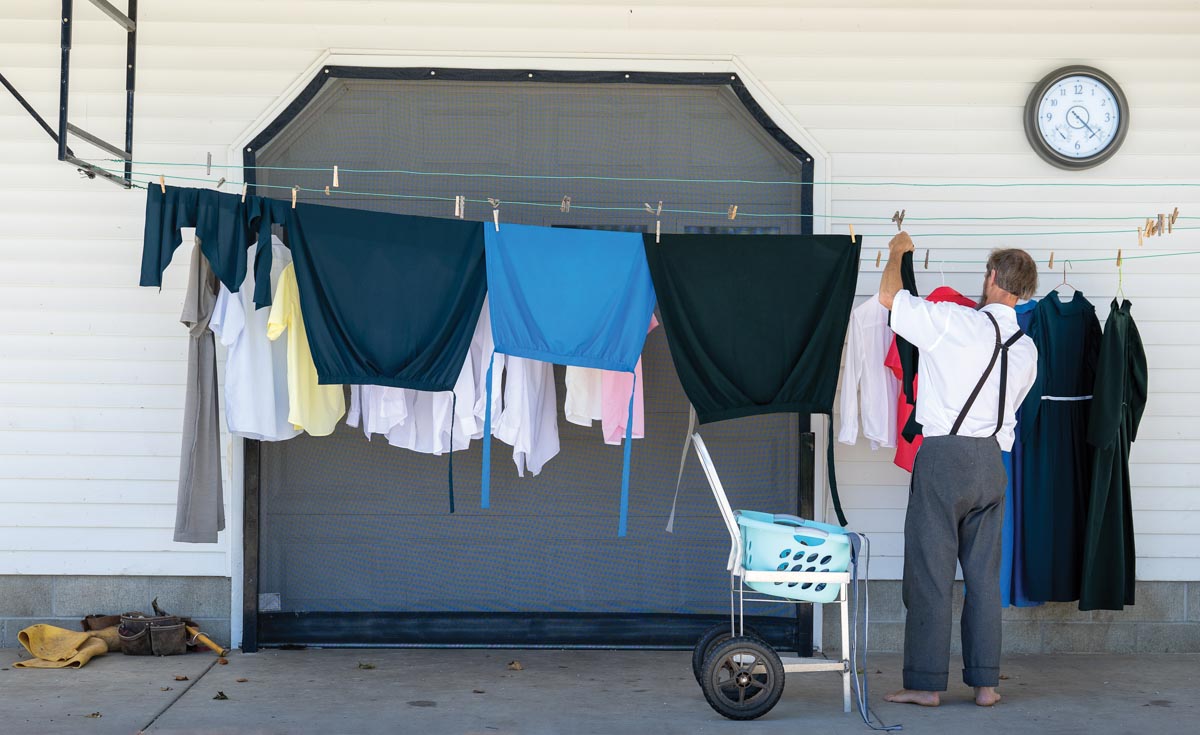
Spending time in Shipshewana, the heart of Indiana’s Amish country, is a study in the art of patience. I knew that entering this environment camera-in-hand, expecting things to happen in a New York minute, would not yield the photographic results that would convey the essence of the community. My goal was to step into this simpler, more purposeful way of life and come away with a meaningful photo essay.
On-location projects start with determining which equipment to pack and which to leave at home. Carrying too much can slow down reaction times and forgetting a crucial piece of equipment can lead to a missed opportunity. Regardless of the destination, you increase the odds of making the right packing decisions by going through the itinerary beforehand and checking out locations online.
Based on my research for Indiana’s Amish country, I decided that I could work in a focal range between 14-200mm and leave behind my longer lenses. This meant my Think Tank Urban Access would be a good fit. Into the bag went Nikon Z 8 and Z 9 bodies, Nikkor Z 14-24mm f/2.8, Z 24-70mm f/2.8, Z 70-200mm f/2.8 lenses, and for its magnificent bokeh, the Z 85mm f/1.2. My compact and versatile 20-inch Westcott Illuminator Collapsible 5-in-1 Reflector and an amaran Ace 25x Bi-Color LED light panel also fit. I added a small carbon fiber Benro travel tripod to the side pocket to open the world of photographic opportunities that exist at shutter speeds slower than 1/60 second.
First, Gain Understanding
After checking in at The Blue Gate Garden Inn, I headed to the Menno-Hof information center, where I gained a deeper understanding of the Amish-Mennonite story and whom I would be photographing.
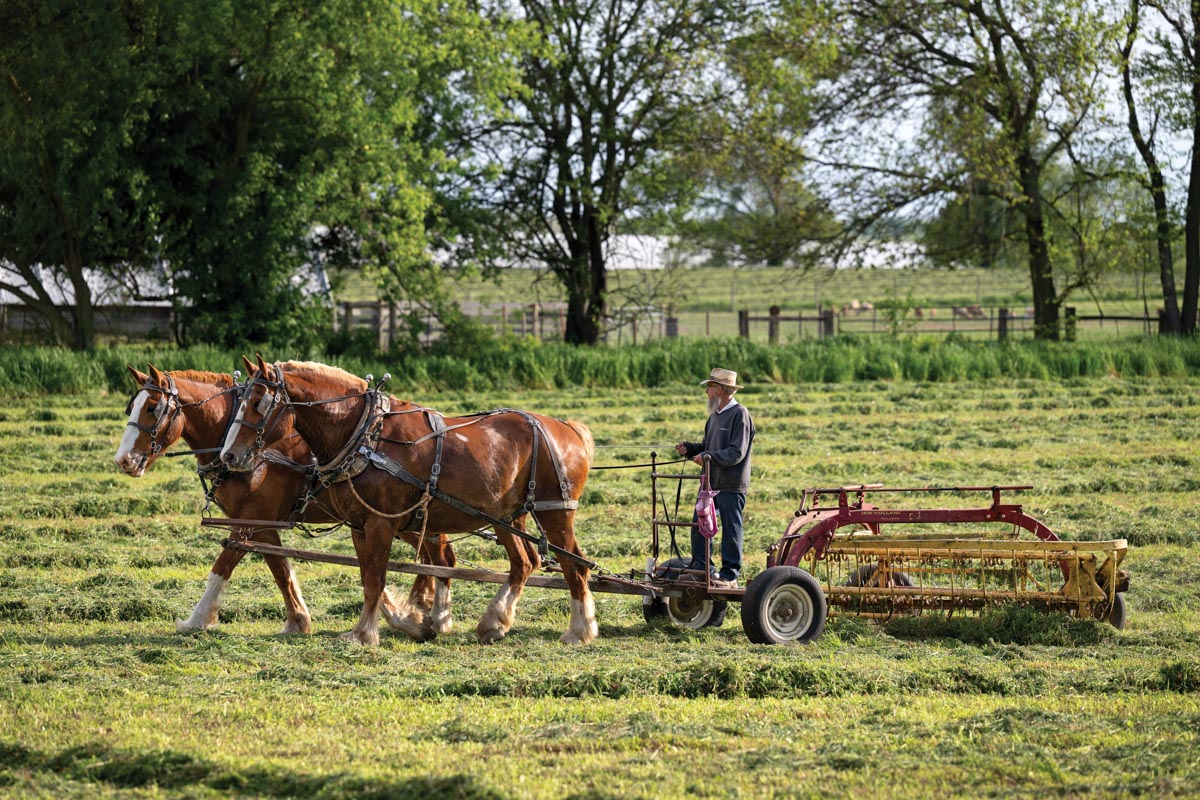
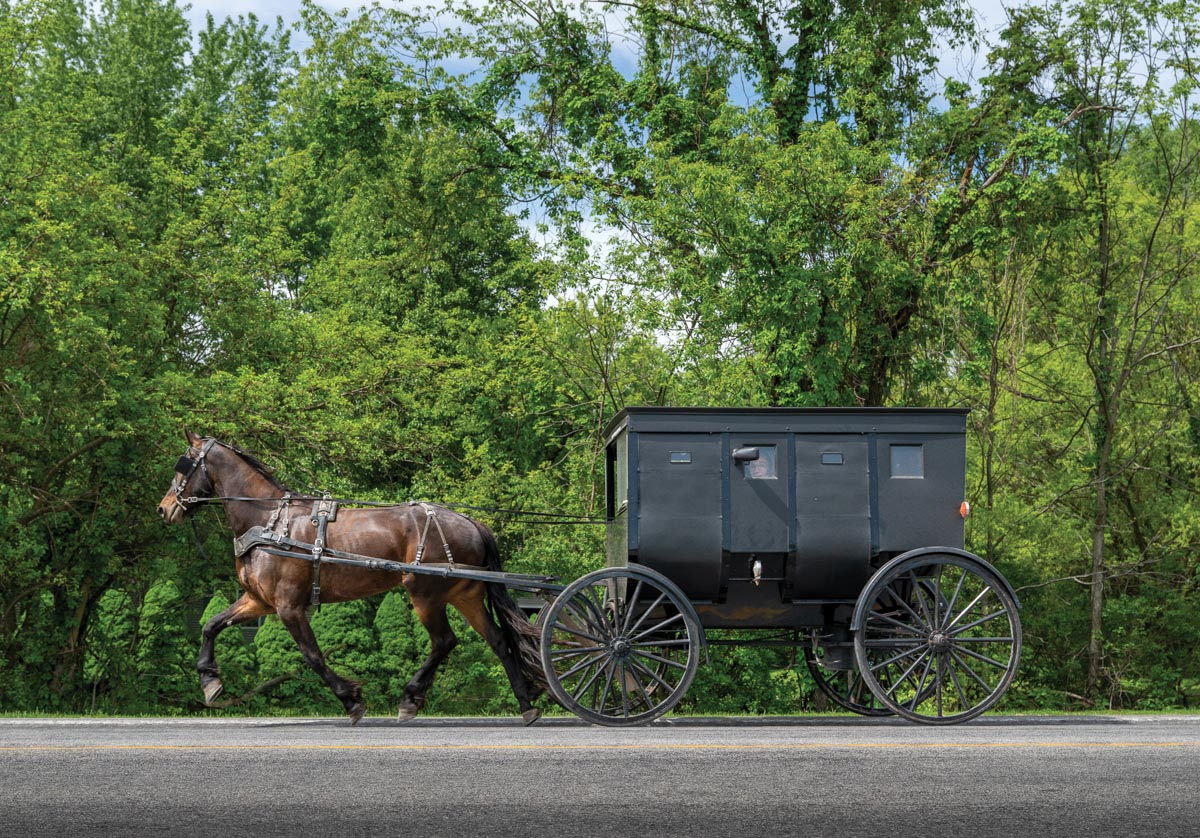
While living alongside modern society, the Amish maintain a lifestyle rooted in tradition by eschewing public electricity, political involvement, and military service. For transportation, this community relies on horse-drawn buggies and bicycles, which reinforces their commitment to simplicity. Amish often have phones at their place of business or in an outbuilding, but not in their homes. Mennonites more fully accept modern technology, including driving cars. As for being photographed, many adult Amish prefer not to pose for a portrait, considering it a violation of the Second Commandment, which prohibits the making of “graven images” that promote individualism and vanity. Photos of those going about their daily business, especially craftspeople, are typically OK. Most Mennonites do not hold religious prohibitions against photography. They take family portraits, and use personal cameras and smartphones. The key is to be sensitive to the individual and the situation and observe their non-verbal communication. For example, are they turning away or avoiding eye contact? In the more than 100 countries where I have made photographs, from North Korea and Iran to China and India, I have seldom had an issue capturing an image because I pay attention to those non-verbal cues.
Environmental Portraits
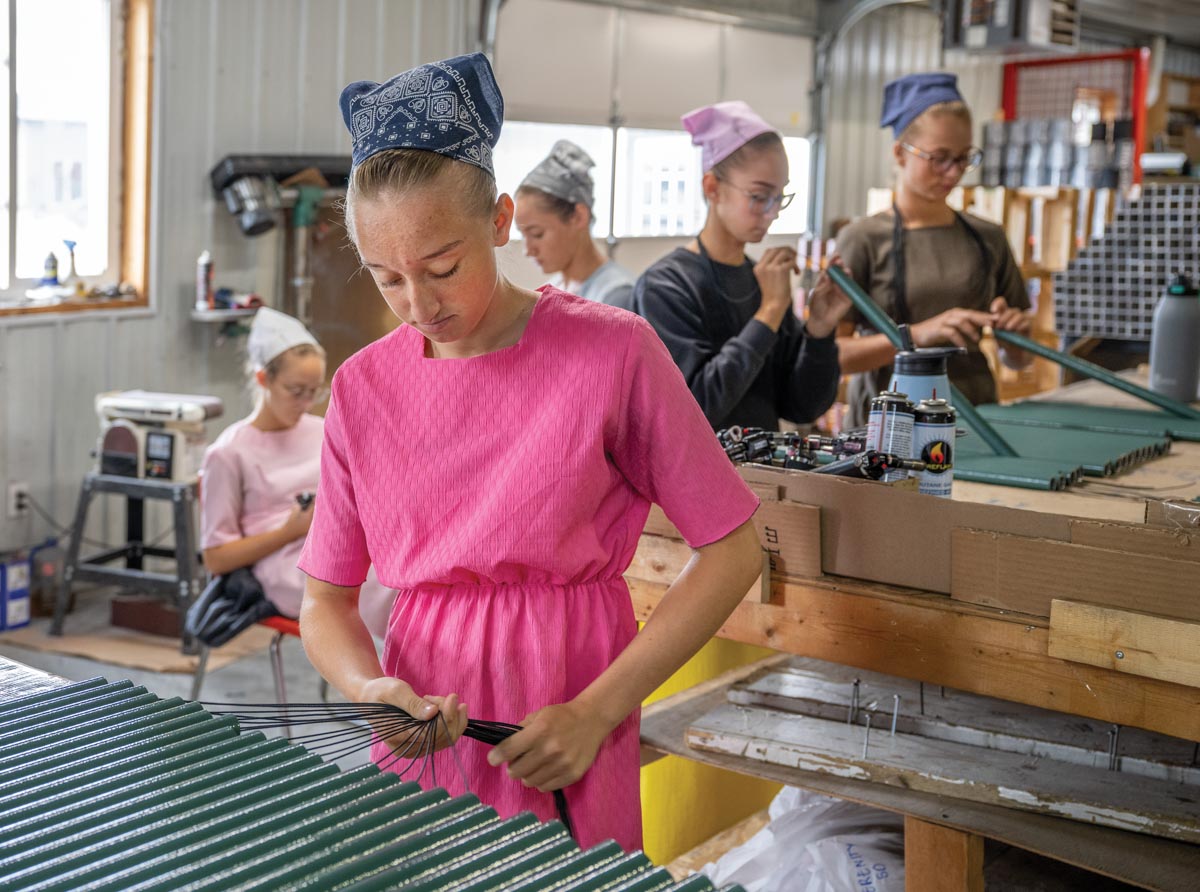
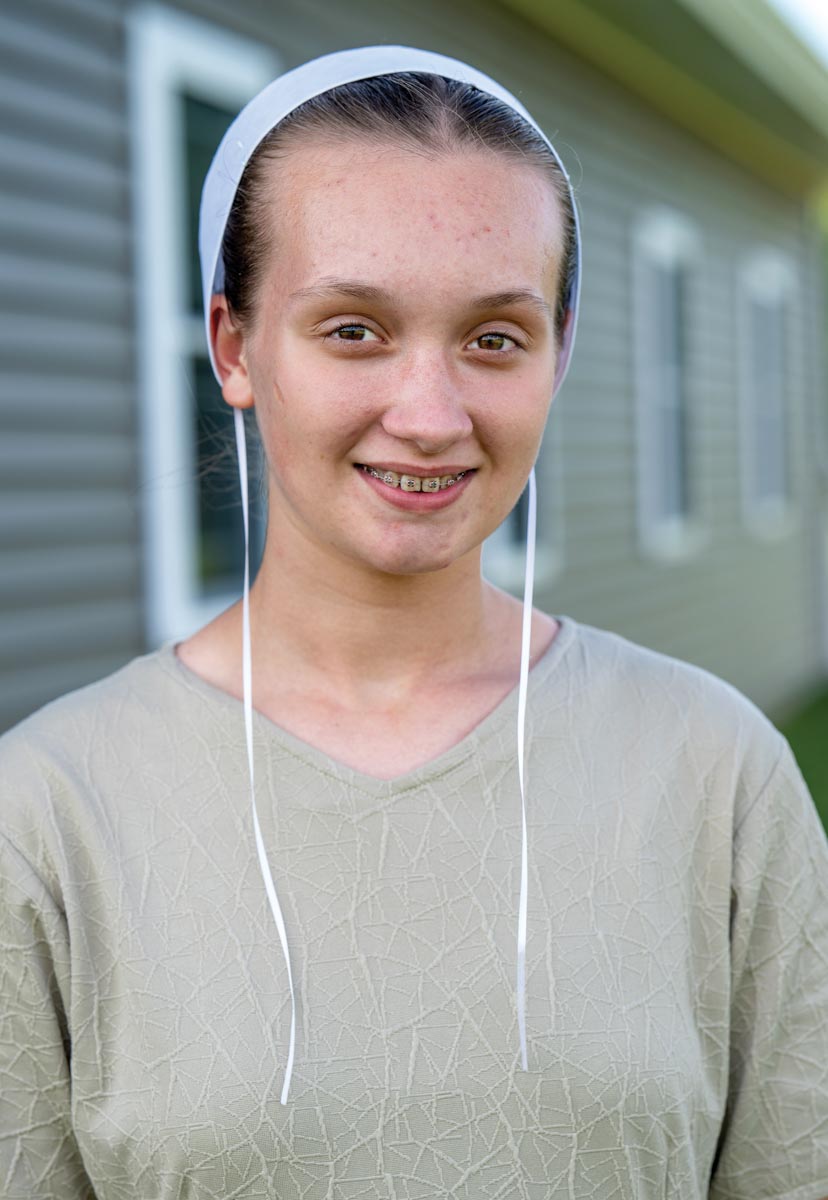
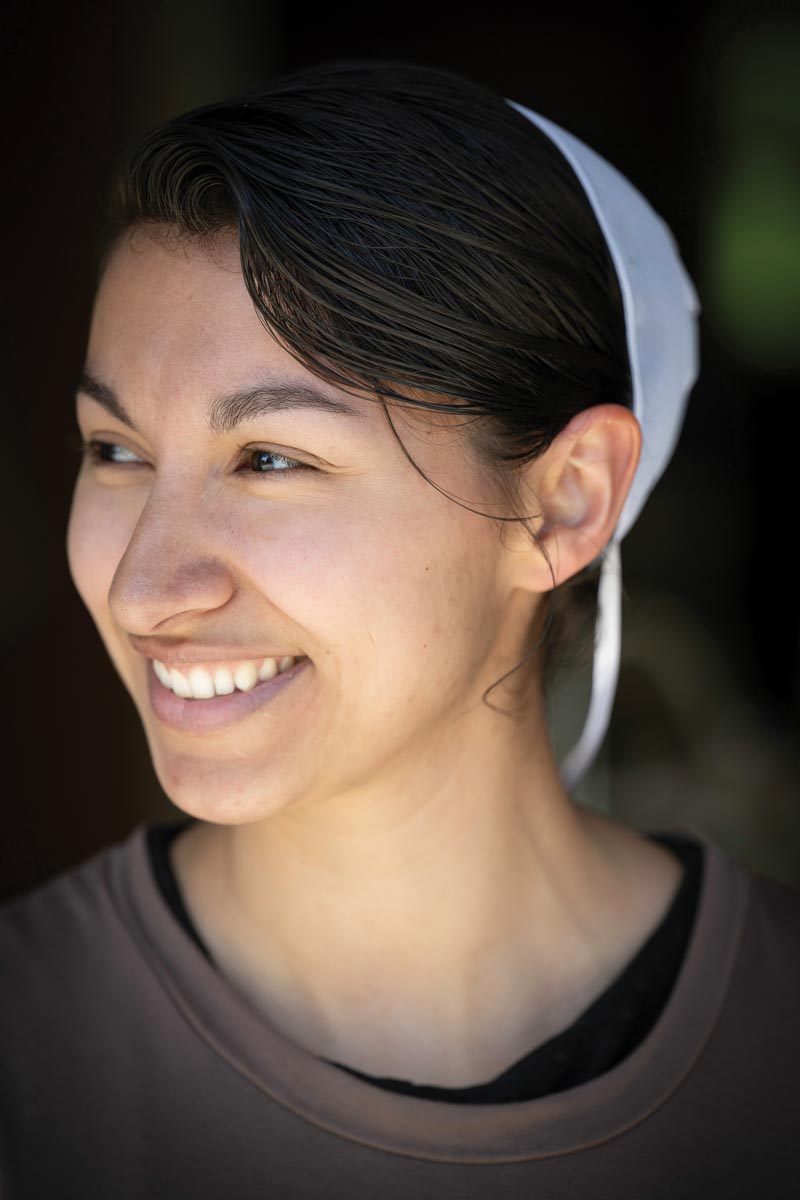
In addition to doing environmental portraits of those willing to be photographed, I documented some Amish and Mennonite craftspeople creating leather goods, windchimes, quilts, pottery, and wooden furniture. These items are often sold at “Shingle Shops,” small, independent stores on farmsteads that are perfect locations for environmental portraits. Most community members earn a living through small businesses. The Shipshewana Flea Market, the Midwest’s largest with nearly 700 vendors, was a great place for documentary-style photography. My go-to set up was one Nikon camera body with a Z 24-70mm f/2.8 lens or a Leica Q2 Monochrom.
In Shipshewana, I explored the beautiful Amish countryside through guided buggy tours, which offer interesting POV opportunities, especially for videographers. Experiencing life from the vantage point of another person’s carriage seat, even for a short time, is eye-opening. It is also a worthy establishing shot for a photo essay, since this traditional horse-drawn transportation is a hallmark of the Amish lifestyle.
The Pumpkinvine Nature Trail is a 17-mile paved pathway connecting Shipshewana to the neighboring towns of Middlebury and Goshen. Renting a bike and pedaling my way through the northern Indiana countryside scouting for photo ops at a pace that aligns with the local lifestyle was a welcome realignment of my internal clock.
Entertainment With the Locals
One of the biggest surprises was the entertainment opportunities in Shipshewana, including The Blue Gate Theatre. Before the curtain goes up, visitors can sit down for a homestyle Amish meal at the Blue Gate Restaurant. These gatherings are not only about food, but also about fellowship, and maintaining strong family and community ties. I made an environmental portrait of one of our servers with my Nikkor Z 24-70mm f/2.8 and rather than carry a macro lens, I opted for a +1 diopter filter for closeup photos of the restaurant’s legendary pies.
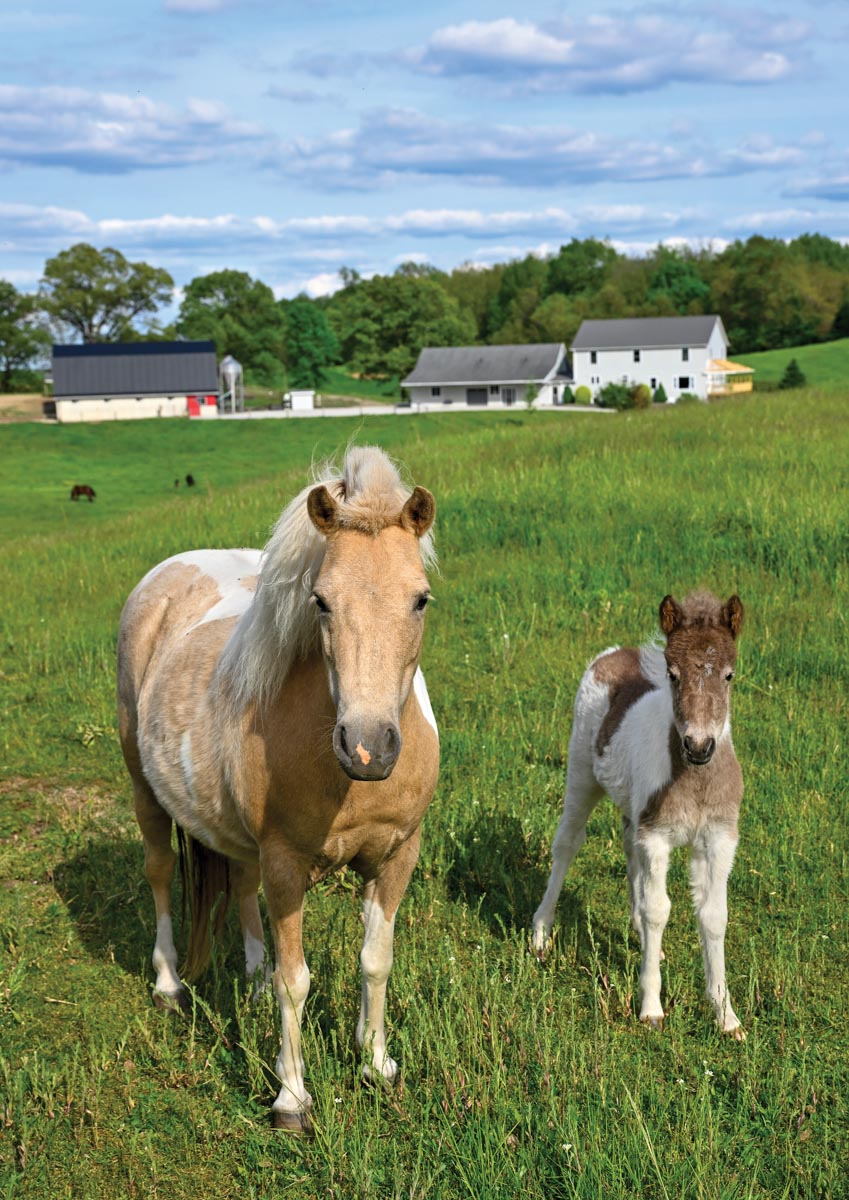
For an even more intimate culinary experience with locals, I enjoyed dinner with an Amish family at their homestead, arranged through the Shipshewana tourism office. Toward the end of the meal, which included delicious food and insightful conversation, I asked permission to do an eyes-are-the-window-to-the-soul-type portrait of one of the younger members of the family, who had also doubled as a server. I’ve found over the years that it’s best to follow your instincts when it comes to when and how to ask permission to do a portrait. This approach transcends culture. If the answer is “no” or someone seems uncomfortable with the idea, I simply smile and we move on. People have a right not to be photographed. More often than not, however, I do get a “yes” or a smile that indicates I can proceed. On the homestead I asked if I could photograph the young woman in the open shade of the house rather than in the house for more favorable light. Once there, I used my Nikkor Z 85mm f/1.2 lens for the portrait and then turned to the neighbor’s horses, who had moseyed over to see what was going on.
Slowing down to develop stories leads to excellent images. While it might be a cliché, it’s a valid one that can be applied to photography: Good things come to those who wait.
Mark Edward Harris is an award-winning photographer and writer based in Los Angeles.
Tags: gear technique travel photography