

In January 2024, Columbus, Ohio-based headshot and commercial architectural photographer Mike Price, M.Photog.Cr., went out for a beer with a local photographer friend. Two days later, his friend, who specialized in senior portraits, had a stroke that left the entire left side of his body paralyzed. It was the height of senior portrait orders, and after a couple of months of struggle, his overwhelmed spouse reached out to Price to help organize the business. “We had to do it on the fly,” Price recalls, due to the sudden change in his friend’s circumstances. There were so many questions: Where were certain passwords or documents located? Who was this or that customer? “It’s like changing the engines on the airplane in flight. We didn’t have a plan, and we didn’t have the details,” Price explains in the “Professional Photographer” podcast episode, “How to Exit Your Photography Business the Right Way with Mike Price.”
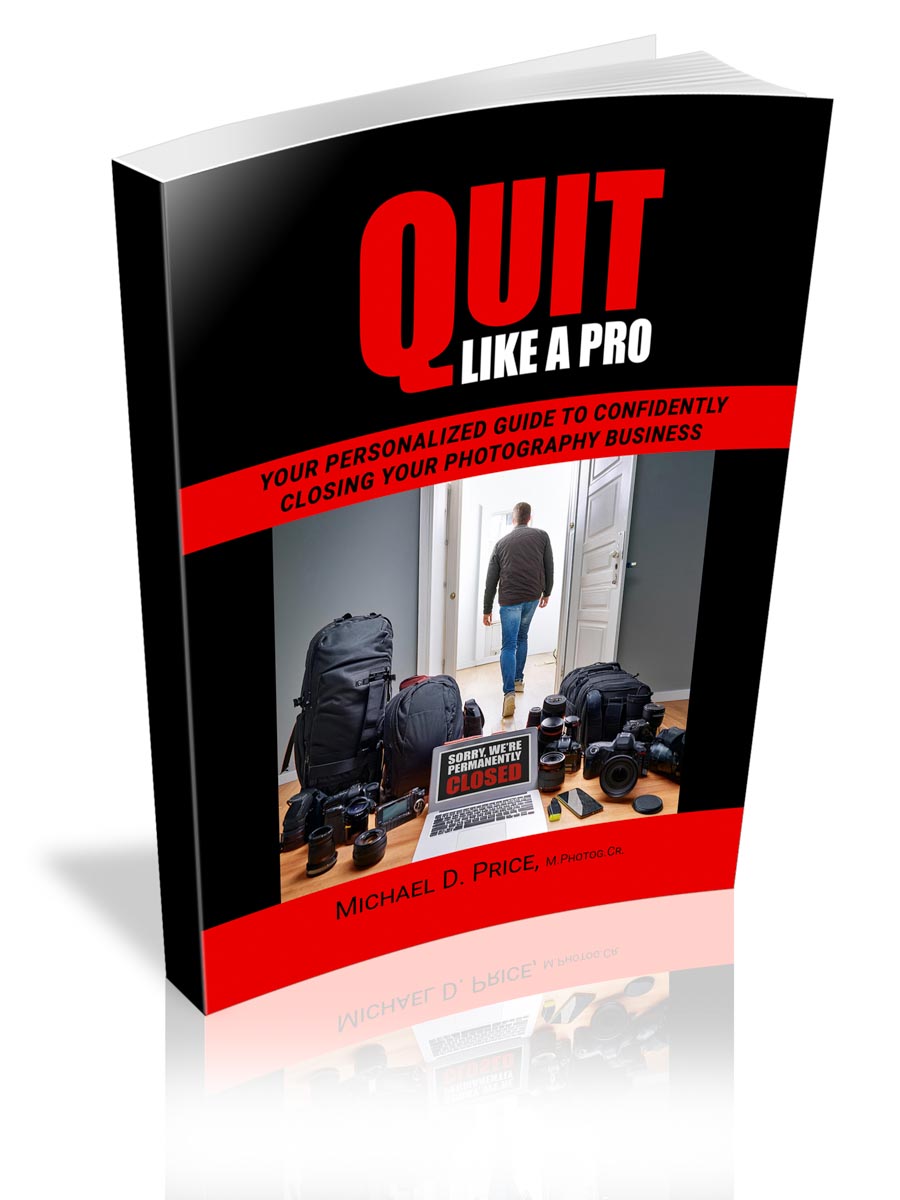
The experience led Price to write his book, “Quit Like a Pro,” a guide for photographers to assemble all elements of their business in one place in the event of closure, whether for retirement, medical emergency, business failure, or other reason. Taking this action prevents that stress on a spouse, partner, or friend, and ensures that business matters are handled properly, clients get what they need, and the photographer’s reputation remains intact.
It can be unpleasant to think about the end of your business, especially if it’s due to medical issues, Price says. So, think about this work as a kindness to whomever takes over the business when you can’t. “Unless you’ve done some plans ahead of time, unless you’ve talked about that, unless you’ve organized it, it’s a tremendous burden on that spouse or partner who may in that moment be more focused on being a caregiver for the photographer than trying to take care of the business and dealing with the customers who are expecting photos,” he explains.
Price started his own business 19 years ago and is heeding his own advice to get organized now. He searched for his business formation documents, sales tax information, and other forms. “It took me a while to find those and dig those out and get myself organized because we kind of forget where that’s at,” he says. “So even if you’re doing a planned retirement or something down the road, getting things organized today for when you do plan to exit the business means that everything is there, everything’s at your fingertips. You’re not stumbling around making mistakes or wasting time as you’re trying to find stuff.”
DESIGNATED AGENT
Your first order of business is naming a “designated agent,” a trusted person (not a spouse or partner) who can operate the business on your behalf. “Say you’re in a hospital, or worse, a circumstance where you’re not actually able to close the business, a designated agent is someone who’s been given a power of attorney,” says Price. Your designated agent serves as a “quarterback” who then can reach out to trusted advisors, including your accountant, your bank representatives, your insurance advisor, and others who work on your business. Why not use your spouse, partner, or family member? “In an emergency, in a crisis situation, that spouse may be more involved in caring for the photographer or involved in the crisis rather than … really thinking straight about what they need to do for business aspects,” Price explains. “And the designated agent can operate independently and provide that continuity to help out through the process.”
Price coined the term “designated agent” as he combed through his friend’s business and made notes on what he needed, which became the framework for his book. For example, there are small but important pieces of information, such as passwords, keys, and combinations, and two-factor authentication, as well as larger elements, including where financial data is kept, where images and client information are stored, and how to access all of it. Among the financial data you want to compile (and provide access to for your designated agent) is:
- Profit and loss statements
- Bank account statements
- List of bills that need to be paid regularly
- Other financial information needed for tax-filing purposes
“If the photographer is not shooting new projects and there’s no new money coming in, it becomes really important to understand where the money is going out [so] that we can turn off things that aren’t necessary, reduce some of the other areas that we have, and be able to manage the money in the account,” Price says.
You also may want to consider cataloguing some of your most pricey equipment, he advises. He recommends establishing a financial threshold—for example, every asset over $2,500. Inland marine insurance, typically attached to business loss insurance, covers moveable property, so if you have this, you have a place to start. Get a copy of the list of big-ticket items covered under that policy and put it with your other material, Price advises.

Mike Price
FROM CREATIVE TO PRACTICAL
It’s challenging for some to think about how to “quit” your business, according to Price. “We focus so much on growing our businesses,” he says, citing the numerous books and seminars dedicated to that topic, “but we’ve never really built the vocabulary, built the conversation, around what do you do at the end of the business the same way. … This [concept of planning the end] is an equal part of the business as is growing the business.”
In fact, gathering your client lists, financials, passwords, processes, and the like can help the creative photographer think more like the small business owner you are, he says. “… Not everyone does a great job of organizing their business financials. There’s a shoe box full of receipts. There’s a bookkeeper that once a year gets paid a handsome amount to sort it all out and then tell the photographer, ‘Did you make any money this year?’” Price says. Instead of that haphazard approach, documenting your exit plans forces you to engage more frequently and deeply as an entrepreneur, he adds. “And going through this process may help people get a better insight into the profitability of their business and be able to maybe run a better business.”
Price cites an example: One photographer was documenting his vendors and realized he was paying annual fees to multiple vendors doing the same thing. “So that inventory process, understanding where things are at in your business,” Price says, “can really give you some insight for maybe what you really need and what you don’t need anymore.”
Reading Price’s book, finding and compiling the information, filing power of attorney for your designated agent, and all the other steps take time, Price explains. Though you may create your plan, you also should consider revisiting it over the months and years. He recommends meeting with your designated agent once a year, updating any financials or passwords, and ensuring your agent is still confident. If starting the process feels daunting, Price created the four-page “Be Prepared Jump Start Worksheet” for PPA members to get started and build momentum for the larger closure plan. “It’s not as pleasant and fun to talk about that as it is for shutter speeds, f/stops, and ISOs, yet it’s so important for us to be able to do, to be able to take care of our business going forward,” he says. “And, for those that we leave behind or the business stuff we leave behind, [it ensures] that we’re well-organized and we’ve got a plan in place.”
Melanie Lasoff Levs is director of publications.
Tags: business operations