
Sweet Fragility
Lisa Cory leverages her nursing background for newborn sessions that sing
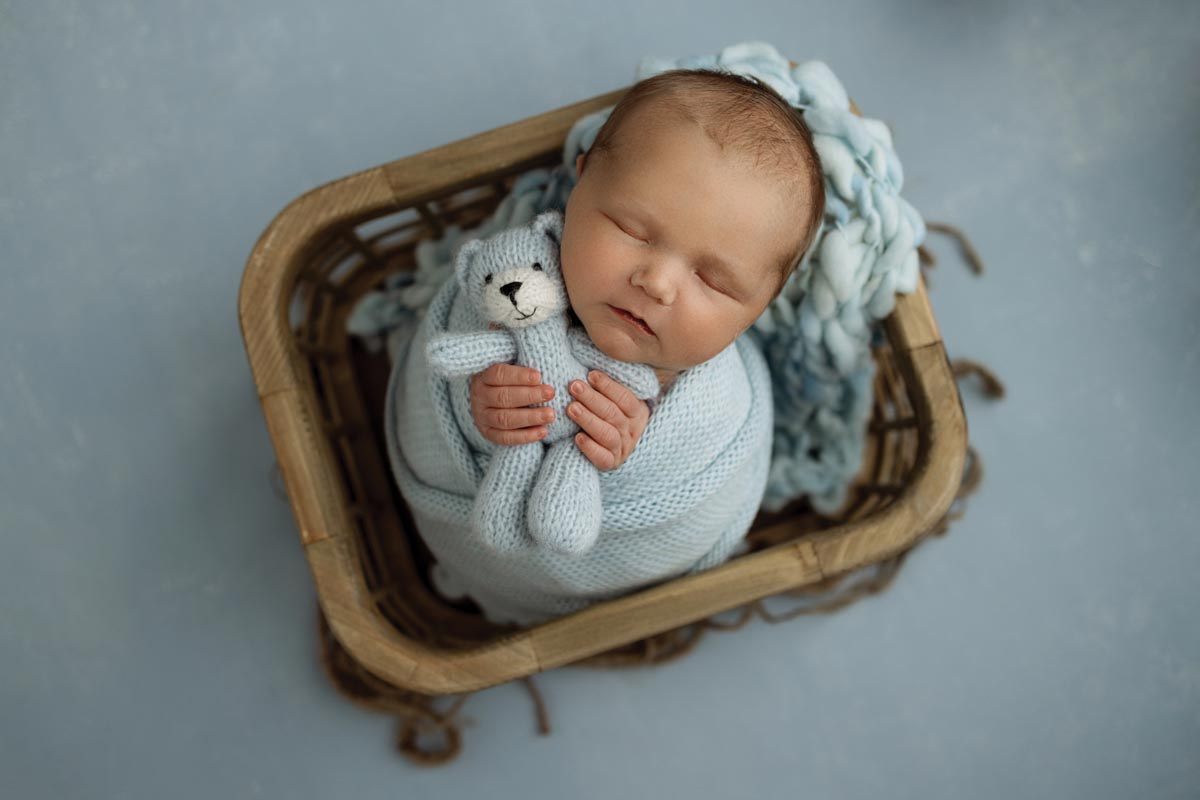
Despite an infatuation with “photographing anything and everything” since childhood, Lisa Cory says becoming a professional photographer was more accident than plan. With a bachelor’s degree in nursing, Cory spent over a decade working in emergency and operating rooms. But when her twins were born prematurely, Cory was unable to immediately return to work.
“My oldest was two and the twins were newborns, and one of the ways I was working through it all was to set up photo shoots with them practically every day,” she says. “Ever since I was a child, I just wanted to document everything, and so it continued onward when I had the twins.” In need of family support, Cory and her husband moved from Columbus, Ohio, to the smaller town of Findlay, where she is still based. “My intentions were to get acclimated after the move and then go back to work,” says Cory.
Friends noticed her portraits of her children and began asking if she’d make their own families’ portraits. Cory thought family portraiture could help her decide if she wanted to pivot to a photography career, but, she says, she was hesitant to pursue newborn photography because newborns are so fragile. But then a woman she knew asked Cory to photograph her newborn, who had Down syndrome. Suddenly, Cory’s nursing background kicked into gear, as well as her artful eye. That session marked Cory’s transition from nurse and sometimes family photographer to enthusiastic newborn photographer. “I realized that this was now my thing,” she says. “I just absolutely loved it.”

SAFETY FIRST
Cory wanted to make sure she approached every newborn session with safety in mind. She took newborn photography safety classes, attended workshops, and completed the Accredited Professional Newborn Photographers International (APNPI) program to become Newborn Safety Certified. She is also a National Association of Professional Child Photographers (NAPCP) Master Newborn Photographer and newborn photography safety educator. “A baby is a family’s greatest joy, and I want to make sure I’m doing everything correctly and as safely as possible,” Cory says. “I had my nursing background, but I wanted to learn about safety from a photography perspective and find out the safest way to pose babies, what not to do, and what to look out for.”
At each photo session, before picking up her camera, Cory performs a quick assessment of the baby’s arm, leg, and hip mobility. For example, some newborns have hip or shoulder tightness from being in utero, she explains, and if she finds any restriction, she avoids poses that will potentially cause discomfort. “I never promise or guarantee any poses because it’s all up to the baby,” she says she tells parents.
LET THE BABY LEAD
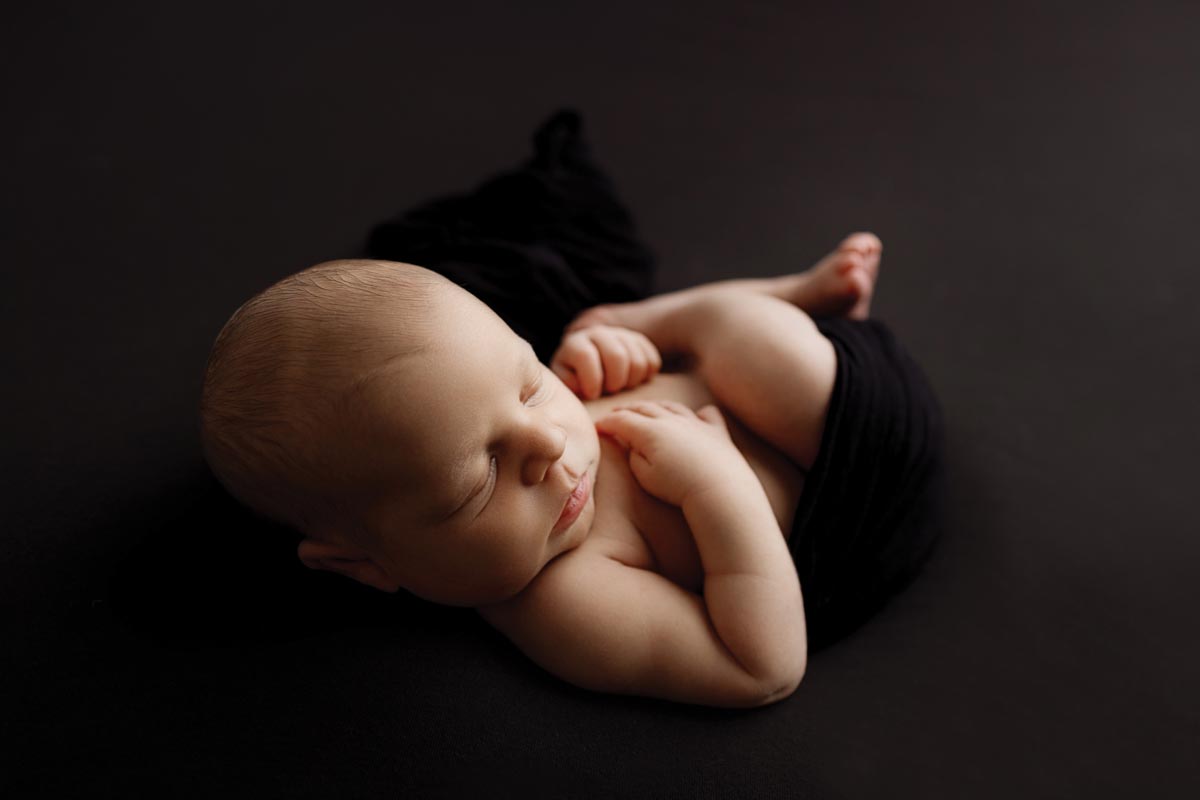
Because babies do everything on their own timetable and every baby is different, Cory says a big part of her job is to be flexible and adapt to an infant’s changing whims. If a baby isn’t feeling well, she tells the parents that the baby’s health is more important than a photo session and advises rescheduling. If a baby’s nose is clogged, for example, it’s almost impossible to coax the baby into a comfortable pose, and the session is an exercise in frustration for everyone. Even if a baby is in perfect health, it still can be hard to accomplish certain poses. Cory finds that some babies happily do anything, and others have trouble with numerous poses for no obvious reason, such as being on their bellies.
“Babies always tell you what they’ll tolerate, and I always follow their lead,” Cory says. “I will tell a mom that I just can’t work through certain poses because I don’t want to compromise the baby’s wellbeing. You can tell when a baby just needs to settle into a pose versus being truly uncomfortable by how they squirm and move.”
SET EVERYONE UP FOR SUCCESS
Cory likes to plan sessions well in advance. For newborn sessions, she prefers families book while the woman is still pregnant and then let her know within the first two days of the baby’s birth. Ideally, Cory can then schedule the session within the baby’s first eight to 14 days of life. Immediately after that booking, Cory sends out a prep guide and questionnaire, where parents can choose fabric colors and props, and request any special posing. When young siblings with short attention spans are involved, Cory structures the session so the entire family is photographed first and then individual sibling setups, so that a parent or another caregiver can leave with the older children and the other parent and baby can work through the remaining poses. Cory also has a closed-off space in her studio for older siblings and caregivers to wait out the session if they can’t physically leave. “That way, everyone can relax,” she says.
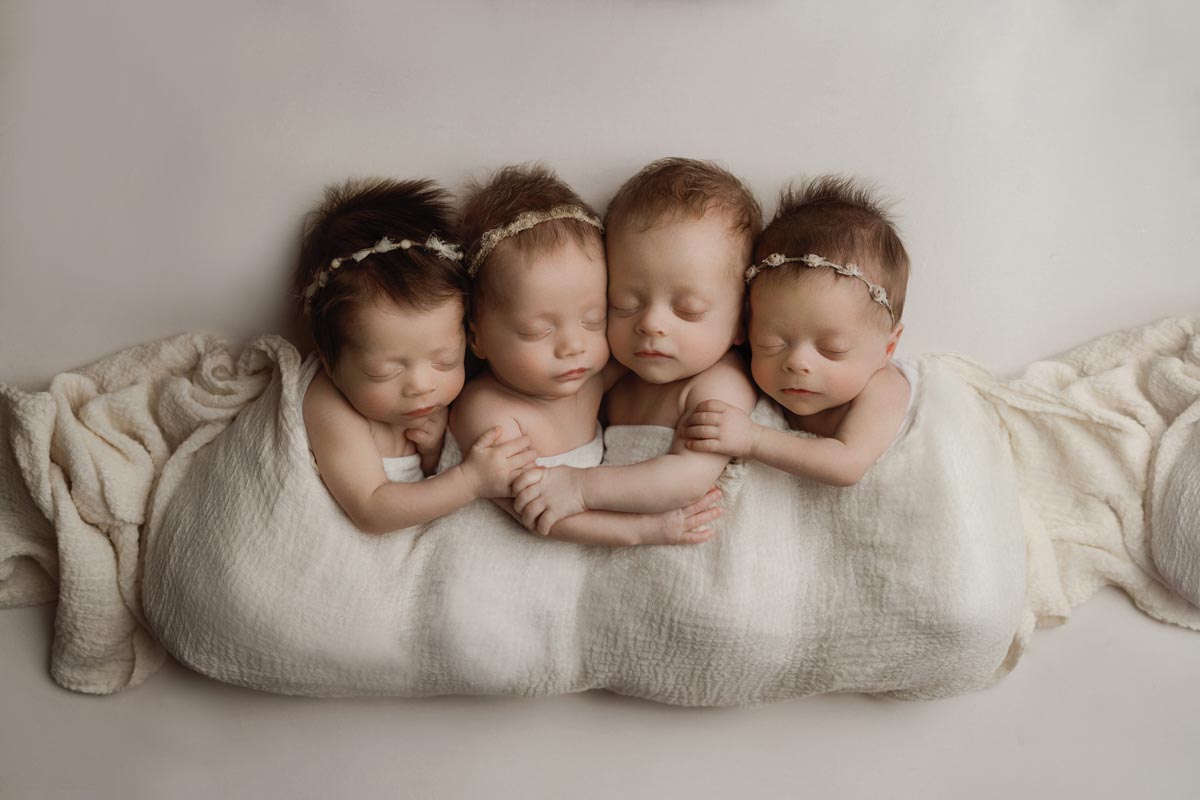
While newborns often seem to sleep blissfully unaware of their surroundings, the right atmosphere makes all the difference in how they handle the session, according to Cory. She keeps her studio at a toasty 77 degrees and keeps all the lights off except for her modeling light to create a dim, calming environment. She also keeps a Baby Shusher sound machine running in the background and spa music playing at a low volume. She encourages parents to try to keep the baby stimulated and awake as long as possible before the session. Then, a quick feeding and the soothing atmosphere of Cory’s studio usually make for a sleepy baby who is easily poseable during the session. That’s when the magic can happen, such as when all the study, preparation, and precautions pay off, resulting in a special image of fragile quadruplets and a prestigious photography award. “You really can’t call this a job when you love it so much,” Cory says. “It really is amazing.”
Stephanie Boozer is a writer in Charleston, South Carolina.
Tags: newborn photography