
Superior Design: Profoto B20 and B30
Profoto lives up to its reputation for quality lighting with these monolights
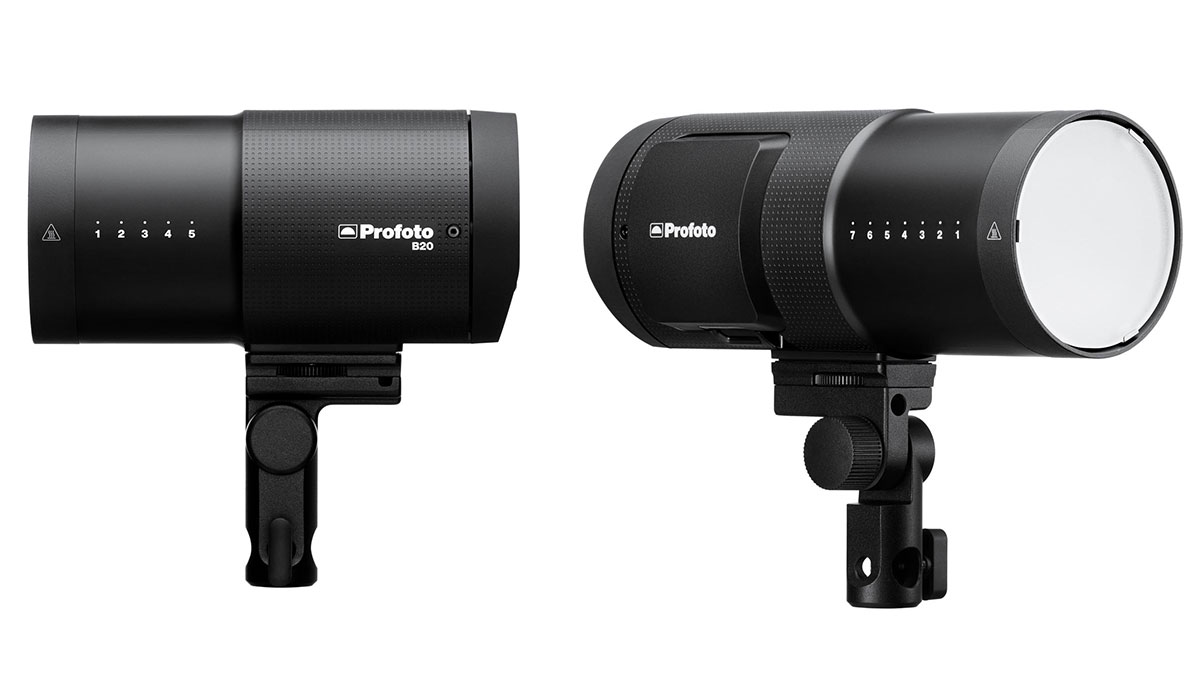
The new Profoto B20 and B30 flashes are designed essentially the same, differing only in maximum and minimum output. The B20 power range covers 250 wattseconds to 0.25 watt-seconds; the B30 is a 500-0.5Ws flash. These power-range differences also affect flash duration and recycle times between flashes. Both use the same removable Profoto Li-ion 4S1P battery. The maximum number of full-power flashes, size, weight, and price also differ.
I appreciate Profoto lights for their excellent light quality, especially for portraits, and their user-friendly design. Their approach follows the tenets of modern design: clean lines; intentional, clutter-free use of space; and a clear, minimalist layout of information and controls. With Profoto, form follows function in every detail. The way light modifiers attach, the battery latch, the controls, and the tilting stand/umbrella mount all embody intuitive design that assures fast, safe, and robust use.
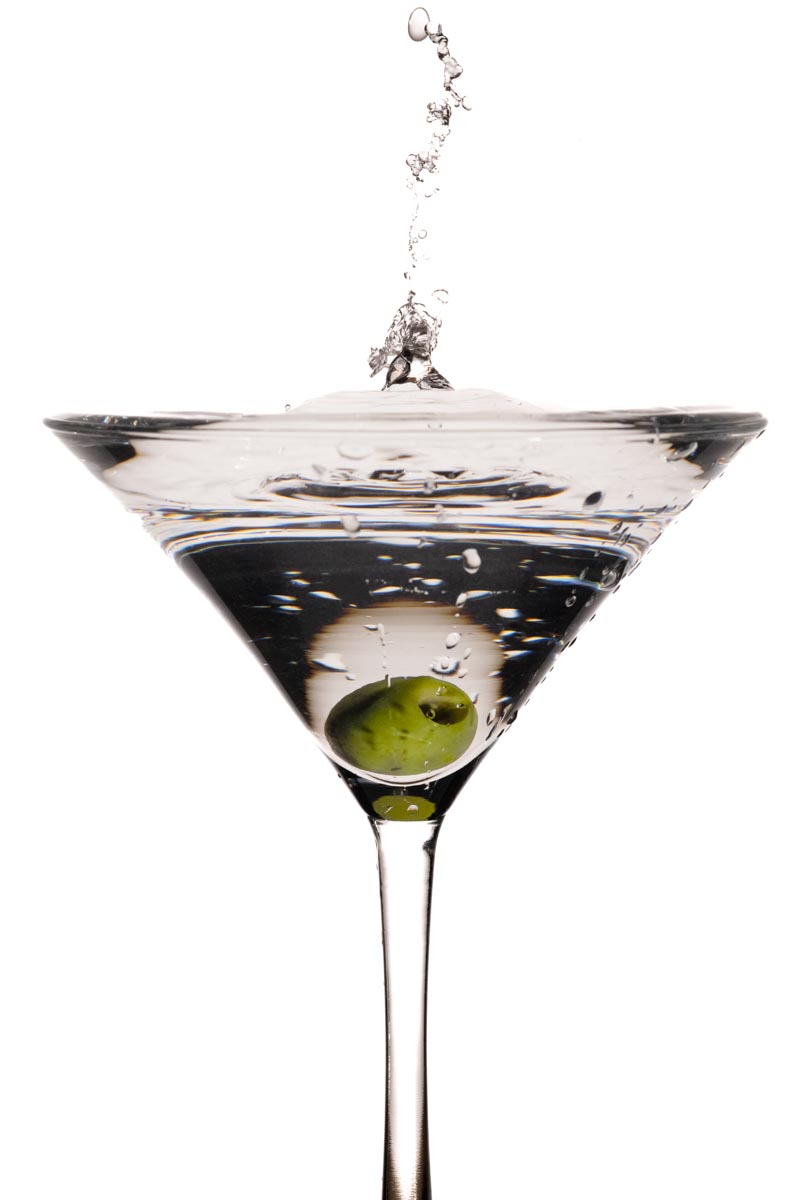
Using a Miops Splash Pro kit to sync the camera with the droplets, I froze the splash with the Profoto in freeze mode at power level 5 and t/0.1 flash duration of 1/6,800 second.
Let’s first look at the detachable OCF Stand Adapter, to show the thought Profoto engineers have put into making a superior product. Unlike every other flash manufacturer I know, the bolt that locks the mount to a standard 5/8-inch baby pin has an end-stop that prevents it from separating from the mount. If you have ever found yourself digging through a case looking for that missing bolt, you will be relieved to know it can’t go missing with the B20 and B30.
The tilt pivot has three stages: fully locked, fully loose, and an intermediate stage. The low-profile gearing in the joint engages right before it is fully locked. This gearing makes head angling more precise and lets you know by feel that it is not quite fully locked and could still slip. One last detail for the stand mount: the long umbrella shaft tube. Short of those integrated into a flash’s body, this is the longest umbrella tube I’ve seen on a light stand mount.
The back of the Profoto B20 and B30 is mostly occupied by a large, easy-to-read LCD display, with two multifunction knobs and an on/off button below the display. When using flash only, the information panel features a white-on-black alphanumeric display, which is easy to read even in bright sunlight. Beneath that are two knobs and the on/off switch. The smaller knob on the left controls the 40-watt bi-color LED. Push it to turn it on or off, rotate it to set the brightness, or press-hold and rotate to set the color temperature over its 2,800K-7,000K range. These values are indicated on bar graphs. The middle knob is larger and rotating its outer portion controls flash output in 1/10-stop increments over the 500Ws to 0.5Ws range. Press and rotate the outer portion to change output in full-stop increments. Tap and release the center knob to make the eight-item function menu appear. The menu options for each of these items are shallow and clearly described.

For this self-portrait, I fitted the Profoto B20 with a Plume Wafer 75 soft box and used the Profoto Control app to sync the flash to an iPhone 14 Pro front camera on a tripod.
There’s one more trick to the information display for those who hang a light from a boom or a ceiling track. As far as I know, Profoto is the only company to offer a display that can flip so it reads correctly when upside down. To access this, scroll down to the General options menu and choose Display Orientation. Press the center button once more to choose Auto, Normal, or Reversed.
The cylindrical shape of the B20 and B30 is designed to work with both Profoto OFC and standard Profoto light shapers and soft box speedrings/adapters. Compared to Bowens-S and Broncolor bayonets, or the Balcar/Buff sprung finger-type mounts, the design and mechanics of the Profoto mounts make them the platinum standard for security and versatility in attaching rigid metal and parabolic light reflectors, beauty dishes, and soft boxes to a light.
The B20 and B30 have three flash modes: Eco, Boost, and Freeze. Eco mode delivers consistent color from top to bottom across the power range and a short flash duration. Boost provides the same color consistency with a slight increase in output at all but full power. This is somewhat analogous to pushing a computer processor beyond its rated speed and, according to Profoto, comes at the cost of shortening component lifespan. In my experience, the Boost setting did not provide a noticeable benefit. Freeze mode shortens flash duration. Use Freeze mode when you need even shorter flash duration at all settings below full. However, by restricting the flash duration to the leading part of the power release curve, the color temperature becomes bluer as power decreases, rising from 6,000K at full power to 9,000K at minimum power.

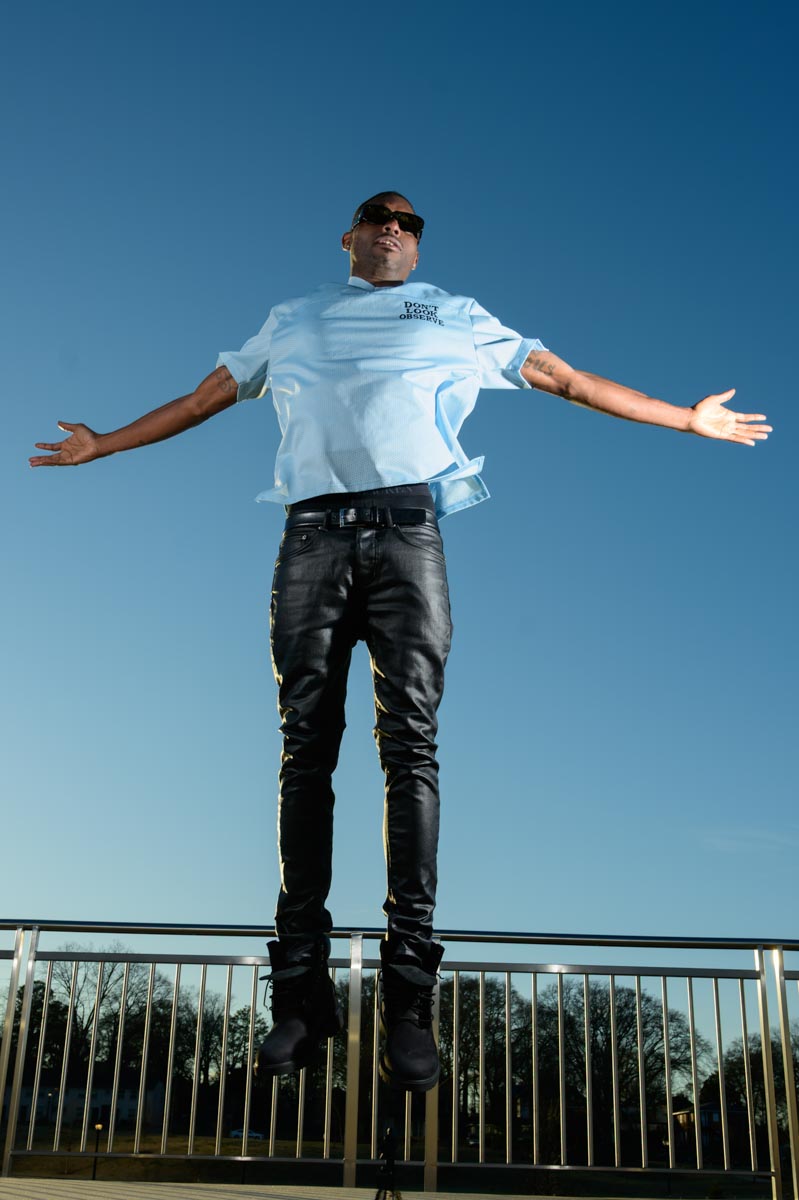
I lit this portrait of entrepreneur and musician D'Angelo (aka) DLO with a Profoto B30 fitted with a 45" white umbrella as the key light and a bare Profoto B20 from camera right for fill.
The B20 and B30, like other recent Profoto lights, use the AirX wireless control system. Other compatible lights include the A10 Speedlight, D30, Pro D3, B10, B10X Plus, and four new LED models: three CoB lights for full-size Profoto modifiers (600-watt RGBWWW L600C, 600-watt 5,600K L600D, and 1600-watt 5,600K L1,600D) and the RGBWW 2,000-watt ProPanel 3X2. For this review, I used the Nikon model of the Connect Pro trigger. The Connect Pro offers 100 channels, six groups per channel, 2.4GHz frequency, and a 330-foot range (ideal conditions). It worked flawlessly for me, both indoors and out.
With my Nikon Z cameras, TTL and manual control of the B20 and B30 via the Connect Pro, whether used together or separately, was consistent and accurate in varying conditions. Profoto also has two Bluetooth-connected apps for Android and Apple: Profoto Control and Profoto Camera.
The Profoto Control app lets you remotely control all settings on individual AirX system lights and take over the controls of Profoto Connect Pro remotes when the camera is not in your hands.
For hybrid shooters and content creators, the Profoto Camera app enables flash use with your phone’s camera. If the workflow fits your needs and your clients’ expectations, this approach offers significant potential for specific applications.
Profoto continues its legacy of thoughtful, quality design for working photographers with the B20 and B30, priced at $1,995 and $2,395 respectively, but likely available for less. It’s among the more expensive brands, but once you use Profoto lights, you’ll see why many top photographers remain loyal customers.
Ellis Vener is a commercial and portrait photographer in Atlanta.