
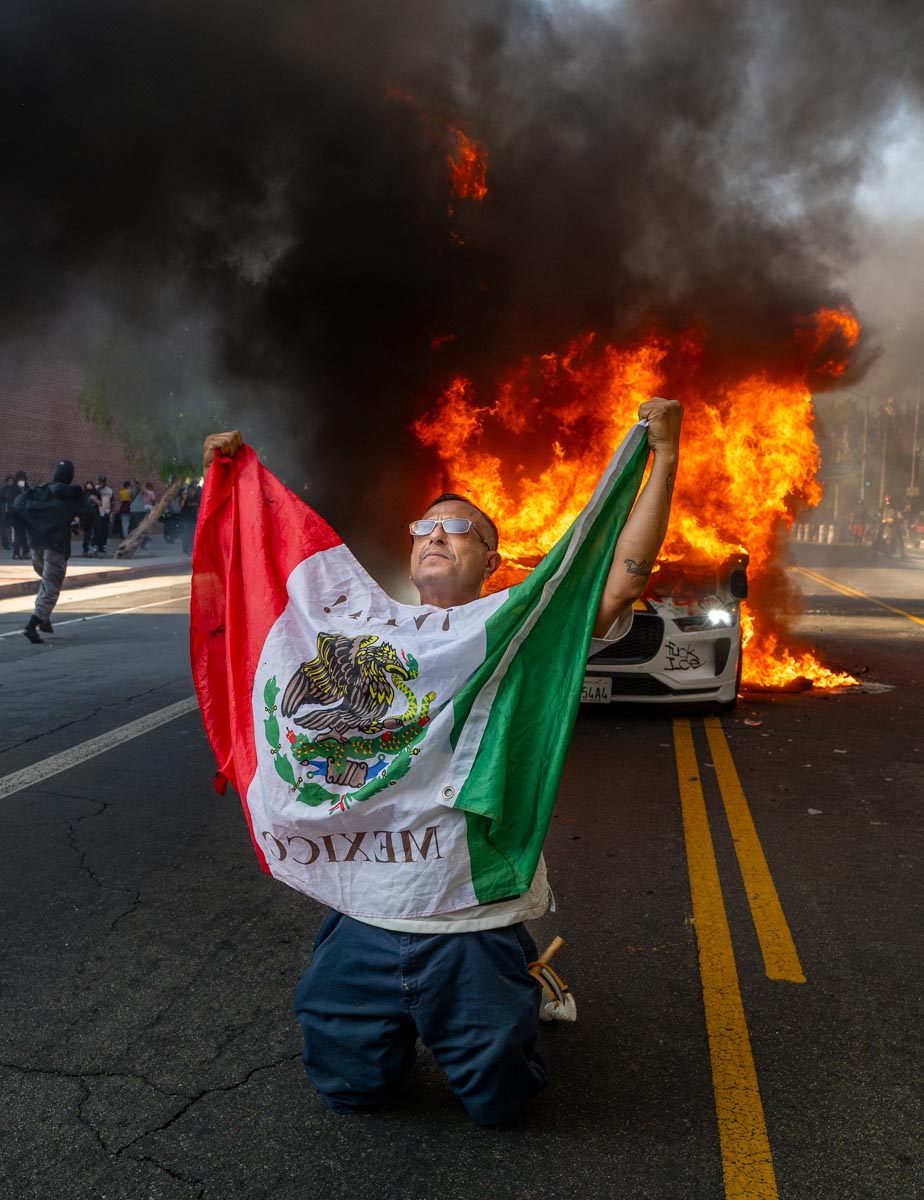
Conflicts and natural disasters are, for the foreseeable future, unfortunate realities. Knowing how to navigate in potentially dangerous environments means not only making photographs that convey the gravity of the situation, but more important, getting out alive. If you are compelled to dip into photojournalism and reportage, you will want to be prepared.
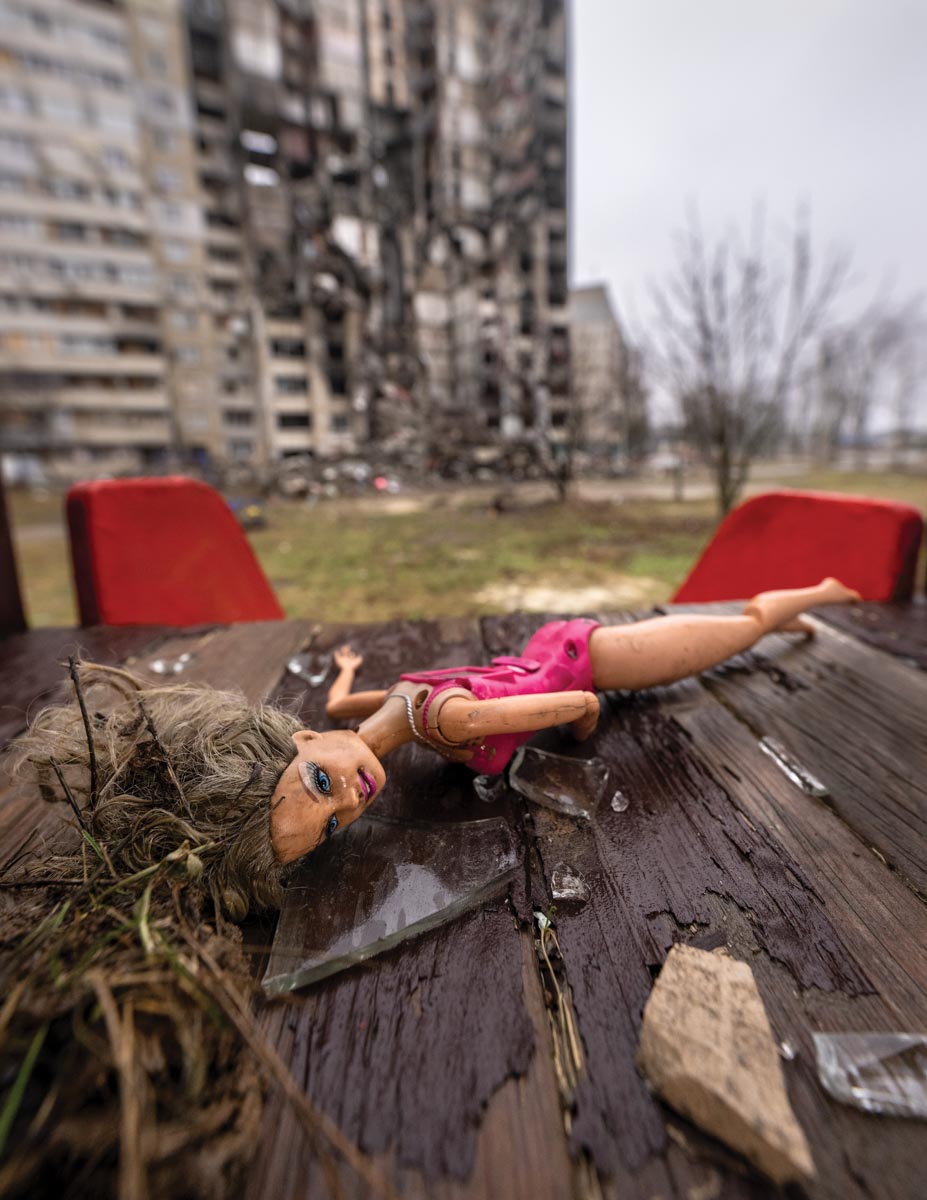
Kharkiv, Ukraine, December 2022
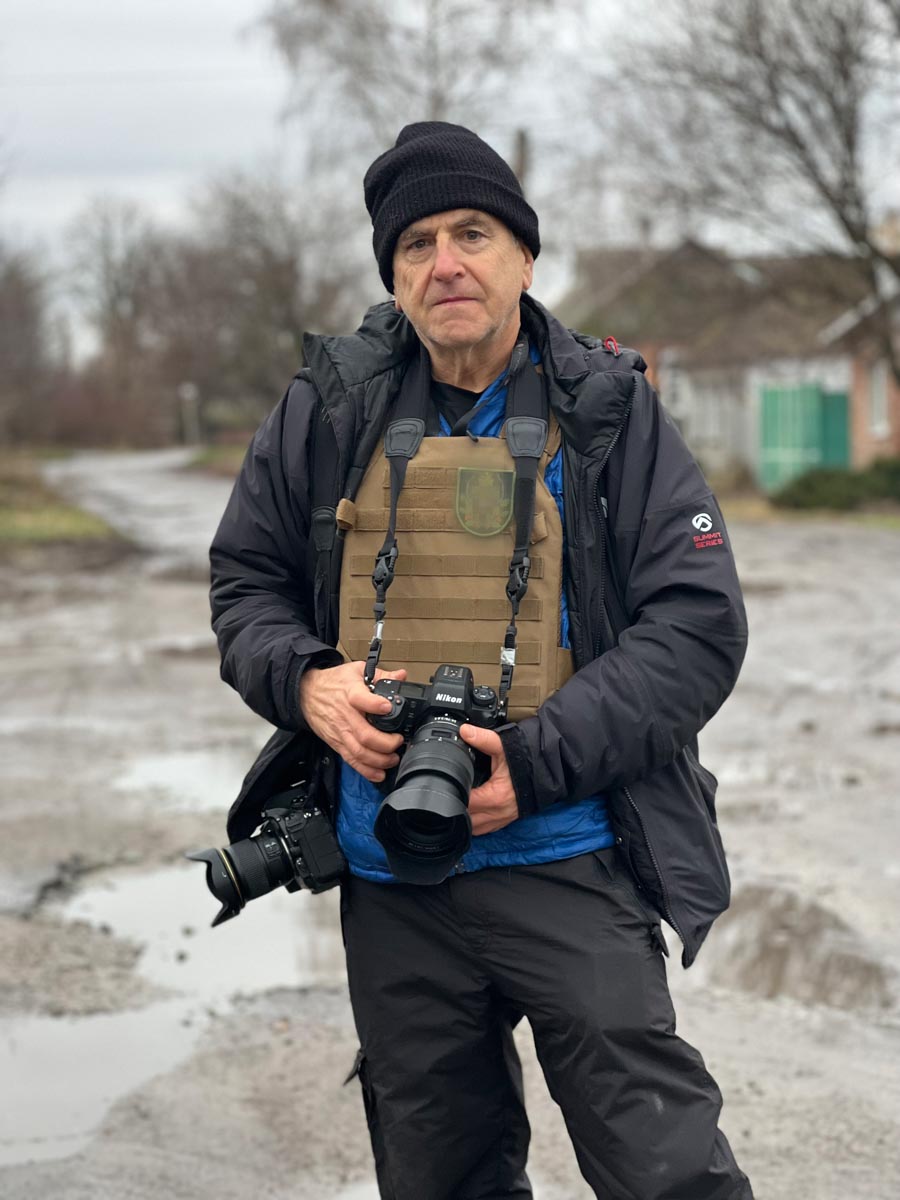
Mark Edward Harris in Vovchansk, a city in Kharkiv Oblast, Ukraine
1. Have (or obtain) the proper credentials.
If a fire happens in a building or on your street and you capture images of it, you’ve practiced reportage photography. You can start a relationship with a local news organization by photographing news in your community. Contact a local news outlet to see if they will pay for or at least give you credit for showing your photos. However, if you want to visit an area of war or conflict, or that has been impacted by a natural disaster, you will need press or media credentials to enter otherwise prohibited areas. To obtain those credentials, you’ll need proof you are a photojournalist, which includes a formal assignment from a news outlet such as a newspaper or online news service.
Since I am based in Los Angeles, I have an LAPD-issued credential that allows me to cross police and fire lines. While I can show it in other cities and countries, I take the chance that officials there might not recognize it as valid. I also frequently photograph for an online news agency and have credentials for those assignments. For a recent project photographing war refugees in Ukraine, the country required further documentation. I filled out the online paperwork, digitally submitted the requested documents (including my passport photo page, a passport photo, and a news agency assignment letter), and received my credential in about a week. Without it, my movements near the frontlines would have been highly restricted or completely denied. When in those dangerous areas, it’s important to play by the rules. If anyone in charge asks to see your credentials, show them. It’s for your safety as well as everyone else’s.
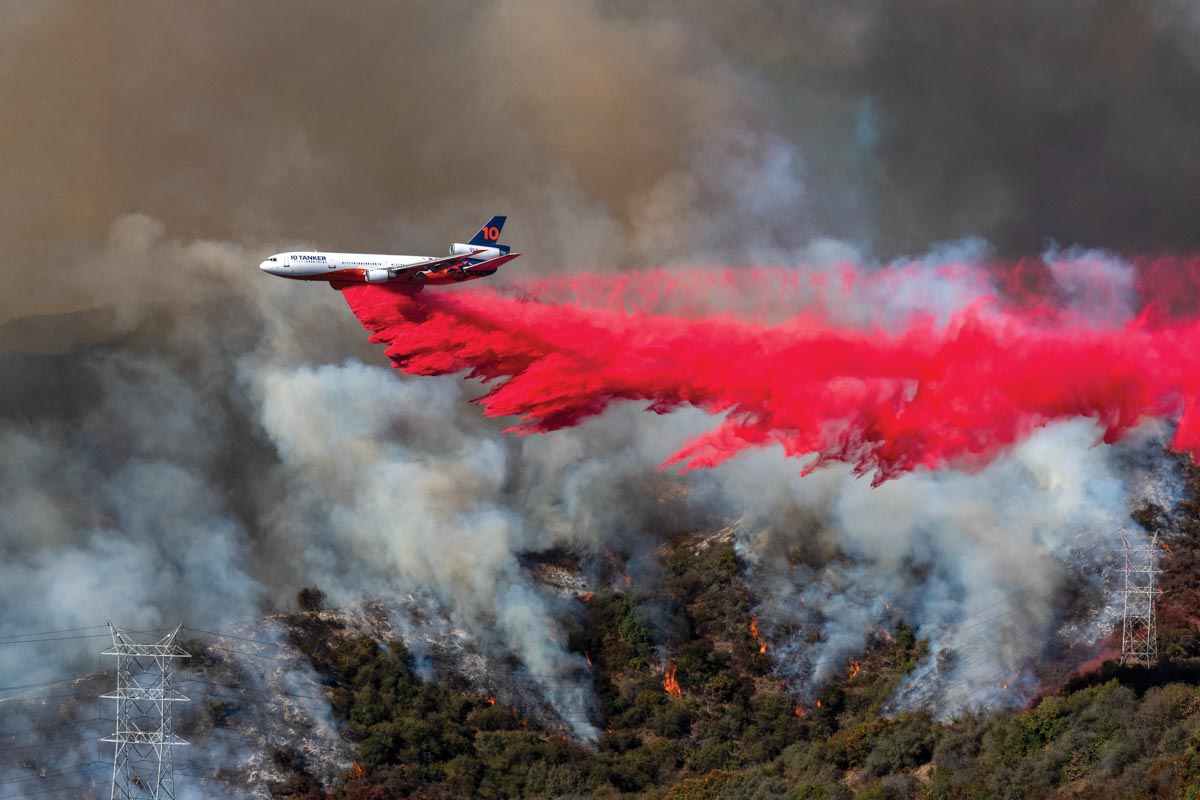
Palisades Fire, Los Angeles County, January 2025
2. Download relevant apps.
In some situations, apps are useful in conflict and disaster zones. For example, an air raid alert app in Ukraine shared advance warnings of missile and drone attacks. Through the app, I could choose the city or region I was in to receive localized warnings. No need to be alerted to an attack on Kyiv when I was working in Dnipro. Closer to home, the wildfire tracking app Watch Duty was my constant companion while covering the devastating Southern California wildfires in January 2025.
3. Dress appropriately.
What you wear can at times be lifesaving. Many photographers who cover protests carry gas masks and helmets. Body armor for conflict zones, fire-retardant clothing that meets National Fire Protection Association standards for covering infernos, and a hazmat suit for toxic environments all have their places in the reportage arena. The only time I donned a hazmat suit was when I was working near the Fukushima Daiichi Nuclear Power Plant covering the aftermath of the devastating March 11, 2011 tsunami on the northeastern coast of Japan. For that assignment, I also took potassium iodide tablets to protect my thyroid gland from absorbing radioactive iodine.
Gloves, such as those made by The Heat Company, can be helpful in frigid conditions. Their heat layer system combines a selection of inner liner gloves with a shell mitten. During pauses in your photography, you can use its polar hood pullover mitten. Because I did not have the proper gloves, I suffered frostbite while covering skiing at the 2022 Winter Olympics in China, an experience I don’t want to repeat. The Heat Company also makes insole foot warmers that work for up to eight hours.
For both my documentary and travel assignment work, I often wear ClothingArts Pick-Pocket Proof Convertible TravelPants with 11 multi-secure pockets. Travelers in war and peace can be targets for pickpockets. Even without the fear of sticky fingers, it is easy to lose important items in unsecured pockets. The extra pockets are also great to have for small camera accessories.
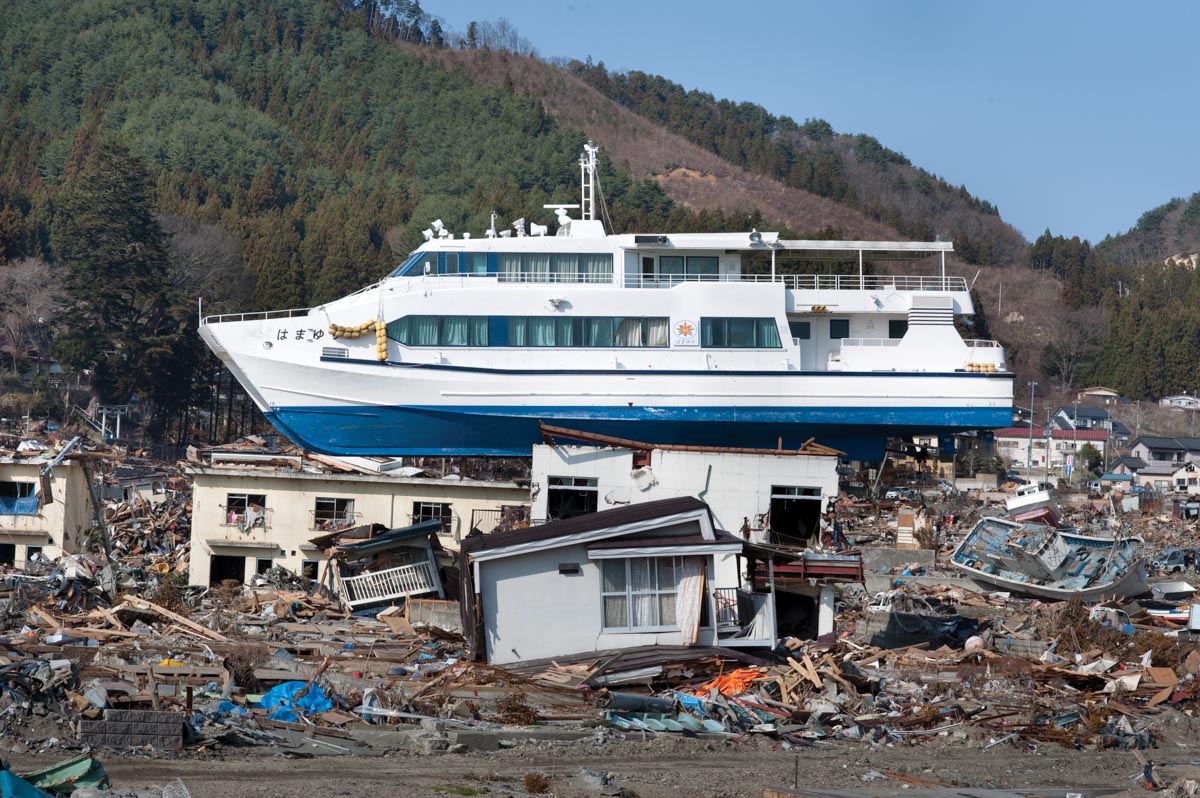
The town of Ōtsuchi in the Iwate Prefecture, Japan, April 2011
4. Bring the right gear.
In terms of photographic equipment, nimbleness is key. To cover the ICE protest that turned violent in Los Angeles in June 2025, I opted to shed my camera backpack and carry a Nikon Z 8 with a Nikkor Z 24-70mm f/2.8 and a Nikon Z 9 with a Nikkor Z 14-24mm f/2.8 over my shoulders. Around my waist I had a Think Tank PressPass Sling Bag (which can also be used in a sling position) with a Nikkor Z 80-200mm f/2.8 in its main compartment, with extra batteries and a cleaning cloth in the front pocket. I use Delkin Black series cards for their dependability, and the 1.4 TB card can record more than 92,500 48-megapixel resolution files, so I only need to carry a couple at a time.
On the road, I’ll transport my equipment in a Think Tank Walker Pro Rolling Backpack, Think Tank Airport Security, Think Tank Airport Advantage XT, or a MindShift FirstLight 40L Backpack and leave the bag in the hotel before going into the field. For the recent Ukraine trip near the front lines of the conflict with Russia, I brought a Westcott 20" Collapsible 5-in-1 reflector and a demure but powerful amaran Ace 25x Bi-Color LED Light Panel. The light panel’s color temperature range of 2,300K-6,500K allowed me to fine tune color temperatures to match the ambient light. In photojournalism, you are not allowed to make significant color corrections in post, especially to just sections of an image.
5. Check your mindset.
When covering volatile situations, I try to maintain a constant awareness of the environment and sensitivity to those inhabiting it. People in conflict and disaster conditions are often experiencing powerful emotions, and a photographer must decide how to interact with the subjects they encounter. I prefer the Humanist social documentary approach to photography that emerged in the mid-20th century after the upheaval of two world wars. This philosophy focuses more on the broad human experience than on a specific news event. At the same time, I agree with Robert Capa’s statement: “If your pictures aren’t good enough, you’re not close enough.” I think the two can coexist. W. Gene Smith’s powerful photo essays including “Spanish Village,” “Country Doctor,” and “Minamata,” as well as his World War II coverage in the Pacific, serve as classic examples that I try to emulate. •
Mark Edward Harris is an award-winning photographer and writer based in Los Angeles.
Tags: gear tips & tricks