
Protecting a Photographer’s Livelihood
Software helps prevent screenshot theft
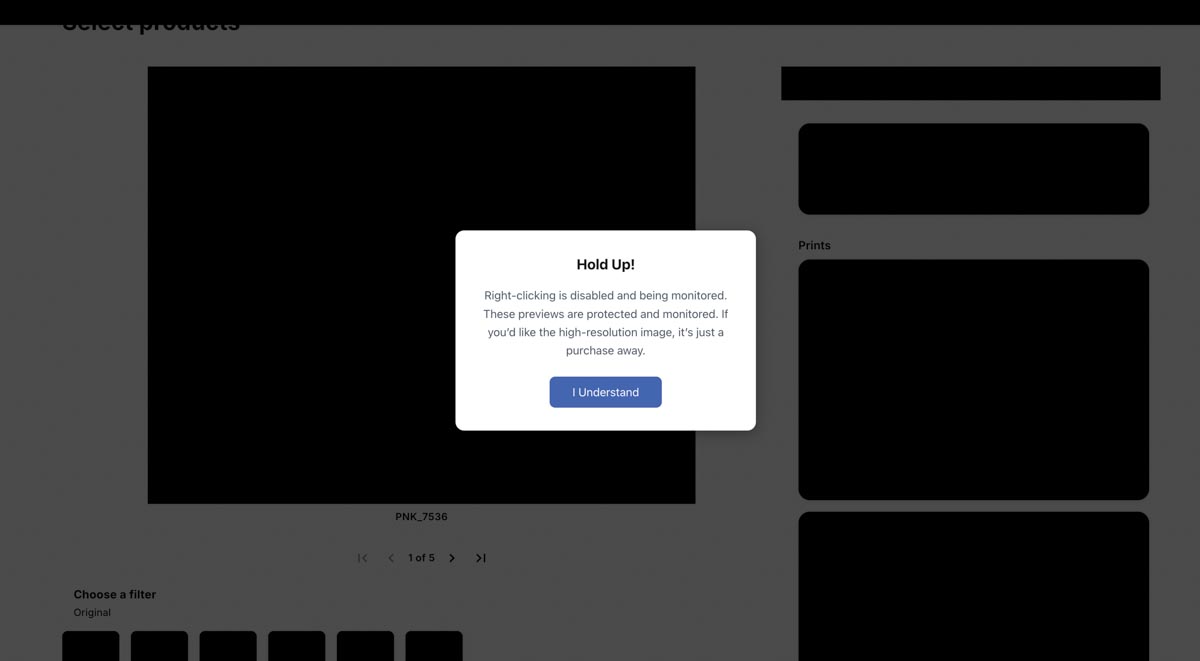
It’s becoming more of a common occurrence for high-volume photographers: Clients take screenshots of their images, even with watermarks on them, and share with others without paying for packages. Some clients are well-intentioned and some may be trying to get away without paying, but either way, it’s a copyright violation, and it’s theft. Carl Bott, volume photographer and owner of Legacy Photo Company in Nashville, Tennessee, is working to raise awareness of and prevent screenshotting.
“There’s honest people that are doing it that just truthfully don’t understand and don’t know that that’s the theft,” he tells “Professional Photographer” podcast host Pat Miller during the filming of the episode, “How to Protect Your Photography from Screenshot Theft” at Imaging USA 2026 in Nashville. “But, you know, there’s some that just don’t care. And so that’s really the battle on a volume side that we’re running into. … It’s one of those issues that we can’t wait until it becomes a major issue because at that point, it’s too late.”

With some 100,000 kids registered as clients this year, Bott uses the high-volume photography platform GotPhoto to support his workflow and business. It has become almost normalized for some sports, dance studio, and school clients to pay a small amount to an AI or overseas company to remove watermarks rather than pay the photographer for a legal download, he explains. “This is theft because it’s kind of like the music industry, where people were downloading music illegally. You had a lot of honest people that were doing it just because everybody else was. And so it became a social norm. It became OK to do and people just didn’t understand the impact it was making on these artists,” Bott says. “It’s hard enough being in the creative realm, so this is just adding a whole other level of difficulty to the jobs that we do and how we support our families.”
Before Bott started sharing digital proofs with clients and offered only paper prepay order forms, he would make about $22 per order, he explains. Today, it is more common for volume photographers to share digital proofs, and Bott says doing so has taken him to an average of about $55 per order. Does that $30+ increase in sales offset the theft that is happening? Bott says currently it does, “but, again, a couple years from now, as this [screenshotting] becomes a trend, I think that goes away completely.”
Bott created a software, SnapShield, which allows users to embed a code to combat screenshot theft. For photographers with this protection, if someone attempts a screenshot of one of their images, the image either blacks out or half of it blurs. The program also offers a customizable consent page for clients to sign ahead of seeing their proofs. “So, you can say something along the lines of, ‘Just to let you know, screenshotting is a copyright issue. We feed our families this way,’ you know, however you want to label it,” Bott explains. “Then they actually have to consent to that before they ever see their images. … The [clients] that are kind of on the fence … there’s that little piece of guilt that hopefully keeps them honest.”
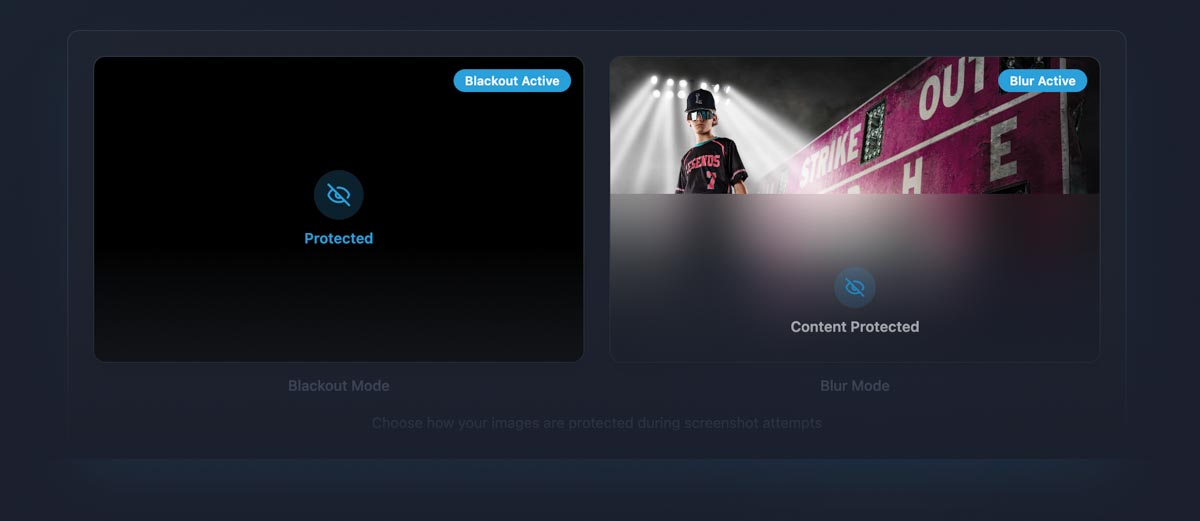
The program then sends a notification to the photographer, with the access code and the IP address of that client, that a screenshot was attempted. The photographer can then remove the online images for that specific client, confront the client (politely, of course), and say that they will send them a paper form to pay for their images. “It puts the photographers back on the offensive side versus waiting for [stolen images] to show up in a Facebook group where they’re doing watermark removal, and then all of a sudden we’re trying to chase these people when the work’s already been done,” Bott tells Miller, adding that though watermarks are still important, even with SnapShield, “we have to get to the point where we’re starting to protect and prevent these screenshots from happening to begin with.”
Bott’s company also doubles down in its terms and conditions language: If a client is caught attempting to screenshot images, they must pay double. For example, the cost for a full download of all sports images for a client is $99, he explains. Clients attempting to screenshot get sent an invoice for $198, due in 15 days. “You got caught, right? No harm, no foul. We’re not going to mark your account,” he says. “If you don’t pay the invoice, then we’re going to proceed and say, ‘Hey, look, obviously you’re OK with stealing this.’ So now we need to push this further, and if we need to get an attorney and take this to small claims, then we take it to small claims.” This strong language is unfortunate but necessary, he adds. “I think if we don’t start pushing back on this, we’re allowing it to happen, we’re creating bad behavior, and we’re going to lose our industry, and that’s the terrifying part to me.”
Most clients, once they are educated, are understanding, Bott says, and the software is doing its job for professional photographers. He shares the example of a photographer who caught the director of a school sports program attempting multiple screenshots for multiple students, and the photographer sent the director a bill.
Bott’s goal is to protect photographers’ livelihoods. If just 5% of the 100,000 clients his company is photographing this year attempted to screenshot images instead of pay for them, that is 5,000—a significant number—clients not paying. The blackout screen and the blurred images are deterrents, and the reporting system helps educate consumers and helps the photographers recoup their money, he says. “I think it’s going to make people think twice. It’s going to keep the honest people honest,” he says. “The reporting is really kind of the heart and soul of the platform. That’s what gives us the offensive side to say, ‘Look, I know this is happening.’”
Pricing options are available on the website getsnapshield.com, and Bott’s goal was to keep the software affordable for photographers. And ultimately, the program pays for itself. “If you save four screenshots a year,” he says, “you just paid for the entire program.”
Melanie Lasoff Levs is director of publications.
Tags: volume