
Nikon ZR: Cinema for the People
The Nikon ZR is a compact cinema-grade camera
Wilbur Wright didn’t invent flight in a lab. He first noticed it in the world. A bird banks into the wind, holds itself there, then drops and recovers as if gravity is negotiable. That kind of observation is a human thing: not just seeing but making a connection from what we see to what could be possible. The invention of the airplane wasn’t only a breakthrough in engineering. It was also about paying attention. We’re in an era where creation is being redefined by automation and artificial intelligence. But AI can’t replace the raw human act of being present, watching light shift across a face and seeing intention become reality.
This is why the Nikon ZR matters. Not only because of what it records, but because of what it enables: a cinema-grade workflow in a body small enough to follow real life instead of stage it.
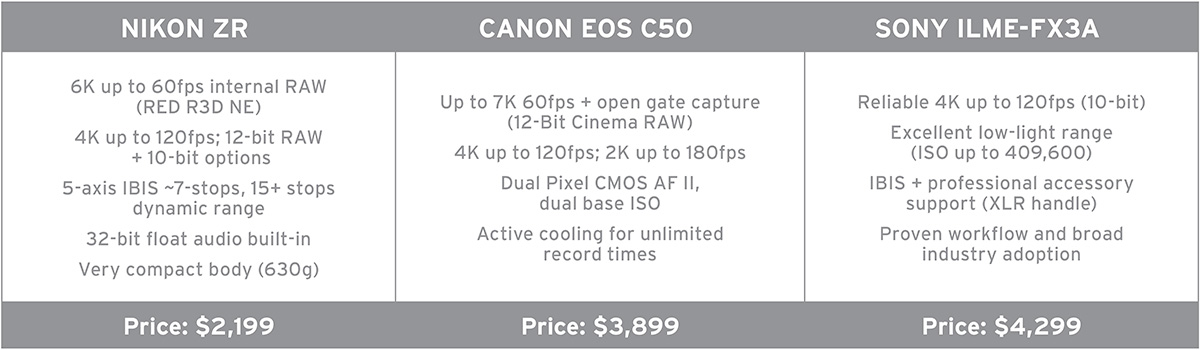
In September 2025, Canon dropped the EOS C50, a compact full-frame cinema body built around internal 7K Cinema RAW recording capability and positioned directly at the small-crew market. Then Nikon answered—almost immediately—with the ZR: a full-frame, pocketable cinema camera, co-developed with RED, priced at $2,199, aimed at the creators who want real cinema files without having to build a larger rig. This shift is driven by the need for human connection. The 2026 Commercial Filmmaking Trend Report by Musicbed advises creators to “keep it human.” “The audience you’re trying to reach is human. They respond to human stories, human faces, and human emotion,” the report states. “No matter how sophisticated your tools become, that fundamental truth doesn’t change.”
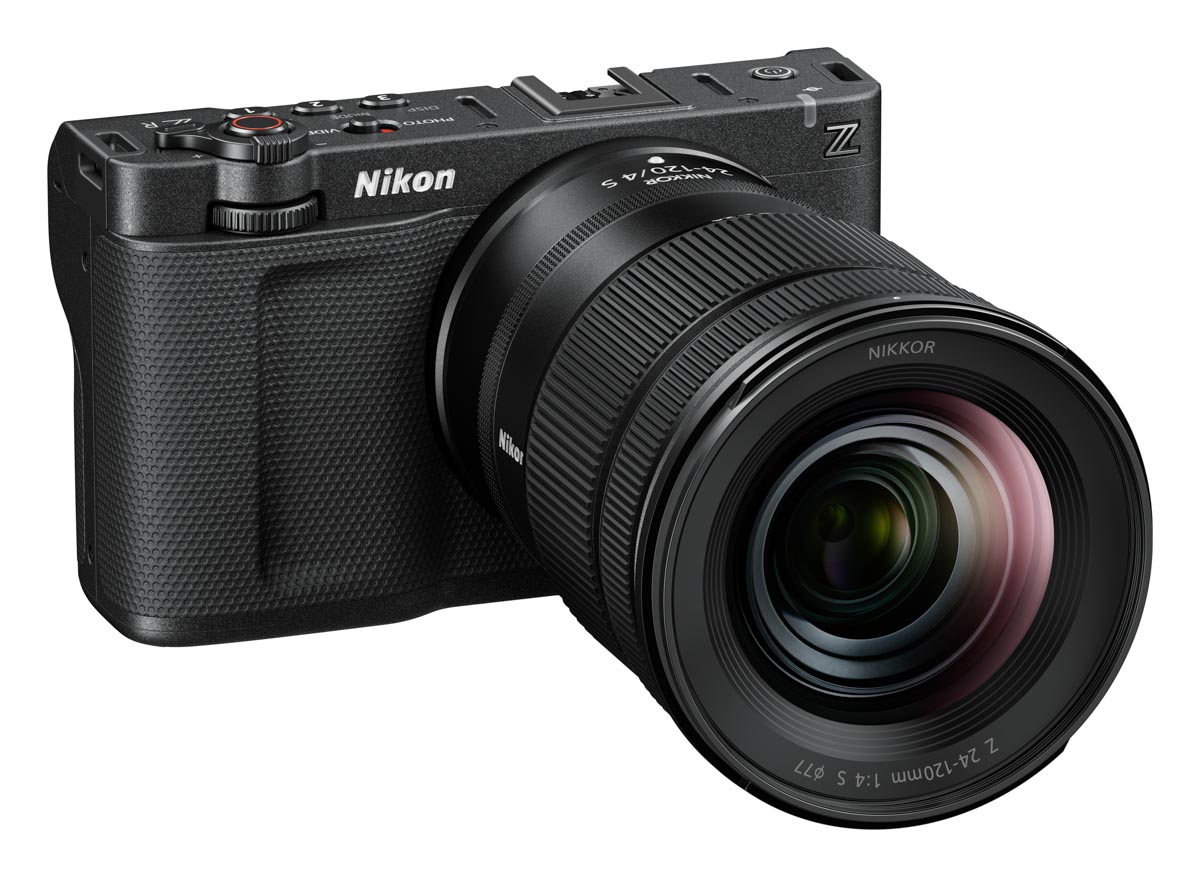
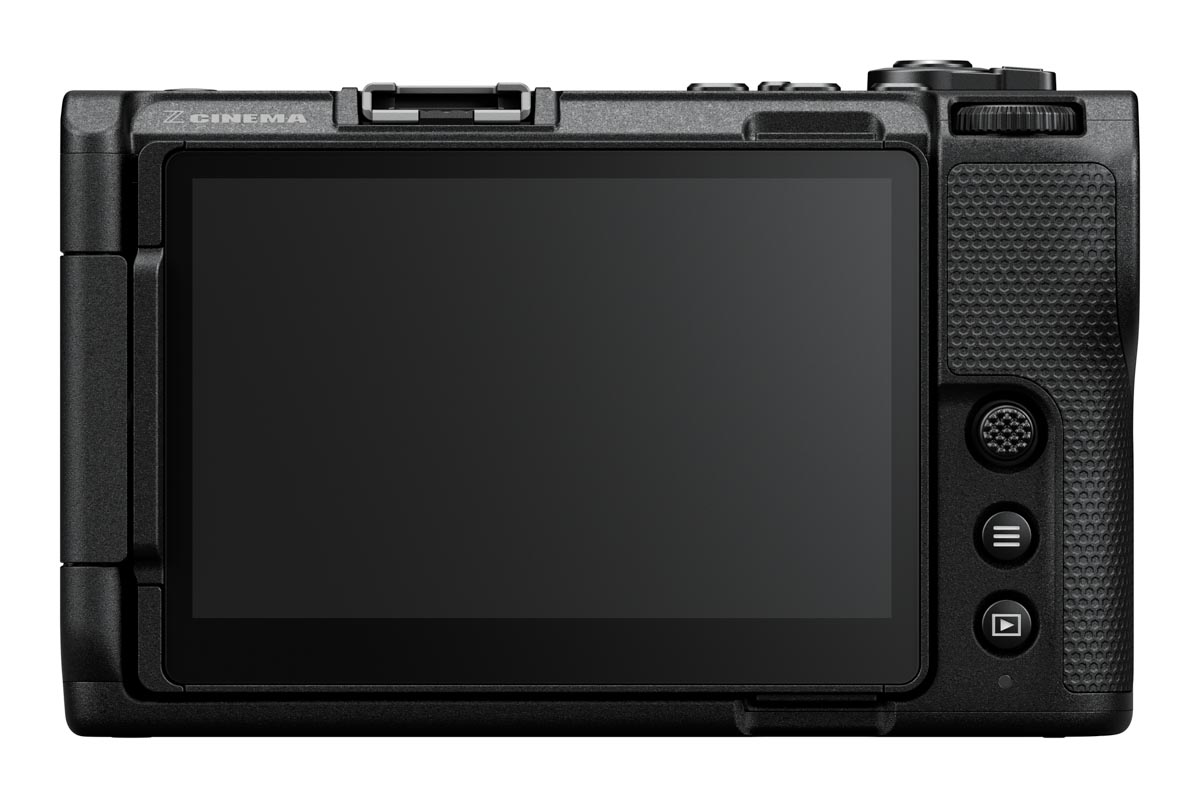
When I asked Mark Cruz, the senior manager of product DCIL for Nikon, what gap Nikon was aiming to fill with the ZR, he said, “With the combined strengths of Nikon and RED technologies, the Nikon ZR was designed as a handheld cinema camera that delivers professional-level results and features at an accessible price point.” Cruz touted its performance and versatility, citing features like 6K/60p recording paired with the new R3D NE RAW video format and RED color science, with 15+ stops of dynamic range and precise color matching. The ZR has a 4-inch DCI-P3 LCD screen, advanced 32-bit float and OZO audio, and up to 7.5 stops of in-body image stabilization. “The introduction of the ZR reinforces Nikon’s commitment to providing innovative tools that empower filmmakers to elevate their videography skills across all levels of experience, fields, styles, and scenarios,” Cruz added.
But the Nikon ZR isn’t just a spec sheet. It’s Nikon enabling creators to work with less friction, a smaller footprint, and a workflow that keeps you in the moment while delivering a cinema-grade file.
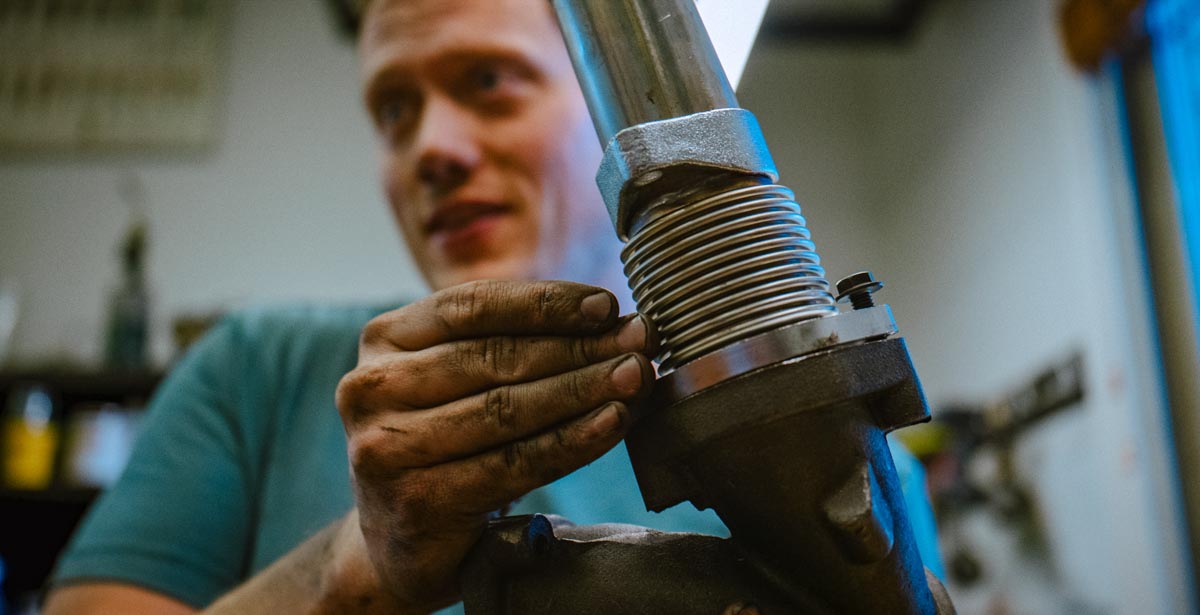
Frame from video
FIRST IMPRESSIONS
The Nikon ZR is technically a cinema camera: It records RED-based RAW, offers a staggering range of resolutions and codecs, and sits comfortably in a professional workflow. And yet, it doesn’t behave like a cinema camera. It doesn’t demand slow, deliberate pushes or perfectly motivated movement. In fact, when I tried to treat it like a traditional cinema body with subtle slides, intentional parallax, and controlled lateral motion, it felt forced. Instead, what I realized in those first few moments is the ZR is Nikon’s response to a noisy world, a silent witness to what’s unfolding. In a world where algorithms push fast cuts and viral content, the ZR asks us to slow down and focus on what matters most: what’s happening right in front of us.
Large cinema cameras announce themselves. They carry weight, physically and psychologically. When you bring a RED body into a space, people feel it. You expect the discipline, the locked-off frames, the calculated movement. With the ZR, those expectations dissolve. Handheld jitters don’t feel like mistakes; they feel human. Small adjustments feel natural, not sloppy.
The Nikon ZR is a camera that happens to be capable of cinema-grade images without demanding cinema-grade behavior. It’s about presence and about standing close enough to life that you can feel its movement. Nikon reinforces that philosophy by refusing to limit the creator. The ZR doesn’t force you into a single “correct” way to shoot. It gives you a spectrum: full HD, 4K, 6K, and a full buffet of codecs, from 8-bit and 10-bit options to ProRes, Nikon RAW, and RED R3D. It’s rare to see a manufacturer open the floodgates this wide, and it’s worth acknowledging that Nikon trusts its users to choose what makes sense for their story.
That said, the ZR isn’t without friction, and some of it feels oddly out of character.
 View Gallery
WORTH NOTING
When you switch the ZR to RED Raw recording, the camera’s system shifts most of its processing power toward handling that raw data. As a result, features like focus peaking and certain autofocus modes don’t respond as they do in standard video modes. Both early users and Nikon itself note this current limitation, though it could change with updates. The microphone jack placement makes full screen articulation awkward with a hot-shoe mic attached, meaning you can’t fully articulate the screen without hitting the mic cord.
When switching between photo and video modes, the camera settings remain the same. For example, if I were filming in manual mode at 6K in Nikon Raw at 50fps, when I switch to stills the shutter speed will be 1/100 second and it will still be in manual mode. It takes an additional step to take stills in aperture priority, which I prefer, and to change the shutter speed and ISO. For some, this may not be a huge deal, but I quickly realized while flying around the Tetons that I lost some opportunities for image capture when I needed those additional seconds to switch settings.
I love what the Nikon ZR offers on the video side and would buy it for the video aspect, but back on the ground, the photographer in me yearned for a viewfinder whenever the camera was in photo mode.
Those are real limitations, and they matter, but it doesn’t ruin the camera.
Frame from video
FIELD TEST
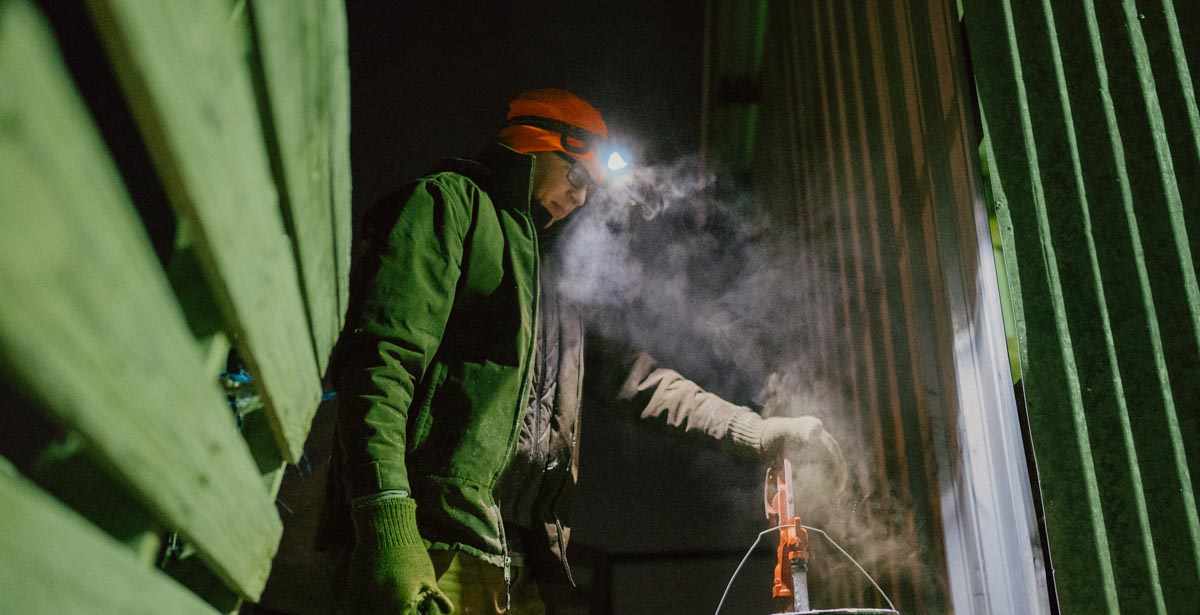
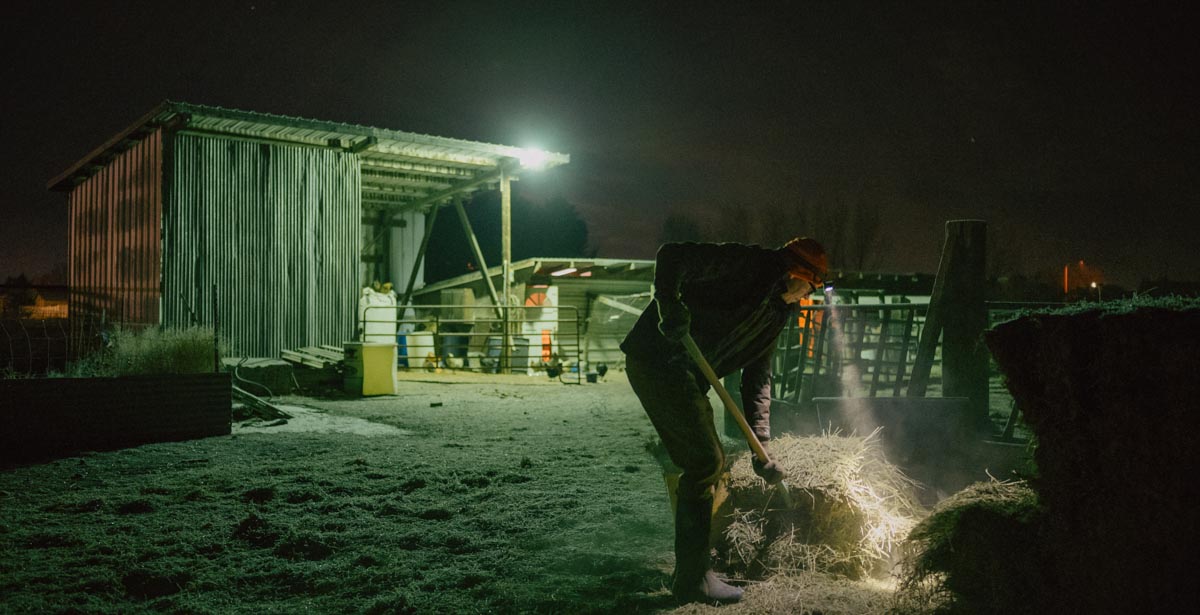
We were up at 5:15 a.m. at a friend’s small farm feeding the cows, and preparing bottles for the goats, grain for the chickens, and hay for the horses. I’d been there before, but this time I brought only the ZR and a Nikon Z 35mm f/1.8 S Lens, and instead of directing anything, I just watched moments unfold. The 4-inch screen is beautiful and unobtrusive. The body is quiet. The size feels intentional. When you’re documenting people’s lives, the camera doesn’t interfere with the moment. It preserves it.
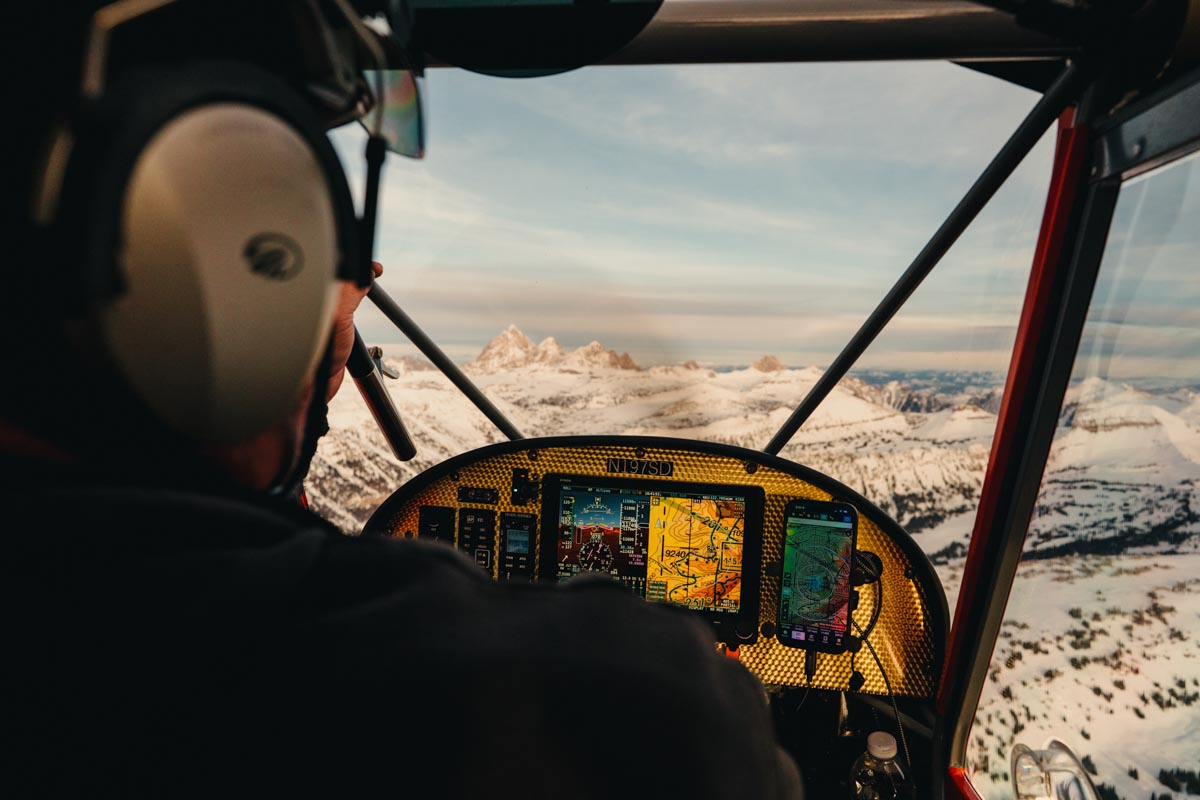
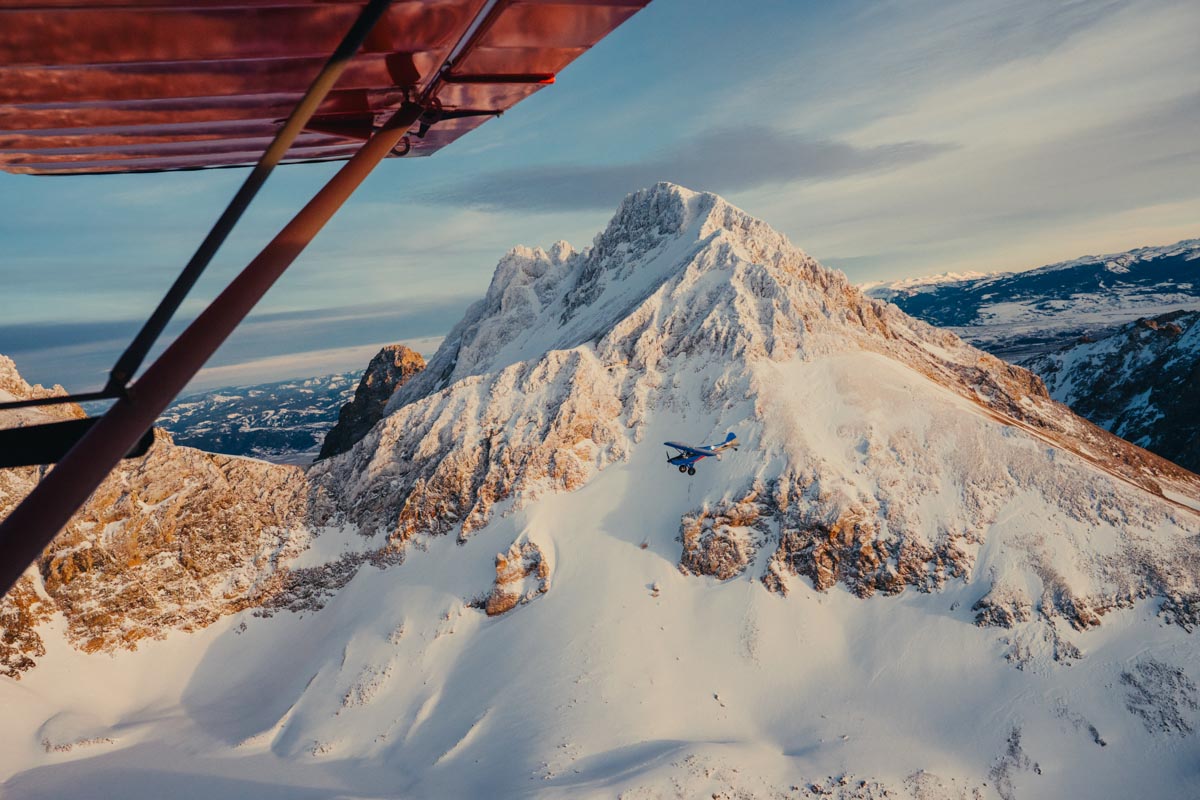
The real test came in the air. We flew with three planes to the backside of the Tetons. The goal was simple on paper but unforgiving in practice: Capture scale, movement, and proximity, all from inside a small aircraft, where every inch of space and every ounce of weight matters. I used only the Nikon ZR with a Nikkor Z 24-70mm f/2.8 S II for image capture and a GoPro mounted on the hot shoe mount for behind-the-scenes context. In a tiny airplane cabin, switching camera bodies isn’t feasible. There is no room and very little margin for error.
And this is where the ZR surprised me again.
Despite my earlier insistence that I wouldn’t buy this camera for stills, this is where the ability to use the same compact body for video and photos became essential. I could capture a sequence of stills, then seconds later roll 12-bit raw video—Nikon Raw at 6K—as planes crossed in front of the Tetons. Everything meaningful I experienced in that cockpit passed through this one camera in two reliable formats.
We took off with the battery around 80%. After nearly two hours in the air—capturing roughly 2,500 files across photo and video, much of it in high-bit-depth raw—we landed with just enough power left to capture the hanger closing for the night, all without overheating. Cold temps are also a factor in battery charge.
Still capture
Still capture
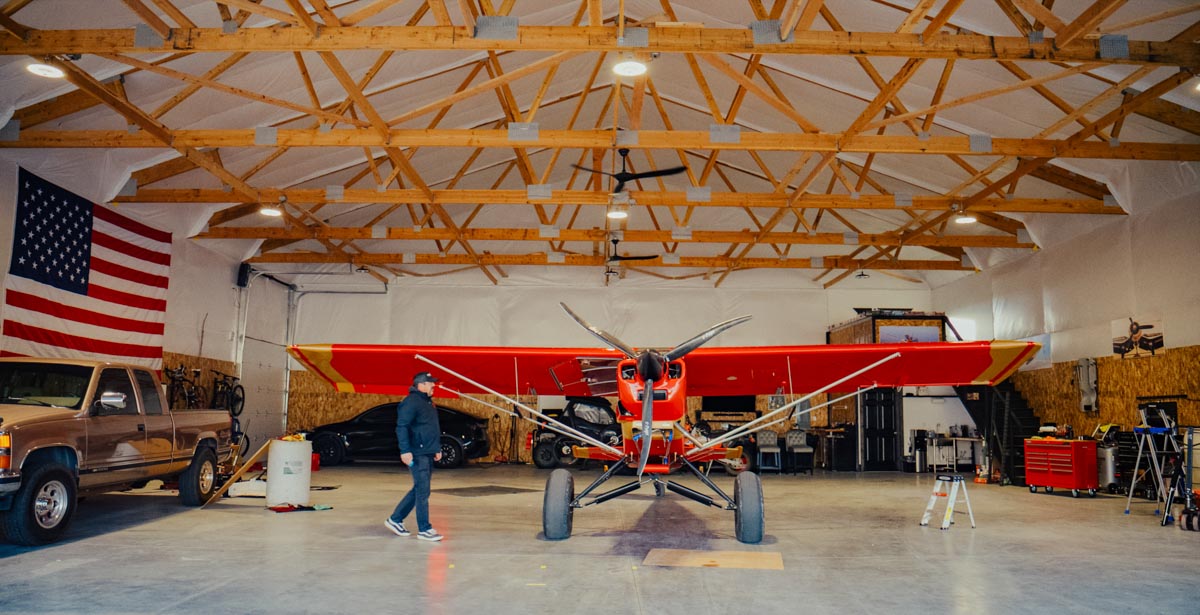
Frame from video
WHY NOW
We’re saturated by notifications, constant communication, and tools that demand more input than they return. In response, creators are gravitating toward simplicity. In other words, they want tools that remove friction rather than add it. The Nikon ZR feels like a deliberate response to that.
“The Nikon ZR is designed for content professionals, emerging cinematographers, and experienced filmmakers seeking a cinema camera that balances efficiency, creative expression, and industry-standard workflows,” Cruz told me. “With the ZR, filmmakers of all levels can bring their vision to life while growing into more ambitious filmmaking.”
By stripping away intimidation while retaining cinema-grade capability, Nikon has created a camera that encourages presence. And presence, in the end, is what allows us to see clearly and to capture what matters.
Tyler Rickenbach is a filmmaker and photographer based in Idaho.