
Next Level
Brad Toms is on a mission to make better and better images
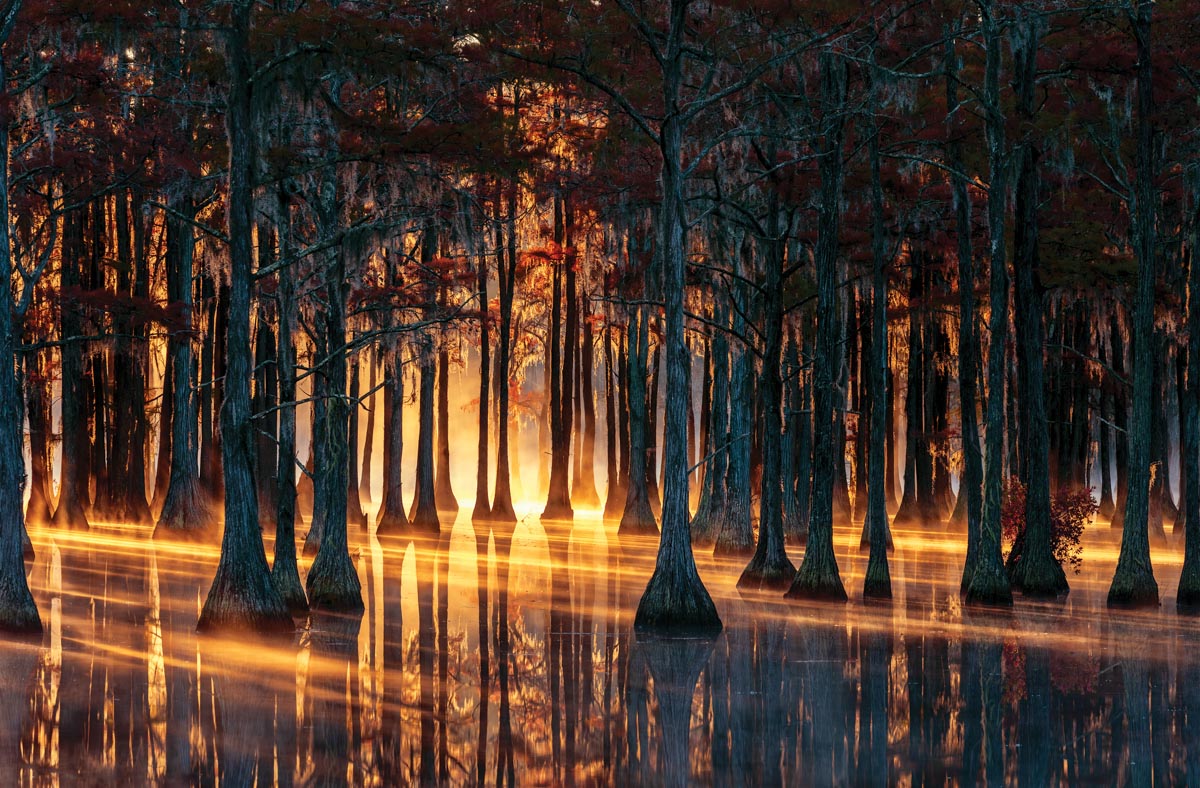
“Stunned … absolutely stunned!” That’s how Brad Toms describes his reaction when he learned his landscape image “Cypress Haze” (below) was one of the top four images in the landscape category of PPA’s International Photographic Competition (IPC), which was judged in January at Imaging USA 2026 in Nashville, Tennessee.
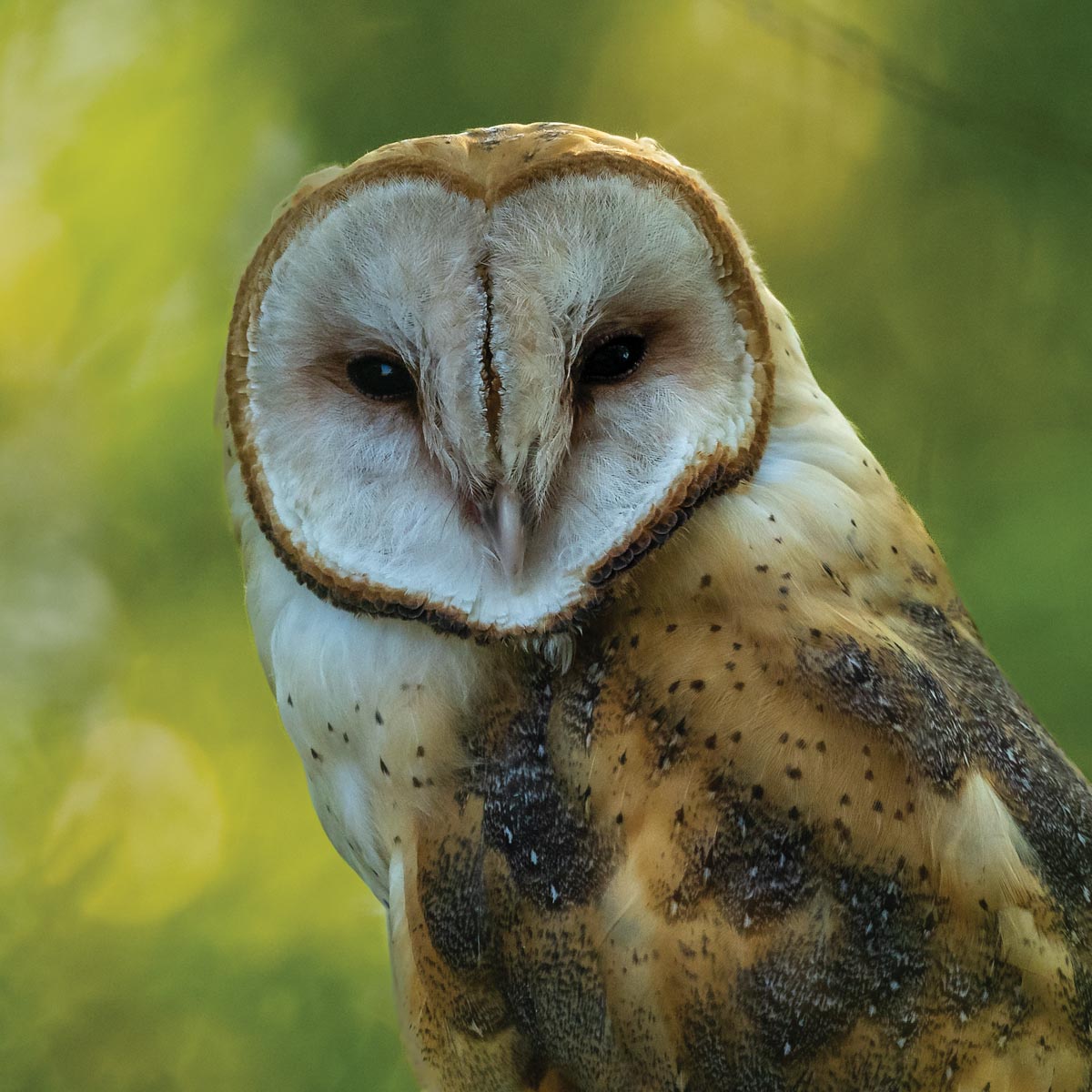
“Actually, you could have knocked me over with a feather,” says Toms with a smile. “I’m basically self-taught and never thought I’d have a chance in such a prestigious photography competition. Without a doubt, this has been the biggest thrill of my photography career.” His image “A Dance of Light” was also included in the top 32 images in the wild birds category.
Before buying his first camera, a Canon EOS 7D, in 2014, Toms served 30 years as a law enforcement officer in the San Bernardino County Sheriff’s Office’s homicide, SWAT, major narcotics, and public affairs divisions. “My wife and I and our three children loved jumping into our RV and travelling, hiking, and exploring,” says Toms, who is based in Yucaipa, California. “I’d always admired landscape and nature photography, so I thought that would be a good hobby I could explore and hopefully develop on our travels.”
He retired as a captain in 2019 and has devoted much of his time since then to travel and photography.
This interview has been edited for length and clarity.
Robert Kiener: It’s 2014 and you just bought your first camera. What was your learning process?
Brad Toms: Canon was not only the first camera I bought; it was the first camera I’d ever picked up. Days after I bought the camera I signed up for a photography and Photoshop class at Crafton Hills College here in Yucaipa. All the students in my class had full-frame cameras. I quickly realized my 7D wasn’t going to work. I returned it and bought a full-frame Canon EOS 5D Mark III.
RK: Did you begin with landscape images?
BT: I’d always liked getting out in nature—hiking, walking, motorcycling, and traveling in our RV. So, landscape photography was a natural choice. Over the years I’ve developed additional interests, but landscape and nature have continued to engage me. I often thought, Maybe I can become good at this and sell some photographs and make a little bit of money out of it. Today I look back and laugh because it’s not easy to sell landscape photography. However, selling was never the primary goal. Photography was a way to enjoy the fresh air and wind down from the high stress of my law enforcement job. And our family was traveling a lot, so it was the perfect fit. I realized I needed to keep learning. After Crafton College, I joined a regional group, the Inland Empire Professional Photographers and Videographers (IEPPV), which offered seminars and workshops. I’ve been a member since 2017 and have learned so much from the IEPPV.
RK: How does competition help you learn?
BT: If you listen to what these judges say about your photo and other entries, you pick up tips. You learn things like what time of day has the best light, how to fix dust spots, how to get your horizon line correct, so many technical things you need to pay attention to. One of the great benefits of entering these contests is that you get that helpful feedback. So, even if you’re not winning anything, you’re learning something.
RK: Are there any aspects of police work that helped you be a good photographer?
BT: In law enforcement you have to be technical. You have to understand the law. You need to know what you can and cannot do. Do you need to have a search warrant? How do you conduct an interview of a suspect? Correlating that to photography, I think of things like, Do I want to make everything perfectly still or make the water look like it is moving? How can I catch droplets flying off a wave? What shutter speed do I need? What aperture do I need? Law enforcement is very black and white. It’s not super creative. When I look at artists who are very creative, I’m just in awe of how they come up with ideas. When I see how portrait photographers light and pose their subjects, I think, Boy, I wish I had that creativity.
 View Gallery
RK: What advice do you have for other landscape photographers?
BT: My No. 1 tip: Get out. Get away from your desk, from YouTube, from your computer. Get out and utilize your camera. You’re going to take thousands of mediocre photos before you get one that really shines.
Another tip: Be out at the right time of day, either in the morning before sunrise or in the late afternoon when the sun is setting—the golden hours. If you’re not out at those times of day, you might be lucky and get something excellent, but knowing how to take a photograph in the right light is the key to landscape photography.
Something I didn’t understand when I was starting out is how important it is to envision the image you want take before you take it. You can go to a place and think, This is absolutely beautiful. But if you imagine your image in the right light or the right conditions, such as with clouds or thunderstorms, plan around those conditions. Do your research. If you want fall colors, go in the fall. If you want mist on a lake, check the weather forecast.
RK: Can you share an example of how you were in the right place at the right time for a successful landscape image?
BT: In 2019, shortly after I retired, I went with photographer and friend Peter Levshin on a 15-day trip to Asia. I took more than 15,000 photographs on that trip and came back with only a few that were good enough to do anything with. But the trip took my photography to a whole other level. I remember often waking up at 4 a.m. to make sure we were in the right place for morning light or having to sleep in a van to get to our next destination at the perfect time. We talked about photography nonstop. It was a nonstop learning experience.
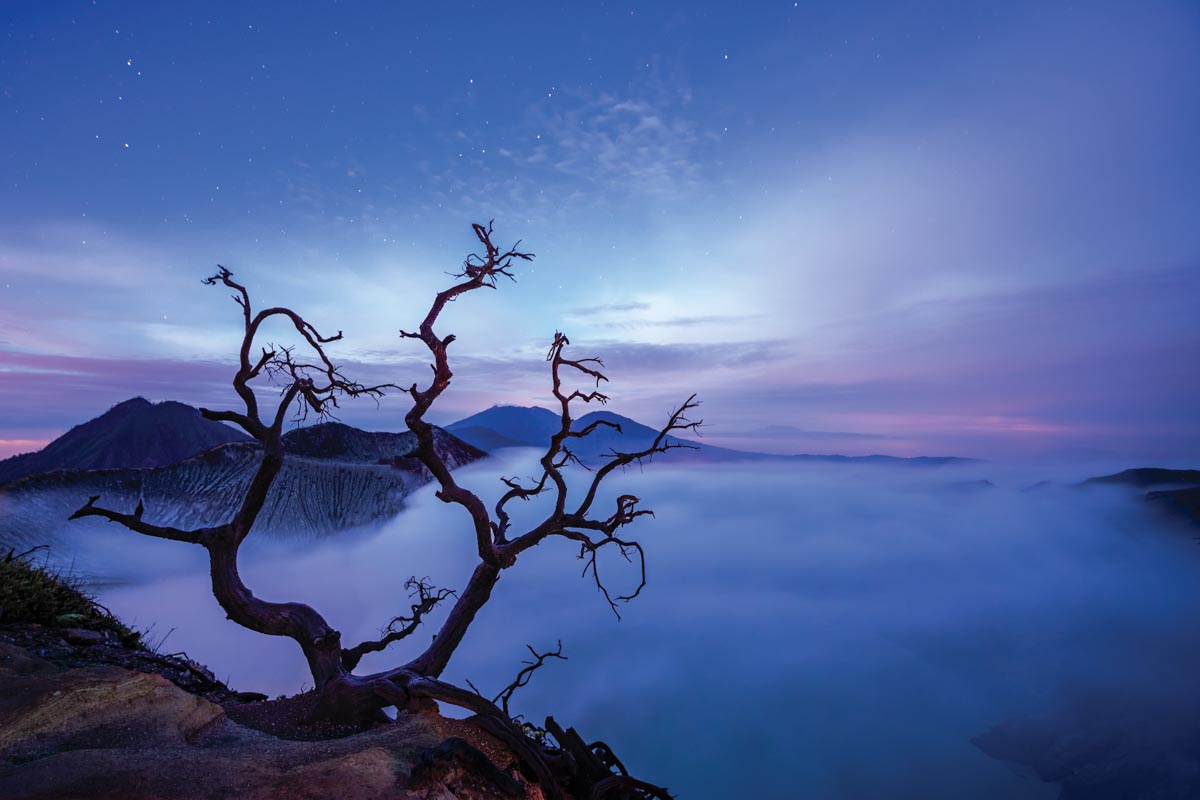
In East Java, Indonesia, we set our sights on Mount Ijen. To make sure we got to the top in time for sunrise, we arrived at the base and started our four-hour, 9,000-foot hike to the top at 1 a.m. When the sun rises, it’s a spectacular scene and well worth the long, arduous hike. My image “Dusk to Dawn, Mount Ijen” (at top) is one of my favorites.
Peter and I also went on a photo trip to capture cypress trees in the George L. Smith State Park near Savannah, Georgia, in 2021. To get the images we wanted—or hoped for—in the morning light, we got there at 4 a.m. It was worth it; watching that scene unfold was incredible. We had the mist on the water. It was just gorgeous. And then all of a sudden the sun came up, and the whole place exploded with light. It was so stunning. That’s where I got my image “Cypress Haze.”
RK: How did you develop the consumer section of your website?
BT: It’s Art Storefront. They have daily seminars to help artists sell their art. They will even help you set up a plan for social media, so you can grow your social media base and ultimately try to sell your art. Their marketing is outstanding.
RK: Can you explain how you capture your droplet images?
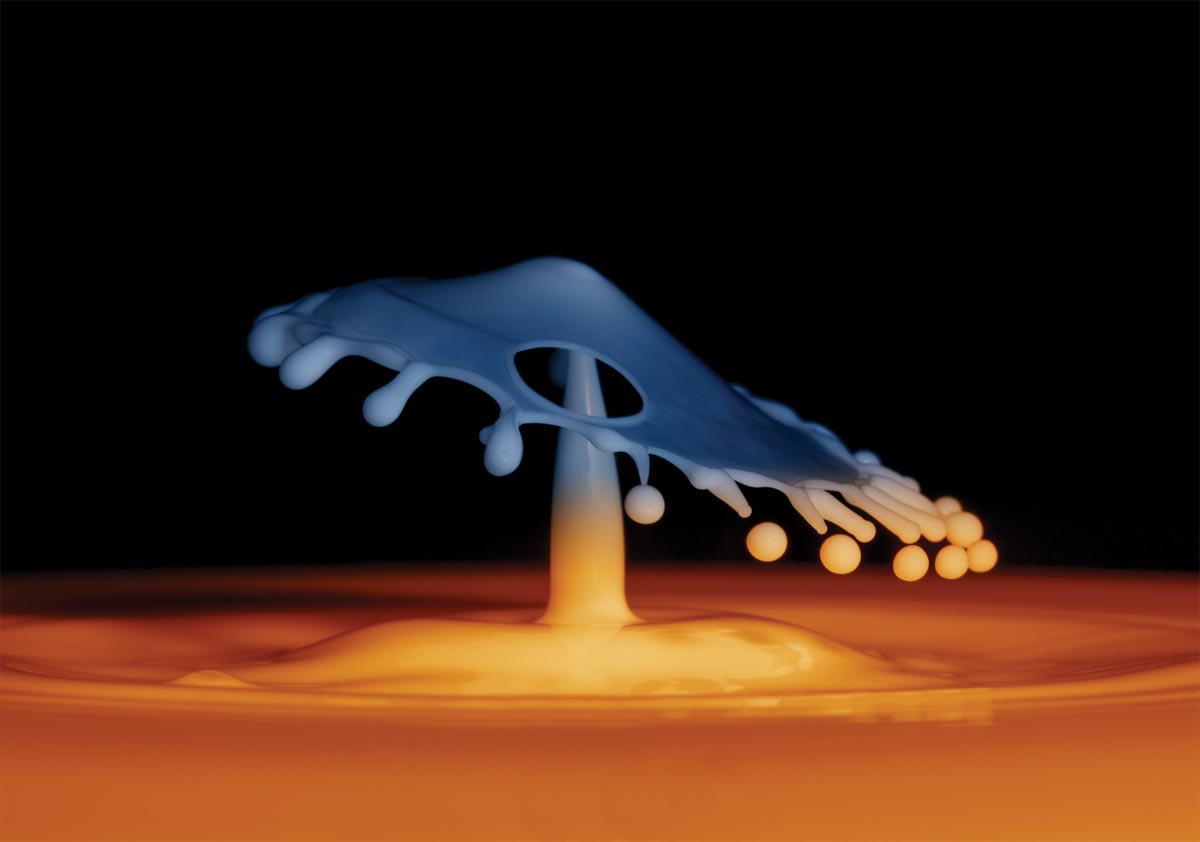
BT: It’s a genre called drop photography. I got interested in that from a workshop. It takes about 500 shots to get one usable photo. These are milk droplets in my photos; it’s called a drop collision. The color comes from a filter in Photoshop to add that shade. That is how you get that effect.
RK: In what other genres have you experimented?
BT: I’ve tried a lot—macro, abstract, street photography, nature photography. There are lots of genres in photography that I find interesting. I’ll pick one up, tackle it, pursue it, and work at it until I’m proficient in that genre. That keeps my interest going.
I don’t want to be a one-trick pony. If someone says, “Hey, can you do this?” I instantly want to learn how to do it and become proficient in it. The one field I haven’t yet tackled is portraiture, because the lighting and the people are more complicated. But I need to. It’s the continuous learning in photography, including trial and error, that I enjoy.
Robert Kiener is a writer in Vermont.