
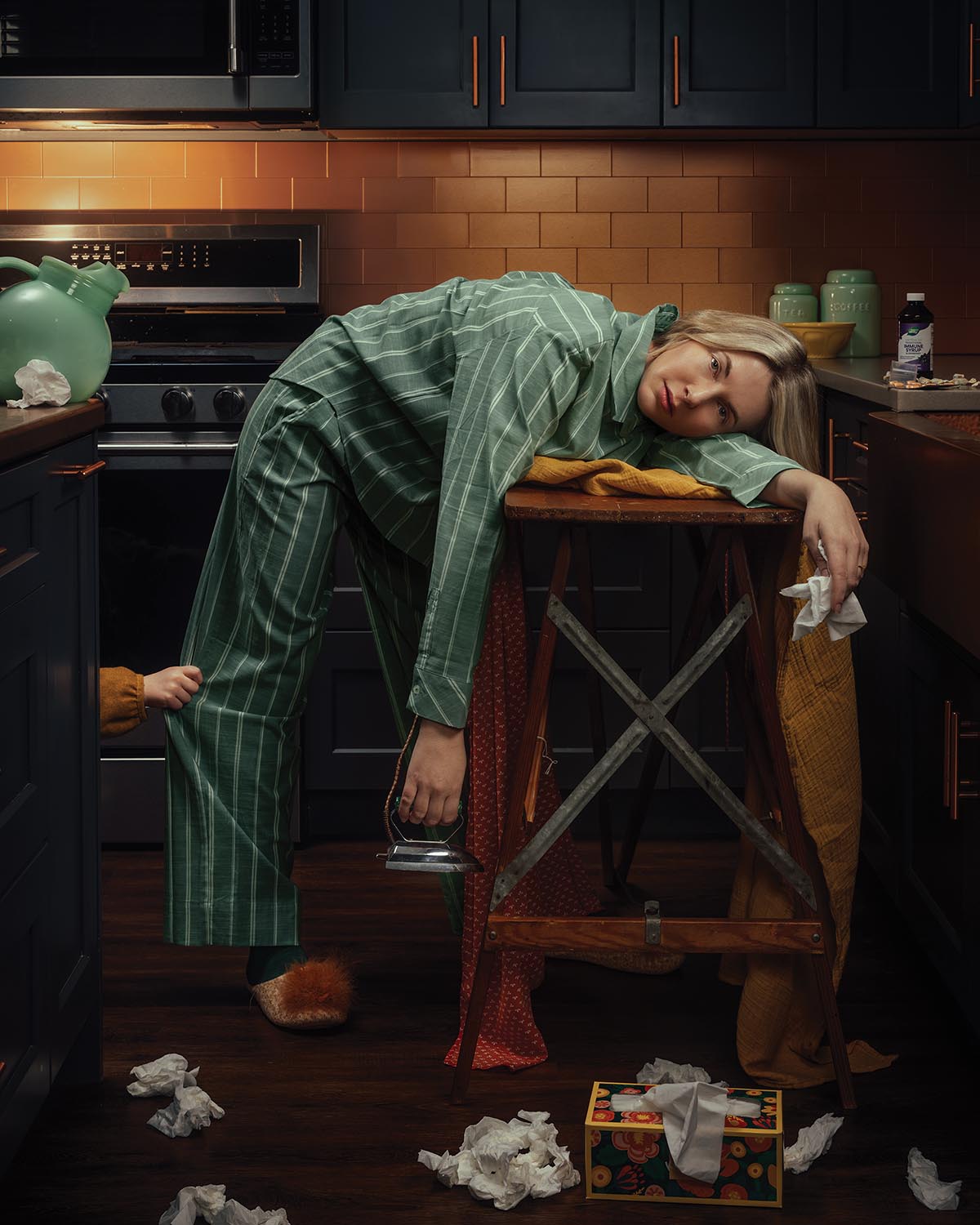
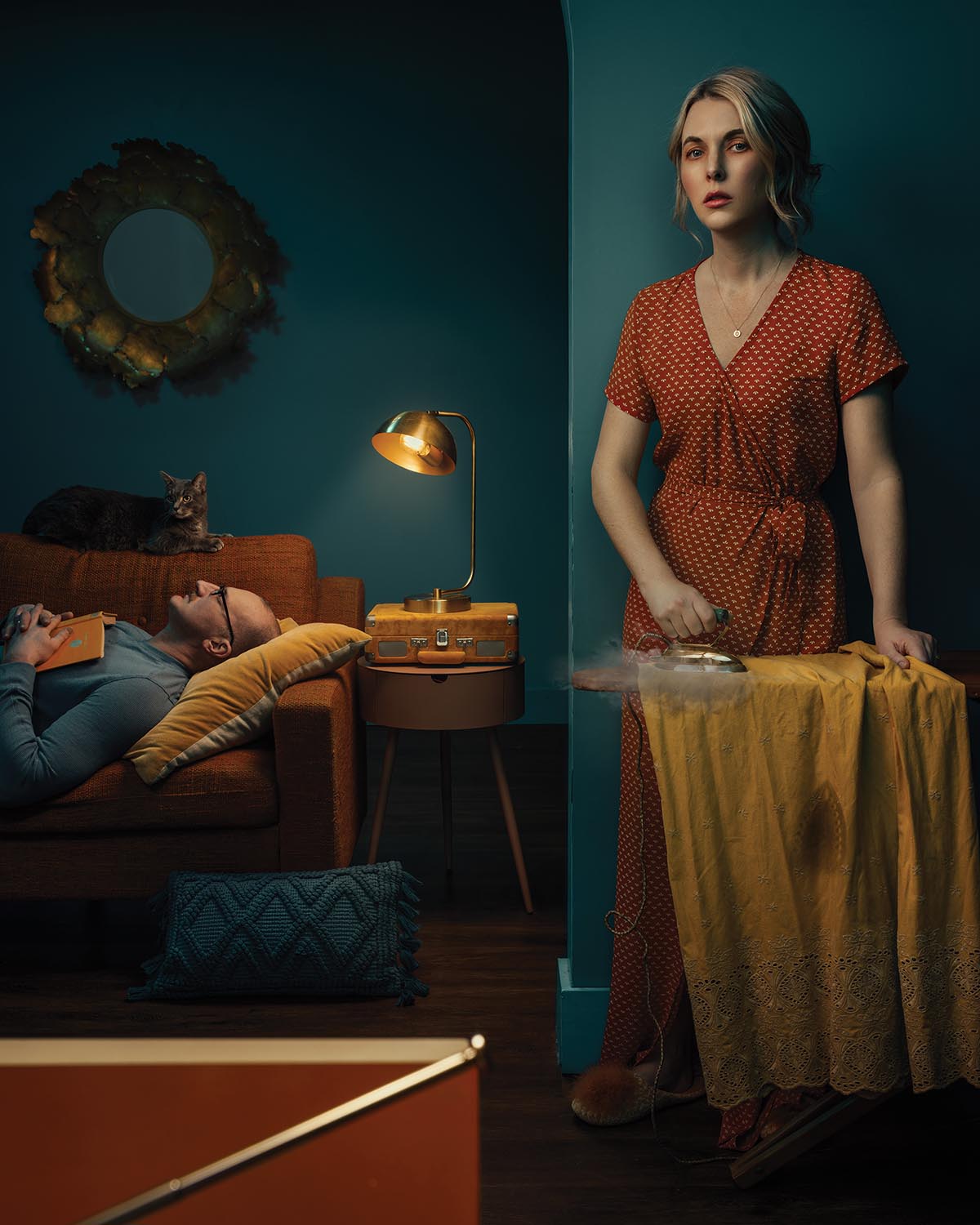
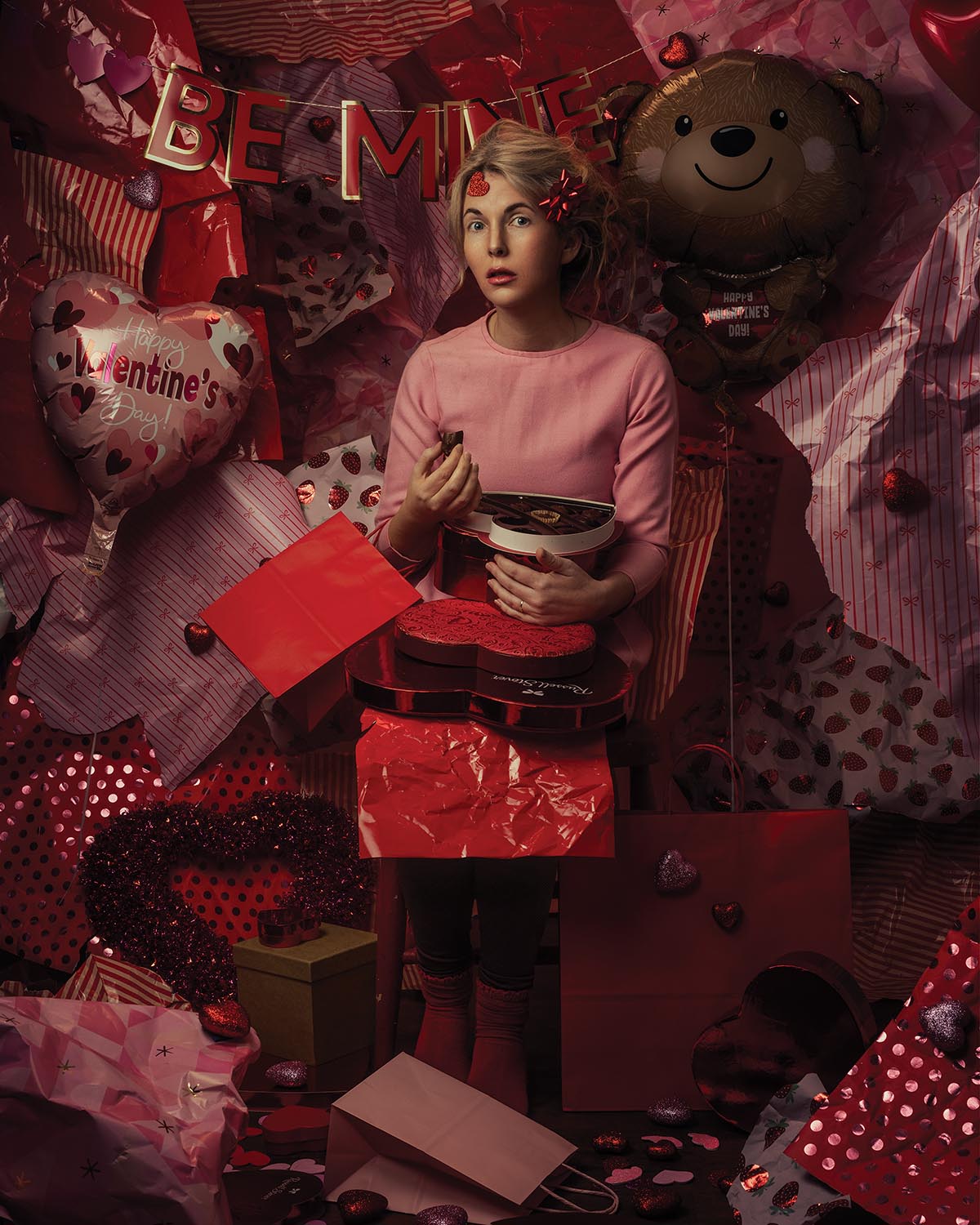
The ordinary becomes extraordinary in Meg Loeks’ cinematic images, which vividly convey the chaos, humor, and sometimes the heartache of real family life, created on her 40-acre farm in Michigan’s Upper Peninsula. Her property, which includes a garden, about 45 chickens and ducks, several dogs, and a cat, offers a timelessness to her photography, she says. Most of her current work is deeply personal, and features her own image and those of her five children. Loeks plans to share how she uses both ambient and created light to shape mood and story during her pre-conference workshop, “Light, Color, and The Art of Narrative,” at Imaging USA 2026 in Nashville, Tennessee in January. This interview has been edited for length and clarity.
Mark Edward Harris: How did you become interested in photography?
Meg Loeks: I started when I was a teen, photographing everything from flowers to landscapes. I didn’t study photography in college, though I did get a small scholarship for my photography. I ended up getting a degree in advertising, which influences the way I create my images. Styling, color theory, filling the frame—all those things are rooted in when I was designing ads in college. I also pull a lot of inspiration from classic Americana and old advertisements. My greatest influences are Norman Rockwell and George Hughes.
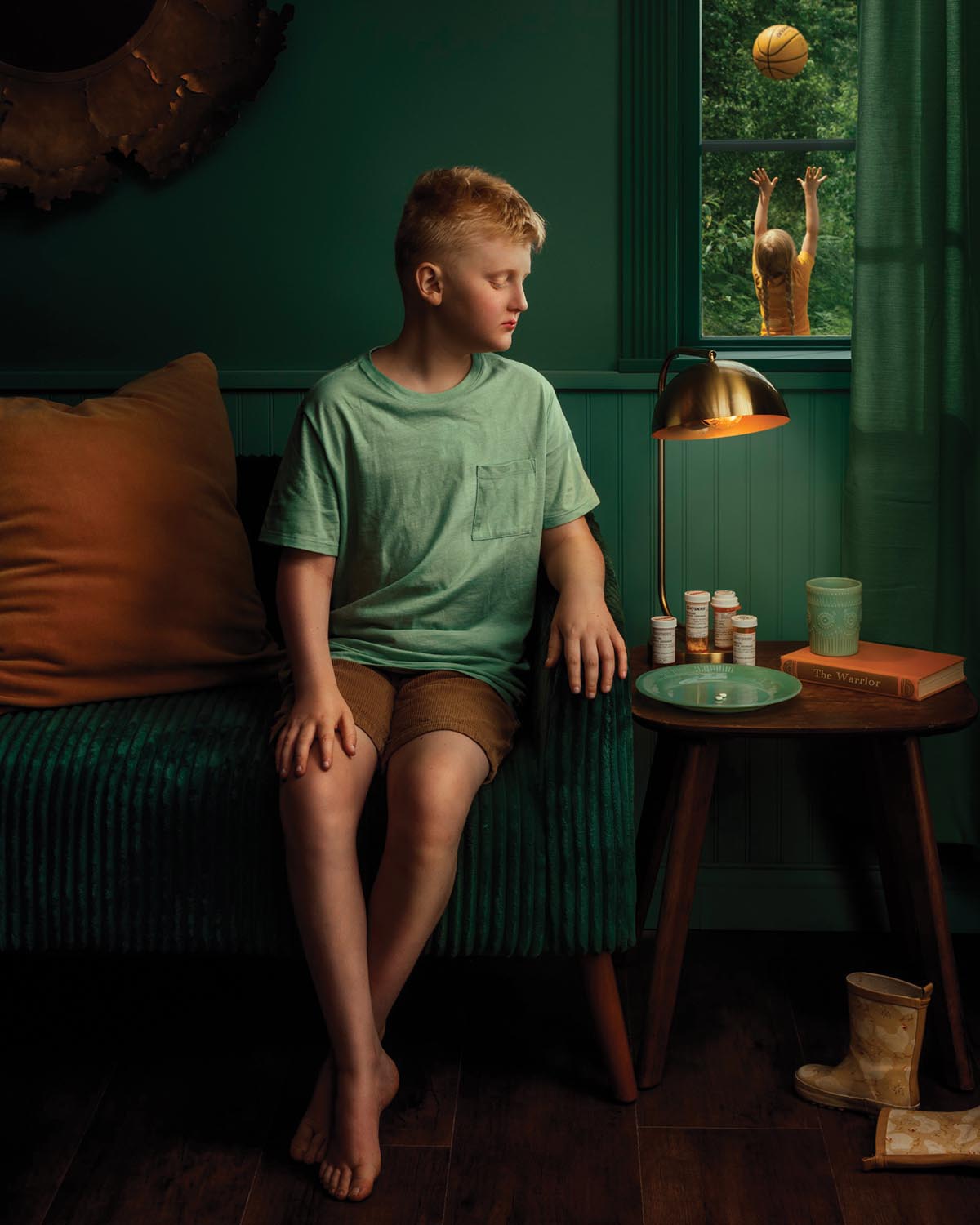
MEH: They produced many idyllic illustrations, but you sometimes incorporate real life into your work. The powerful image of your son with his pill bottles (above) is one example.
ML: There was a major shift a couple of years ago in my work when my oldest son was diagnosed a second time with leukemia. My husband was deployed overseas and immediately flew home. My son’s hospital is seven hours away, so one of us needed to be at the hospital with him and one of us needed to be home with the rest of our children. We have four boys, one girl, and our animals. I previously was creating images that were on the romantic side, a little unrealistic and maybe hard to resonate with. Once he was diagnosed a second time, I grew tired of that. There was a part of me that really wanted to home in on the hardships of motherhood. I started to focus heavily on the chaotic part of the season of life I was in, with my son’s diagnosis and his chemotherapy, having to deal with situations where he’s sick and my other children are outside playing and enjoying their childhood. Some of that was robbed from him. This image focuses on that juxtaposition.
MEH: How did you light the scene?
ML: One thing I did was place a bare light outside the window. I wanted that extra bit of light filtering through the curtain, highlighting and separating him from the background. There’s a key light with a soft box camera right that’s highlighting him and a fill. I often have a fill light to lift the shadows, because, while I like moodiness and contrast, I also like the shadows to be soft. The lamp light is from the lamp itself. It’s a very strong lamp, but sometimes I do place lights with CTO gels by my lamps because often my strobes overpower that practical lighting. One of the reasons I’m so drawn to artists like Norman Rockwell and George Hughes is they often had hidden details within their illustrations and paintings. I often try to do that within my own work. On the table with the lamp is a book with the title “The Warrior.” That was an intentional storytelling detail.
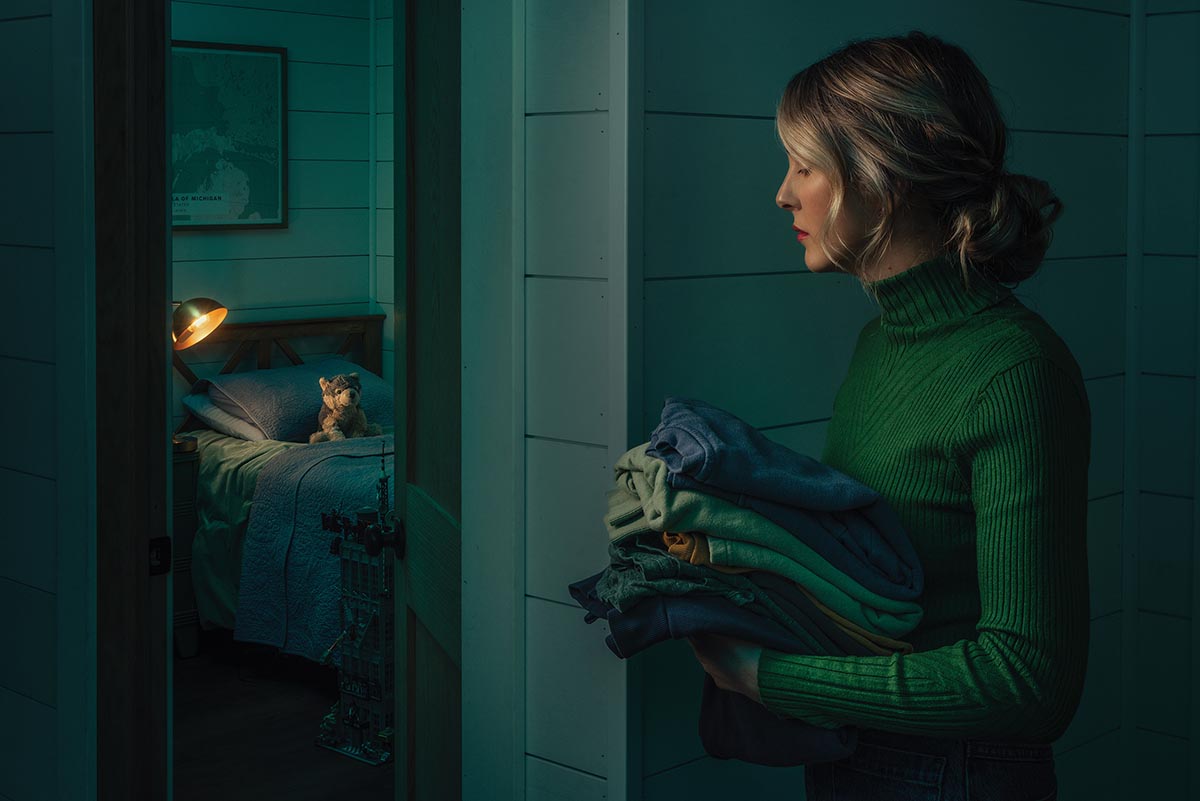
MEH: Is the photo of the stuffed animal (above) on the bed and you’re in the foreground part of the same overall concept about your son?
ML: After his first diagnosis, he was in the hospital getting treatment. I would walk by his room and he wouldn’t be there. I felt the weight of his absence and wanted to center a portrait around that specific memory. You go through these hard things, but you do carry on with your day-to-day activities. The rest of the world does too. Everyone has their own hardships, and they’ve got their tasks to do. This is his bedroom and the walls are white. I wanted to create a nighttime feel and to make it feel somewhat sad, so I used two blue-gelled lights: one inside his room and one outside bouncing off the ceiling to fill the spaces with a blue color to enhance the mood.
MEH: Did you pull this much focus in a single frame?
ML: No, I did focus stacking. I don’t always do that but in this case, I wanted to make sure everything was in focus. I took the shot focused on me and then changed focus to his bedroom and then merged the two in Photoshop. One big push I have for [students I teach in workshops] is to focus on the season of life they’re in. For me, I have five children ranging from 3 years old to 13, so there’s definitely some comical stuff that happens on a day-to-day basis, and I do like to add humor into my work. This is also pulling from classic Americana. My son making it rain with the garden hose or my daughter playing with makeup are examples.
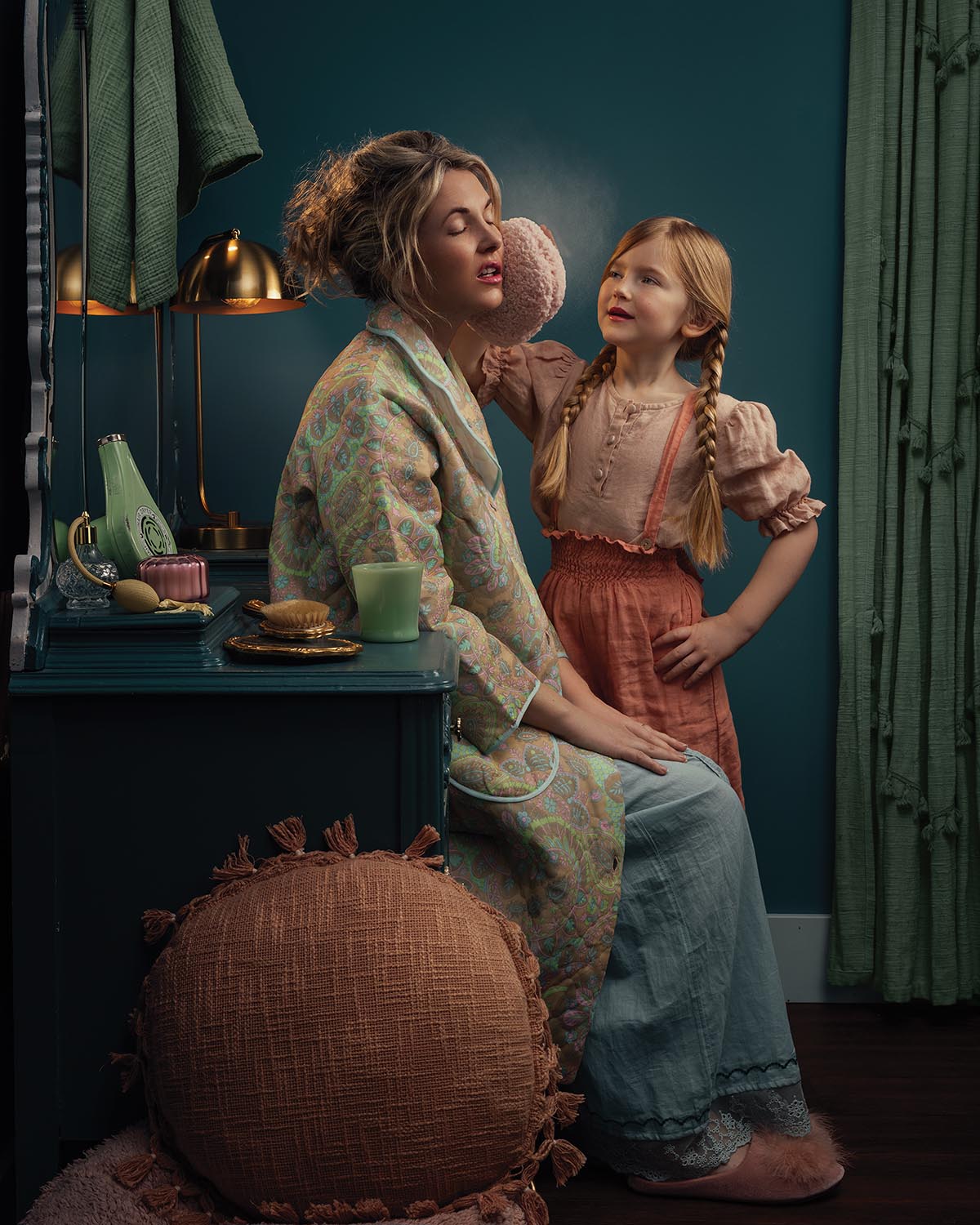
MEH: How did you create the makeup shot (above)?
ML: I used a peacock blue gel bounced off the ceiling to soften the shadows and create a blue effect that I enhanced in post. You can kind of see the motivated lighting in my hair. I also had a flash with a CTO gel hidden behind the blanket hanging on the vanity to enhance the light that’s coming from the lamp.
MEH: What camera and lighting equipment are you using to create these scenarios?
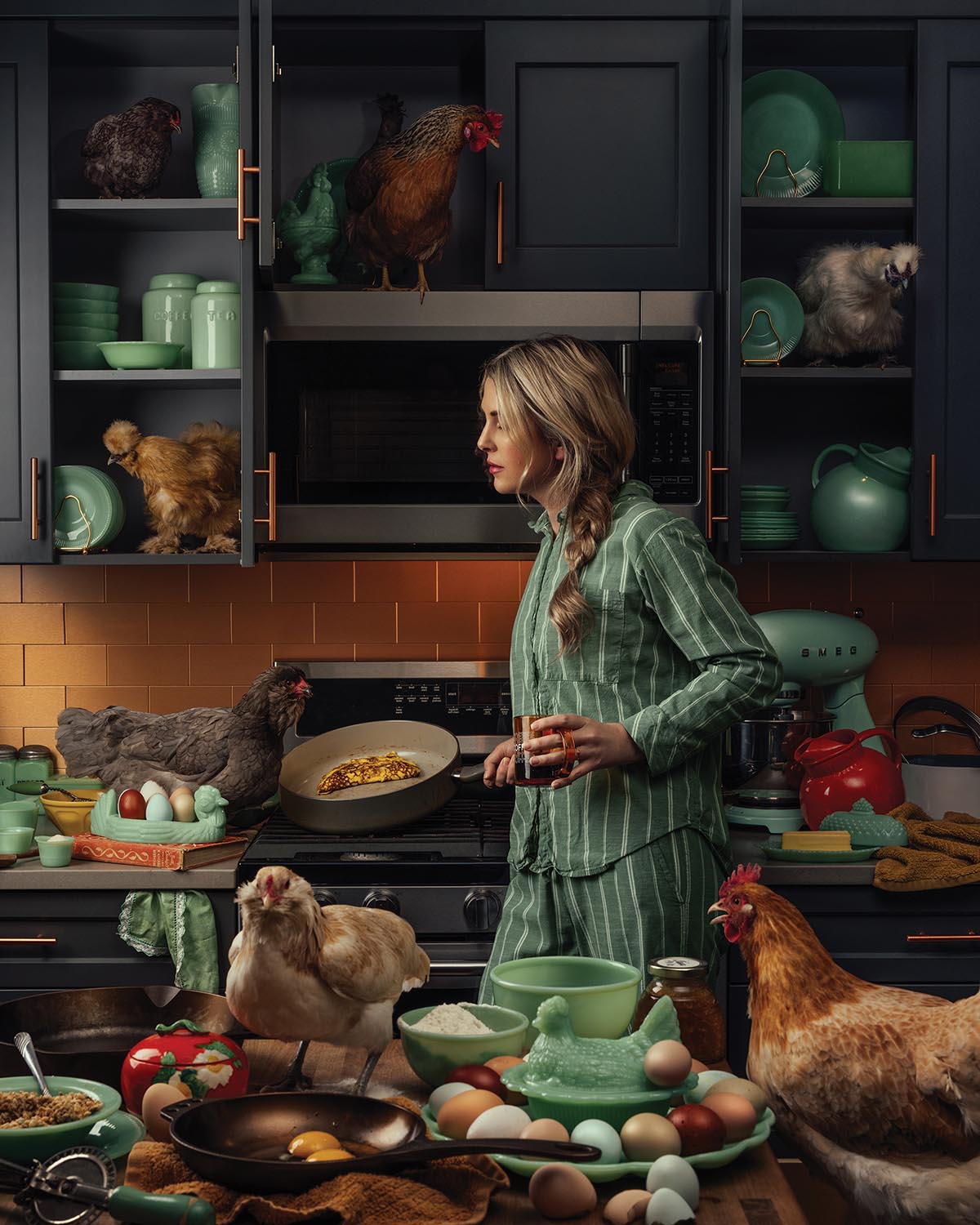
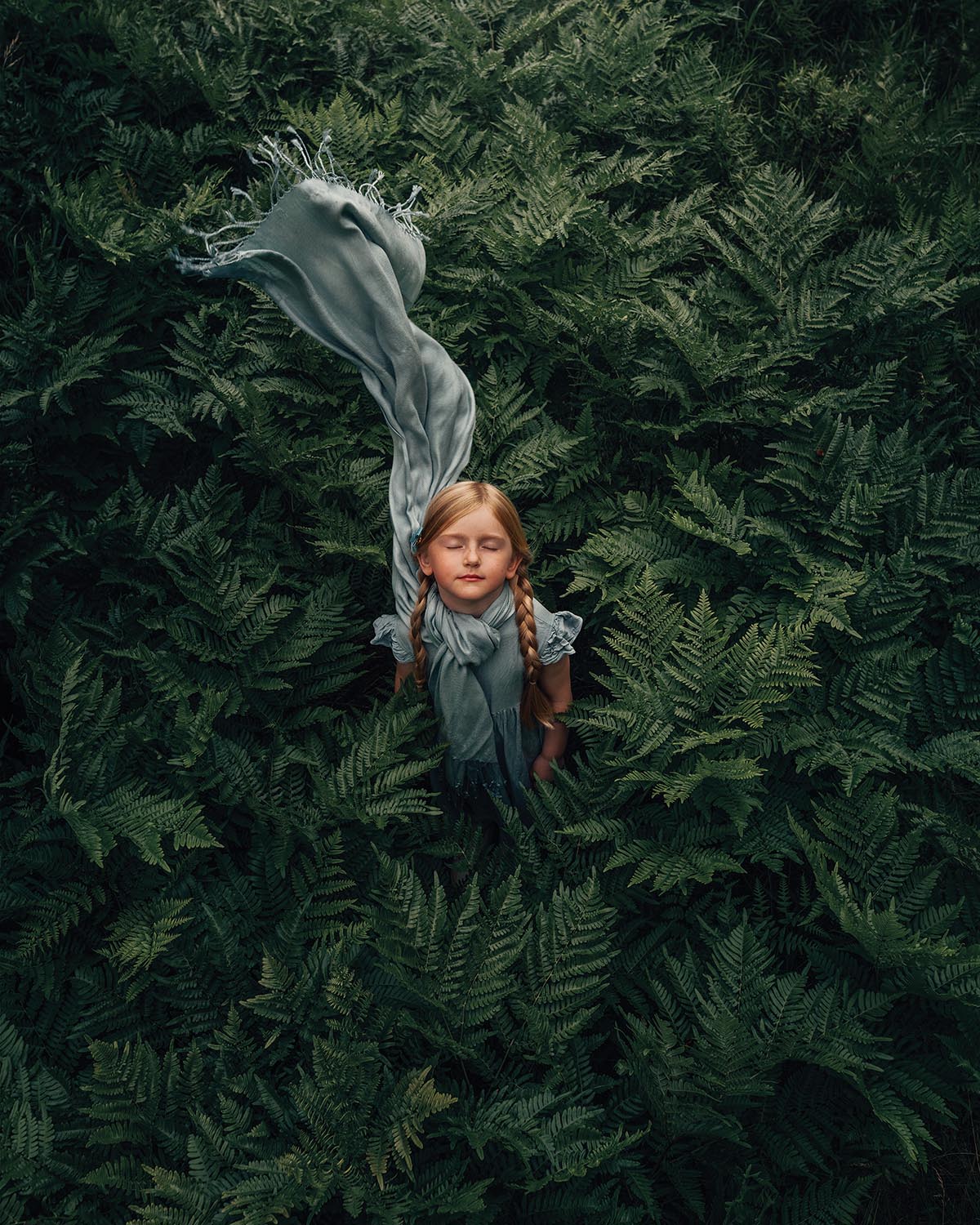
ML: My images are highly styled, but I really enjoy that part of the process. It’s like putting a puzzle together. As my children have grown, I’ve started to put myself in front of the camera more. I find it’s quite therapeutic. Time with my camera is self-care. I usually use the interval timer on my camera and a narrow aperture like f/8 or f/10. I also sometimes use the Canon connect app remote on my phone and the CamRanger remote. The Canon EOS R5 is my main body, but I also shoot Sony. I have all Sigma lenses, and I gravitate towards prime lenses. My lighting is Profoto. My favorite lights are the A2s. They’re so compact but powerful. Over the past year or two I’ve made it a goal to create more cinematic lighting, and to play with gels and motivated lighting to enhance mood and the overall atmosphere within my work, and to add a little more depth to my portraits.
MEH: What is your working methodology?
ML: I often do things on my own. It’s especially important if I bring my children into the frame that I have everything ready to go, so I often do test shots on myself. I put myself in different spots within the frame to make sure I absolutely love everything, because when I bring them in, I have a very short window of time. When my husband is home, he’s a huge help. Our son is cancer free again, no longer in treatment, so I’ve recently started photographing a very limited number of families again. I typically go to their houses and photograph them in their spaces. The Profoto A2 lights keep my kit small and portable.
MEH: What is your post-production workflow like?
ML: Culling and doing basic adjustments within Lightroom and then any creative edits—composite work, brush work, and selective color editing, tweaking colors one object at a time—in Photoshop. I then save back into Lightroom where I may do color grading. I use a Wacom tablet. I sometimes use presets, especially when I need to do a batch edit. The newest pack that I have is Meridian Natura.
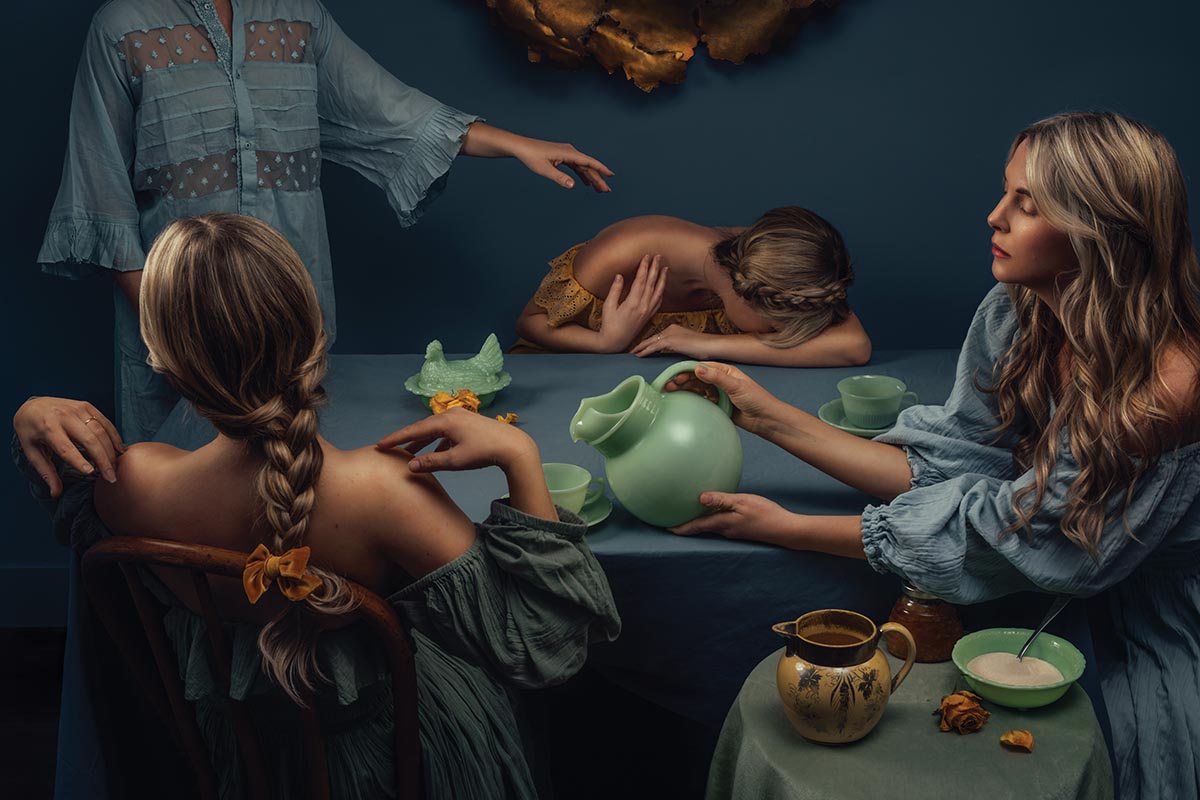
MEH: Can you describe the image that includes you several times in a composite frame (above)?
ML: That was inspired by painter Francine Van Hove. All her main subjects are women doing everyday activities. She has a way with highlighting and beautiful skin tones. I wanted to pay tribute to that. This is a self-portrait, obviously a composite because it’s me multiple times. I changed my hair in every single one. I thought Francine’s composition was brilliant so there are some aspects of my photograph that are very similar to the original. The composition is one of them. But the lighting and colors are different. The original is very bright and white, which isn’t true to me.
MEH: Did you change the lighting each time or did you just move from place to place?
ML: I almost never change the lighting because it can be an issue when compositing. I like to use multiple lights with smaller modifiers because I feel like I can shape the light and enhance mood easier than using one light with a big soft box to light the scene. I ended up with four or five lights placed around the table at different strengths. I use grids heavily, especially to help avoid light spill. That includes using grids on a lot of my soft boxes.
MEH: What’s one piece of advice you give workshop participants?
ML: The best advice I can give is in terms of finding their voice. It took me a couple of years to really home in on my voice and what I was drawn to. But it’s always evolving, especially when you’re challenging yourself. Never stop learning, whether you’re a seasoned photographer or not. I think it’s important to learn from all different types of photographers. I follow documentary photographers, landscape photographers, photographers who only shoot in black and white. I learn so much from them, whether it’s lighting or composition or storytelling. I think there are so many things we can learn just by following other photographers who don’t shoot like us, who maybe think a bit differently than we do. There’s an art form to every type of photography.
Mark Edward Harris is an award-winning photographer and writer based in Los Angeles.