
Location Preparation
Mark Edward Harris on preparing for photographing at international locations
When it comes to location photography, especially when international travel is involved, a relatively small amount of time is spent behind the lens. While no assignment can be a guaranteed success, proper planning can dramatically increase the odds.
My latest project in Hokkaido, Japan’s northernmost main island, can serve as a case study. Though I’ve been there in the past and images from there are part of my book, “The Way of the Japanese Bath,” there is no way I’m going to yudan suru na (let my guard down). Once I had a clear picture of the latest assignment— showcasing adventure travel, nature, food, and hot springs in Hokkaido—I could chart a course.
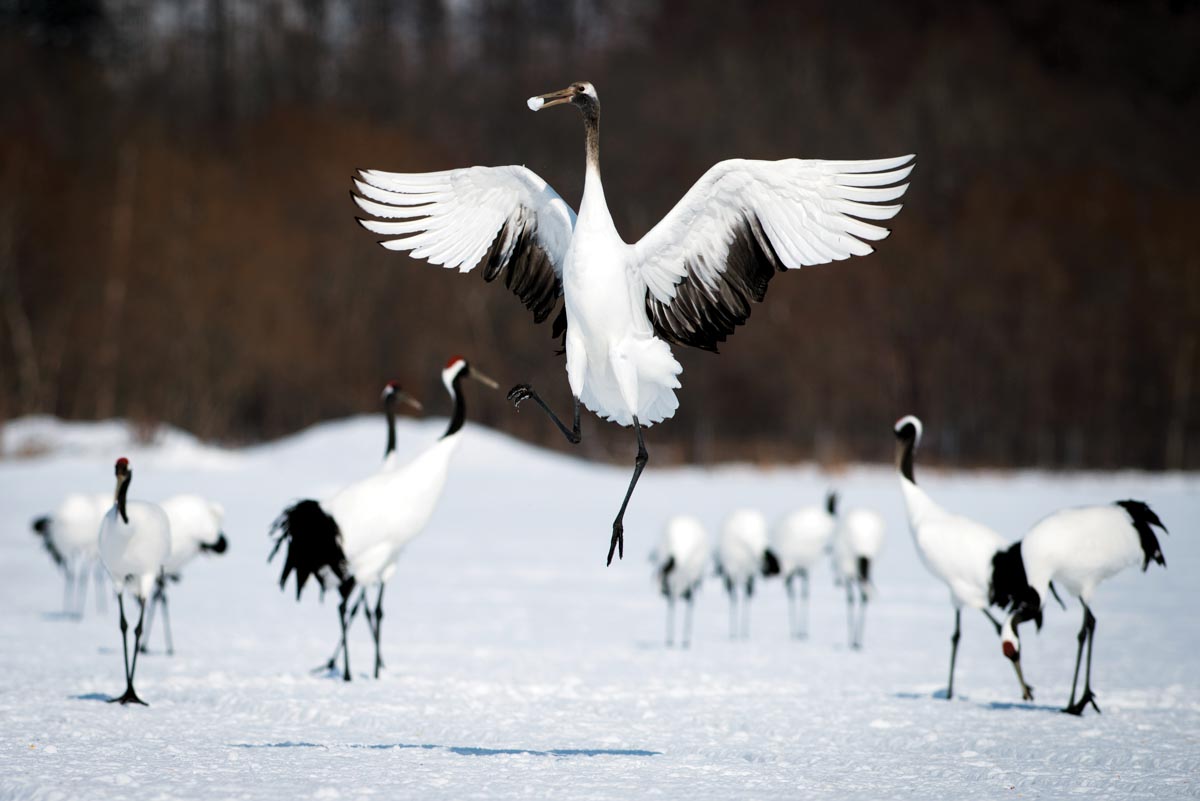
It is crucial the images your client requests match the circumstances. For example, one of the most striking combinations of wildlife and landscape are tancho (Japanese red-crowned crane) in the snow near the town of Kushiro (above). These images are unattainable in the summer. The same is true if a client asks for images of colorful fall foliage in any other season. I had to explain this years ago to a client who had hired me for a travel brochure in Nagano and wanted me to join a tour in early September, the low season not just for tourism but for those multicolored leaves. Earlier in my career I may not have spoken up, but a bit of wisdom has crept in, so I replied, “If you want fall colors, I have to be there in the fall.” I considered adding, “I’m a photographer, not a magician,” but I kept my sarcasm in check. I ended up going in October and captured the desired results. As Helmut Newton once told me, “People never remember discomfort they go through [to produce photos], but they remember bad pictures.”
If my assignment for Hokkaido had involved sakura blooming, I would follow the sukura-zen (cherry blossom report), a forecast published annually that tracks the northward progression of blossoming cherry trees, which would increase my chances of being at the right place at the right time to photograph them. Since Japan is a longitudinal country, cherry trees bloom much earlier in the south than in the north. So, while Kyoto might be bathed in sacred petals between late March and mid-April, there might not be even a hint of red/pink in the landscape in and around Hokkaido’s capital of Sapporo. By the time the cherry trees bloom on the northern-most island, it could be early to mid-May, when the flower petals in Kyoto are a fading memory.
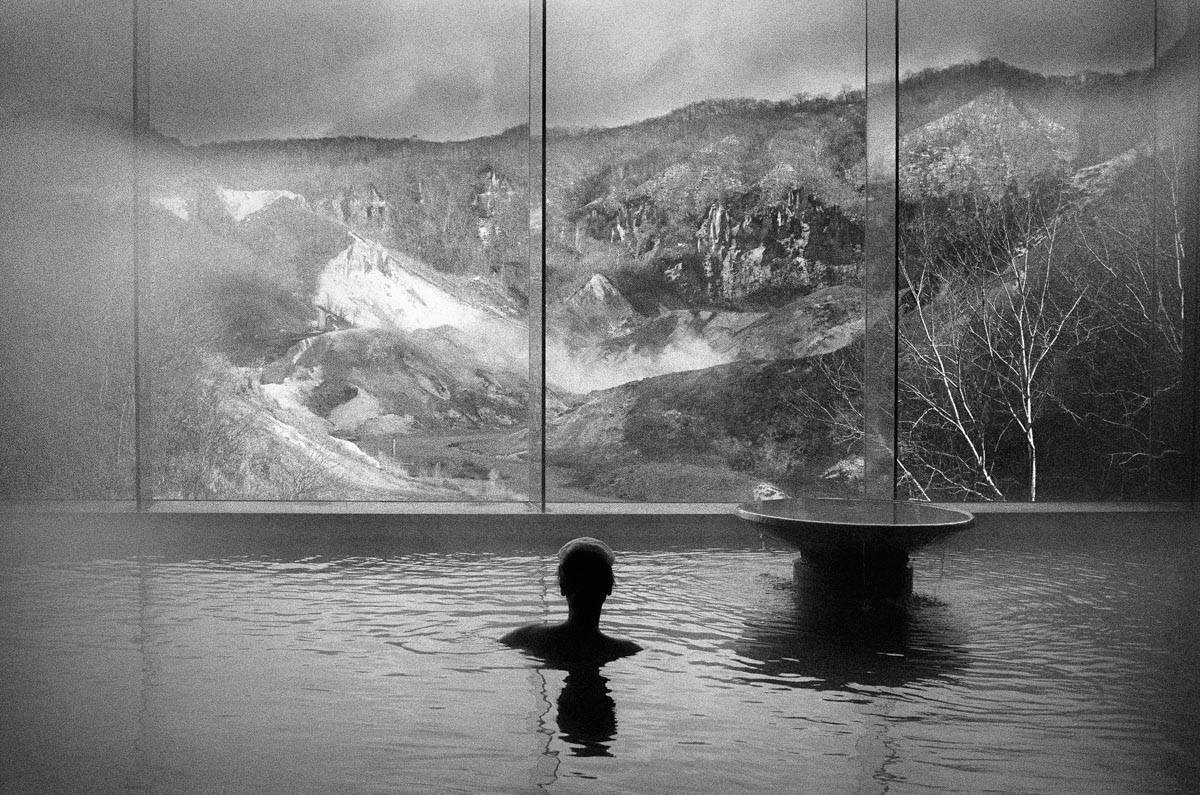
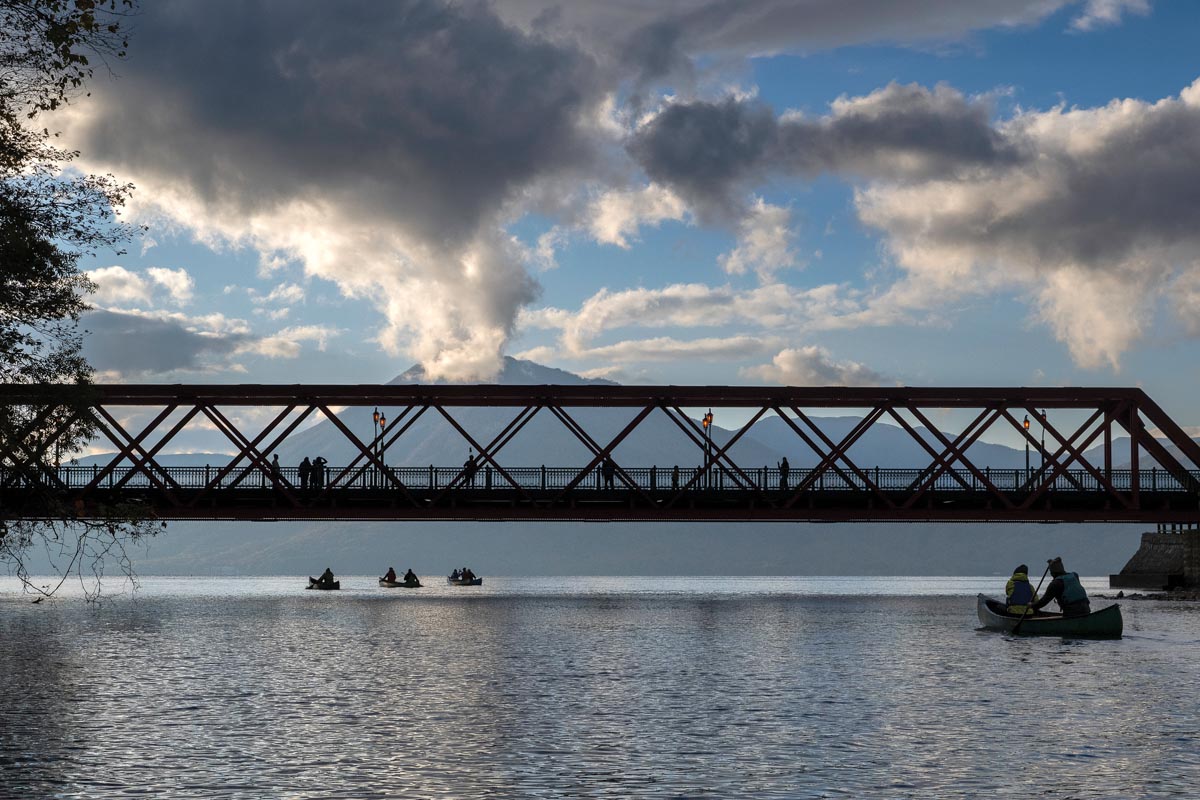
On this trip, late fall was the ideal time to catch the colorful foliage and then stay for the snow as a backdrop to photograph the cranes. Hot springs are also much more dramatic when the natural heat of the water meets the cold air and produces a mystical steam, perfectly suited photographically to convey the sublime feeling of being immersed in an onsen (above). Once the basic schedule was set, I carefully worked out the details. With a busy shooting schedule, being at the right place at the right time of day is imperative. For instance, late afternoon canoeing on Lake Shikotsu in Shikotsu-Toya National Park yielded the drama I was looking for. I relied on the sage advice of certified nature guide Yuya Shimada of Canoa, the adventure company that provided the canoes. My small team reached Lake Shikotsu by bike, traveling 30 km. If my deliverables included a video element, GoPros would have been a great choice, either attached to my helmet, chest, or handlebars. Instead, I got off my bike along the way, composed my images with fall foliage, and had my appropriately outfitted guide Yuya Ishizuka from Cycling Frontier Company pass through my frame.
A night at Hoshino’s magnificent Shikotsuko Tsuruga Resort Spa Mizu no Uta was also an opportunity to continue my hot spring series.
EQUIPMENT LIST
While my assignment dictates my equipment list, my equipment list dictates which camera bag I use. If it’s an urban assignment, I turn to Think Tank’s Urban Access Backpack 15 or the company’s Airport Advantage XT if I want a roller bag. Since the Hokkaido project involved a good deal of both backcountry and city work, I opted for the best of both worlds, and went with the Think Tank StreetWalker Rolling Backpack V2.0.
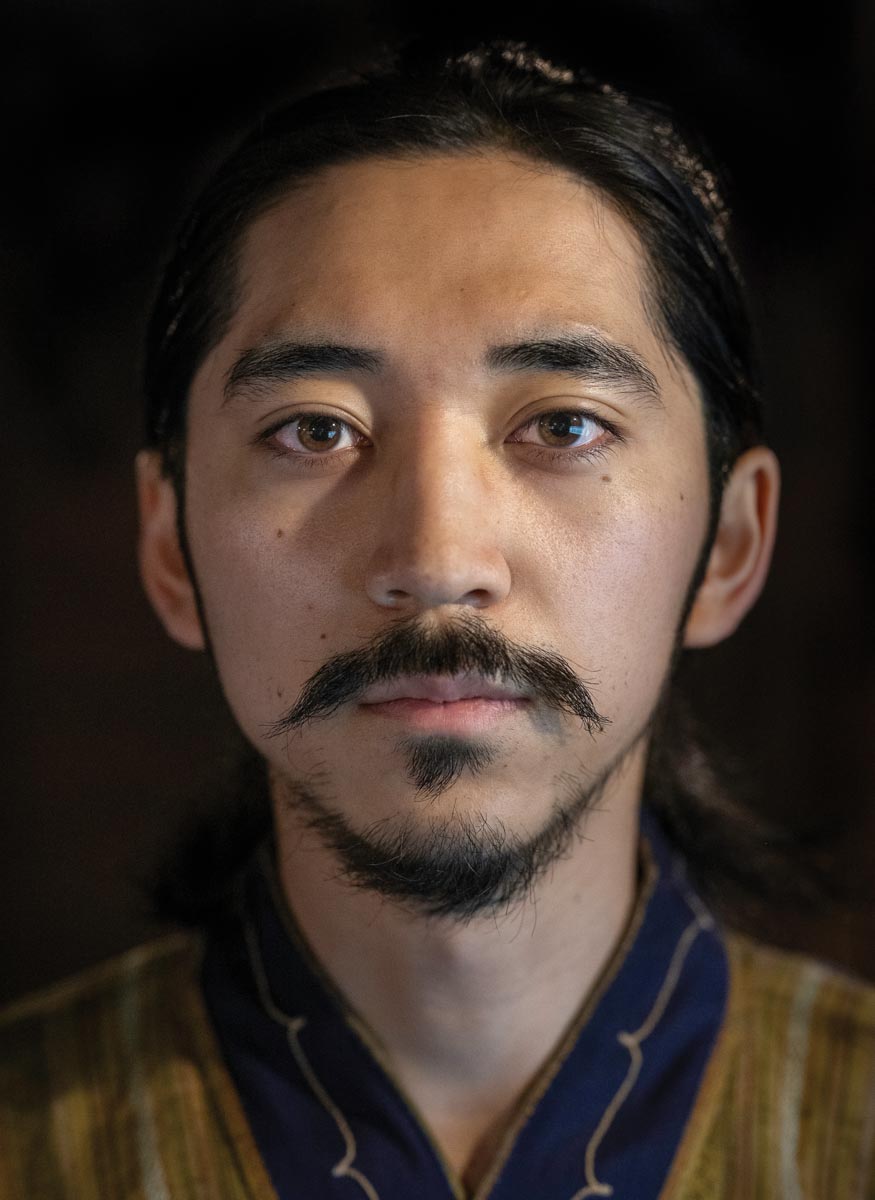
Nikon Z 8 and Z 9 bodies, and the lens trifecta of a Nikkor 14-24mm f/2.8, 24-70mm f/2.8, and 70-200mm f/2.8, are my constant travel companions. My plans once I land influence what I take along for the ride. If portraiture is a serious part of my assignment or project, I use my Nikkor Z 85mm f/1.2 with its magnificent bokeh. Meeting members of the Ainu community—the indigenous people of Hokkaido—at the Kawamura Kaneto Ainu Memorial Museum in Asahikawa was part of the project, so this lens was a must. I used a combination of window light and a dangling lightbulb in a traditional Ainu house called a chise to do an “eyes are the window to the soul”-type portrait of Harumichi Kawamura, the museum’s director (opposite page).
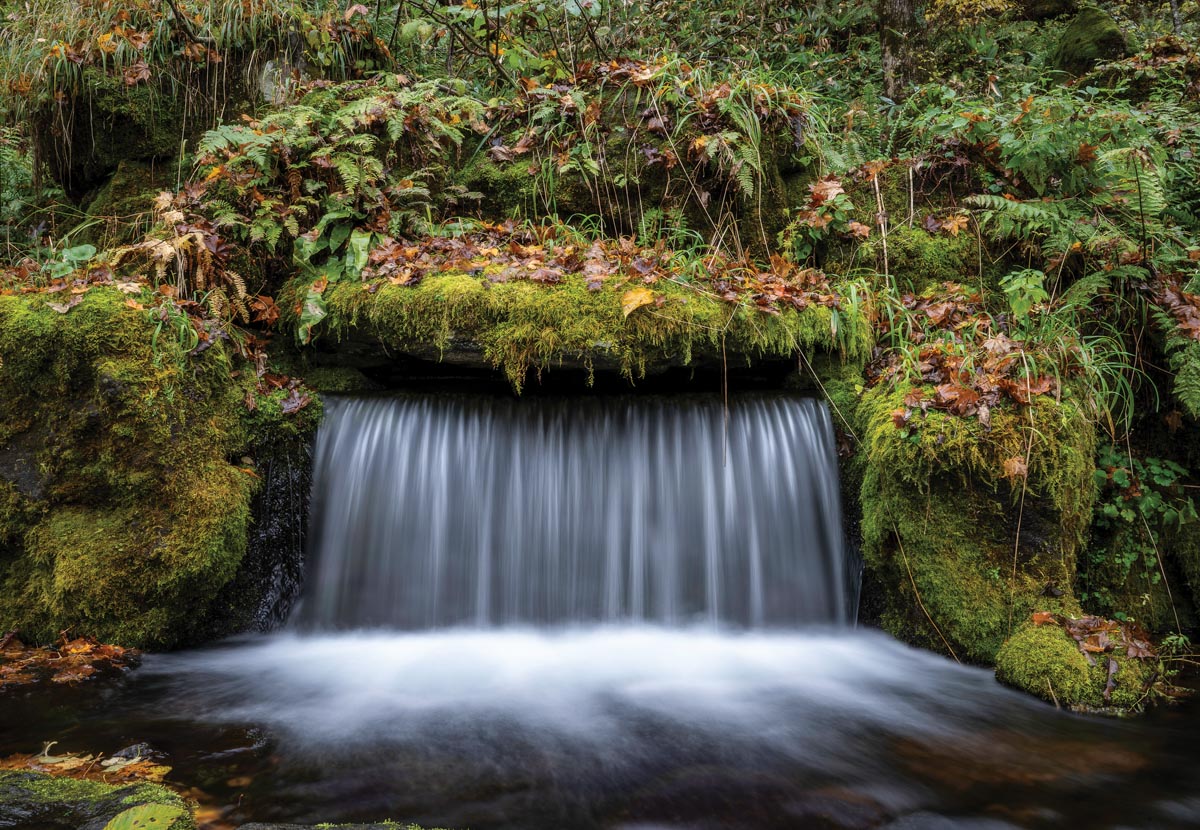
Using the StreetWalker Rolling Backpack meant carrying my Nikkor Z 400mm f/2.8 separately, but I only needed that focal length reach to photograph the cranes. I packed a Benro carbon fiber tripod and Delkin Black high-capacity cards, plus a B+W ND filter to slow down the water at Asahidake spring. I also brought a Leica Q2 Monochrom for black-and-white street photography and for my hot spring images.
PAPERWORK
To get myself quickly in and out of the U.S. as smoothly as my equipment, I have both Clear and Global Entry. And no matter how well you plan a photo session in a foreign country, it won’t do you much good if you can’t get your equipment through customs. On bigger jobs, such as my worldwide campaign for The Coca-Cola Co.—which required Profoto lights, digital monitors, wardrobe, and other equipment—a carnet (pronounced kar-nay) is a must. Carnets are equipment lists submitted to customs officials with serial numbers and estimated replacement costs. These officials are tasked with making sure what you bring into their country leaves with you. Think of this document as a passport for your equipment, allowing temporary, duty-free import and export into participating countries. This customs clearance form simplifies moving professional photography equipment across international borders without completing separate customs procedures in each country. Several companies can assist in obtaining carnets, including Boomerang Carnets.
Even for small international solo projects, it’s a good idea to have an equipment list with serial numbers stamped at a U.S. airport customs office before departure. The CBP 4455 is a U.S. Customs form of registration of goods taken abroad. While other countries are not obligated to accept the CBP 4455, I keep it on hand in case I have issues going to or coming back from an assignment, and when I’m traveling with a small amount of gear and do not plan to declare goods in a foreign country. Just like a carnet, the CBP 4455 form must be taken to the customs office before your flight. When returning to the U.S., these lists also prove that you didn’t buy the equipment overseas and are trying to import it without paying tax.
LOCAL EXPERTISE
Local expertise is invaluable, especially on a tight schedule. Hokkaido’s Adventure Travel (AT) Guides were vital to the success of my assignment, whether it was trekking through the winter volcanic wonderland of Daisetsuzan National Park on Mt. Asahidake with guide Kazuhiro Arai or a shinrin-yoku (forest bathing) hike with guides Chie Moue and Nara Wataru through Maruyama, a nature-rich area within the city of Sapporo. These guides are camera-savvy and know the best times of day to be at locations that will yield the strongest images. I always request guides that are photographically aware because I’ve been on many press trips and reviewed many proposed workshop itineraries that have included dinners scheduled for the exact times a potentially spectacular sunset was to take place. I always spoke up respectfully, “Let’s have dinner at 8 p.m.,” or whatever time the sun disappeared below the horizon. We as photographers know what we need photographically to achieve success. •
Mark Edward Harris is an award-winning photographer and writer based in Los Angeles.
Tags: gear location photography technology travel photography