
Living the Story
Jon SooHoo is recording Dodgers and Los Angeles history
In the sports photography world, few if any full-time positions could be more dream-job-worthy than Los Angeles Dodgers team photographer. Jon SooHoo has been fortunate enough to hold that coveted title since 1995.
SooHoo’s path didn’t begin with photography. At the University of Southern California (USC), he majored in gerontology, the study of the human aging process. At age 11, SooHoo became aware of the fleeting passage of time when his grandmother passed away. Stories about his late paternal grandfather, who played a vital role in preserving L.A.’s historic Chinatown, deepened SooHoo’s understanding of family legacy. Today, SooHoo, a fifth-generation Asian-American Angeleno, is acutely aware of the impact of the stories he captures with his lens of his extended family—the Dodgers—and the city they all call home. This conversation has been edited for length and clarity.
 View Gallery
Mark Edward Harris (MEH): How did you start photographing professional sports?
Jon SooHoo (JS): It goes back to my college days at USC, working at the Daily Trojan, starting as an intern my sophomore year in 1981 doing darkroom work. I applied because I didn’t have any direction. Even though I was studying gerontology and ended up earning a degree in it, the core classes were beating me up. I had to find an enjoyable outlet. I eventually worked my way up to chief photographer at the paper. One Saturday afternoon I was covering a USC women’s basketball game at the L.A. Sports Arena, which also housed the Clippers. That’s where I met Andy Bernstein, the NBA photographer. He had come in during the USC game to set up for the evening NBA game. He mentioned he was looking for a darkroom guy to do his NBA photo prints. I started working in his rental darkroom in a Hollywood studio processing black-and-white negatives that he and his photographers (including me) took, and made 8x10 prints to be sent to the NBA for distribution.
For color at that time, it was slides done with strobes that I lugged up to a catwalk. I would load four 2,400-watt Speedotron packs so Andy could shoot Fujichrome 100. We’d line all the packs up with zip wire to form a ‘u,’ and drop two sync lines down to the floor. That was considered one set. At the Forum, there would be up to seven sets. I would install our set and other entities—Sports Illustrated, USA Today, etc.—would install their own sets. The Forum was a little scarier than the Sports Arena, because the walkway is very narrow—two planks side-by-side—and the arm rails are inconsistent. I got over the fear quickly, though, because I knew Magic Johnson would be playing Michael Jordan, or whomever, down below.
I started photographing both the Clippers and the Lakers. As Andy let me shoot more games in both color and black and white, he got the Dodger contract in 1985, and I started shooting and doing all the darkroom stuff at the stadium as well.
MEH: How did you end up the Dodgers team photographer?
JS: In 1995, I bought the contract from Andy to be the contractor for the Dodgers, as he was too busy with the NBA to do both. In 2012, the last day of Frank McCourt’s ownership, we were in the law office ready to hand the Dodger organization off to the Guggenheims. Frank came up to me and said, “I heard your wife lost her job and your healthcare. Do you want to become a full-time employee before I hand the team over?” I of course said yes. I’m very grateful that he made that offer.
MEH: Can you share some memorable photo moments you’ve had?
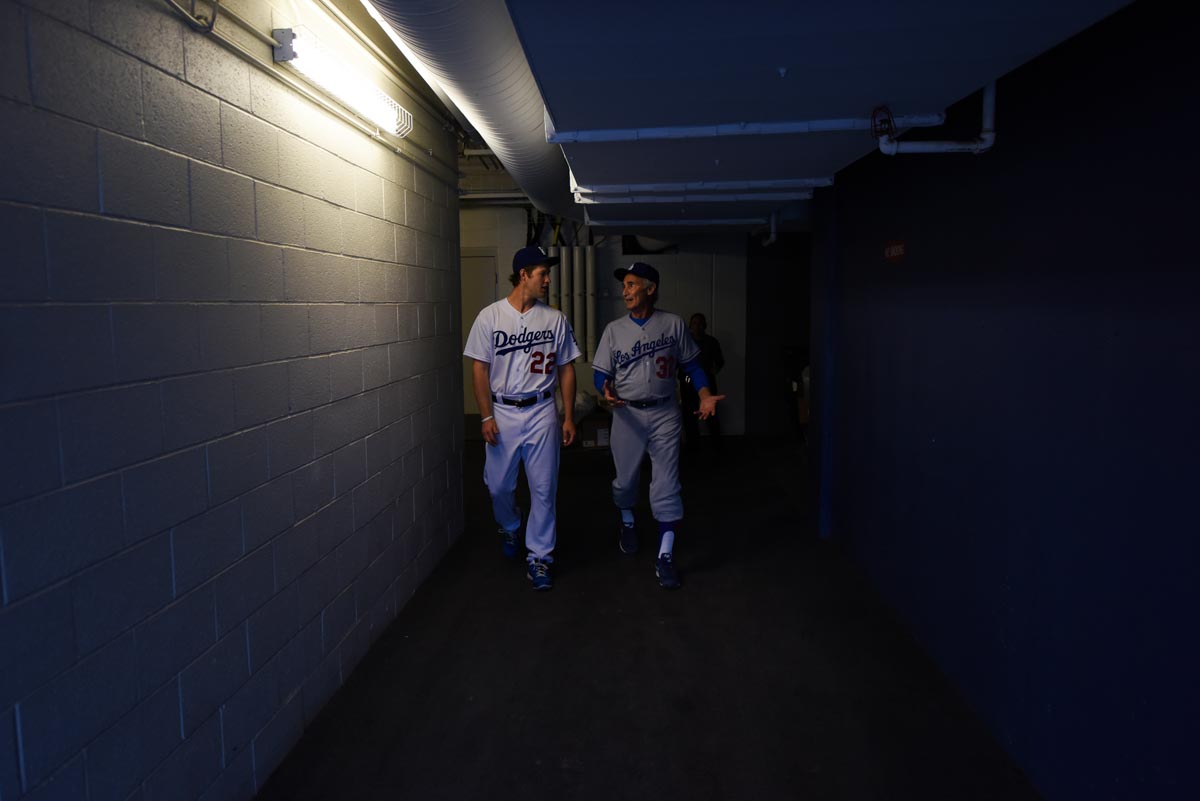
JS: One of my favorite Dodger photos is of Sandy Koufax walking with Clayton Kershaw down the hallway at Dodger Stadium in 2015 before an Old-Timers’ Day game. I’d prepped to do a photo of them in the bullpen. As we headed there, someone tapped me and said, “There’s something real cool going on behind you.” I turned around and started photographing them with my 50mm walking backwards as they talked baseball. It turned out to be the money shot.
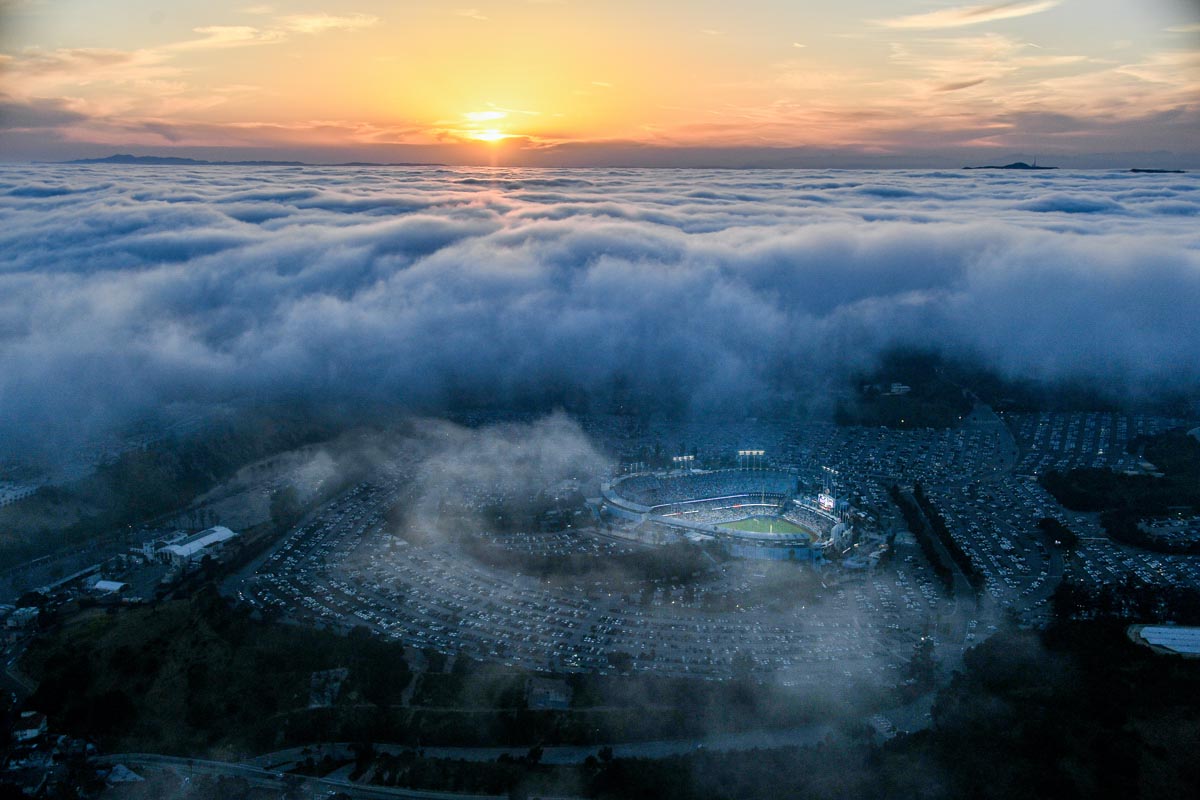
My favorite aerial was taken on Manny Mota Bobblehead Night from a helicopter I’d rented. Before heading to the heliport around 5 p.m. I saw fog had rolled in over downtown, so I texted the pilot, “Do you think I should come another day?” He said, “Oh, no, get down here and we’ll take off. It’s going to be really good.” We get in the air and he was absolutely right. Fog had rolled all the way over Dodger Stadium, and then there was a window where the fog rolled back out, and I had the sunset all lined up and exposed for that. It was magical. I flew with the door off with my 28-300mm on my Nikon. I’m one of the least scared photographers when it comes to using a zoom. All these guys want to use fast primes, and I just want a zoom where I can find my image and pop it, whether it’s at 1600 or 100 ISO. I want to get the image I want to get, and you’ve got to go with results. You can’t go by the specs. That’s how I view this photography game.
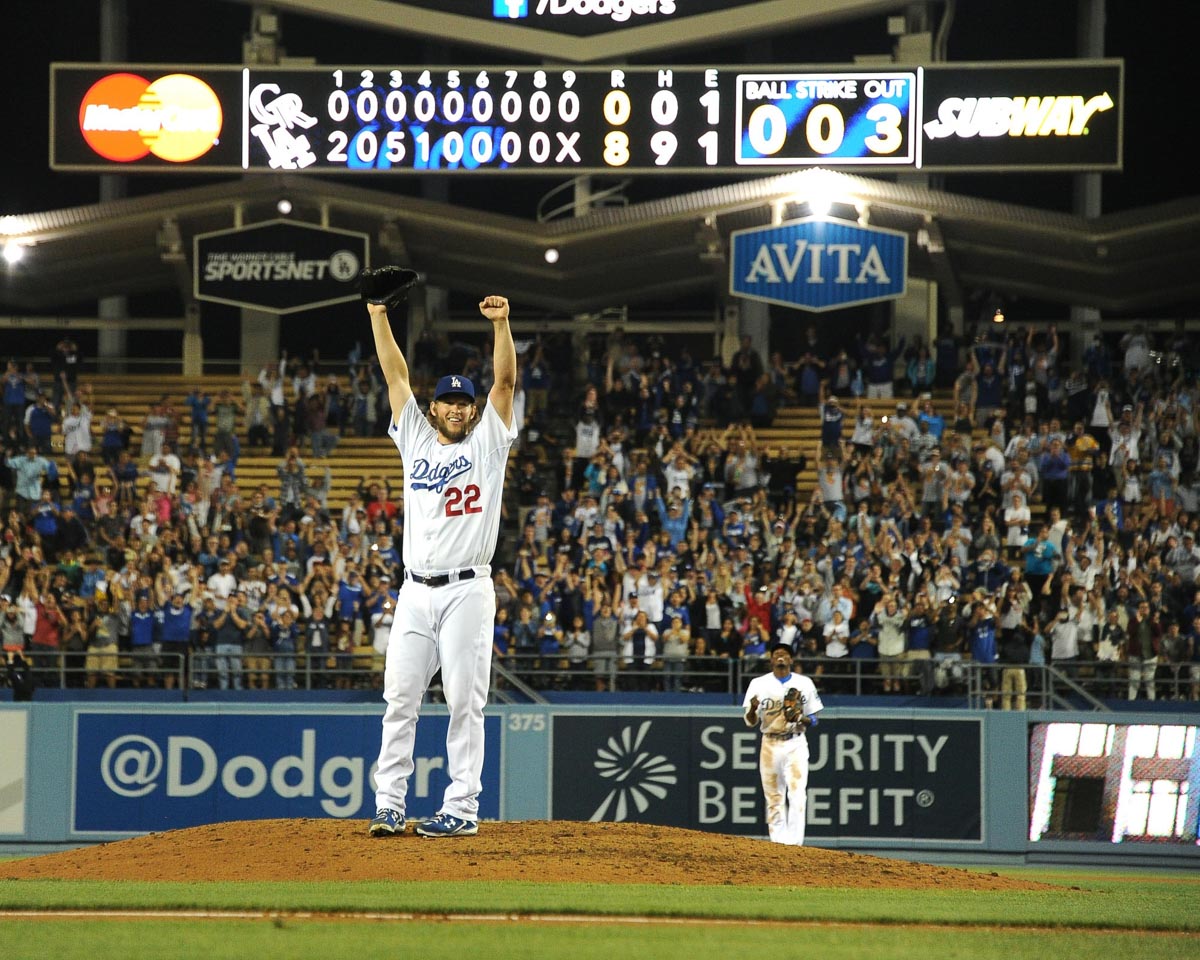
MEH: Perhaps the most historic photo from Clayton Kershaw’s illustrious career was your image of his 2014 no-hitter. How did you capture that?
JS: I took that photo from the Dugout Club seat section between third base and home. The key was to capture Kershaw on the mound with the scoreboard showing all the zeros on it in the background.
MEH: What’s in your bag for a typical game?
JS: When we play at home, I’ll carry a 28-400mm for the Z 9 as my go-to lens. In the clubhouse, I have a 17-35mm and a Nikon SB-5000 Speedlight with a magnetic MagMod diffuser. At the batter’s eye above the center field fence or the bridges above the bullpens at Dodger Stadium, I carry the 800mm f/6.3. If I go to the tower at the top of the stadium, I bring the 180-600mm along with the 14-30mm to get the full house. I also have a 24-120mm and recently added the new Z 70-200mm f/2.8. With a 1.4x converter, I can shoot from any of the photographer wells and cover everything. The Z 9 has an Ethernet port that I plug into to send my tagged images to my editor who’s in the stadium, and they send it to social media ASAP.
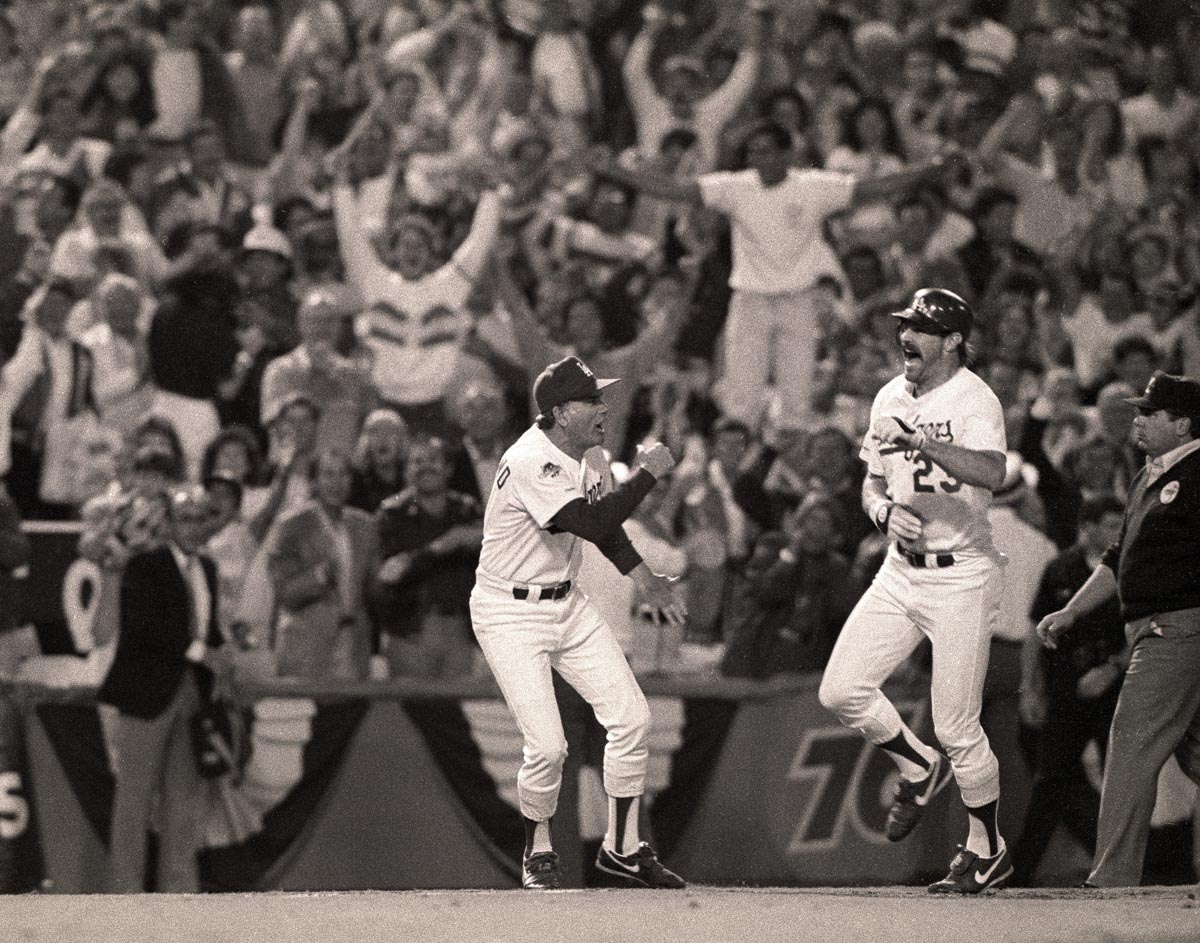
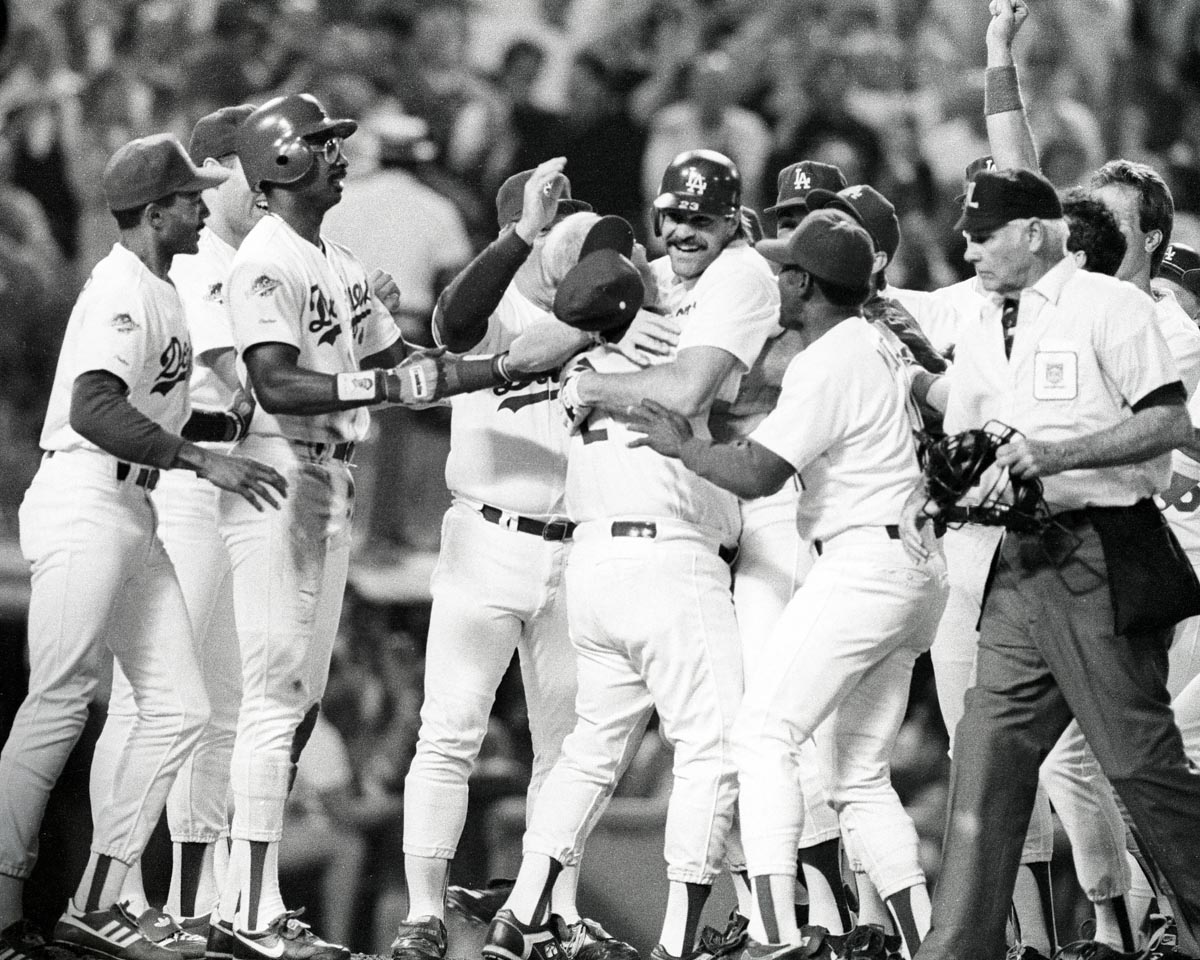
MEH: What are some of your other “greatest hits?” Capturing Kirk Gibson’s walk-off home run in Game 1 of the 1988 World Series against the Oakland A’s and Freddie Freeman in 2024 hitting the first walk-off grand slam in World Series history against the Yankees are other great examples of how you have frozen historic moments.
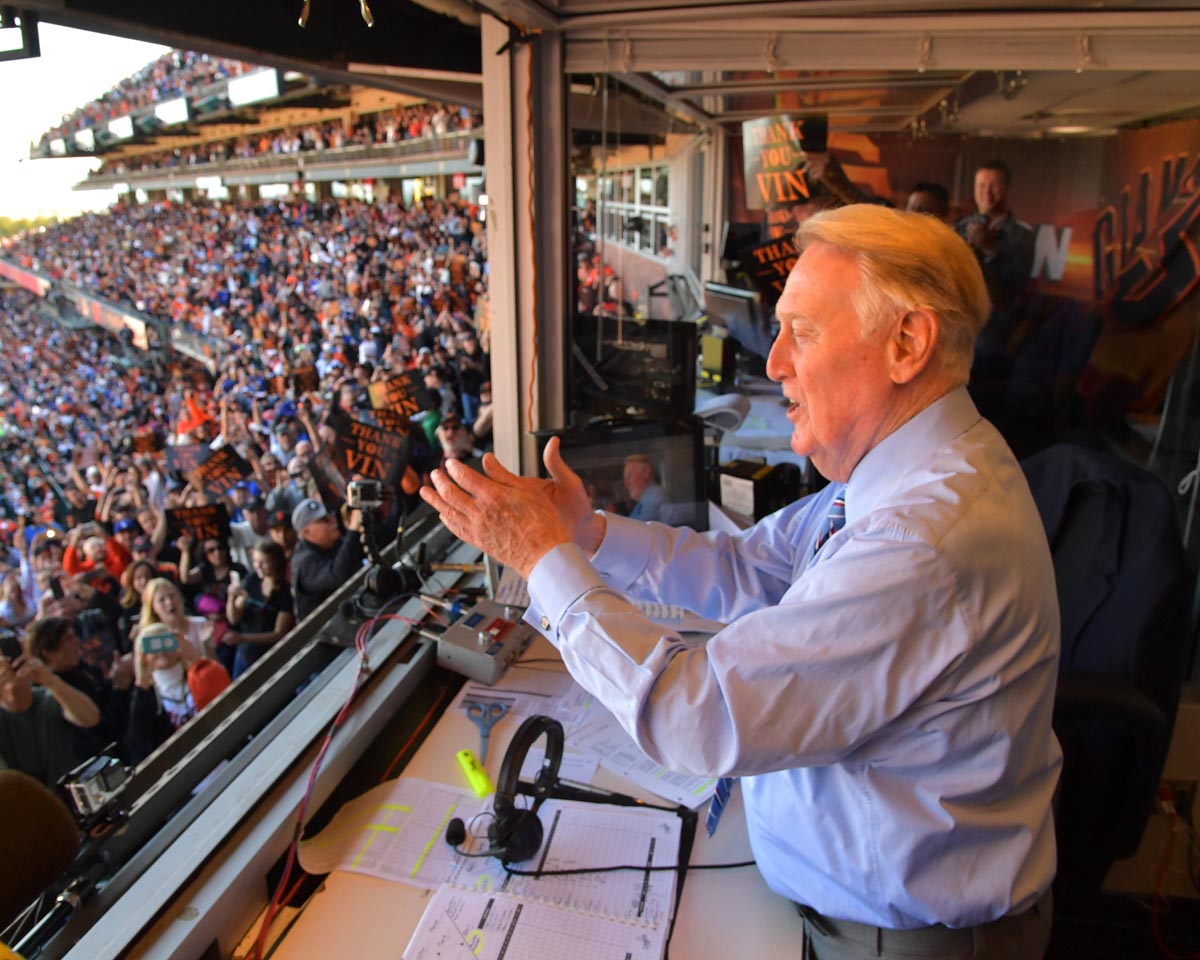
JS: The late sports commentator Vin Scully at the White House is one of my favorites. He was a true gentleman, just the nicest man, very gracious, very well-spoken, very thoughtful. He loved what he did. The best part about Vin is that every story he told was a story that he lived, not stories that somebody else went through. He lived those stories, and so I’m trying to do that with my camera.
For Gibby’s home run I was in a photographer’s well outside first base next to the A’s dugout on the steps, so I had a little extra room to get good angles. I had a roll of T-Max 3200 in my camera and was already at frame 16 before he came up to bat. I remember thinking, I better change rolls. I quickly loaded a new roll and next thing you know, he pulls it over the right field wall. Back in that day it was manual focus, so I’m trying to keep up with him as he’s rounding the bases. I refocused to third base to ensure I’d be able to catch third-base coach Joey Amalfitano high-fiving him and then follow Gibby home for the group hug. When the darkroom guy at Dodger Stadium spooled the reel, some of my negatives got sandwiched, so I lost about six frames from second base to Amalfitano slapping his hand. Fortunately, I got the last frame that happened around home plate, with Gibby’s face looking in my direction and all the players behind him.
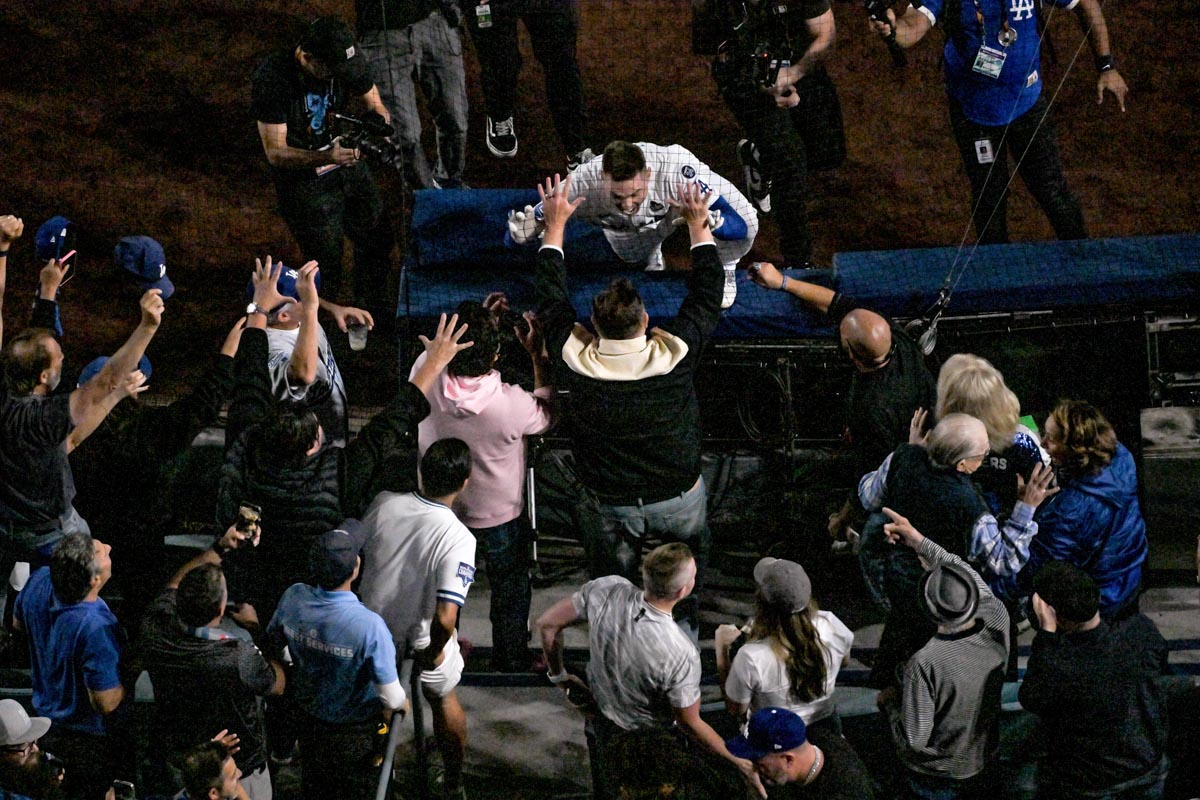
MEH: Where were you for Freddie’s grand slam?
JS: I went up to the top of the stadium and climbed a ladder to the top of the elevator tower behind the plate. I knew there was going to be the game-ender sooner or later, whether it was us winning or losing. Because of my high vantage point, I had the entire batter’s box in the frame and the ball coming off Freddie’s bat. I then followed him going around the bases and doing high-fives at home plate. The topper was Freddie going to see his father in the stands behind home plate. It was a fantastic moment that no one else could get but me because of my angle from the top. I’m always looking for unique angles. I’ve used a fisheye on my camera mounted to a monopod to get a high angle on the team surrounding players coming to home plate. That kind of access is one of the advantages I have as team photographer.
MEH: Do you feel like a real member of the team?
JS: That’s the way I see it. I’ll be here longer than the players will be. I took pictures of Dave Roberts playing baseball and now he’s the manager and his kid just graduated college. Time’s flying by, and I appreciate the whole kit and caboodle.
Mark Edward Harris is an award-winning photographer and writer based in Los Angeles.
Tags: sports photography