
Into the Great Outdoors
Jared Plante is at ease in the natural environment
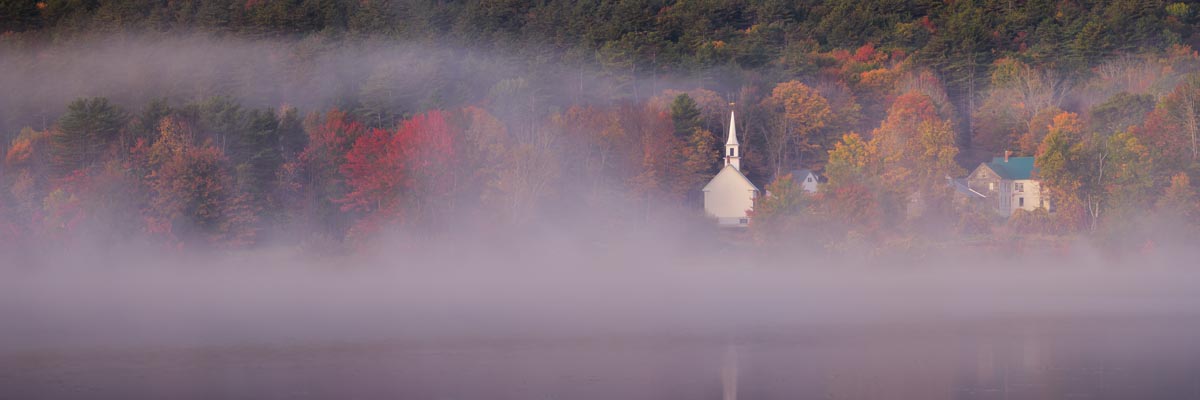
New Hampshire-based Jared Plante, M.Photog., makes it a point to record the magnificent flora and fauna of his adopted state and its neighbors. The Maine-born, self-taught wildlife and nature photographer began capturing images while on a work trip with a very different job description.
Plante was working toward a BA in business at the University of Southern Maine when he decided to change careers. He took a job as a civilian employee overhauling and modernizing submarines at the Portsmouth Naval Shipyard. “I’ve always had an interest in photography, and I love the camera’s ability to eternalize a moment in time,” he says. So, in 2016, just before a four-and-a-half-month post in Virginia, Plante bought his first camera, a mirrorless with interchangeable lenses. “But believe me, I was lost,” he recalls. He turned to YouTube for technical tutorials and ventured out for training in the field. In 2018, he joined the local camera club in Rochester, New Hampshire, met some members of the New Hampshire Professional Photographers Association, and started attending photography workshops. “This in-depth training and feedback on my work was invaluable,” Plante says.
Over the past 12 years, Plante has continued his day job with the Navy while pursuing photography on the side. Not that he doesn’t find the idea of being a full-time nature photographer appealing. “I would do it in a heartbeat, if I could do that, and be very comfortable for the rest of my life,” he says. “It would be so enjoyable. What I’m doing now as a supervisory physical science technician is also a rewarding career, working for the Navy making sure that what we put back to sea sails safely.”
Plante’s aptitude for technology has been a benefit in his photography journey. “I understood how the mechanics worked, though aperture was kind of confusing because the smaller the number, the bigger the opening,” he says. “I used to be a pipe fitter, and I didn’t quite understand that concept, because that’s backwards from my technical thinking, so that took me a little while to learn. But the rest of the mechanical portions of it I caught on pretty quickly. Through a lot of trial and error, I developed my techniques and found my photographic focus.”
KEEN AWARENESS
On another work trip in Hawaii, Plante visited the Peter Lik Gallery and fell in love with Lik’s work. “I spent many days in there, viewing the immersive images that he had created,” Plante says. He also admires David Yarrow’s photography. “He sets up some really cool scenes that include people, and often uses a wide angle when photographing wildlife that’s kind of unique,” Plante says. “That means he has to get really close to his subjects, including lions and elephants.”
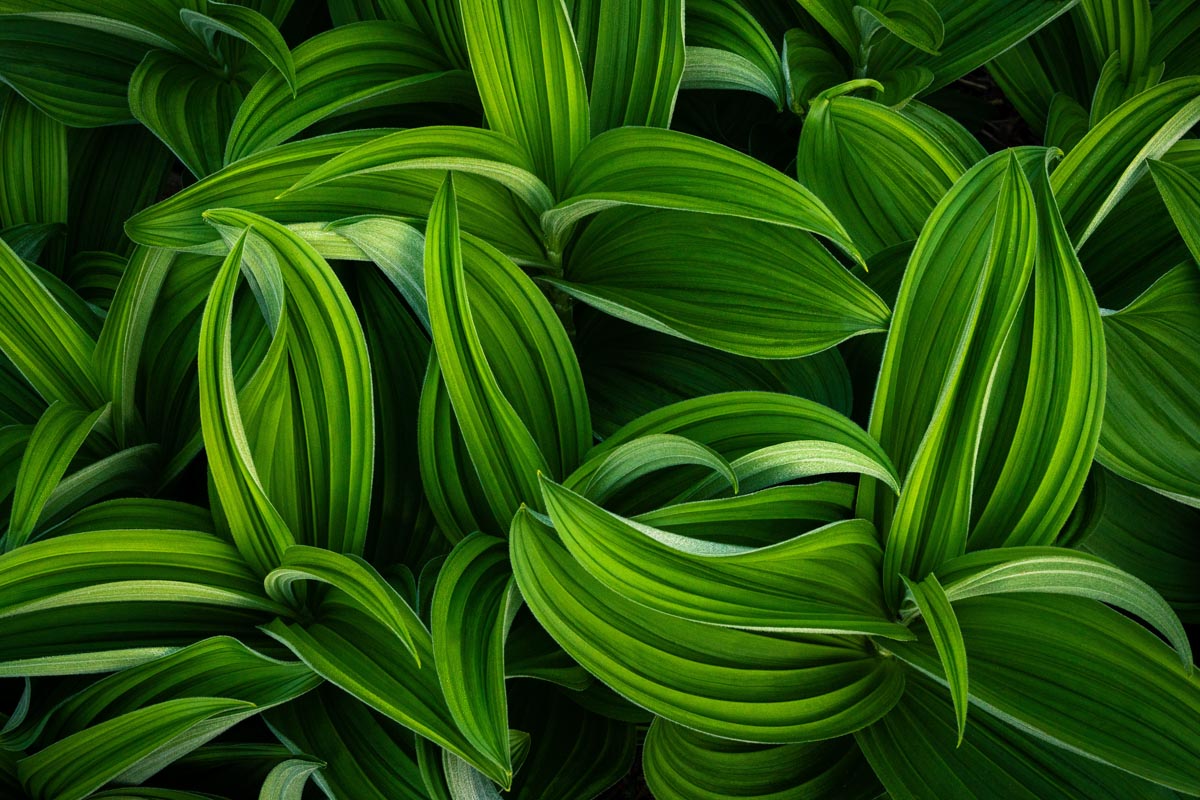
Plante shares stories about his award-winning photos on his website to help viewers and potential clients understand what happens behind the scenes. One of his favorite photos, “Lush” (above), made in Washington’s North Cascades National Park, is an example of his analytical awareness. The intricate plant in the image is called false hellebore, which prefers wet soil in meadows and along stream beds, Plante explains. “The leaves spin around the main access, and as it goes up, it creates this little pinwheel. There’s a lot of symmetry in that,” he says. “The overlapping leaves covered the ground beneath them, leaving little light to pass through. And I love the texture of the leaves, because they’re very smooth, but they have these ridges that can catch the light. I shoot a lot in shade, and then I bring out some of the highlights to create a sense of depth in the photo.”
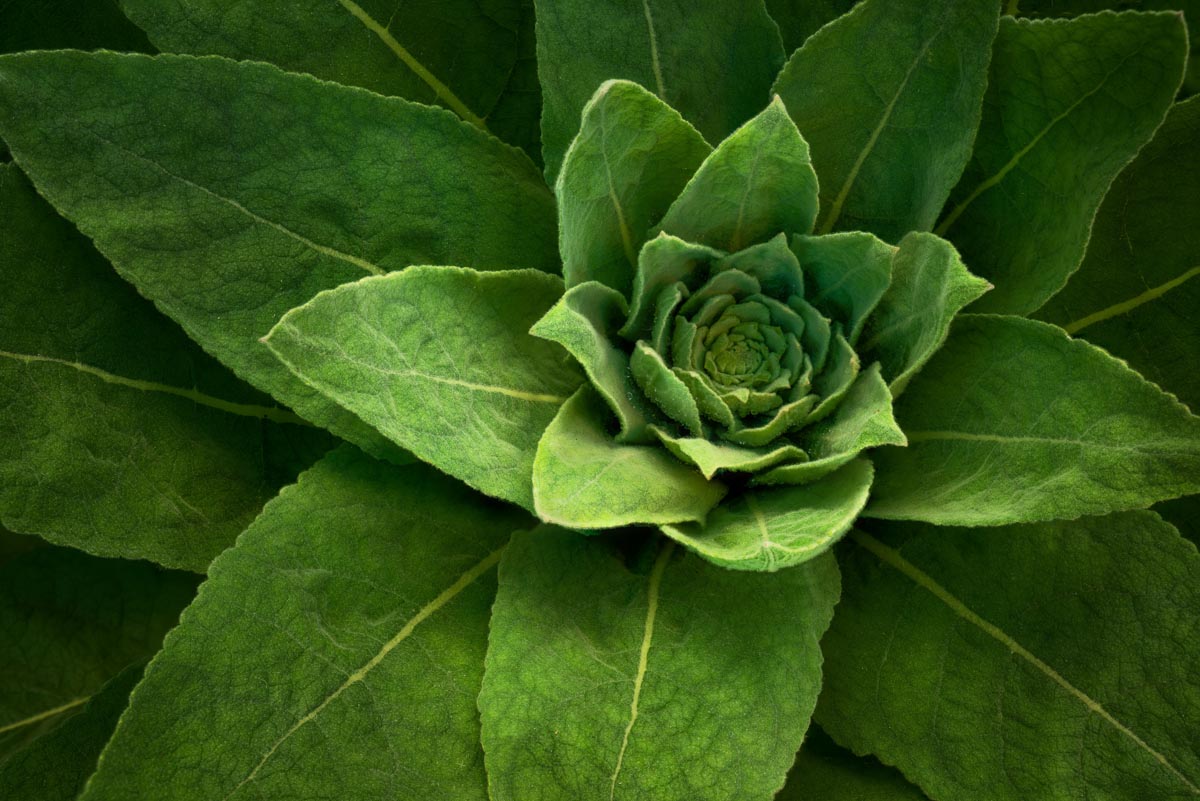
He combined several techniques, including focus-stacking, to create his image, “Budding” (above). “I started with the bud, and I worked my way out,” Plante explains. “I was hoping to get some beautiful morning natural light, but behind me, there were a lot of trees and cover that caused some crazy shadows. So, I ended up bringing in a couple of small Aputure MC continuous lights so you can see some textures and help my overall image.” The lights allowed Plante to fine tune his color temperature, dial in the color balance, and keep the scene looking natural.
For his image “Autumn Birches” (below), which offers a wide view of patterns in nature, he stitched together five or six vertical images using Adobe Lightroom and Photoshop to create a panoramic image. “I love finding birch trees with character,” he says. “Their bright white bark allows them to stand out amongst the gold leaves behind them in autumn.”
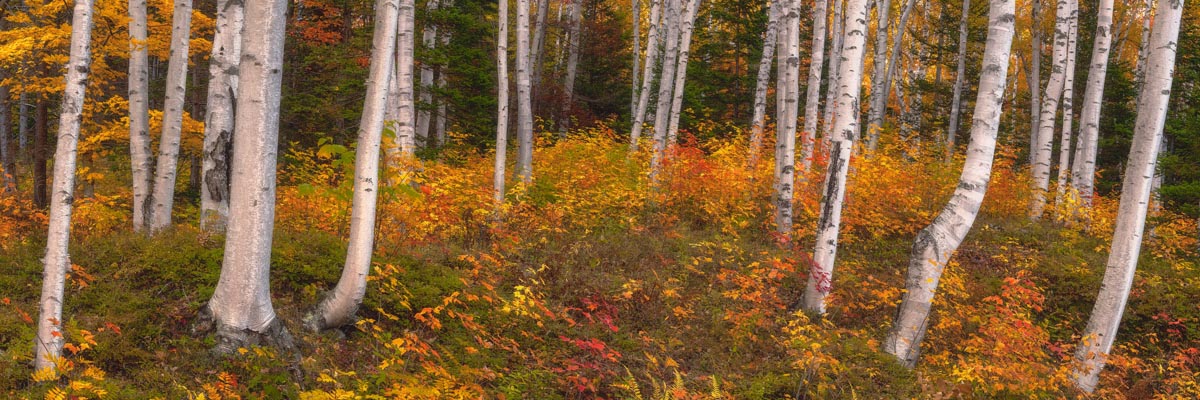
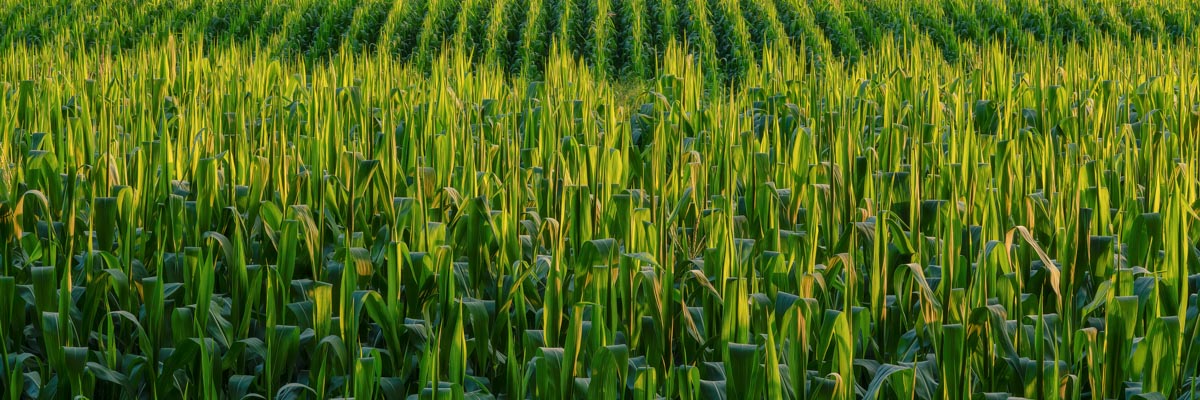
Plante says photographing panoramas in landscape mode can be restrictive. “I have too wide a field of view, or too much of the image left to right, and I really want to be focusing on the top and bottom,” he explains. “I want to have that additional information from the top and bottom, so that when I overlap the images, I have the ability to crop if necessary.” This method ensures there’s no distortion or missed pixels, he adds, and the resulting large file size means he can print “Autumn Birches” or another favorite image, “Harvest Time” (below), at 20x60 inches. “I’m a big panorama guy. I want to be able give myself a 20x60 print if I have the opportunity,” he explains, “but from a single frame, I might not be able to blow it up that much without losing some clarity in the image.”
At home, Plante can print images up to 13x19 inches on Epson’s Signature Worthy Hot Press fine art matte paper with his Canon Pro-10, and he uses Bay Photo lab for larger images. He does his own mounting and builds his own frames out of walnut, oak, maple, and cherry, choosing the wood based on what looks best with the image.
WHEN THE ELEMENTS ARE JUST RIGHT
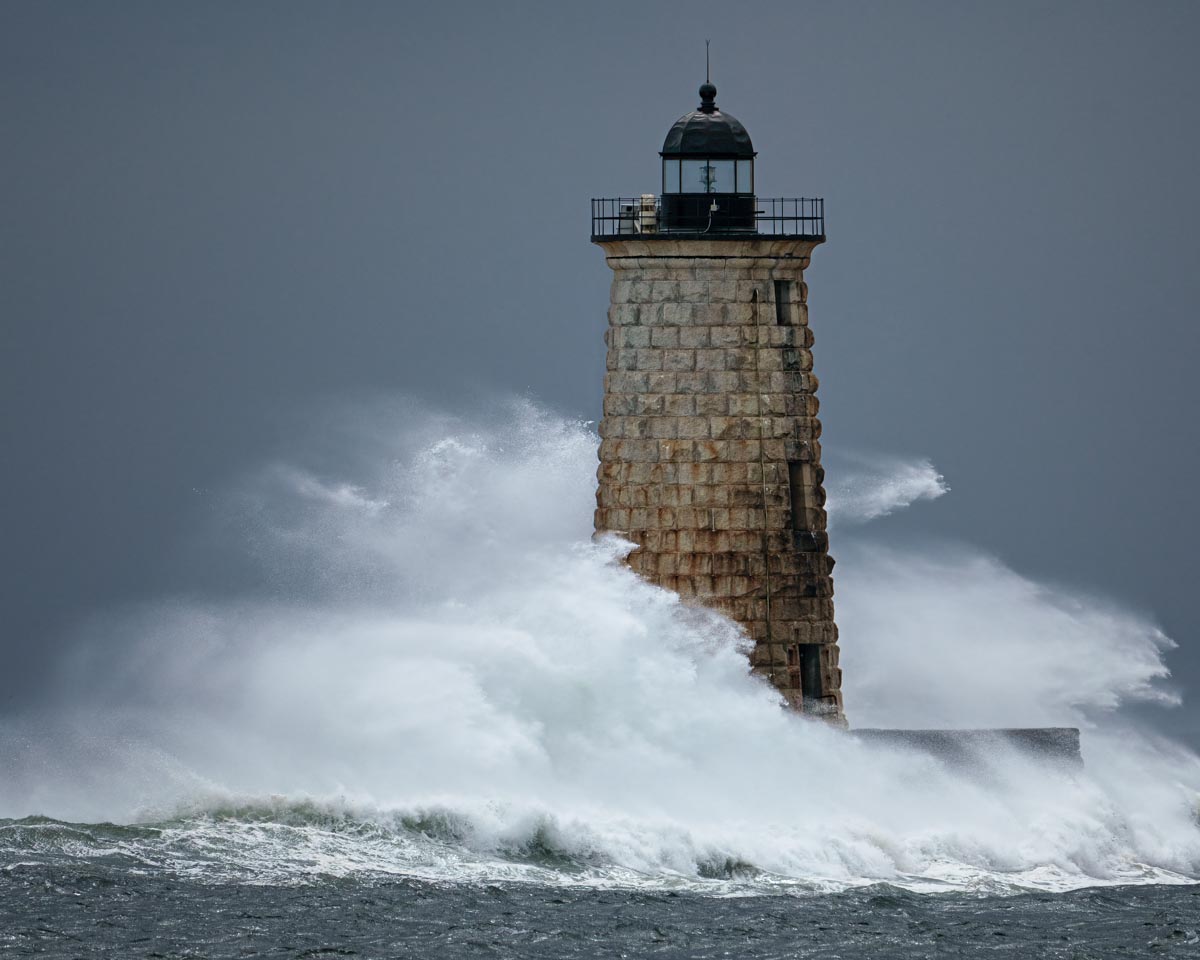
Occasionally Plante will incorporate a human-made element into his nature photography. “Built for the Storm” (below) is one example. “That’s a very popular lighthouse in Maine called Whaleback Lighthouse,” he says. “It’s at the mouth of the Piscataqua River on a rocky outcropping, and it’s a really neat little spot because you get some great sunrises there and also these really big storms with intense waves. It’s really about sitting and waiting for the right waves with the right light.”
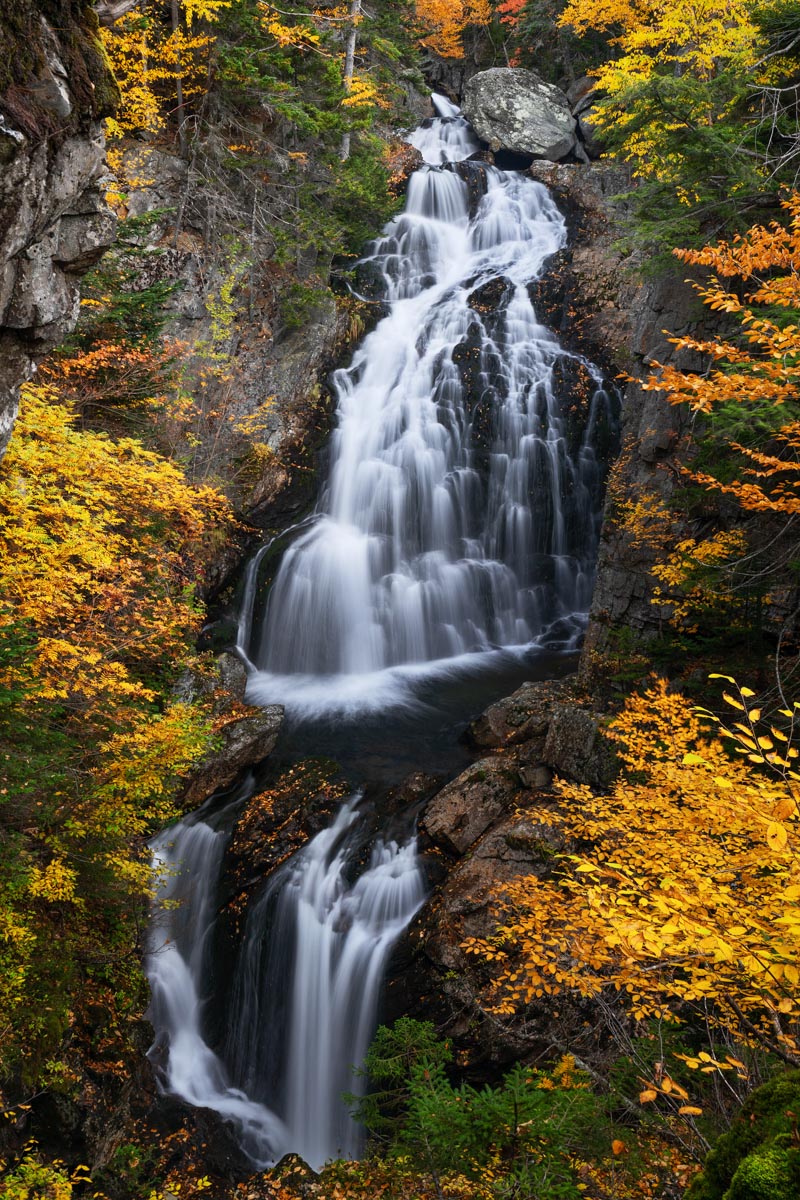
It took longer for all the elements in Plante’s “Autumn’s Cascade” (below) to come together. “This was a couple years in the making,” he says of the photo. Peak foliage was critical. “I wanted to photograph this waterfall in the White Mountain National Forest when there was autumn yellow. And it only happens for about a one-weekend period, and then it’s all gone. There’s an overlook perched up nicely to see this waterfall, and it’s really brilliantly framed with all these little yellow leaves.” He used a Lee polarizer to capture vibrant colors as well as reduce the reflection on the water, “so I could get those deeper blacks in the water and at the same time you get those bright whites in the waterfall.”
For Plante’s type of outdoor photography, it is vital to be aware of the weather, the sun’s position, and the location of the stars. He uses the Photographer’s Ephemeris app and PhotoPills, he says, to figure out where the light’s going to be that day, or when the galaxy’s going to rise. While wildlife photography often requires long lenses and faster shutter speeds, capturing landscapes is often best with the opposite end of the lens spectrum, Plante explains. He doesn’t mind getting dirty if it means coming away with a more dynamic photo. That includes sharing a patch of mud at the base of a maple tree to make eye contact with a gray tree frog (below).
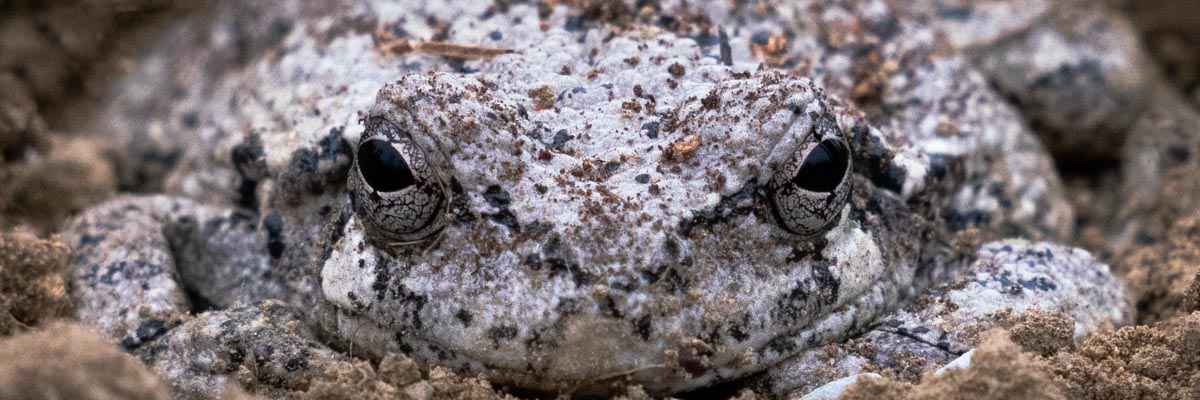
“His eyes were just so captivating,” says Plante, “with all the texture in them. He’s looking right at me, I’m looking right at him. And he was unbothered. He was just happy hanging out there. I like to be able to freeze a moment in time like this to share.” Like the tree frog, Plante is happy simply spending time outside. “I’ve always been a big nature, outdoors person. I love being out in the woods hiking, fishing, watching wildlife, just spending time in quiet places,” he says. “So, photography in the outdoors was a natural fit that started off as a great hobby for me and is now a successful part-time business.”
Mark Edward Harris is an award-winning photographer and writer based in Los Angeles.