
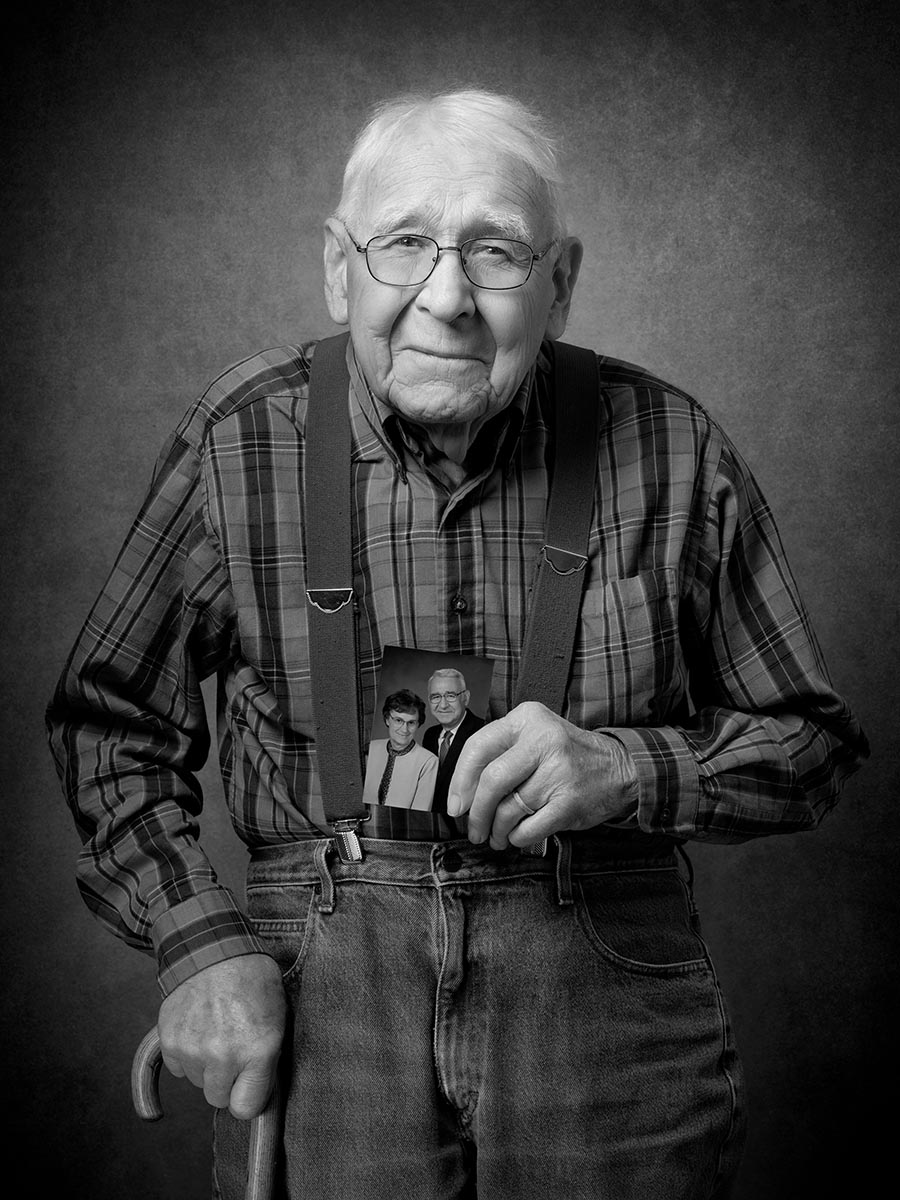
Living in a small town in rural Montana, Craig Edwards, M.Photog., is familiar with many of the people in his community. But as he came into his 60s, he became “increasingly aware of how the elderly fade into the background and are sometimes forgotten and nearly invisible,” he says. So, he decided to start the “Over 80 Project,” creating black-and-white portraits of subjects over the age of 80, each of them holding a photograph of themselves at a younger age. He sees the compositions as reminders that the subjects led interesting lives, have the wisdom of experience, and, he adds, that “their story started long ago.”
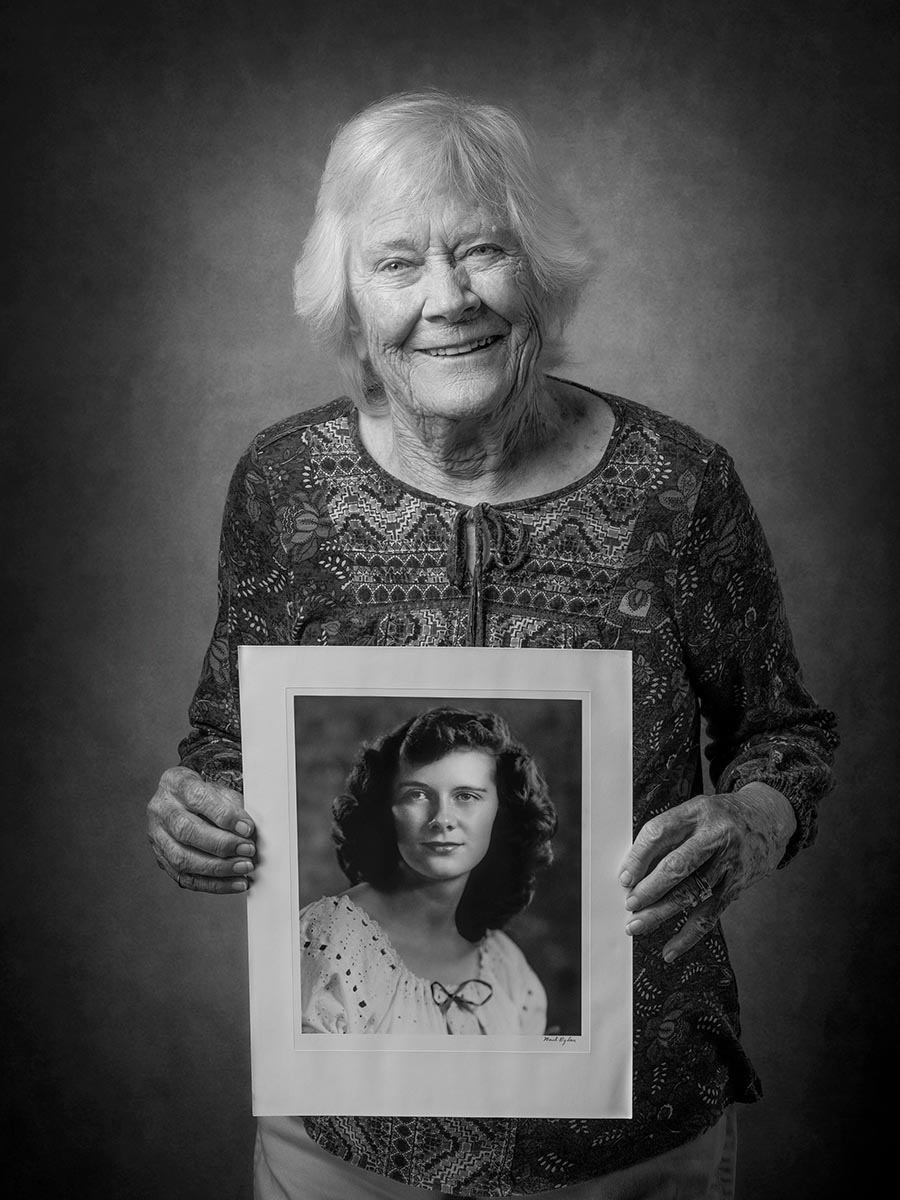
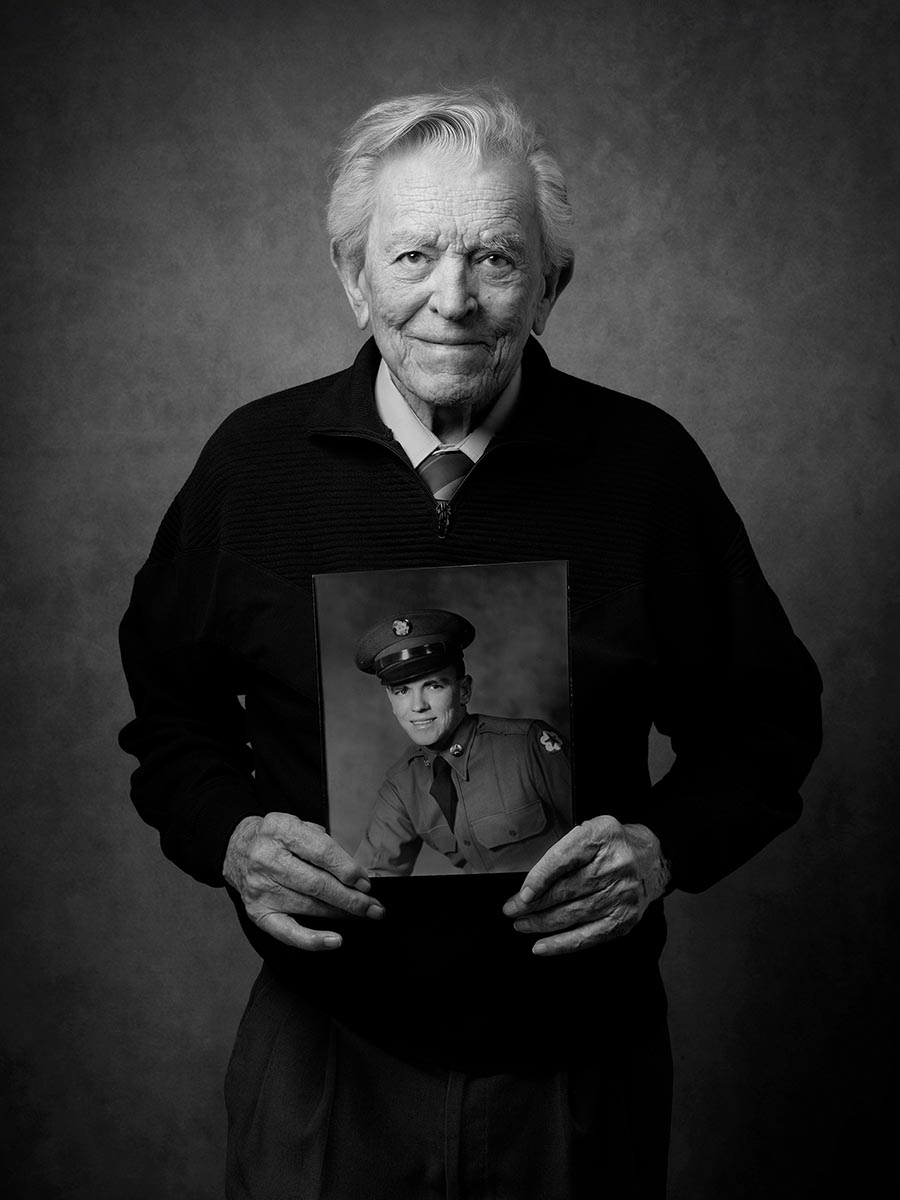
The subjects: Some of the subjects he knows or he knows their children, while others he approaches on the street, at church, or at public events. “Some are shut-ins, and I work with a family member to get them into the studio,” he explains.
The process: Edwards asks subjects to bring two to three photos of themselves at younger ages. Veterans often bring service portraits and others bring high school graduation or wedding photos. When photos are smaller than ideal, he will make a larger copy, but Edwards generally tries to work with what the subject has brought. For his own reference, he attaches his iPhone to the top of his camera bracket to take video of his subject as he works, asking them questions about the significance of the photo they’re holding.
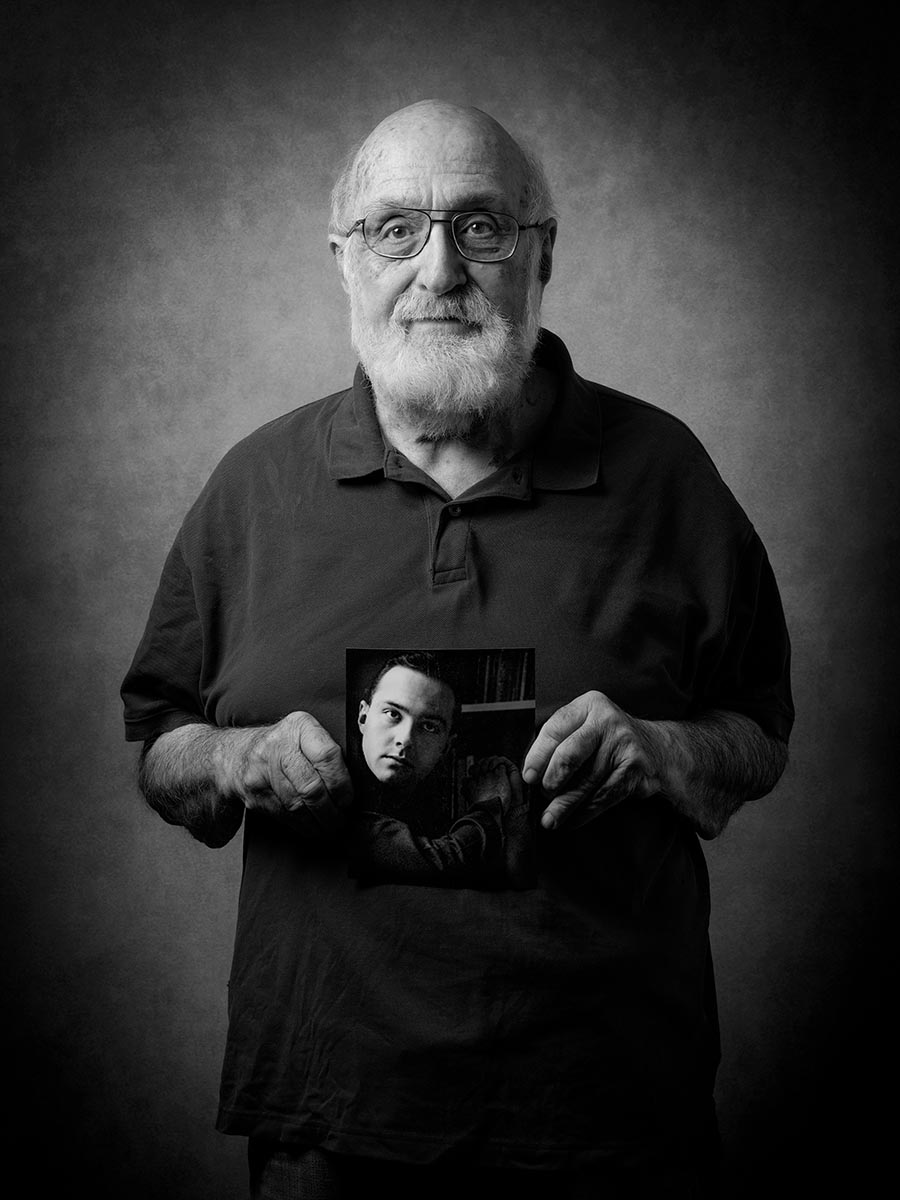
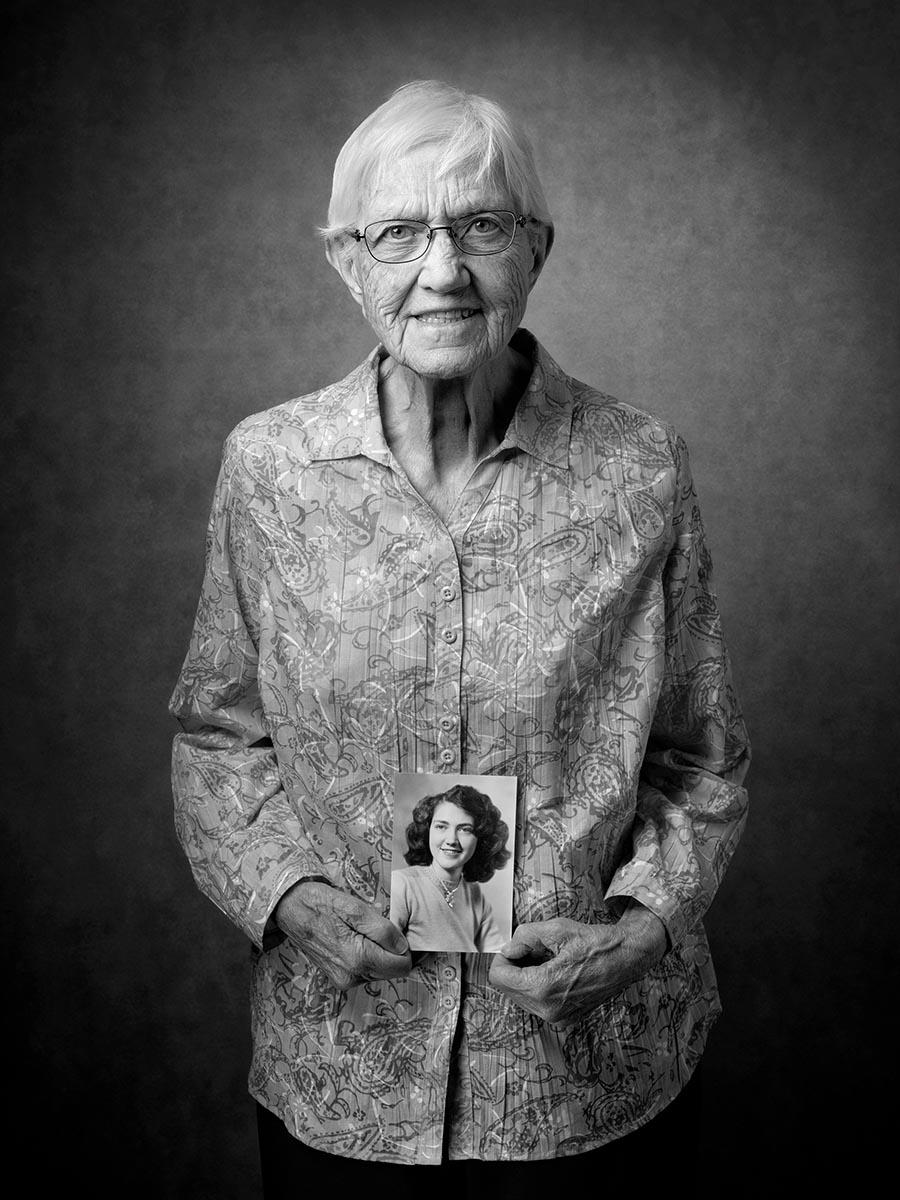
Equipment: He uses a standard canvas background, but in post-production, he overlays a digital background he created for the project. He uses strobe lighting: a key light with a 24-inch round soft box and a second strobe with an 8x24-inch soft box with an egg crate grid, placed on the same side as the key light and used to light the subject’s hands. On the other side of the subject is a 3x6-foot reflector. He photographs with a Fujifilm GFX100 and a 45-100mm lens.
Challenges: Many of the subjects have thinning hair and the background color can bleed through, so a neutral background is important. “White hair can appear to lack texture,” he explains, “so care must be taken not to over light.” The skin, particularly on the hands, “can go dark quickly,” he says. “This is why I use a second light just for the hands.”
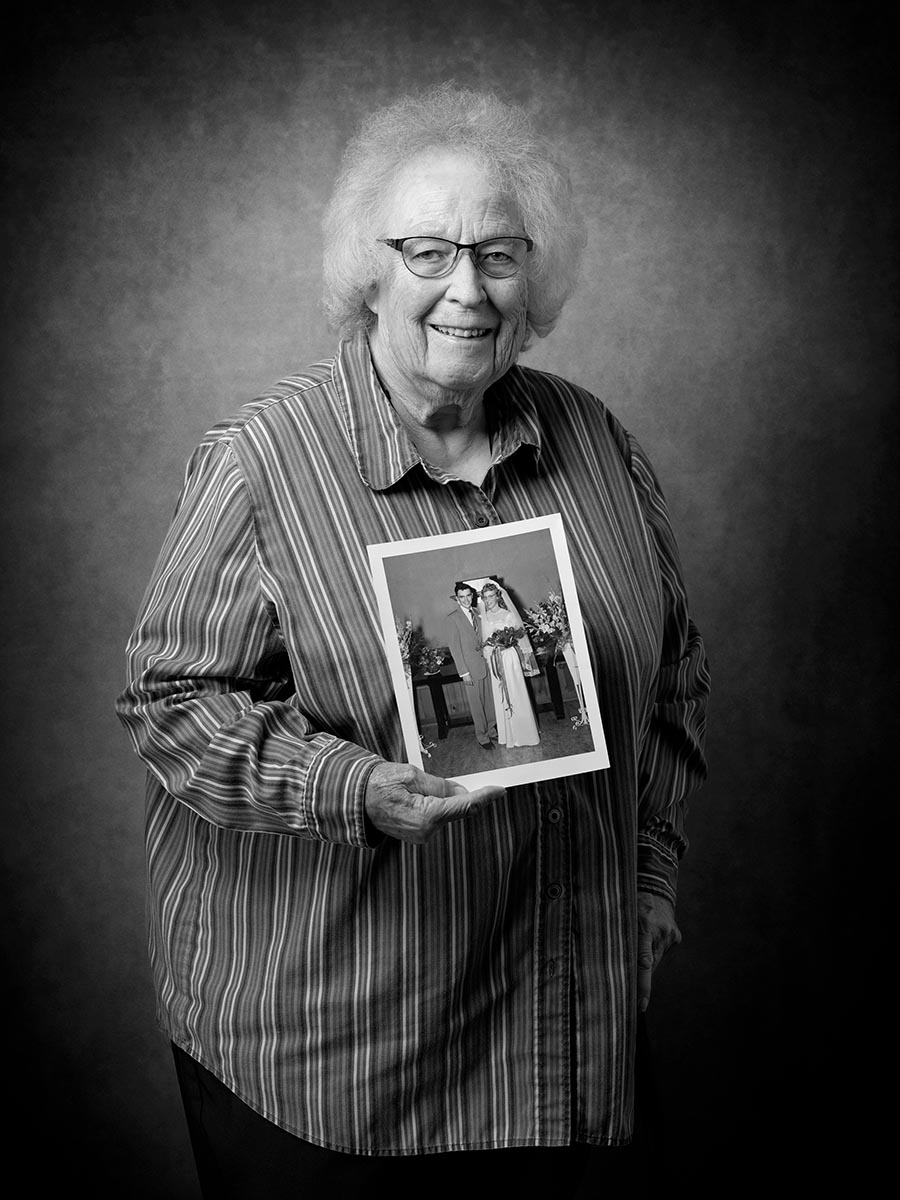
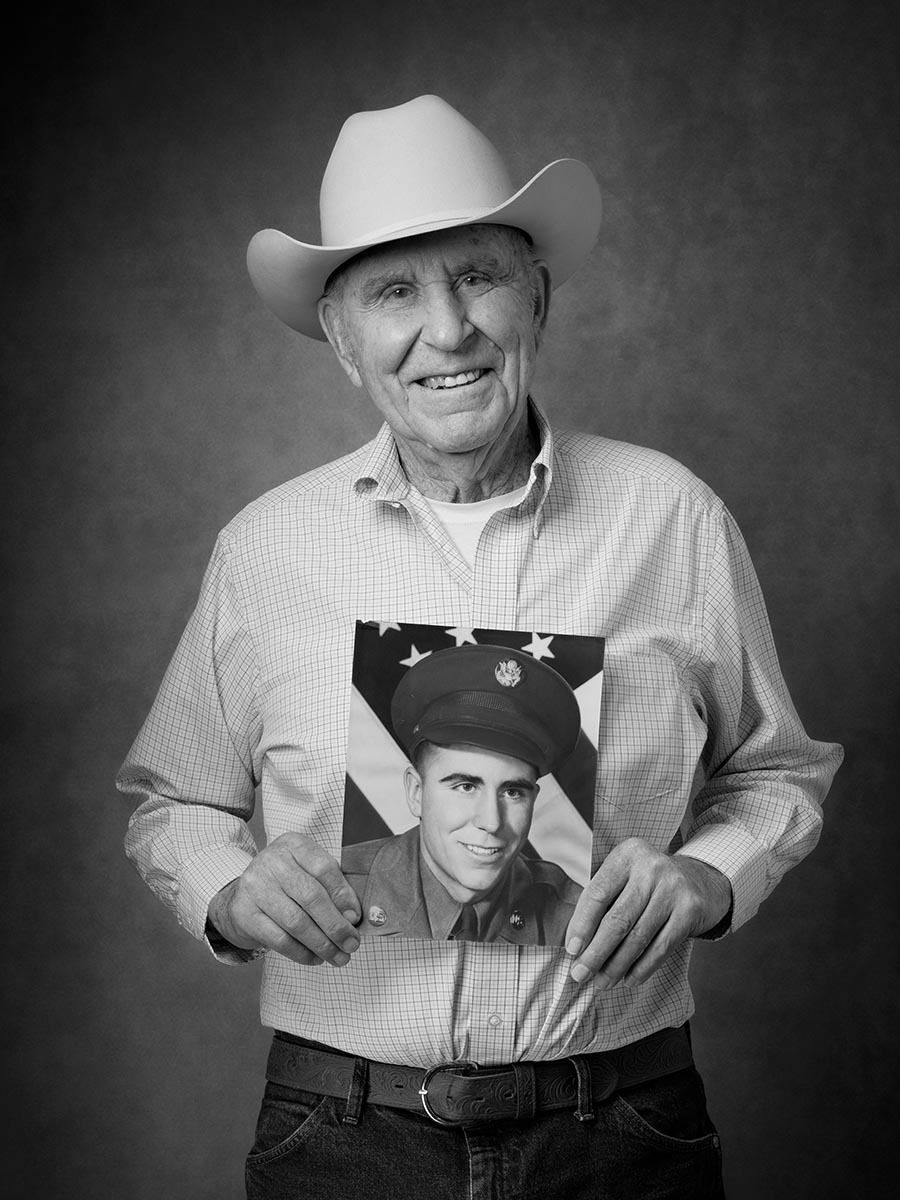
Retouching: He sticks with minimal cosmetic retouching, such as slight teeth whitening, lightening of age spots, and he retouches unwanted hair. “I am not trying to make beauty portraits, but I’m also not trying to emphasize facial lines,” he explains. “No matter how old people are, they want to look at least as good as they think they look.” He creates 24x36-inch prints on canvas for his subjects.
The value: “Photography has always been the best way for me to connect with people, and being able to interact with [these subjects] is good for my soul,” Edwards says, “and I also believe it is good for them as well. … Some of these people have passed since I photographed them, and their portraits have been used at their funerals,” he adds. “For me, that emphasizes the importance of this project and my role as a photographer.”
Amanda Arnold is a senior editor.