
In With the Old
Skaters in tintype
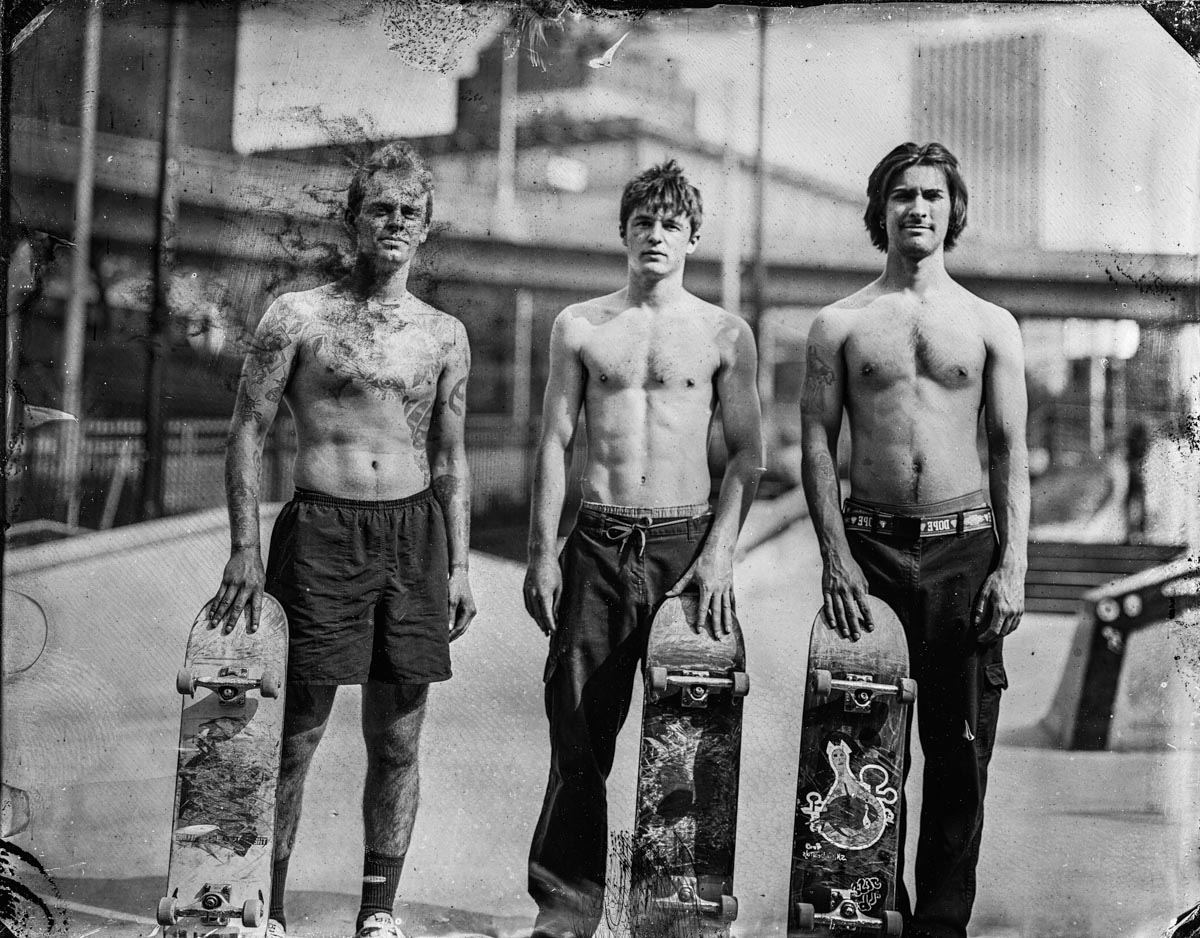
Tintypes first piqued Clay Patrick McBride’s interest when he and his wife’s wedding photographer created some at their wedding. Even though the process originated in the 1850s, the resulting images reminded him of the Polaroid type 55 film he and other rock ‘n roll photographers used in the 1990s. “It felt like everything I loved about the ’90s aesthetic,” says McBride, a seasoned commercial photographer and an assistant professor of photography at the Rochester Institute of Technology. When a fellow professor and mentor offered to teach him the process, he jumped at the opportunity.
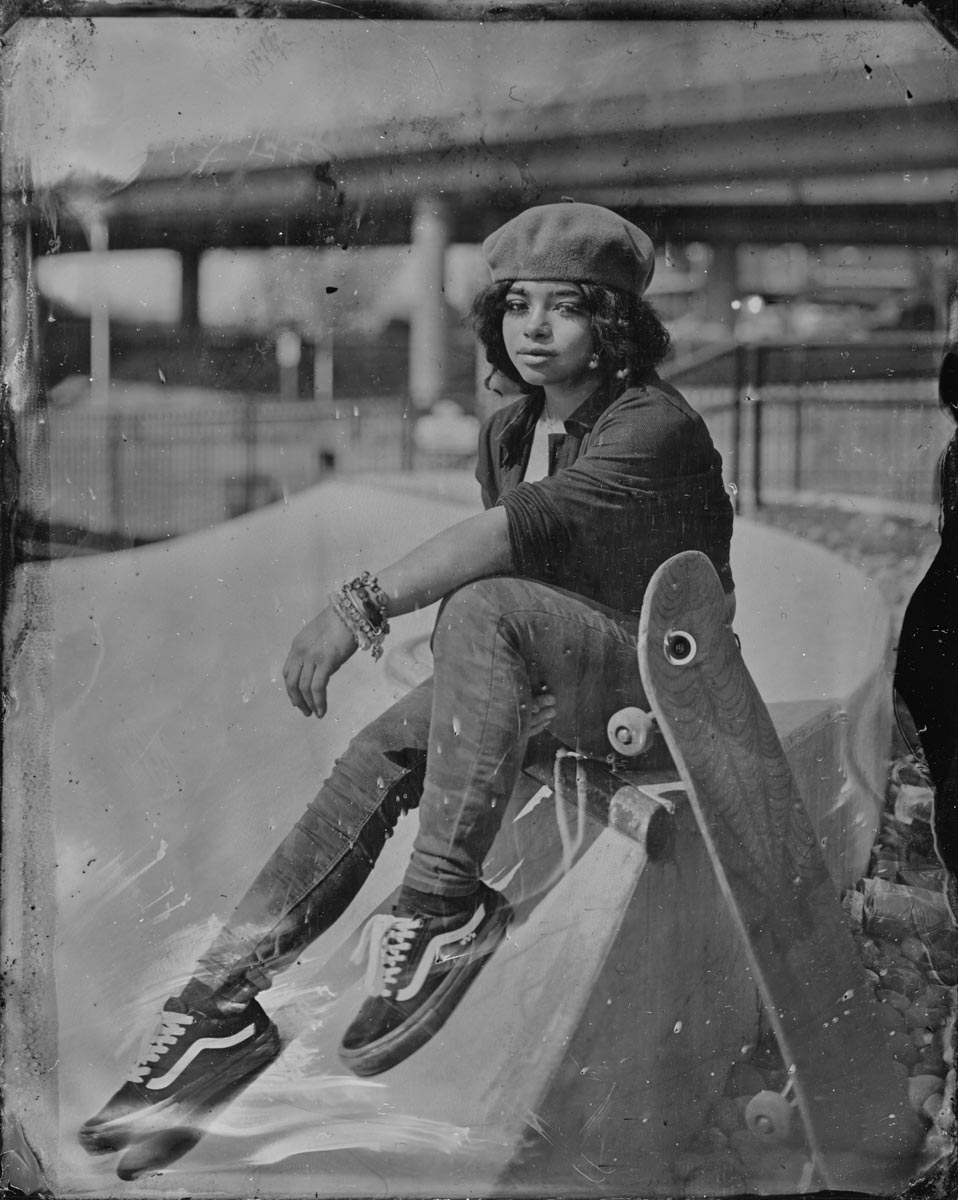
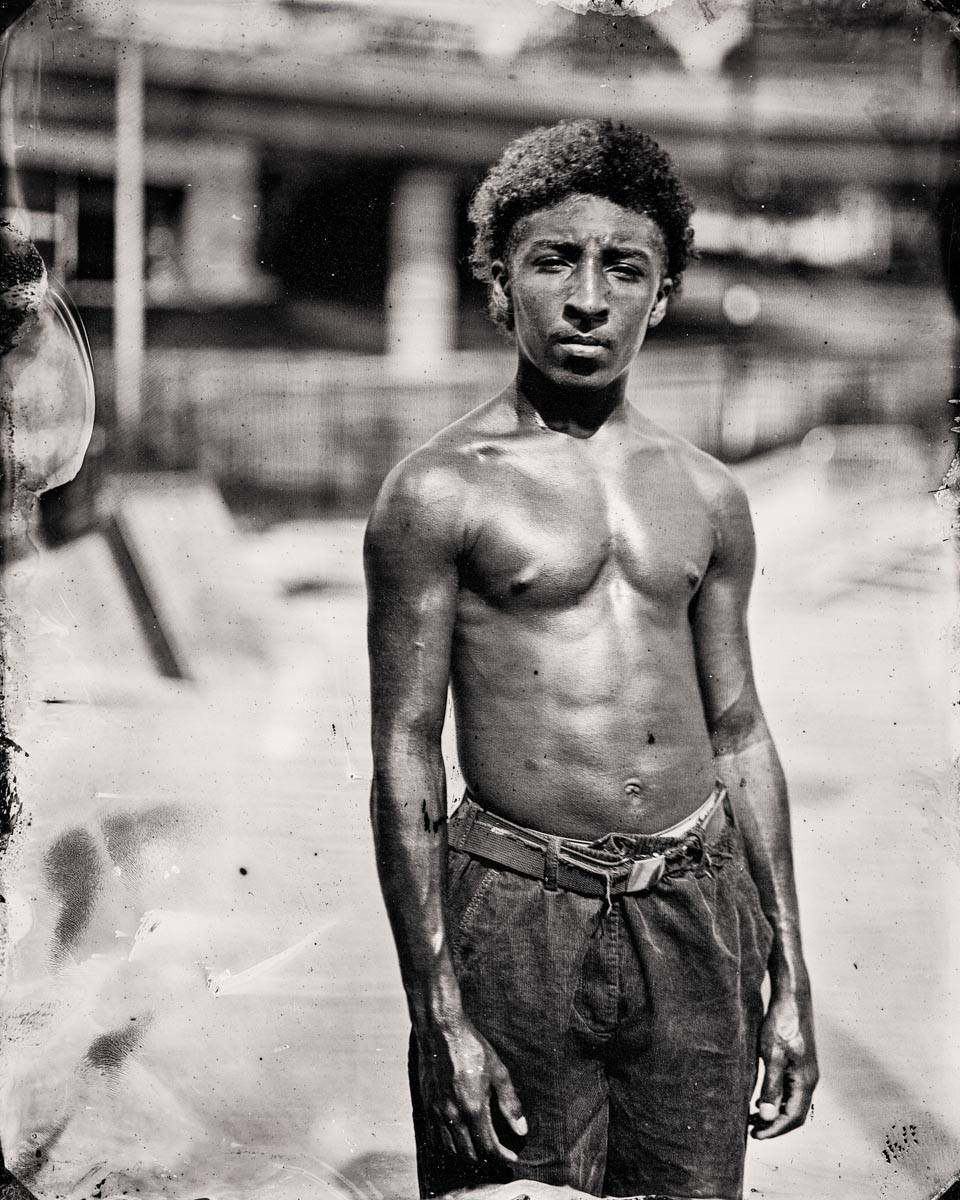
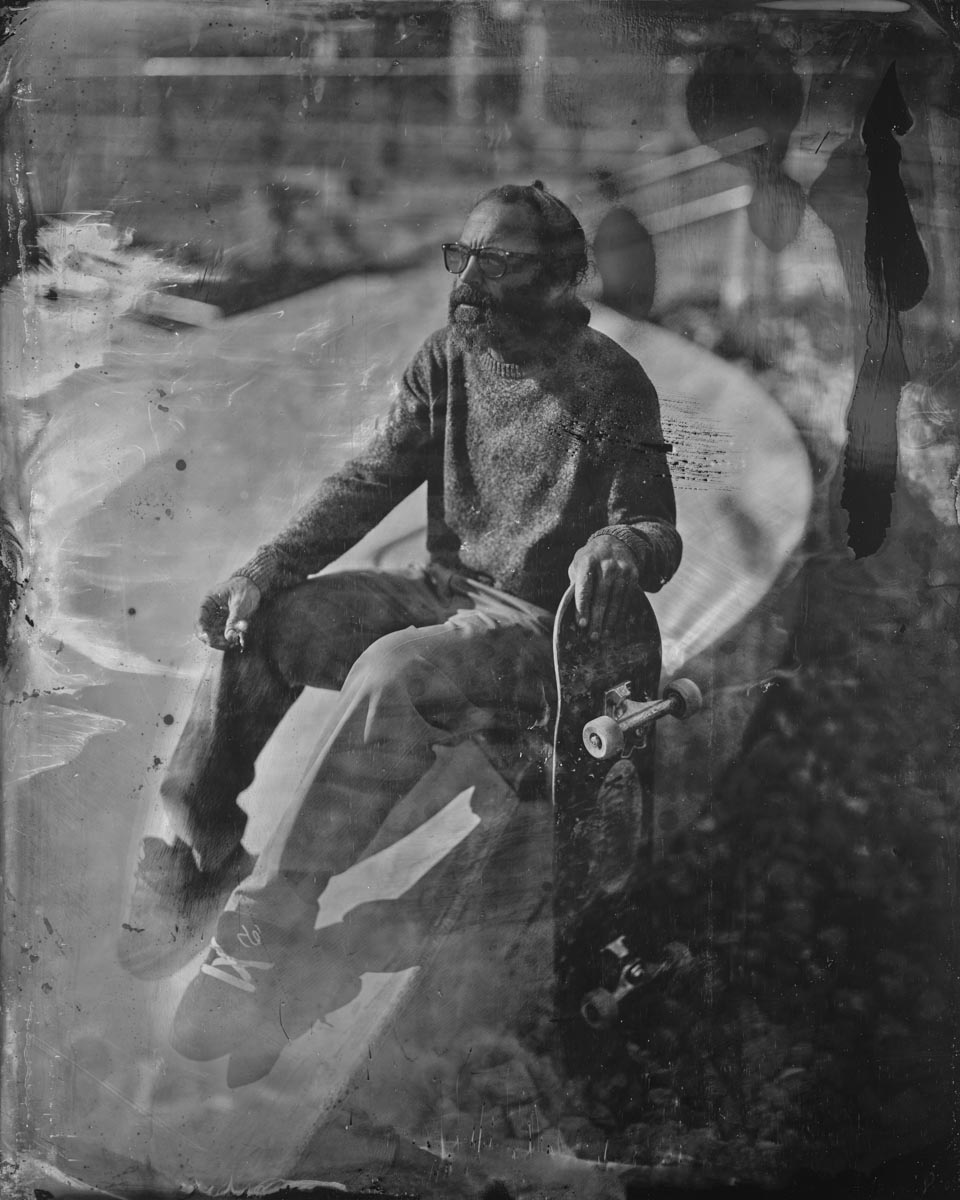
To practice his skills, McBride put a portable wet plate collodion dark room on a cart and wheeled it four blocks to Rochester, New York’s Roc City Skatepark twice a week to document the athletes. It was nice to have a photo project close to home, he explains of creating his series “Rocstar.” “Skaters have a deep history of being photographed,” he says, so he always had willing subjects.
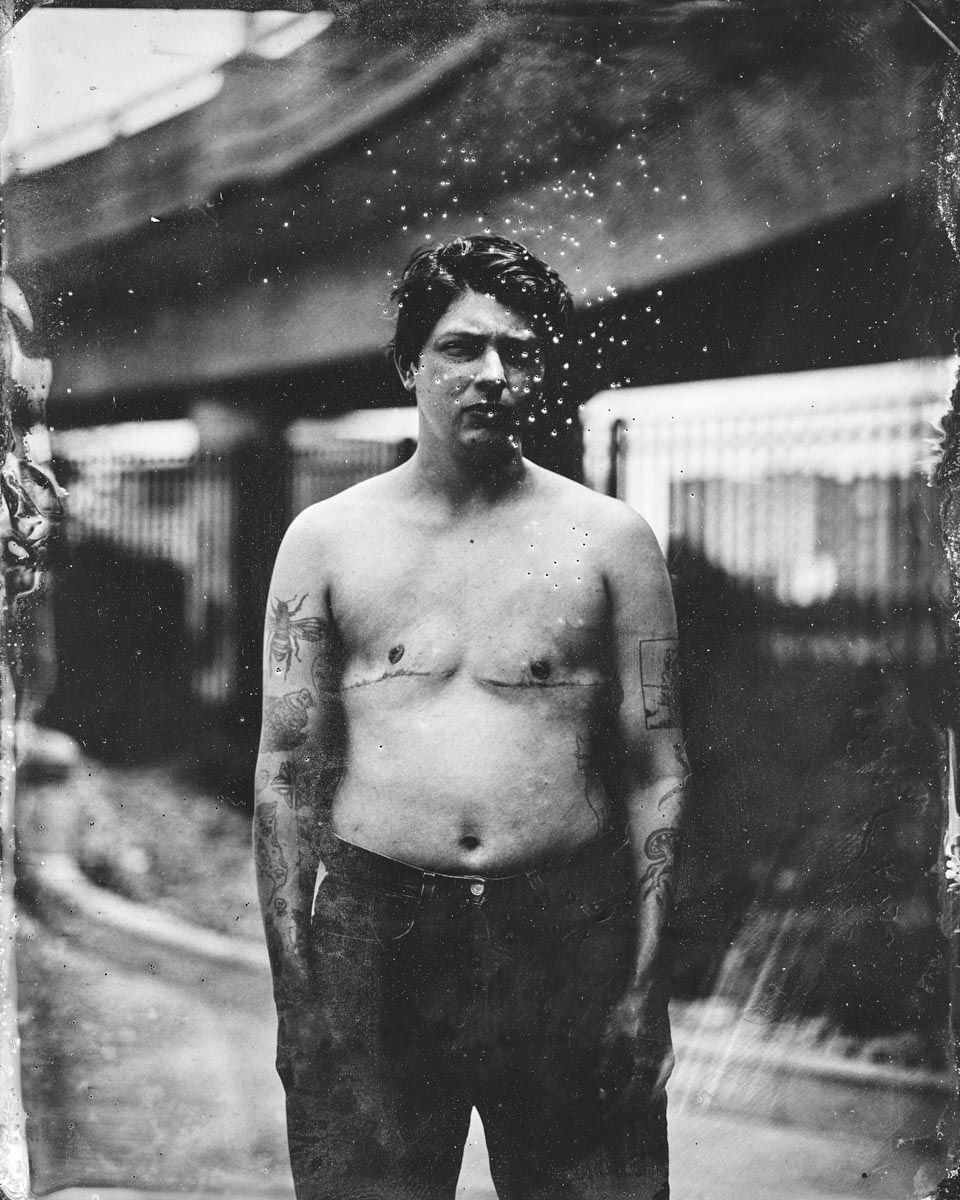
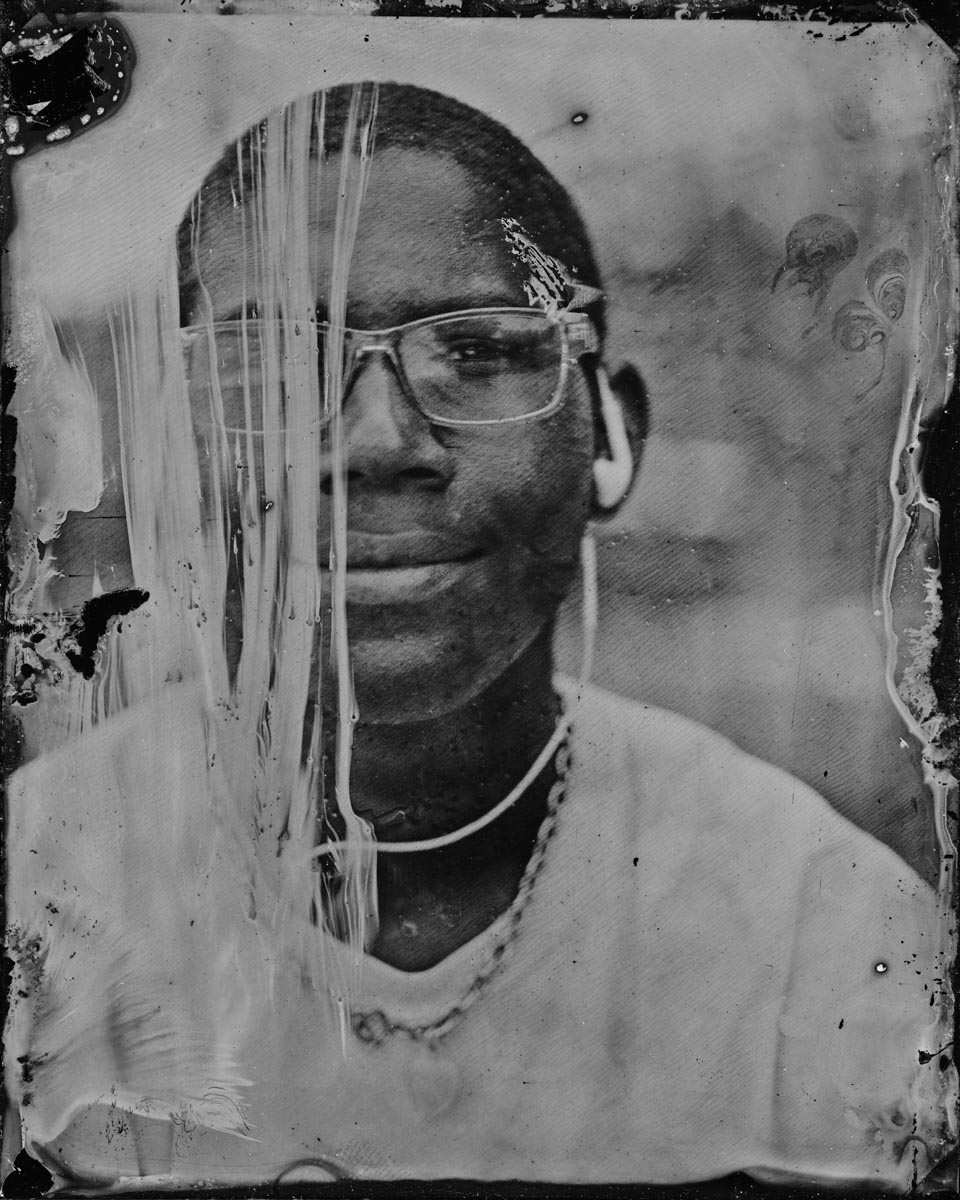
The tintype aesthetic was a good match for the concrete, scarred, beat-up look of the surroundings, he notes. For the best results, he made photos in full, bright sunlight, since the ISO with wet plate collodion is “like, negative one,” he says. He photographs with an 8x10 Eastman Kodak Empire State No. 2 with a Fujinon 300mm f/4.5 lens, and a 4x5 Crown Cloth Wista Field 45DX rosewood and brass camera with a Rodenstock 120mm 72-degree Apo-Sironar N f/5.6 lens.
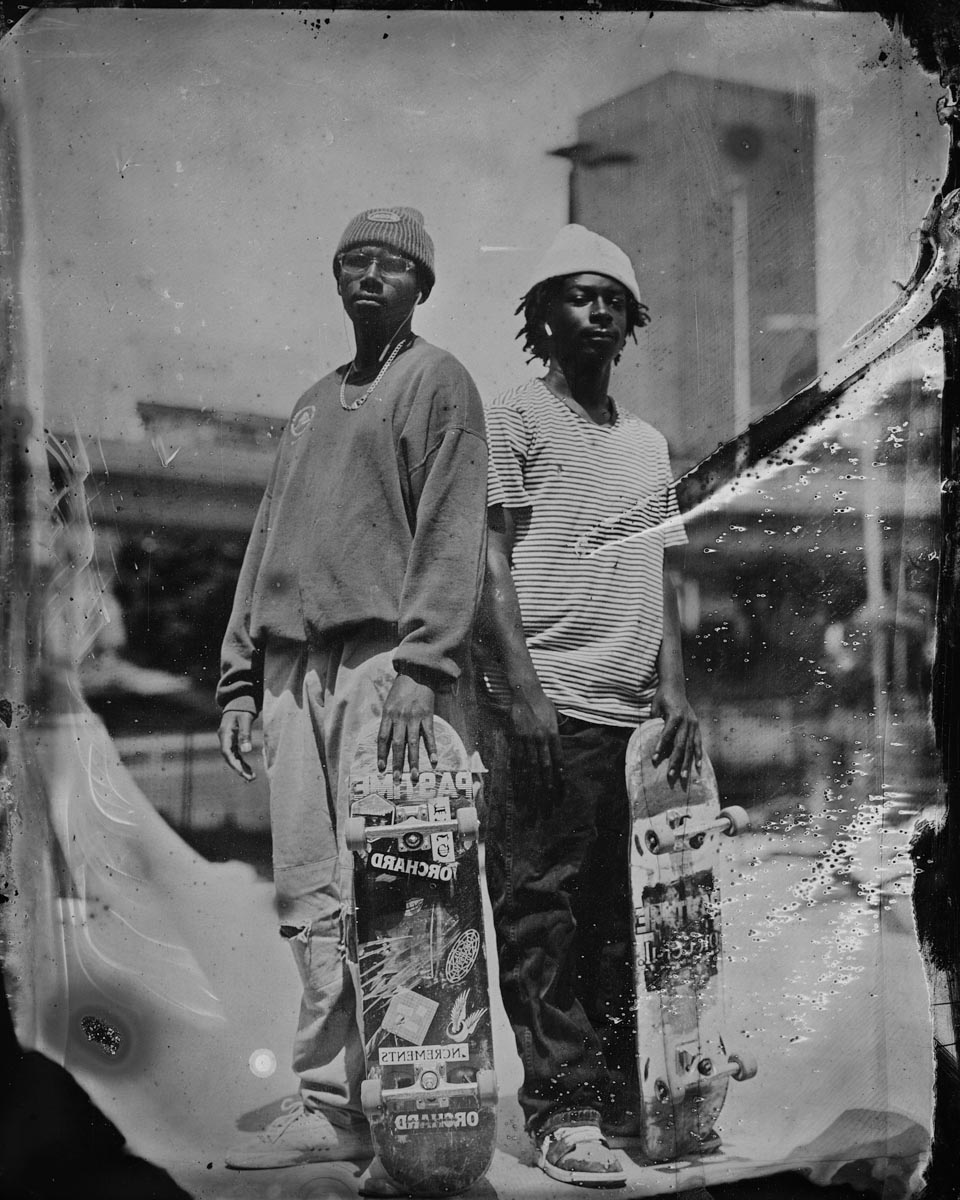
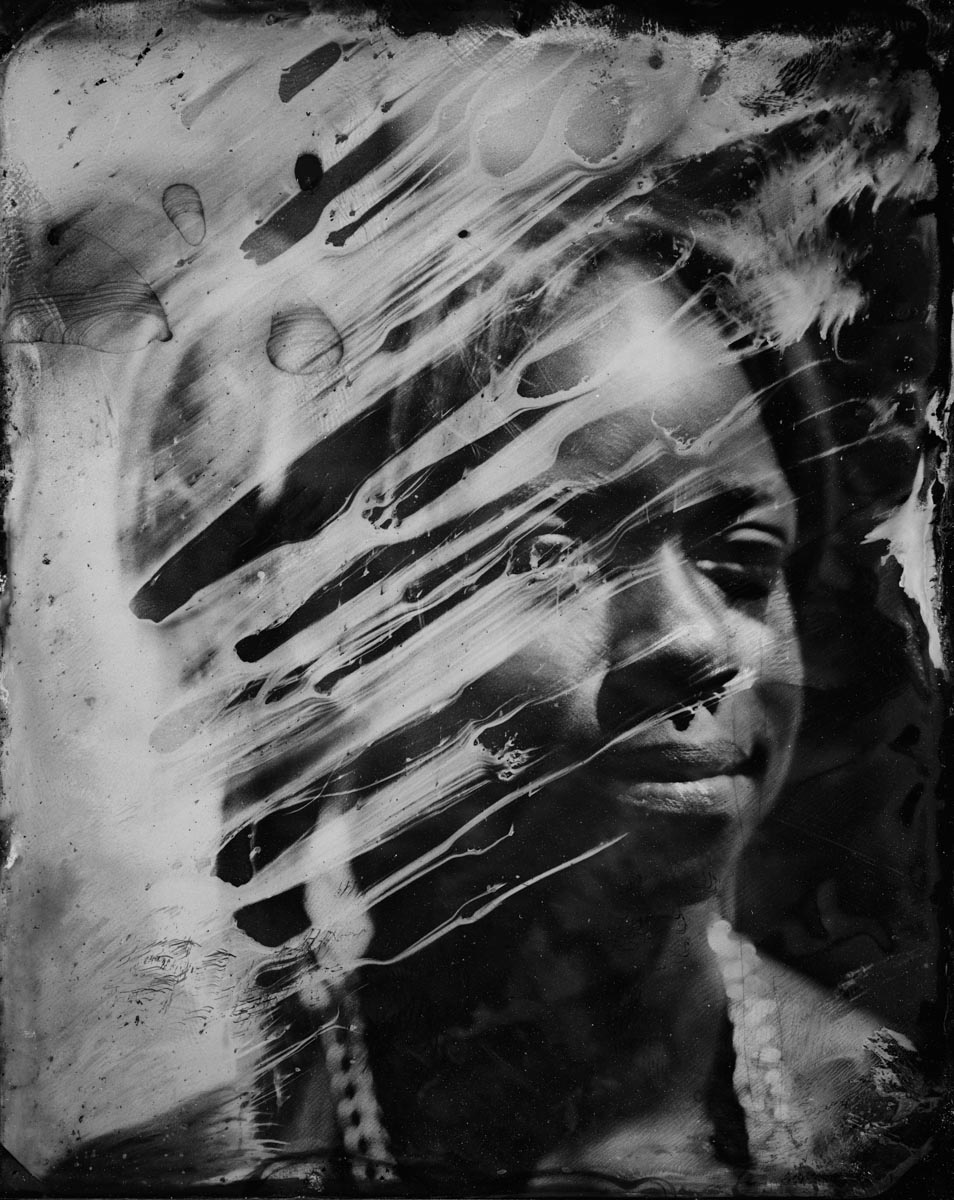
As the skaters practiced their skills—sometimes sticking a landing, sometimes falling—McBride practiced his—sometimes capturing a clear image, sometimes failing to capture anything, and sometimes “capturing a photo that was terrible in the most beautiful way,” he says. “I started to understand and have a new relationship with failure and perfection.”
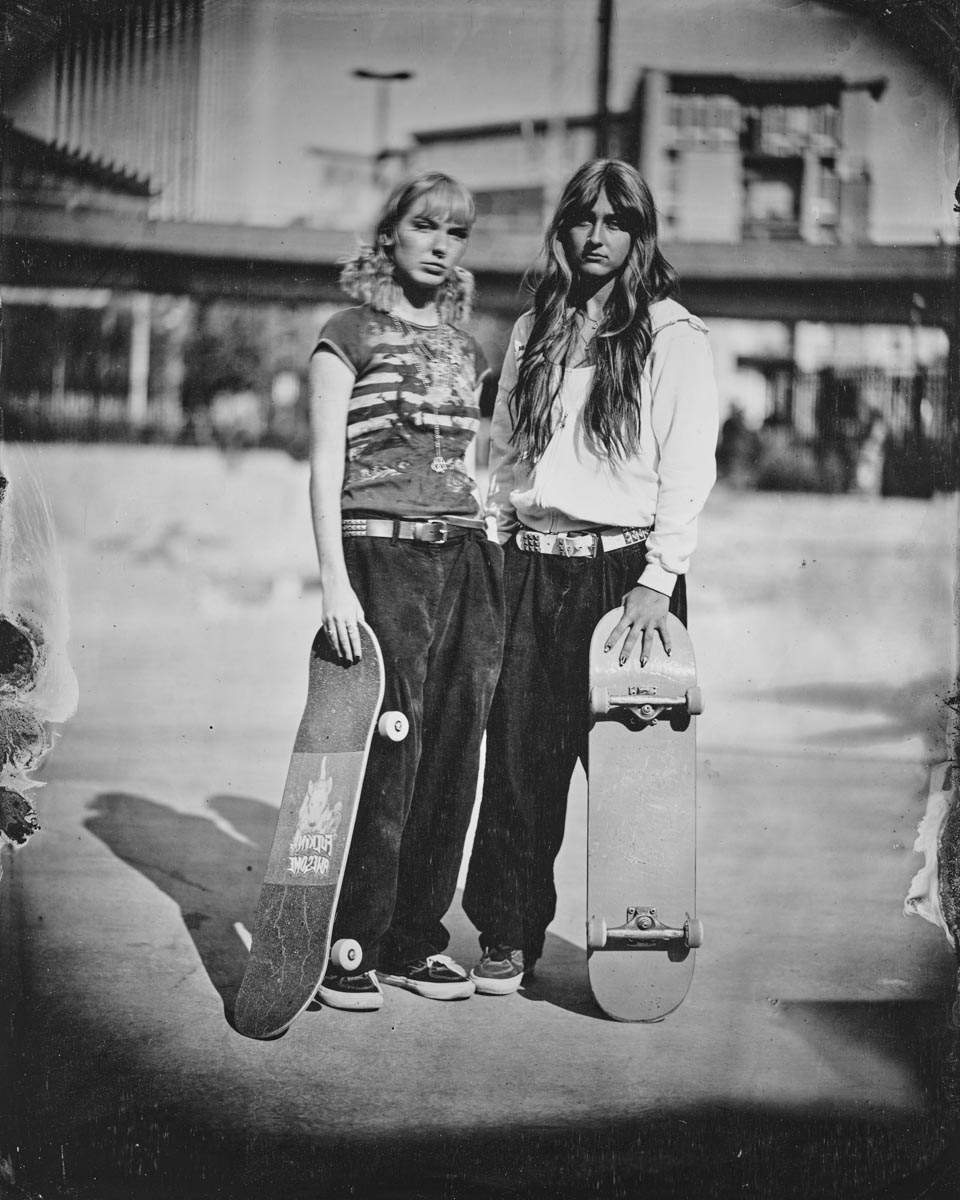
The best part is learning something new. “You do something for 30 years and you get pretty good at it, you get pretty comfortable at it,” says McBride of his commercial photography career. “It was cool to be learning something new again … to be humbled by the process,” he adds. “That’s where you grow, right?”
Amanda Arnold is a senior editor.
Tags: alternative process photography black & white photography creative