
Here Comes the Midday Sun
How to use open shade portraiture to make your subjects look great, even in midday sun
• November 2025 Issue
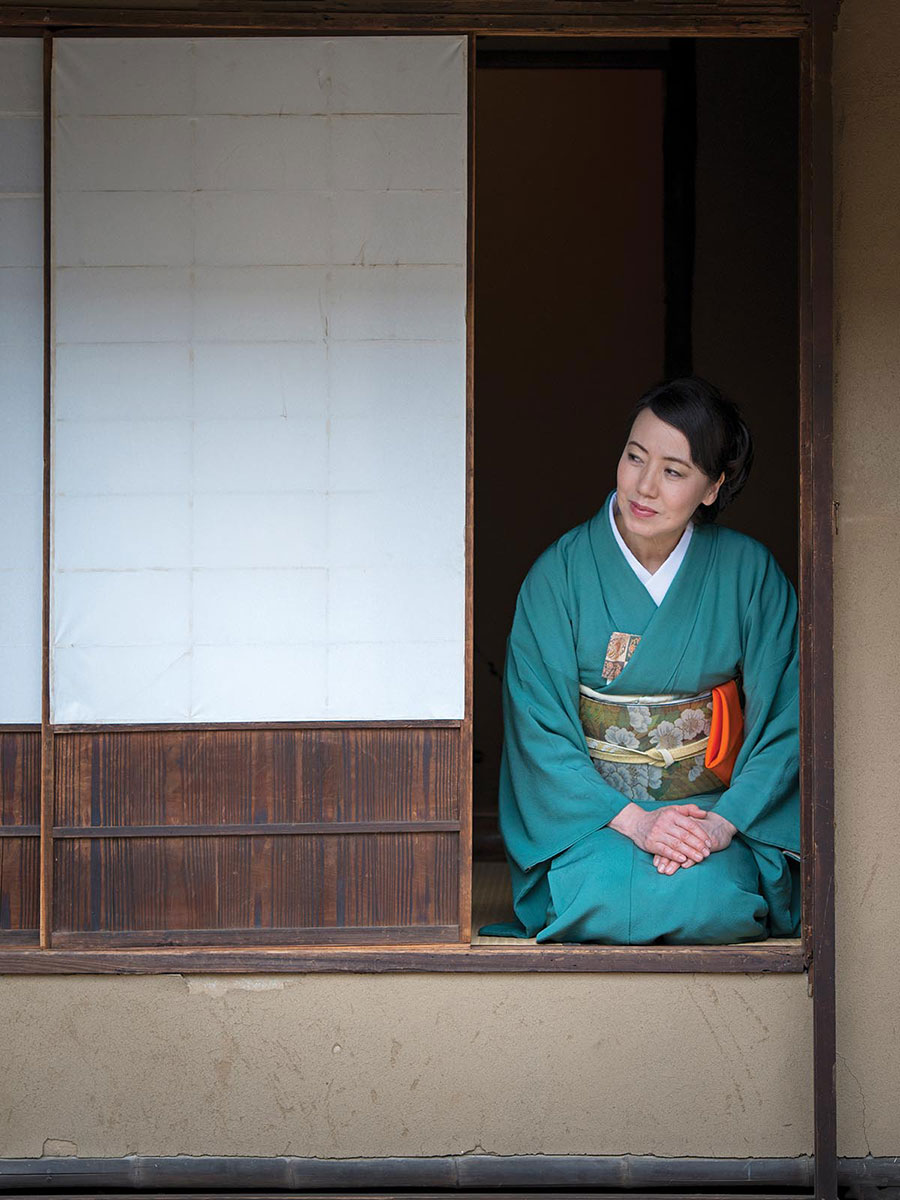
While the edges of the day lend themselves to beautiful portraiture, the reality is, professional photographers have to be ready to create images regardless of the position of the hands on a clock or the sun in the sky.
Photographically speaking, “open shade” can be defined as natural light where a subject is in the shade of an object: more specifically, on the inner edge of the shade where it borders a sunlit area. The soft, even light in this area is flattering on the skin and means subjects can keep their eyes open wide. For setting up photographs outside, have your subjects take a few steps backward or to the left or right to avoid the unpleasant facial shadows cast by midday overhead direct light.
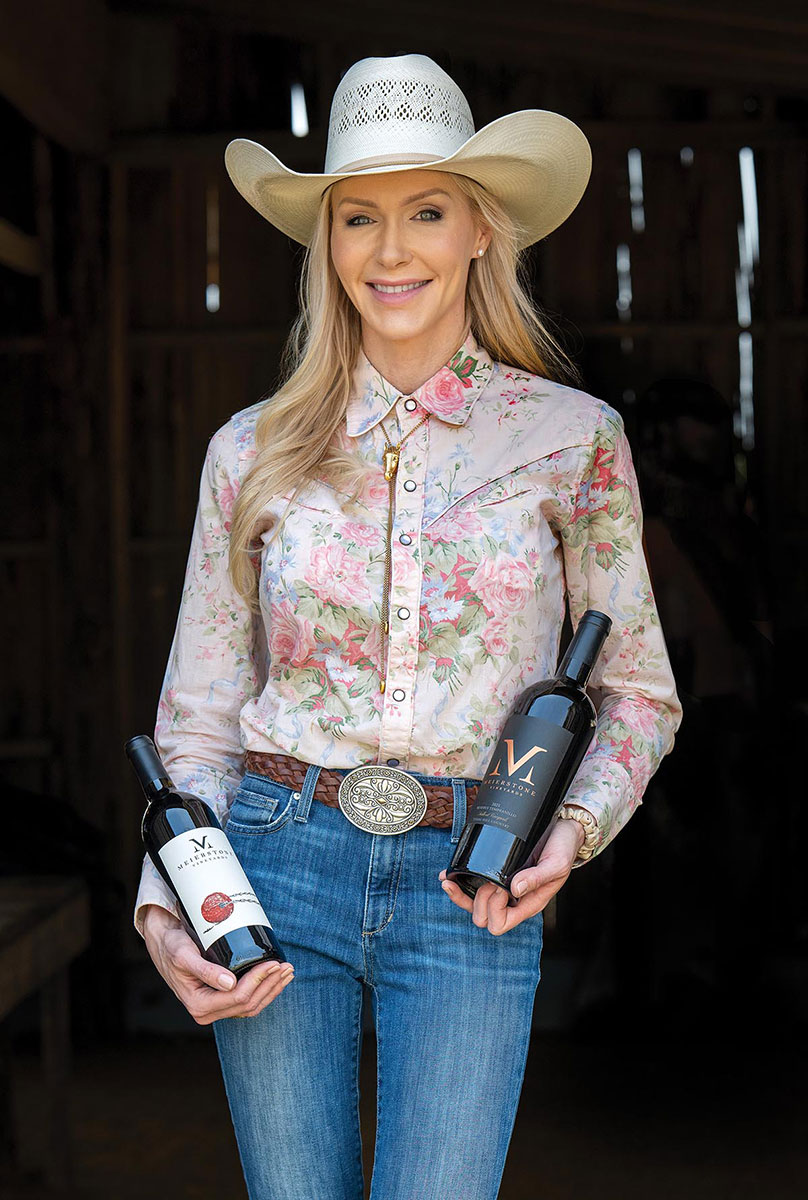
The further back a person moves from this border area into an interior environment, the lesser the f/stop variation or contrast, and you can use this to get your desired results. For instance, if you’re doing a portrait of an interior designer, you would want to show some of their design elements in the background by moving them further into the interior. But if your portrait is solely to focus on the individual, you can increase contrast by positioning the subject just out of reach of direct sunlight. My photographs of Japanese tea master Mika Soka Haneishi in Tokyo (above) and Krystal Patel, owner and winemaker of Meierstone Vineyards in Fredericksburg, Texas (below), are examples. Both are experts in their chosen crafts, and it was important to convey this energy in the photographs.
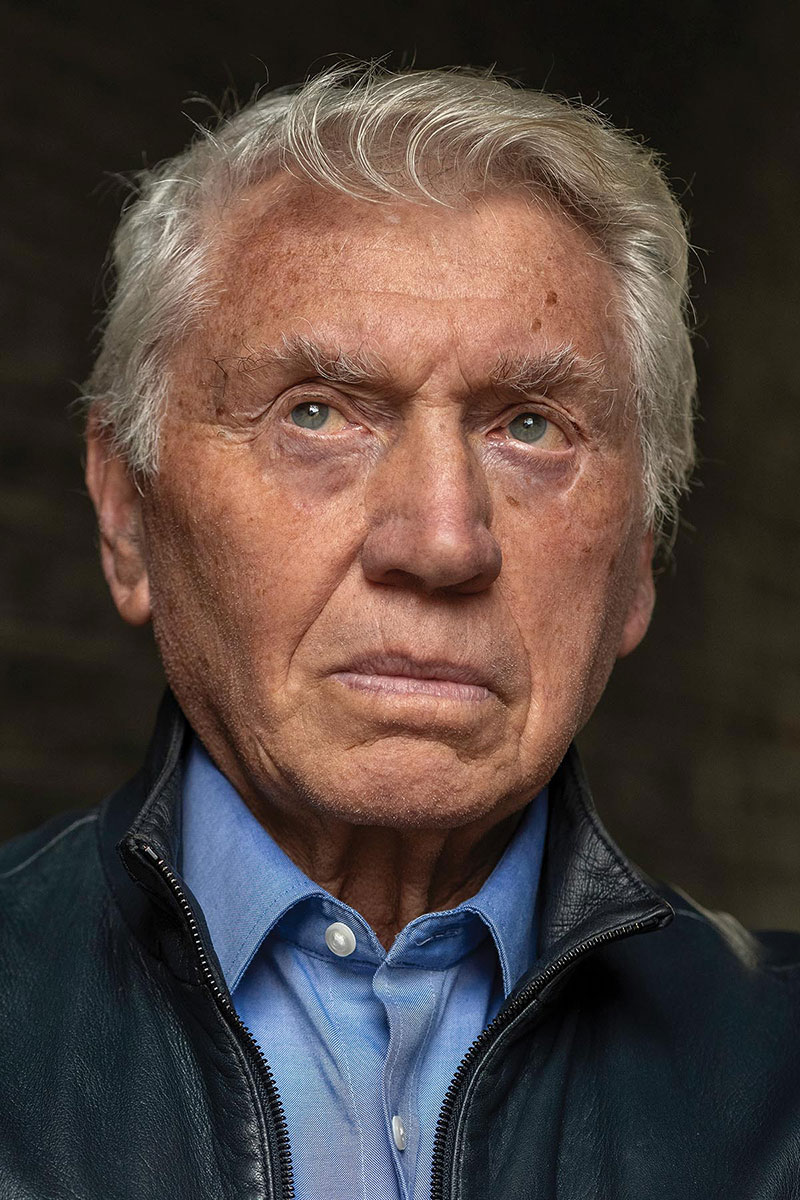
Another master in a chosen profession—in this case, photography—is Sir Don McCullin (above). After interviewing him via Zoom for Vanity Fair, we met up in London, where I used the open shade created by a brick archway leading into a parking area as a temporary set for our portrait session. I had a friend hold a Westcott 20-inch Collapsible 5-in-1 Reflector with the silver side kicking in some light and adding a catch light. Without an existing reflective wall or surface to add this important element, I simply used my own. Positioning the head and reflector for the catch light in this situation is just a matter of studying the eyes of the person you’re photographing. While it is difficult to take a photo of Sir McCullin not looking debonair, the eyes look dull without a catchlight, and the image falls short of the polished look of a professional portrait. Lens choice was also important when I was working so close to a person’s face. I decided to attach my Nikkor VR 105mm f/2.8 with an adapter onto my Nikon Z8 body, finding this classic portrait lens focal length could provide just the right amount of compression and bokeh.
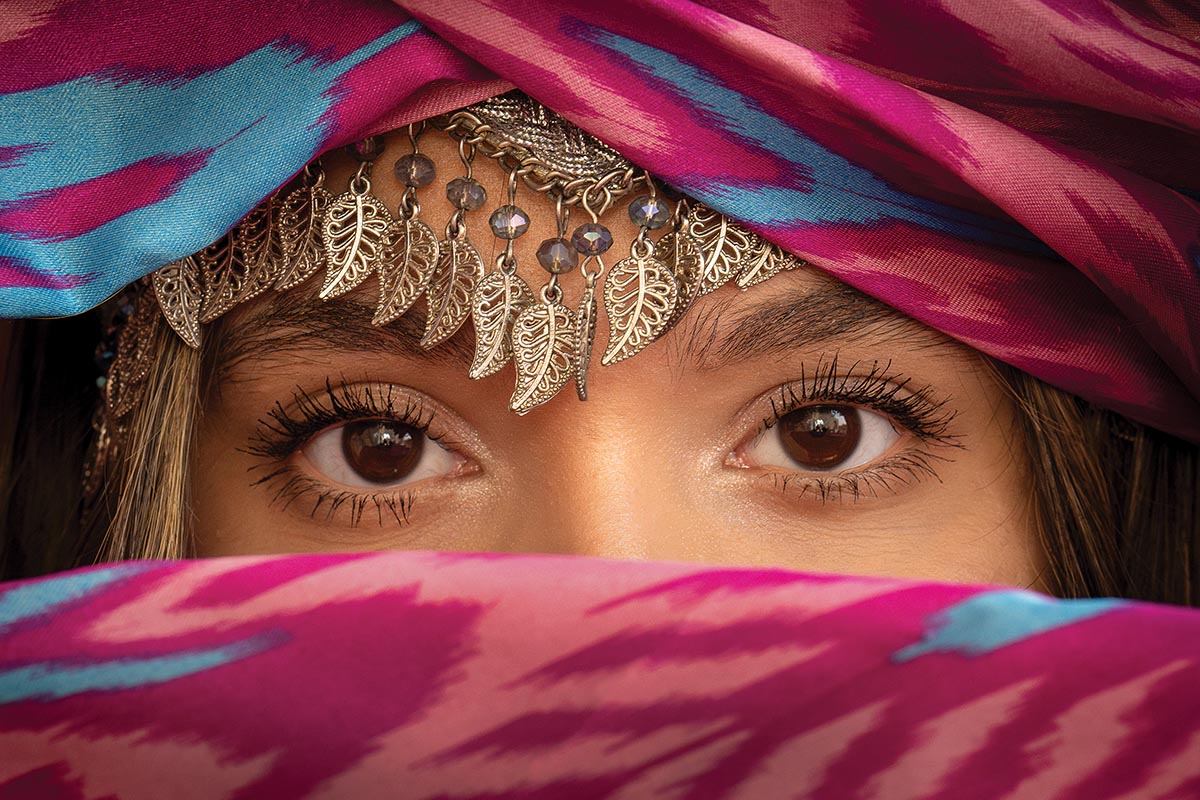
Consider reflected colors when you work in open shade. While our eyes adjust to seeing a person’s skin color as it is, grass below or a brightly colored wall can kick in mismatched or unpleasant color from one or more angles, and that can cause an imbalance. The key is to use a discerning eye to see what the camera is recording, not what our brain is interpreting.
In Samarkand, Uzbekistan’s RegistanSquare, I did another “eyes are the window to the soul” type portrait, this time of actress and model Saby, with my Nikon Z8 with a Nikkor Z 85mm f/1.2 lens (above). I initially tried using a shallower depth of field but couldn’t get the eyes and the jewelry in focus, so I stopped down to f/8. I used the silver side of the Westcott 20-inch Collapsible 5-in-1 Reflector in the sunlight to Saby’s left to kick light into the open shade, and added a white Westcott reflector to her right to bounce some of that light back into her face to reduce the contrast. This was done during a workshop I co-taught with Chicago-based Sandro Miller and Mumbai-based Himanshuu Sheth, to show participants how to work on their own or with one assistant to achieve big results with little support.
On bigger commercial productions, open shade can be created by using silks. In the film and television industry, it is common practice to attach 12x12-foot and 20x20-foot framed silks to high rollers with lots of sandbags to weigh them down.
When you’re working on your own or with a small crew, using existing open shade or a handheld silk disc can expand your opportunities to capture beautiful, non-labor-intensive, stress-free portraiture any time of day, even under the harshest ambient light conditions. •
Mark Edward Harris is an award-winning photographer and writer based in Los Angeles.
Tags: natural light portrait photography technique travel photography