
Full-Focus Empathy
Wedding photographer Kathleen Gemma dials in to each couple’s vision for their special day
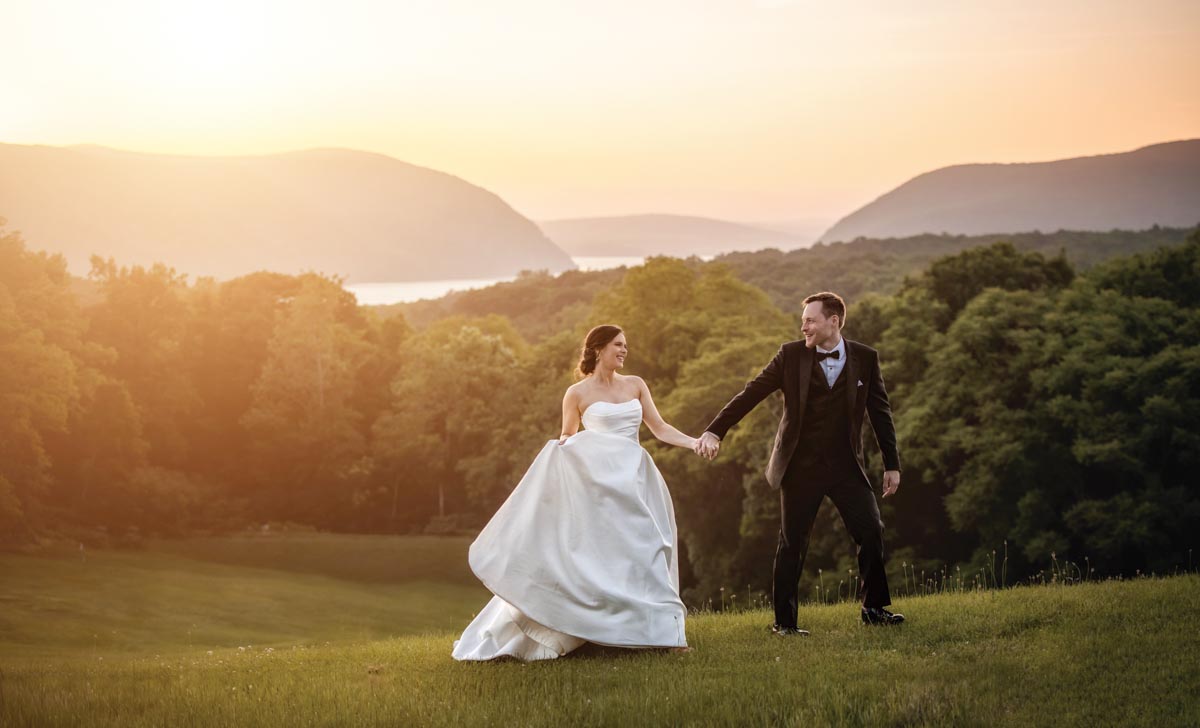
From a young age, Kathleen Gemma loved art. She was always drawing, and often carried a simple camera for personal snaps. At age 21, she received her first “real” camera: a Canon EOS Rebel XT, which sparked a deeper interest in photography. While hanging around a local camera store, she met a professional photographer who invited her to attend events hosted by PPA affiliate Hudson Valley Professional Photographers Society of New York (HVPPSNY). She began connecting with other photographers, learning more about the trade, and building her confidence. Soon she was second photographer at weddings—for free at first, to gain experience, and then as a paid professional.
Gemma developed her own style, grew her reputation and soon won an award in HVPPSNY’s photographic competition, in the illustrative category. Inquiries for her wedding photography soon followed, and she built a client base by focusing on client relationships, detailed preparation, and an emphasis on understanding each couple’s vision for their wedding day.
Today, Gemma runs a busy wedding and portrait studio in upstate New York that draws clients from across the Hudson Valley and beyond. Her work has garnered numerous awards, and clients flock to her for her focus on creating authentic images that capture the underlying feeling of a wedding. “It’s important to remember that, no matter how many weddings you’ve photographed, the one you’re doing that day is special to those people,” says Gemma. “They deserve your full focus, and your best effort to understand their vision. So I listen to my couples. I share in their enthusiasm. I allow them to express their vision for the day while still staying true to my style as a photographer.”
 View Gallery
PERSONAL APPROACH
Gemma collaborates with her clients first via a series of pre-wedding Zoom meetings. During these meetings, she learns their engagement story, their tastes, their family history, and other details that help her understand who the couple is and what they care about. She discusses the wedding day timeline and gives them plenty of opportunities to ask questions. “People like that personal approach,” she says. “It shows that I’m invested in them and their day. I’m genuinely trying. I’m not just here to make a buck.”
To keep all the particulars straight, and to make sure she’s offering as customized a service as possible, Gemma takes detailed notes on everything from her client’s background info to the shot list she creates for each wedding. She refers to these notes throughout the wedding day. “I write down everything,” she says. “You have to write down every little detail. It helps prevent all those different couples and different events from mushing together in your mind. I bring the notes with me. I keep them on my phone, along with the timeline. That helps keep me focused on what the couple wants.”
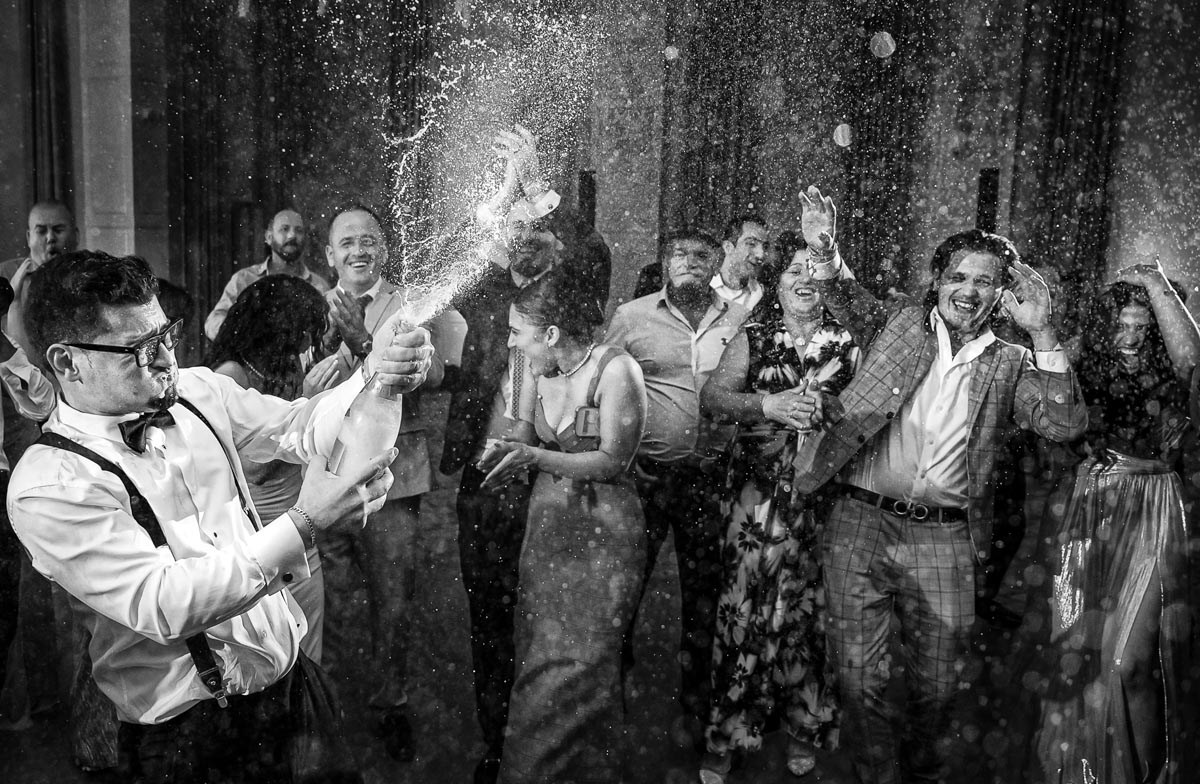
At the reception, Gemma establishes an off-camera lighting setup near the dance floor or the main action, creating a window of pleasing light to photograph candid images of the guests as they pass through. She sets up two flashes on light stands diagonally from each other, and then positions herself so she forms the third point of a triangle. Then she moves around within that window of light. She dances alongside the guests, she wanders in and out of the crowd, and when she sees a compelling scene framed in that good light, she captures it. She carries two cameras: one with an on-camera flash synced with the two lights on stands, and another with a remote trigger for the other lights. The camera she uses depends on the effect she’s trying to achieve, she explains. For example, for a more dramatic look, she’ll use the camera without the flash, usually with an 85mm lens. For a brighter, more filled-in look, she pulls up the camera with the flash (usually with a 24-70mm lens) to add extra pop.
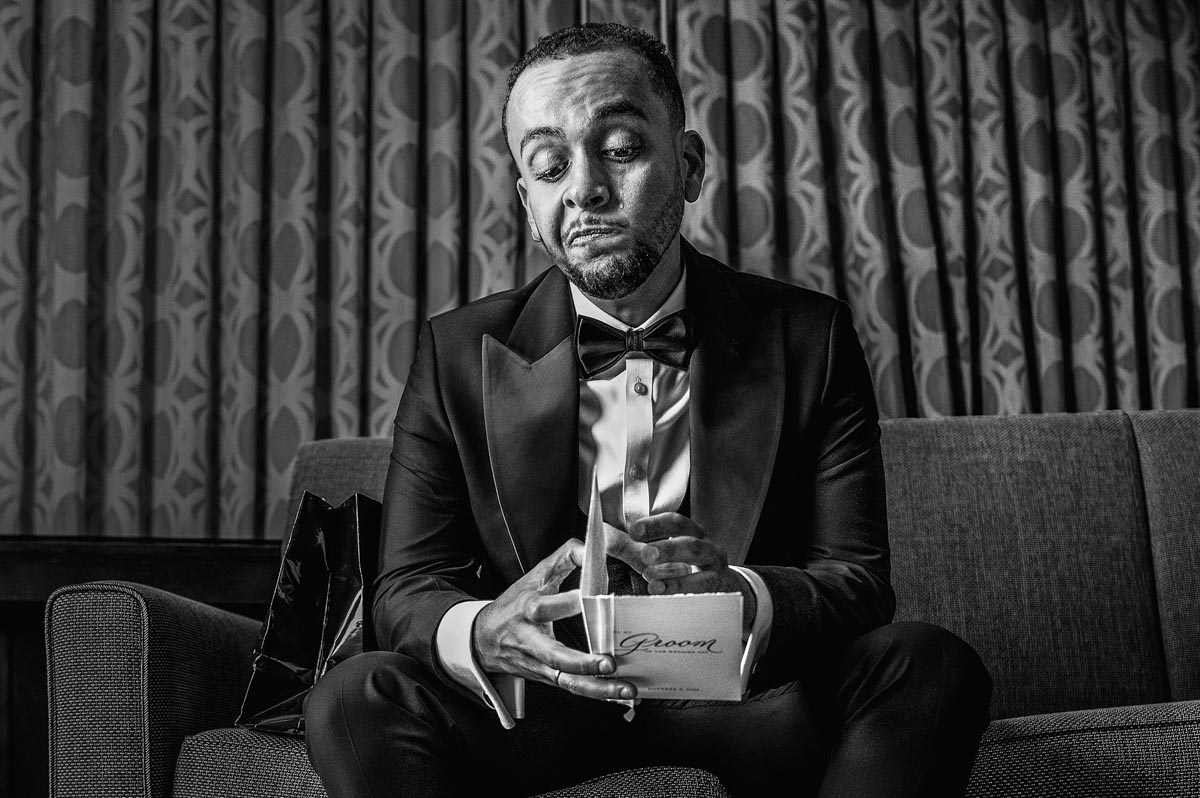
The candid imagery she produces with this approach is one of the most recognizable elements of Gemma’s work, she says. She credits her results to being well prepared, observant, and empathetic, in that she takes time to understand the story behind the story, and what images will help tell that story. “This is where I apply all that background, my notes, the conversations I’ve had with my clients,” she says. “I try to understand what it’s like to be them in that moment, the struggles, the joys. I’m waiting for certain things to happen, and when they do, I’m there and I’m ready.”
GRAND FINALE
At every wedding, Gemma stages what she calls a “grand finale shot.” It’s a special photograph that she sets up to be the marquis image from the event. Typically, it’s either a golden hour portrait or nighttime image. She sets it up in advance, arranges her lighting based on the setting, and lets the couple know to be prepared to be pulled away when the time comes. Clients seem to enjoy creating this defining image, and many of the photographs have won awards, Gemma says.
Post-wedding, it used to take Gemma eight hours or more to cull and edit images, she says. However, with better preparation, a more strategic approach to photographing, and some high-tech tools, she’s cut that time to a couple of hours. “I used to take a lot of photos, but not anymore, because I ask myself, ‘Why am I giving myself so much more work? Is this couple ever going to use this photo? Are they going to print it? Are they going to post it?” she says, “If the answer to those questions is no, then I don’t even take it.”
Using Imagen and Evoto, Gemma pares down the images to a best-of-the-best list. She leans on AI tools within the applications to speed up editing and get images ready for display and delivery in two to three weeks. That timeframe is a critical last step, Gemma notes: If clients have to wait months to view professional photographs from one of the most important days of their lives, their enthusiasm begins to wane and frustration may sour their perceptions of their photographer. Better to move through the post-wedding editing process efficiently and quickly, deliver their images while they’re still excited, and carry that excitement into the ordering session, she explains. Plus, by delivering the images while the wedding is still a recent memory, Gemma adds, the couple is more likely to talk about their wedding photographer to others, and she is more likely to earn referrals.
Wedding photography itself is changing, Gemma says, as she fields requests from clients about videography and even drone photography. Photographers should not feel they have to fulfill every request or provide a service that isn’t within their area of expertise, she explains, but it’s important to stay up to date on new developments in image capture and presentation. Offering flexibility in your services—whether through partnerships with other providers or by learning new techniques or technology—can help keep you top of mind when people are reviewing wedding photographer options.
Most of all, Gemma says, the key to good client service is understanding your clients and delivering on their vision for their wedding day. “Learn the technology, figure out AI tools,” she adds, “but at the end of the day, it’s your ability to work with people who are experiencing this crazy, hectic, exciting time of their lives that will make the most difference.”
Jeff Kent is editor-at-large.
Tags: wedding photography