
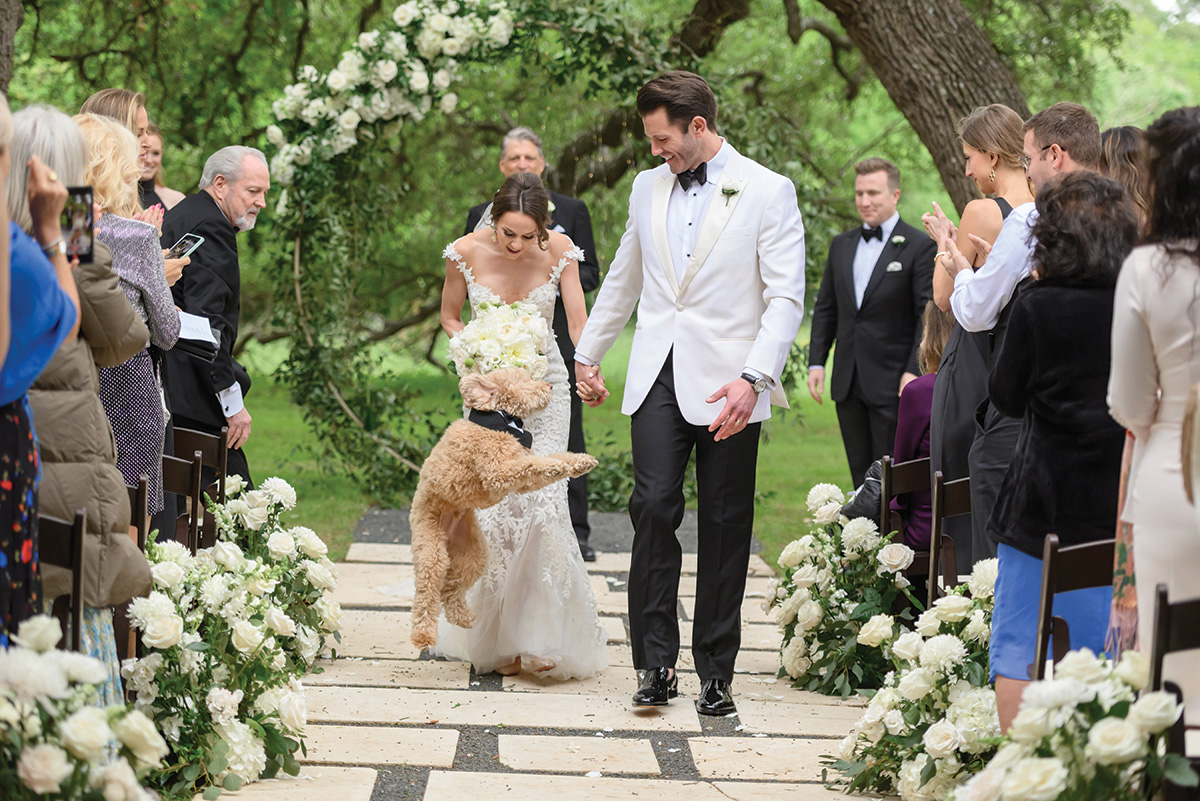
“You can’t do better than real,”said the late, great photojournalist Mary Ellen Mark. Austin, Texas-based wedding photographer Jenny DeMarco lives and works by those words. DeMarco has crossed the globe using her photojournalistic-style photography to capture couples tying the knot. She’s also documented nuptials in her own state in locations ranging from vineyards in the Texas Hill Country to sophisticated city hotels. Wherever she captures the big day, authenticity is her modus operandi.
“I’ve always been the family historian,” says DeMarco. “Even in elementary school I was taking photos of things in class and on our field trips and putting them in photo albums. And I’ve always loved old family photos and genealogy. So, it makes sense that I would gravitate toward wedding photography because it’s all about establishing a current historical archive for future generations.”
A PHOTOJOURNALISTIC TAKE
DeMarco studied design at North Carolina State University and then worked as a landscape architect. She became interested in wedding photography while planning her own wedding in 2008. At the time, she was living in Ireland with her fiancé and planning a move back to the U.S. “I knew there wasn’t going to be any landscape architect jobs because of the [Great Recession],” she explains, adding that she found her own wedding photographer through Foundation Workshops, a five-day prestigious and challenging photography program, and was intrigued. “That got me thinking about wedding photography as a career.”
When the couple moved to the United States, she decided to take on the challenge herself. The first year she participated in Foundation Workshops, she was given an assignment to photograph a fire station in downtown Austin. “It was tough,” she explains, “because you’re given only a basic idea, just like you would for a newspaper or magazine photo assignment: ‘Here’s this fire station. Go and make a story out of it.’” The instructors taught students how to capture the types of images that make a good story, such as a scene-setter image and an environmental portrait. In the evenings, instructors critiqued each student’s daily work, and instructors and classmates would advise each other on what photos could be added to a story. “Then you go back the next day to get more footage,” DeMarco recalls. These experiences taught her how to tell a story through photography, something that “directly applies to wedding photography,” she notes. “I do a lot of after-wedding sales of wedding albums, so I know what to shoot to make a story versus social media, where it’s often just about an image out of context.”
Many Foundation Workshops instructors were former photojournalists, including street and fine art photographer Gulnara Samoilova, founder of Women Street Photographers, who took the iconic 9/11 image of people walking on the street blanketed in gray dust. While DeMarco says she learned her photojournalistic approach to weddings from that experience, she never considered reportage as a career. “I cannot photograph sad things,” she says. “So, I photograph weddings, which are joyful, and I love shooting images where you can see that joy.”
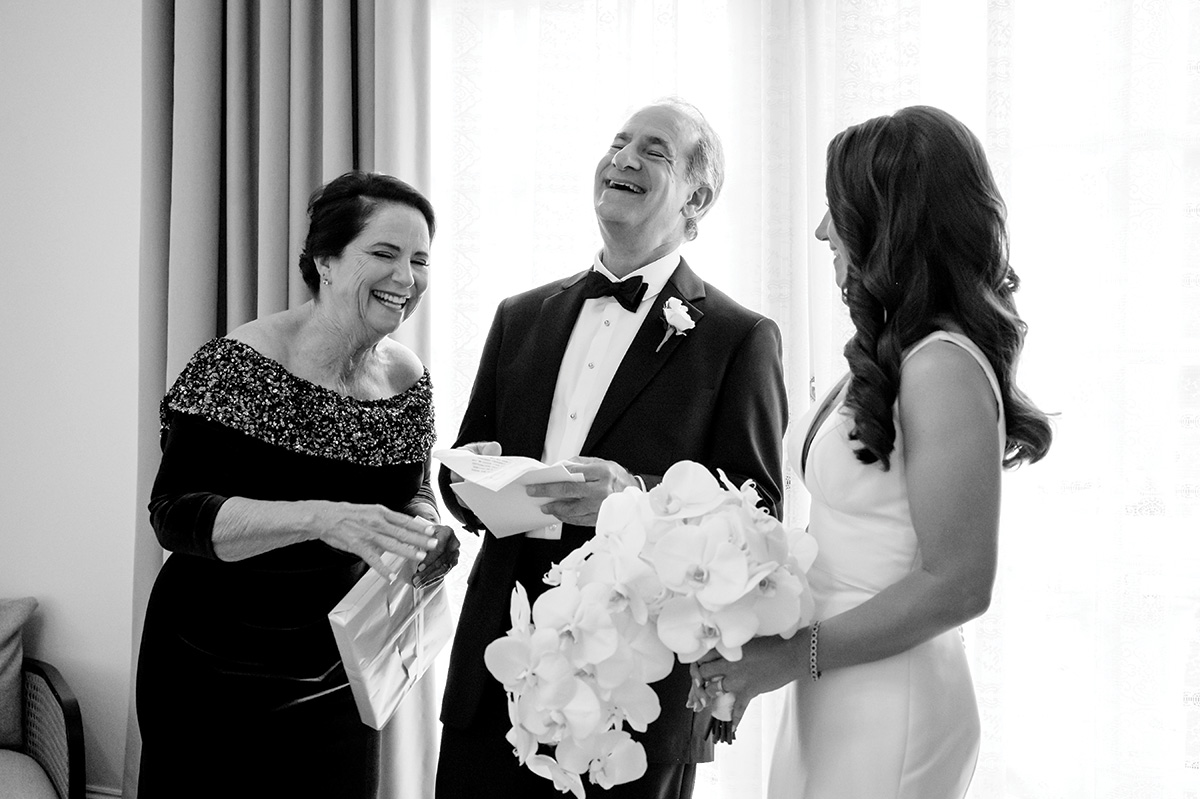
DeMarco takes a thoughtful approach to finding the stories within the stories of a wedding. “I always do the bride putting on the dress,” she says, since it’s such an iconic moment. But she also wants to find out what’s unique about that moment for that bride. “I have a conversation with the bride because, unlike true photojournalism, I can stack the deck in my favor,” she says. “Not that anything’s unnatural, but I can ask questions and make them think a little more about what we’re trying to achieve.” For example, in one case, the mother and the grandmother were helping the bride get into her dress. That story reflected three generations of women in that one moment, DeMarco explains.
LEVERAGING EQUIPMENT
When DeMarco is capturing a wedding, she typically carries two camera bodies: a Nikon Z 8 and a Nikon Z 6II. “I tend to keep a 24-70mm on one of them, and an 85mm on the other. If I’m doing portraits, I’ll switch it out to a longer one, a 105mm or my old 70-200mm,” she says. “I put that on with the adapter and keep that on during the ceremony, and sometimes for the first dance as well. When I get to the dance floor, I’ll keep an 85mm close to me, but mostly I’ll just shoot that with one camera with a 24mm or 35mm.”
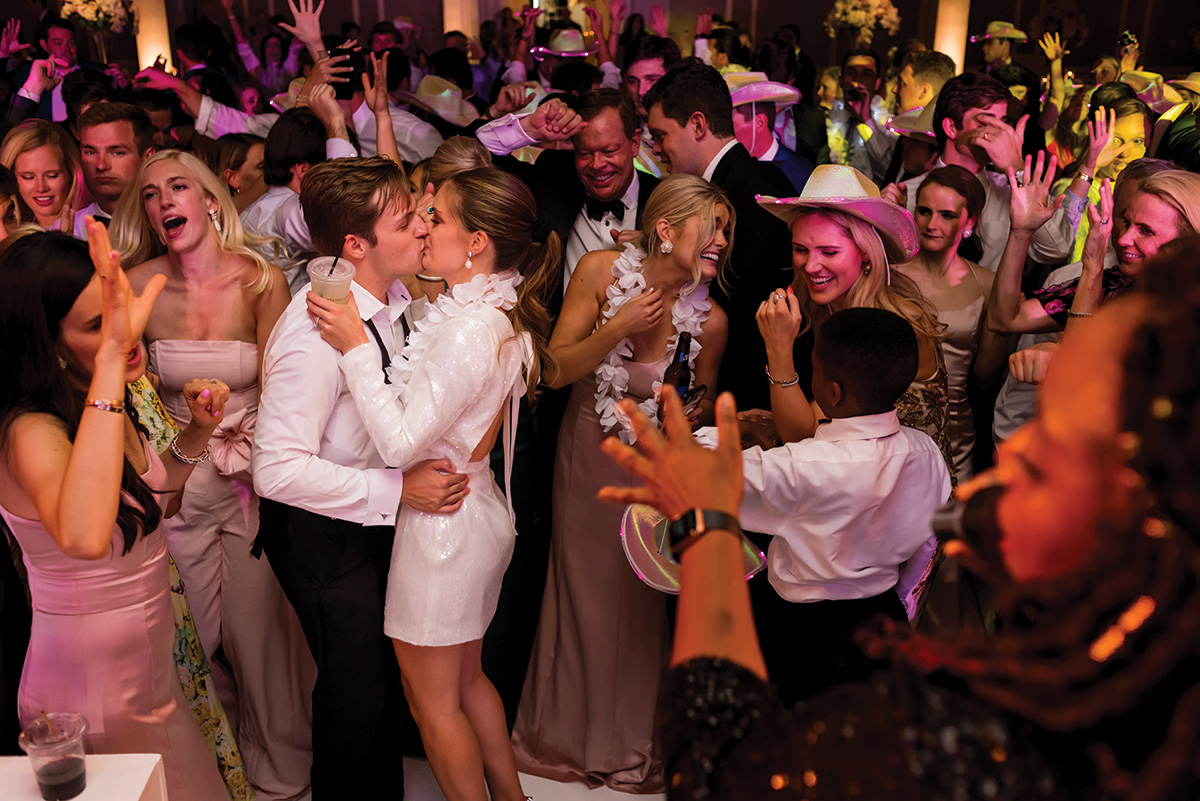
DeMarco turns to Godox flashes or a continuous LED light for artificial lighting. She sees a generational change in how the bride, groom, and guests react to artificial lighting. “Back in the day, the big video light used to be this obnoxious thing,” she says. “But the younger generation is so used to being on camera. They don’t mind a spotlight being put on them, whereas Gen X and some millennials would run for the hills.” DeMarco often sets up a constant light on the dance floor for cake cutting and toasts, which tends to blend in and not impact the action, she explains. “I get some great dance photos when they know they need to ham it up for the camera. But sometimes you don’t want them to notice you’re there, especially during quiet moments,” she says. “The mirrorless cameras are so much quieter than the clacking of the SLRs, and the sound can be turned off entirely. It’s nice, because they don’t know when they’re being photographed, and that’s when you get some authenticity.”
DeMarco also takes advantage of noise reduction tools in Adobe Lightroom to reach higher ISOs, allowing for more ambient light photography. Still, ISO 10,000 is a threshold she prefers not to cross. She’s also beginning to work with Evoto for retouching.
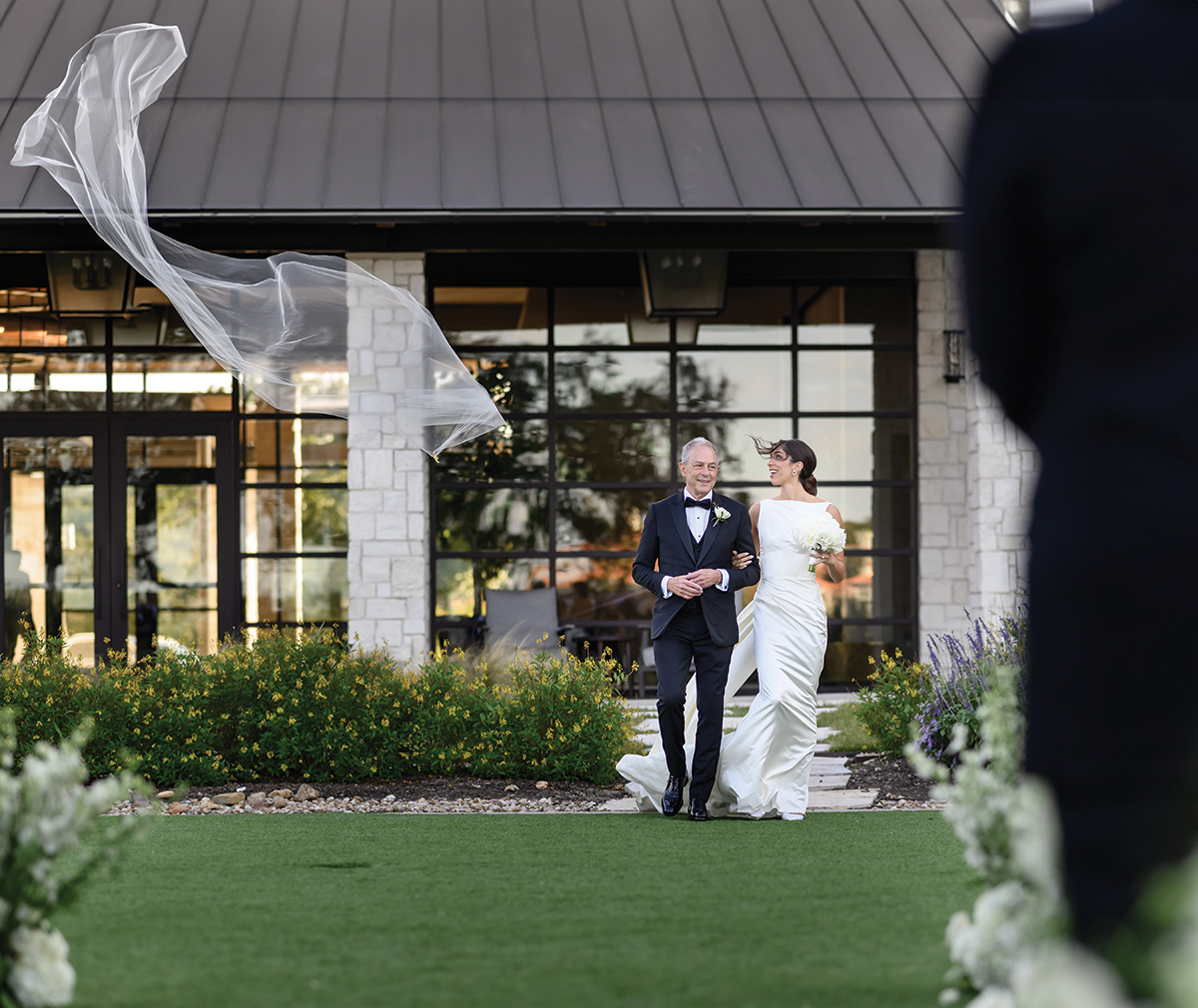
INSPIRED BY ENVIRONMENTS
Where are DeMarco’s favorite places to shoot? “Our Hill Country is so gorgeous,” she says, mentioning The Arlo, a wedding venue in that area with “an amazing staircase” where she captures couples. “I do like places where the bride and groom can get ready on site,” she says. “I shoot a lot of city weddings, where they’re getting ready in a hotel then going to a church and then coming back for the reception. I like those, too, because of the different environments.” In scenarios where there are multiple locations, DeMarco often hires another photographer to wait at the next location, camera in hand, for the couple’s entrance. Those contracted photographers are some of her closest friends and even competitors, but she doesn’t think twice about bringing them in. “They’re all incredibly talented,” she says, recalling one wedding she co-managed with a friend that included seven photographers and many politician guests, including former President George W. Bush. “I can’t be in two places at the same time, and [hiring a second photographer] gives another angle.” These team events are successful because everyone involved understands the timeline and the players, practices good time management, knows what they want to capture, and trusts each other, DeMarco says. Since there are no do-overs in weddings, having additional photographers is also a great safety net.
DeMarco photographs between 15 to 20 weddings a year, often doing full coverage from rehearsal dinner the night before to farewell brunch the day after. Clients initially receive digital photos in an online gallery that they can send to anyone they want and post wherever they like. “I charge enough up front, and it’s good marketing,” DeMarco explains. For wedding albums, she and the clients work together page by page, often live in person or on Zoom. DeMarco uses RedTree Albums, Henley Albums based in the United Kingdom, and Graphistudio, especially for wall art.
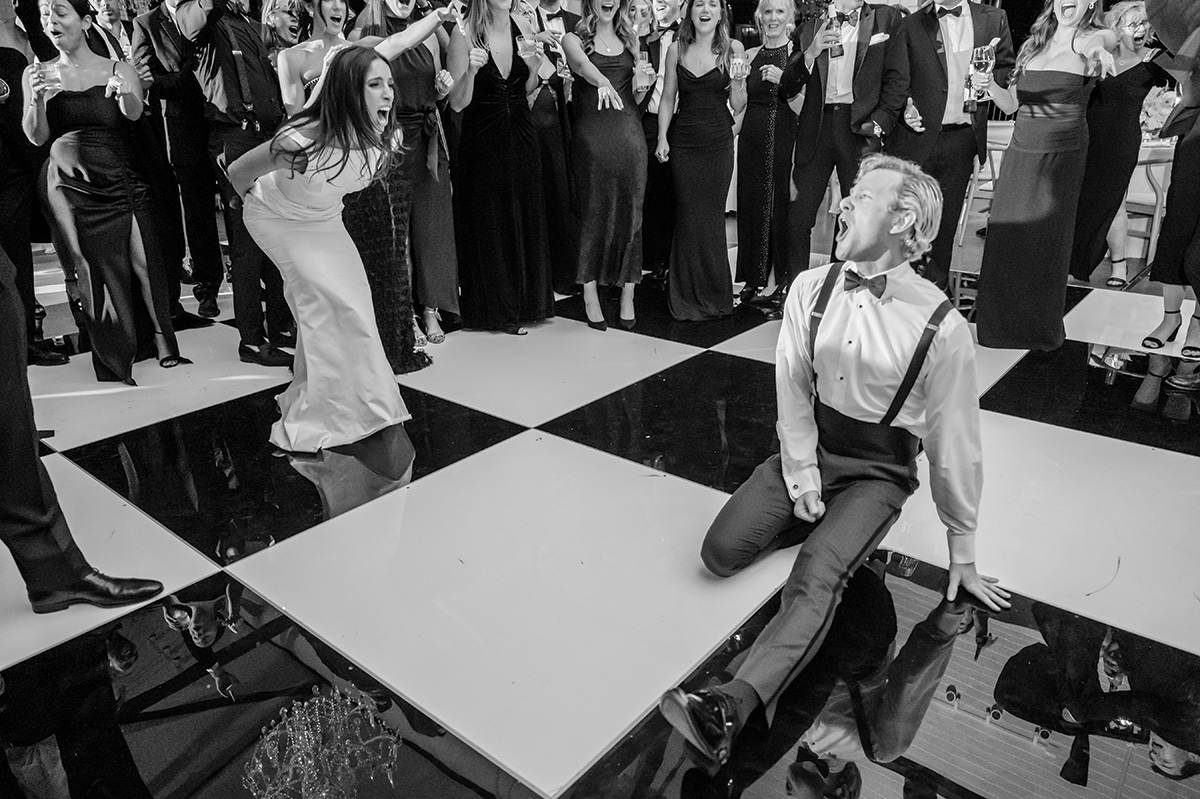
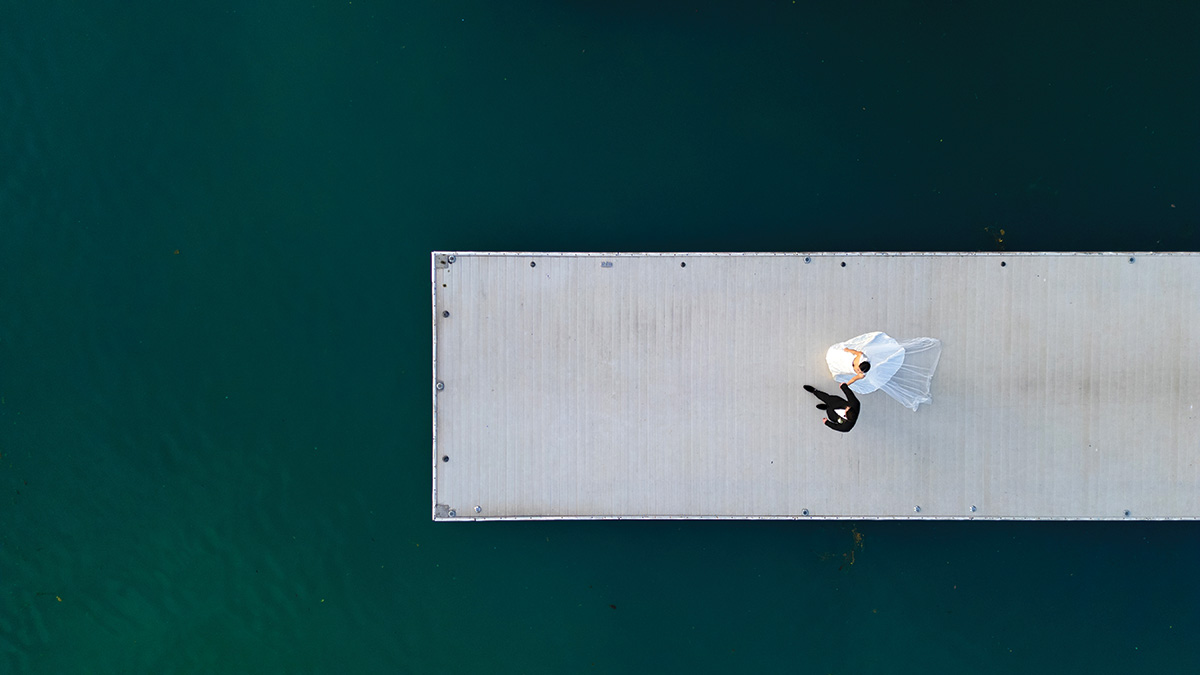
Her former career in landscape architecture plays an important role in her wedding photography, particularly the concept of “genius loci,” Latin for “spirit of the place,” she explains. This perspective is useful for environmental portraits, as it enables her to find the best setting ahead of time. “We sometimes call it ‘tiny people portraits’ because we’re really focusing on the environment,” she says of those photo sessions, which capture some magical moments between the couple. “It’s a quiet moment for the bride and groom because they’ve left all the crazy hubbub, all the guests, and we’re taking them out for a few minutes,” she explains. “It becomes a moment for them to breathe, and they look around and take in the space. All of a sudden, they’re really present. Maybe I’ll give them a little direction. But mostly I just back away and it becomes a moment they can share and remember.”
DeMarco explains to clients that her documentary photography style allows them to be present on their wedding day. After all, photography should not be a distraction. “Even when I’m taking portraits, I try to make it feel effortless,” she says. “That’s how you’re going to get natural expressions.”
Mark Edward Harris is an award-winning photographer and writer based in Los Angeles.
Tags: wedding photography