
Fine-tunable for Filmmakers
GoPro Mission 1 Pro
The introduction of the GoPro Mission line of cameras—the Mission 1, the Mission 1 Pro, and the Mission 1 ILS (for interchangeable Micro Four Thirds lenses)—is the beginning of a new, more powerful era for GoPro, known for its ultra-rugged, compact POV cameras.
I put the Mission 1 Pro loaded with a microSD card to the test at the annual GoPro Mountain Games in Vail, Colorado, where athletes test their physical limits in outdoor sports competitions including biking, climbing, running, and kayaking. The Games are not limited to humans, and some of the most popular events are for dogs.
The Mission 1 Pro is designed for a broader photographic audience, especially filmmakers and content creators, with its user exposure controls including shutter speeds up to 1/7,680 second for video and 1/16,000 second for photography, and ISOs for both from 100-6400. For low-light still photography, the shutter can be adjusted down to 1/8 second, and for exposures in pitch black environments or star trails, the Night Photo mode can be engaged for 2- to 30-second exposures. The fixed f/2.8 of the Mission 1 Pro lens (14mm in 35mm equivalence) means GoPro’s optional set of neutral density filters is a must for slow-motion video captures or long-exposure stills in bright sunlight. The native field of view for the lens gives a 159-degree ultra-wide perspective. The camera settings can be toggled from Wide to Linear for a tighter field of view that reduces the fisheye effect in-camera.
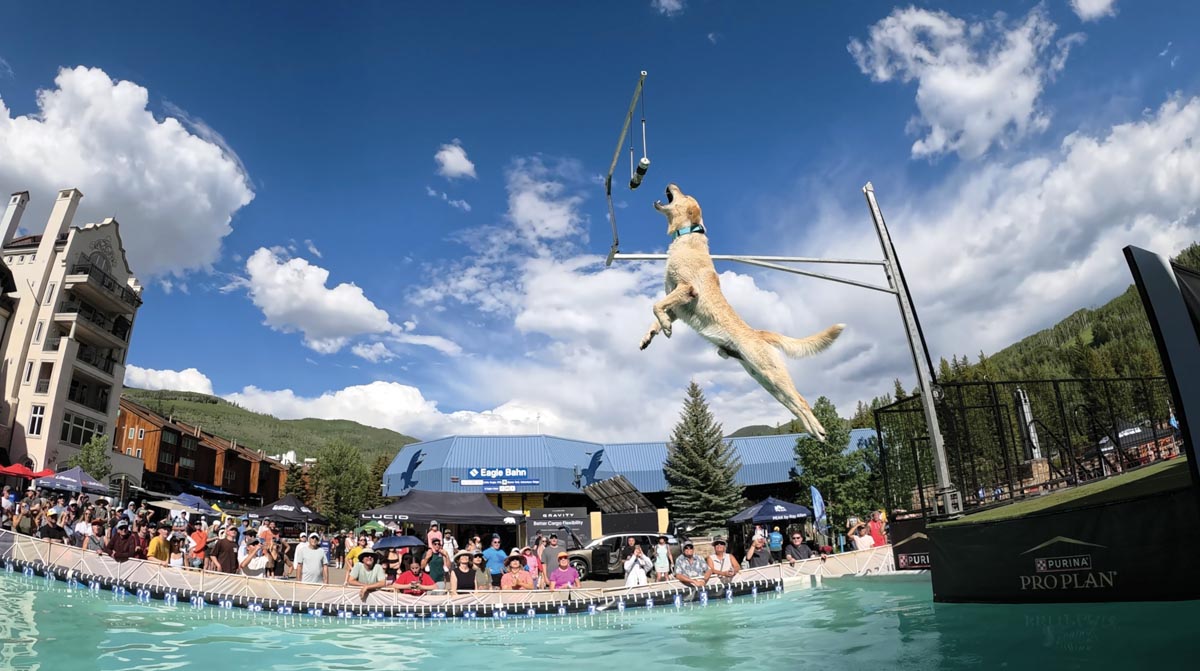
The POV where my GoPro was mounted for video, documenting an Extreme Vertical high jump for dogs.
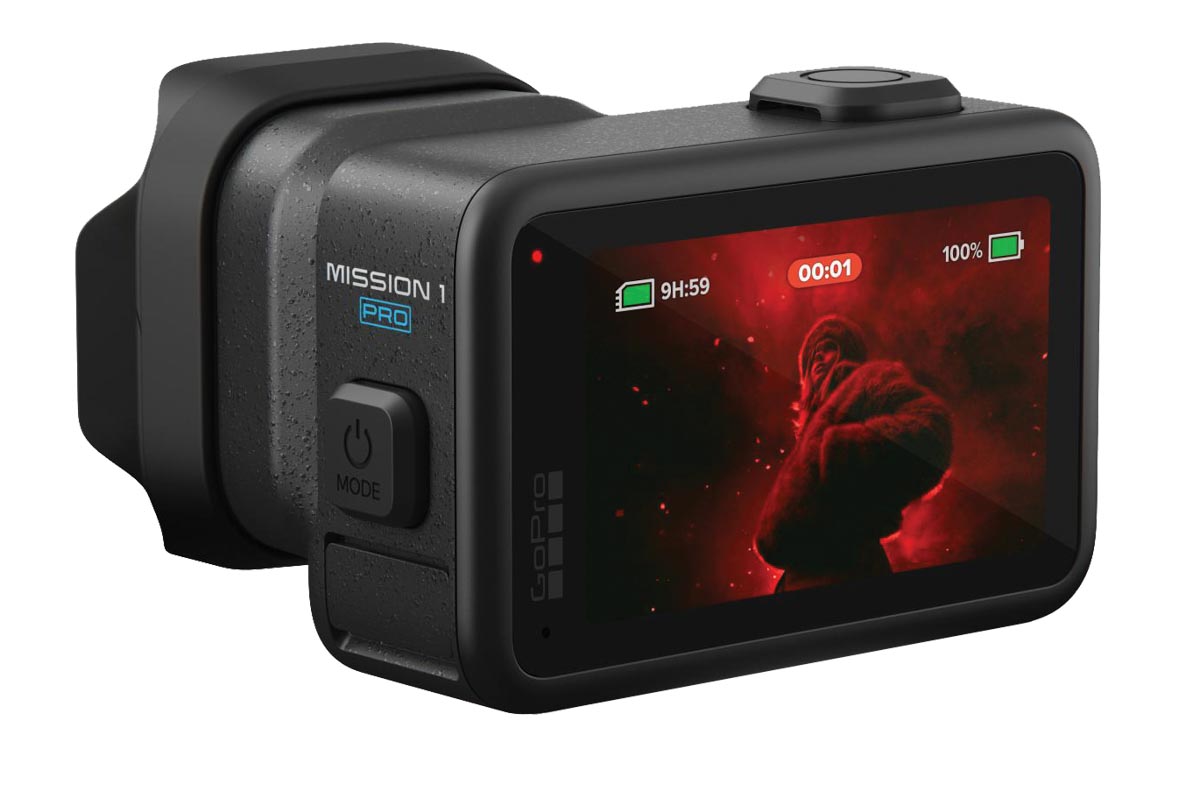
The updated GP3 processing firmware of the Mission 1 Pro allows users to choose between Auto, Fixed, or Shutter Ranges directly in the settings (a feature previously requiring a custom GoPro Labs code). By contrast, GoPro Hero Black cameras are designed for a more traditional action-camera experience. They are typically mounted using one of GoPro’s range of mounting systems, then turned on to capture intense POV moments with minimal to no intervention, meaning users can focus on their activity rather than camera settings or operation.
The Mission line of compact professional-grade cinematic cameras is a leap forward in image quality and overall performance because of its GP3 processor and new 50-megapixel 1-inch Quad Bayer sensor. It goes beyond traditional action sports and POV capture cameras with its 8K30 and 4K120 Open Gate video capture, in-camera stabilization, and category-leading resolutions and frame rates, battery life, and thermal performance. Still photos can be captured at 12MB or 50MB. The camera takes time to process 50MB raw bursts. So, to keep capturing the action at high speed without interruption, you might prefer photographing in jpeg. At the GoPro Mountain Games, the results of my in-camera jpeg processing were impressive in both color rendition and low noise.
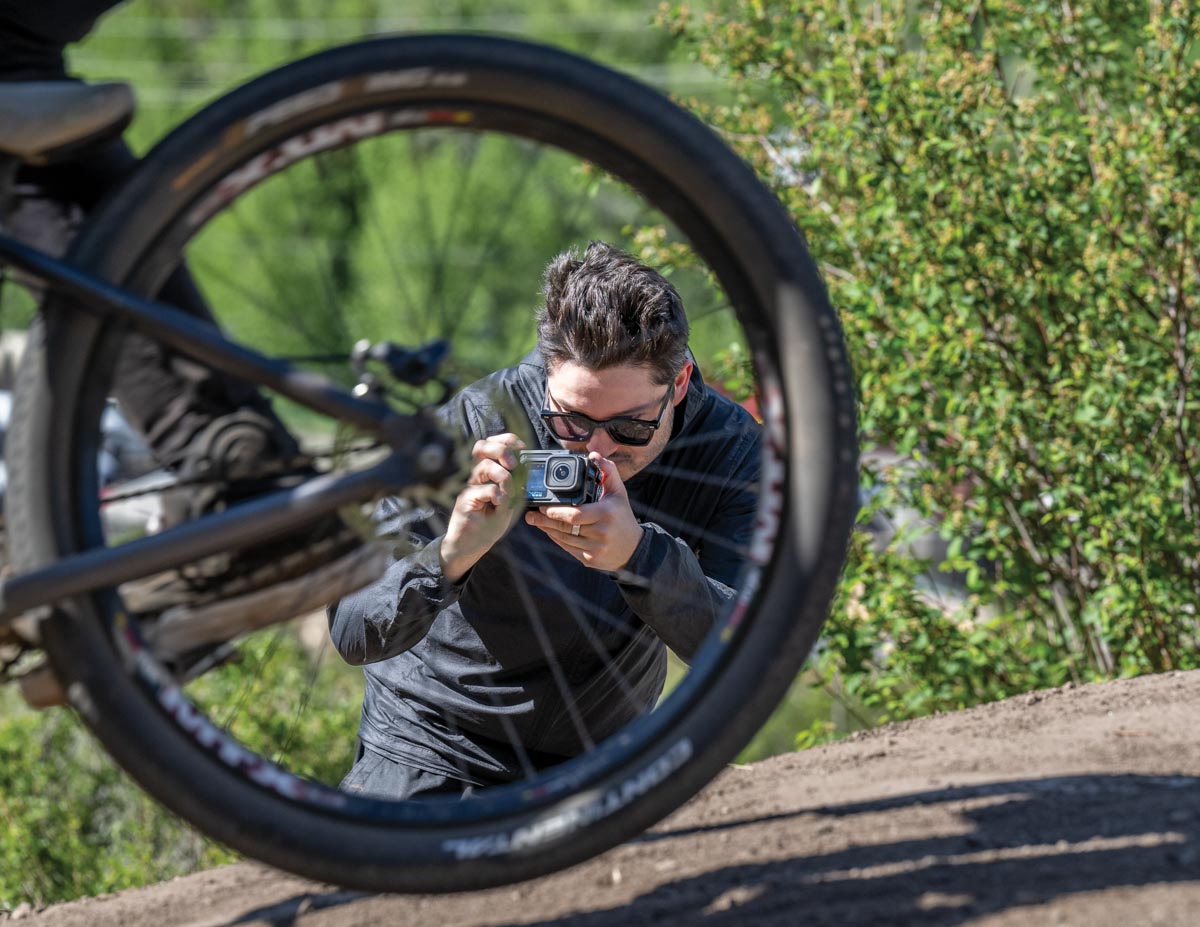
The GoPro Mission 1 Pro records a slow-motion pan of a biker at the GoPro Mountain Games.
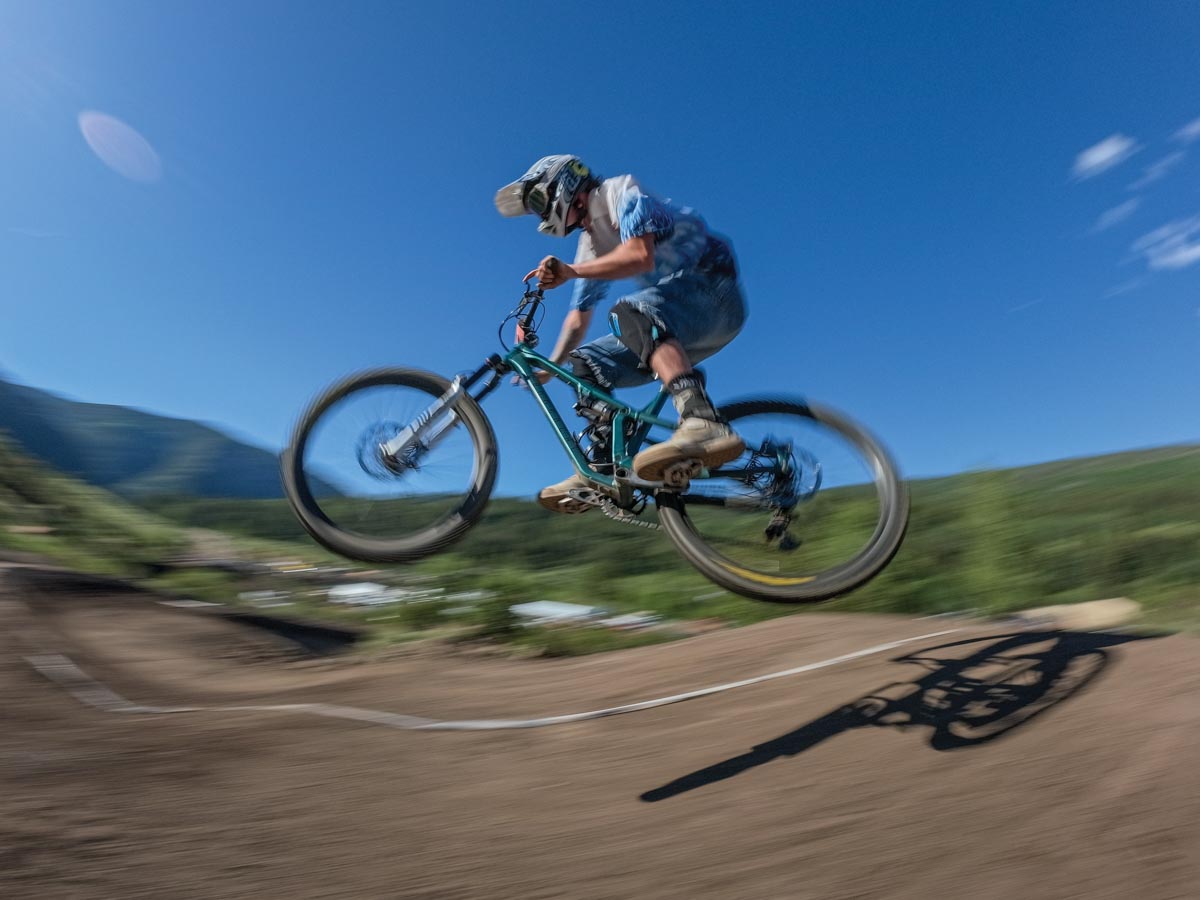
With a slow pan I captured this racer at 1/60 second at f/2.8, ISO 100.
The Mission 1 Pro camera comes with an Enduro 2 battery and a USB-C charging cord. It also includes a removable rubber lens hood that protects the lens, improves contrast and color, and reduces unwanted flair. Other accessories included in the box are a curved adhesive mount for attaching the camera to a helmet, and a buckle with a thumb screw to capture the action from a bicycle handle perspective. Attach the GoPro Boom mount to rig the camera on a bike for an even more unique perspective. The Boom can be used in tandem with ND filters to get slower shutter speeds to capture motion blur from the surrounding terrain. For handheld shots without accessories, I slipped the Mission 1 Pro into GoPro’s ergonomic point-and-shoot grip.
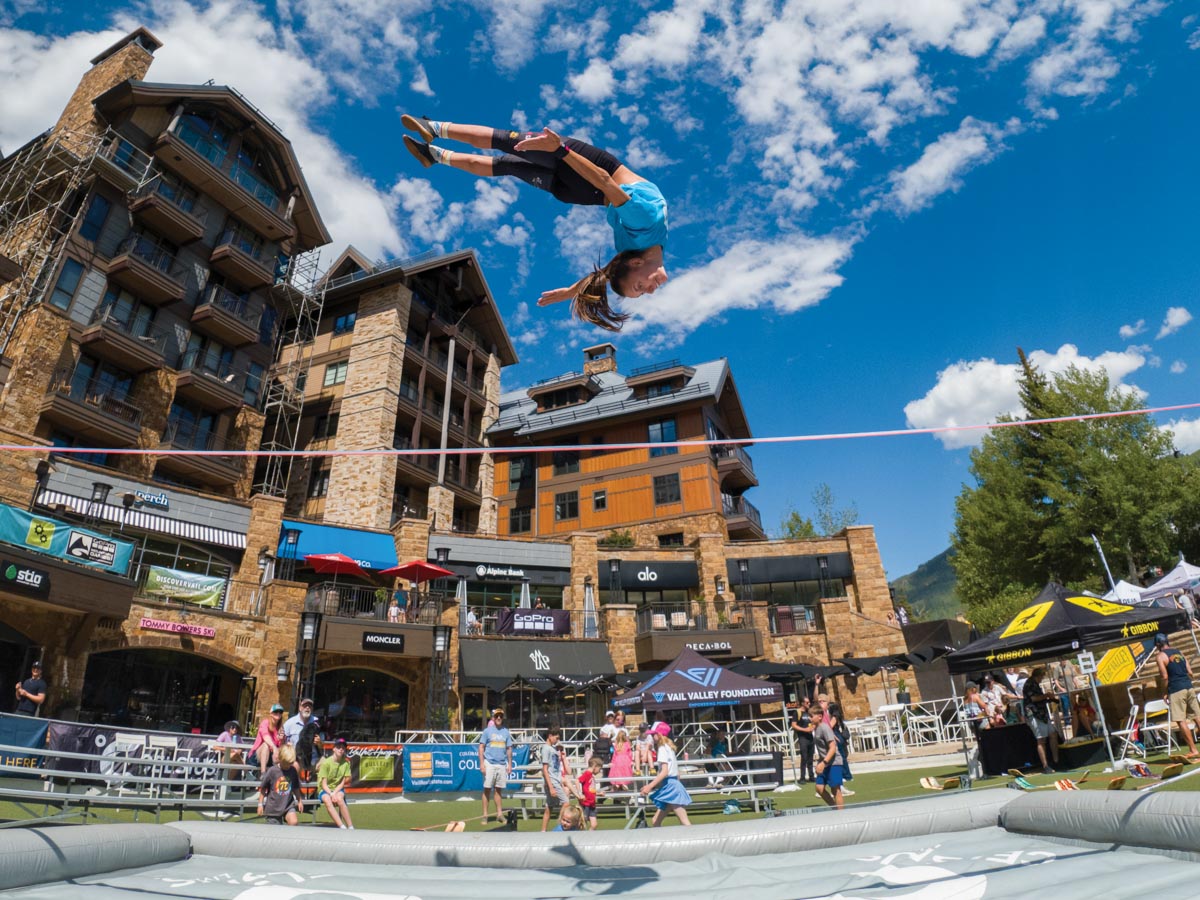
I documented several GoPro filmmakers/photographers to understand how they used their Mission 1 Pro’s to capture the excitement of the Games, including Henry Hougen, who rigged his GoPro to a boom to safely move into the action while Giada Regoli performed her slackline acrobatic magic. For my photos of dogs showing off their long jumps and vertical jumping skills, I used the 40-inch GoPro carbon fiber extension pole to reach out over the pool they were landing in to create slow-motion videos. The same extension pole came in handy to document the human action on USA Climbing-sanctioned walls.
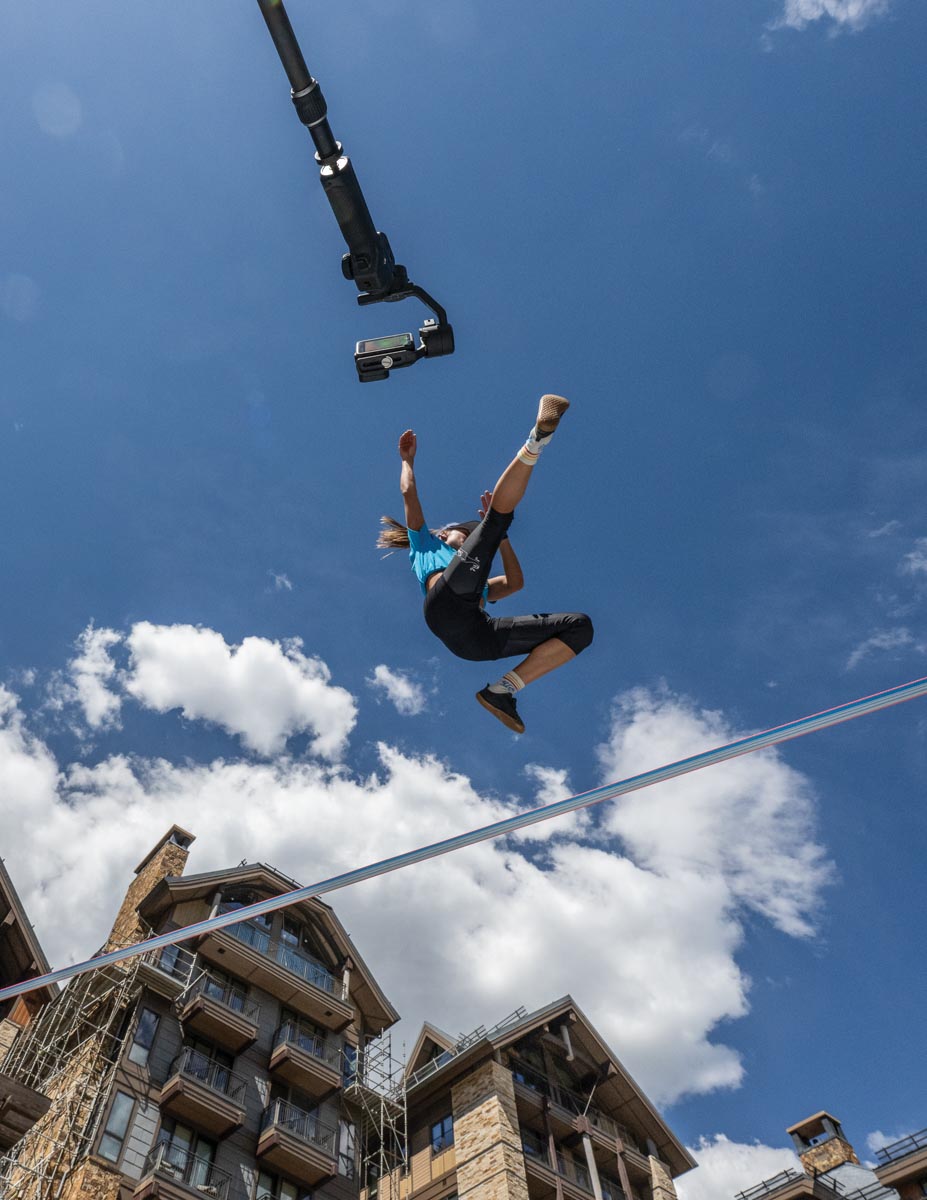
I documented photographer Henry Hougen’s technique of attaching a GoPro Mission 1 Pro to a boom pole to get much closer to the action of Giada Regoli performing her slackline acrobatics at the GoPro Mountain Games.
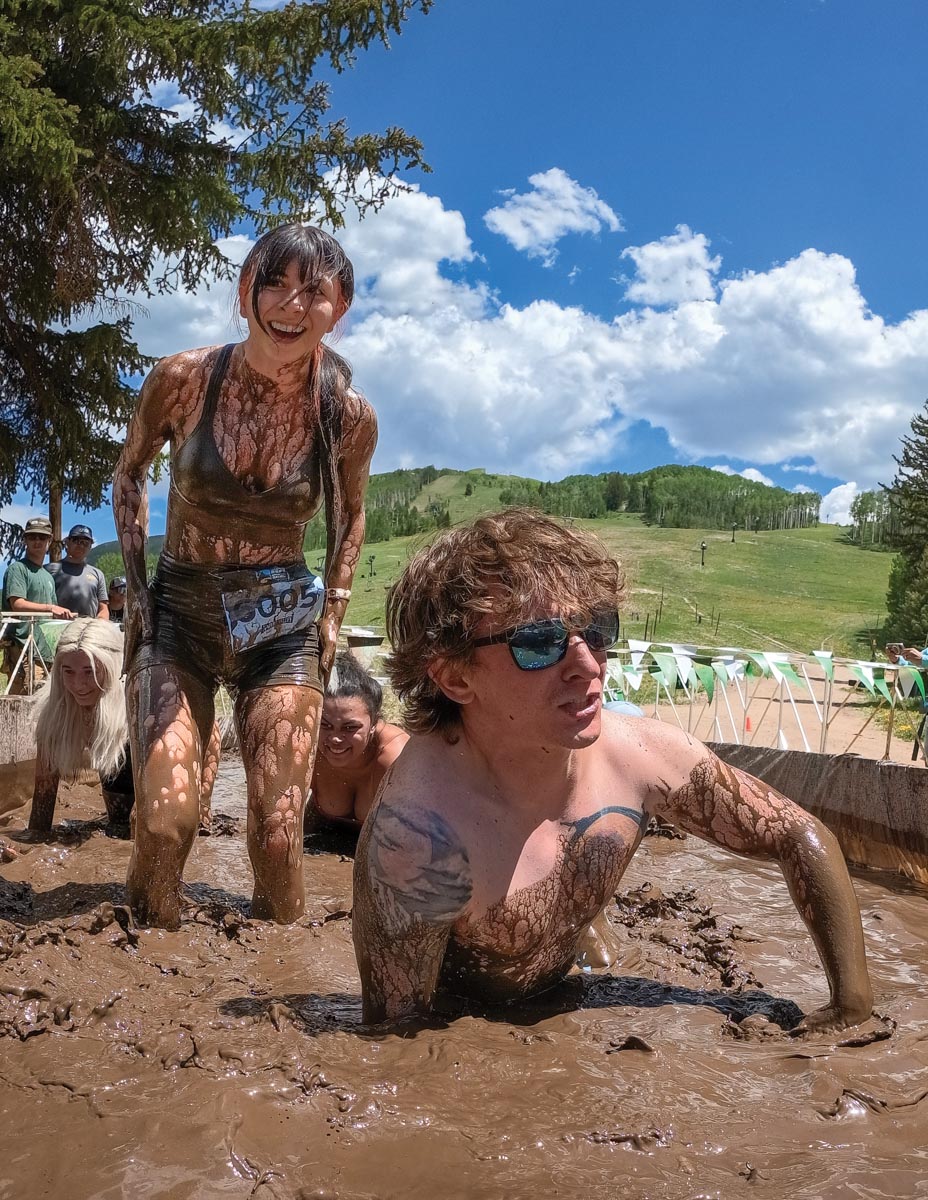
The GoPro Mission 1 Pro captured the action in the mud pit section of an obstacle course.
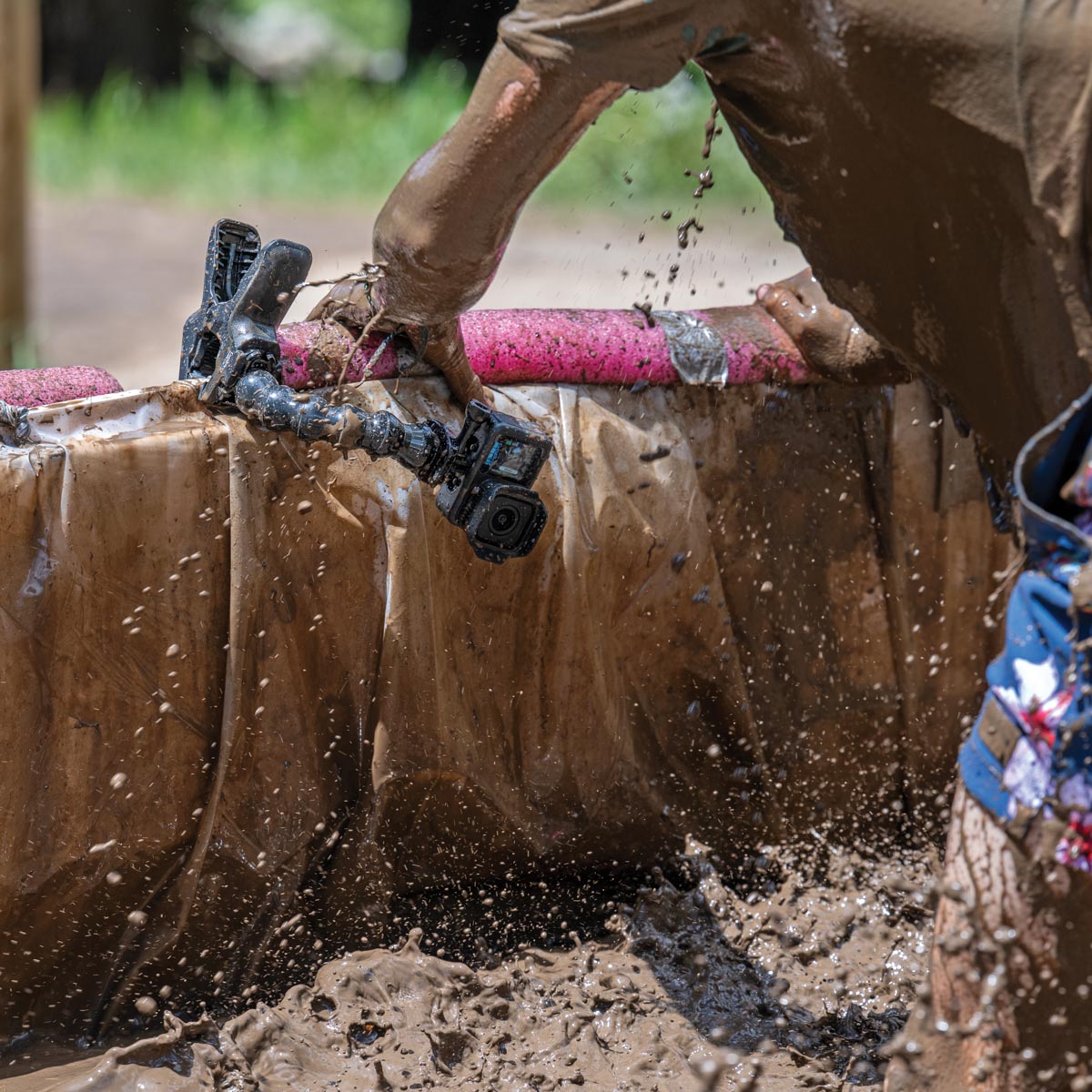
To photograph runners going through a mud pit on an obstacle course, I clamped the Mission 1 Pro to a horizontal pole in front of where the athletes were exiting and operated the camera with the GoPro Quik App on my iPhone 17 Pro to fire the camera in Burst Mode for 30 exposures in 3 seconds. I set the camera to a fixed shutter speed but kept the ISO on Auto and made slight exposure adjustments with EV (up to 2 stops plus or minus).
The Mountain Games Athlete Team’s sponsored athletes embody the core values of the annual event: a passion for human-powered mountain sports, an active outdoor lifestyle, eco-consciousness, and a spirit of adventure. There is no upper or lower age limit to be part of this dream team, with 11-year-old Coloradan Dax Macomber showing off his mountain biking skills with a GoPro attached to his helmet.
Other attachments for POV shooting expand the range of opportunities, from a silicon GoPro Bite Mount that is especially useful for close-to-the-eye angle videos, to a built-in kayak action camera mount, which documented my unintentional departures into Rocky Mountain white water. The Mission 1 and Mission 1 Pro are waterproof down to 66 feet (20 meters) without additional housing, while the Mission 1 Pro ILS is weatherproof but not waterproof, due to its interchangeable lens system.
Videographers and photographers can use Mission 1 Pros for virtually any genre. GoPro’s Chris Prado suggests that wedding photographers discreetly place the camera within the altar flowers to capture the ceremony from the couple’s perspective. As the bride walks down the aisle, the device records her approach, the groom’s reaction, the wedding party, and loved ones, all from an angle traditional cameras rarely capture. In addition to being set up and triggered directly on the camera, e.g. for intervalometer or video recording, the Mission 1 Pro can be controlled via the GoPro Quik smartphone app or GoPro’s remote that works up to 196 feet away and can control up to five cameras.
The Mission 1 Pro and its two siblings live up to their positioning as tools for imagemakers who want greater creative control and are willing to engage more deeply with the imaging process to capture a particular look, mood, or narrative. In the right hands, they are powerful storytelling tools.
Mark Edward Harris is an award-winning photographer and writer based in Los Angeles.
Tags: gear sports photography technique video