
Film Photography: The Artistic Edge
How to find your way back, or for the first time, to film.

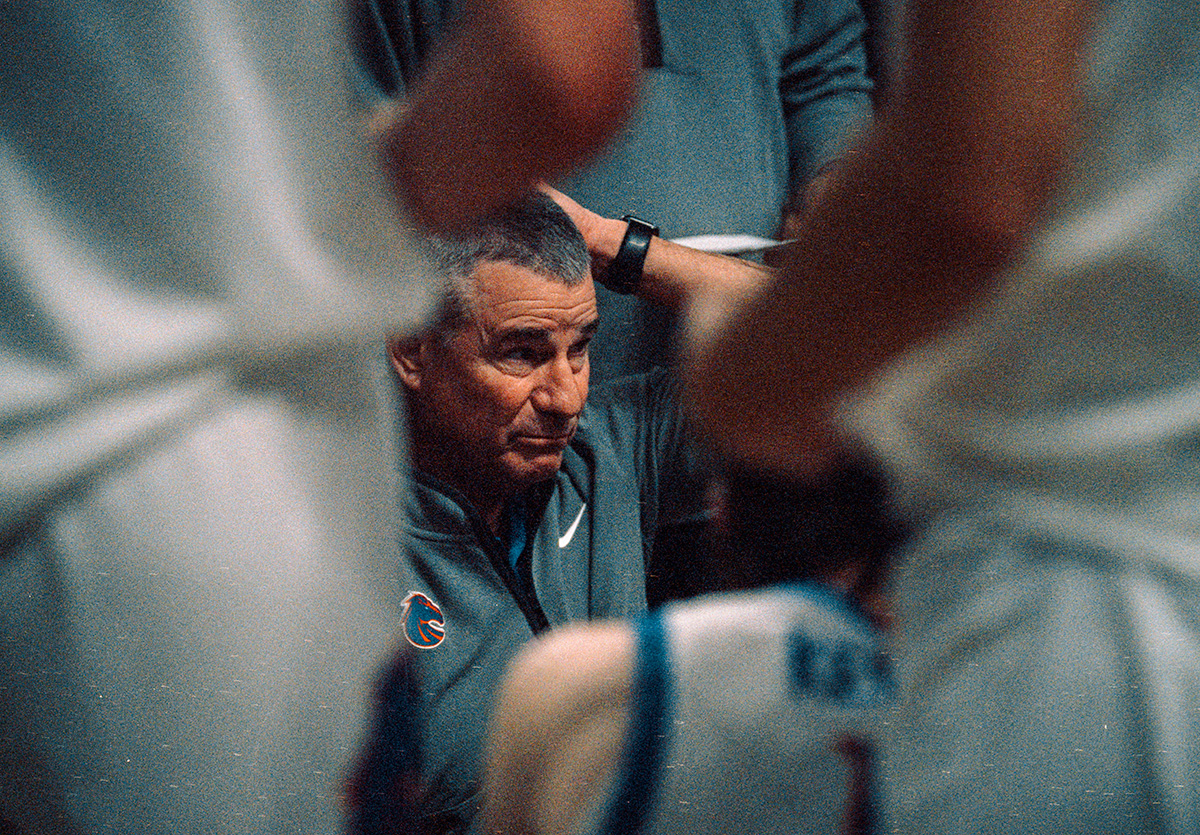
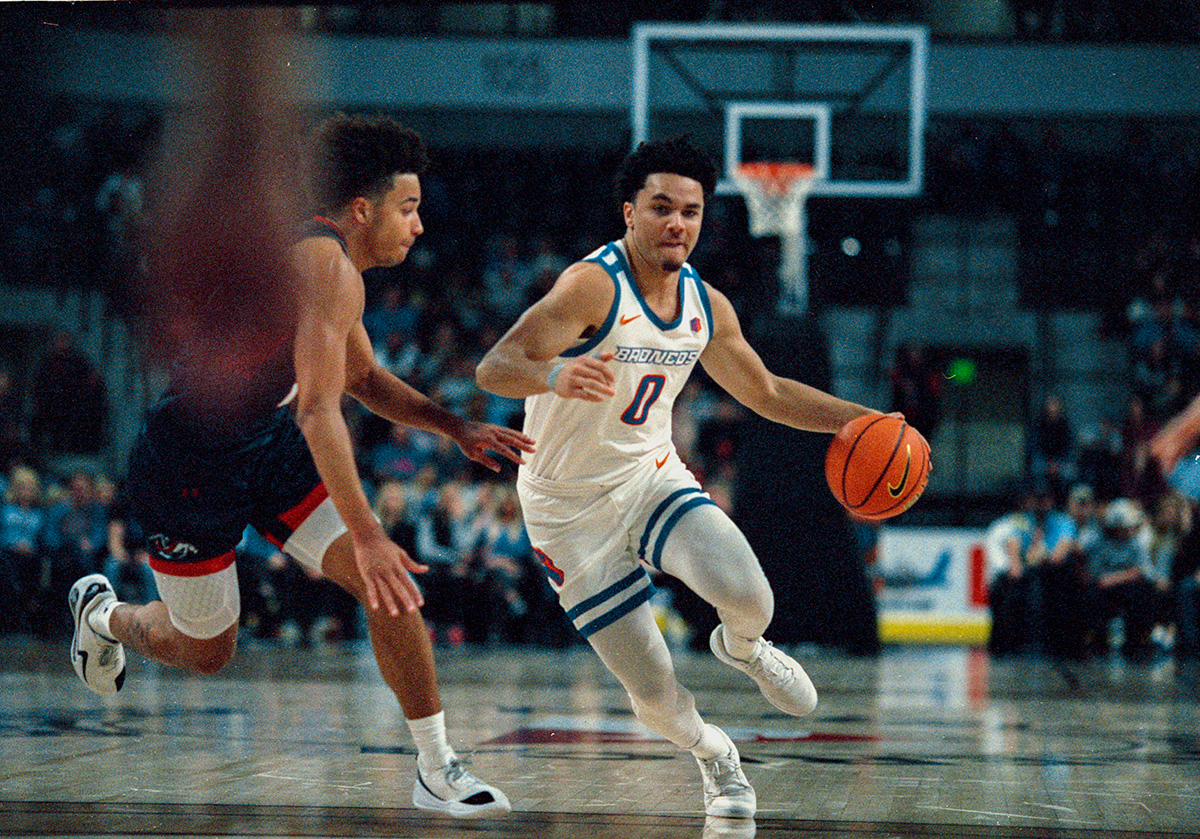
While photographing the Boise State vs. St. Mary’s College basketball game at the Mountain America Center in Idaho Falls, Idaho, I decided to take a leap of faith. I brought something entirely different to the court—a Canon 1V and four rolls of 35mm film: two rolls of Cinestill 800T, and one roll of Ilford Delta 3200. My goal was to photograph the entire game on film, a first for me.
The Canon 1V had arrived in the mail just two days earlier from an eBay seller. The thought of capturing a fast-paced, high-stakes event without the safety net of a digital camera was nerve-wracking. But that’s why I wanted to do it.
Courtside, I loaded my first roll of film, set the Canon 1V to aperture priority, dialed in the ISO, and overexposed by a third of a stop. After that, there was nothing else to tweak, other than focus entirely on capturing the game’s best moments. With no LCD screen to check, I wasn’t distracted by reviewing shots or adjusting settings. I was simply present.
That’s one of the greatest blessings of film photography. It forces you to live in the moment. I was fully engaged in the game, waiting, composing, and capturing the action through the viewfinder.
When I received my negatives in the mail and scanned them, I saw that trusting my instincts paid off. The images carried the energy of the game and my intent with each frame.
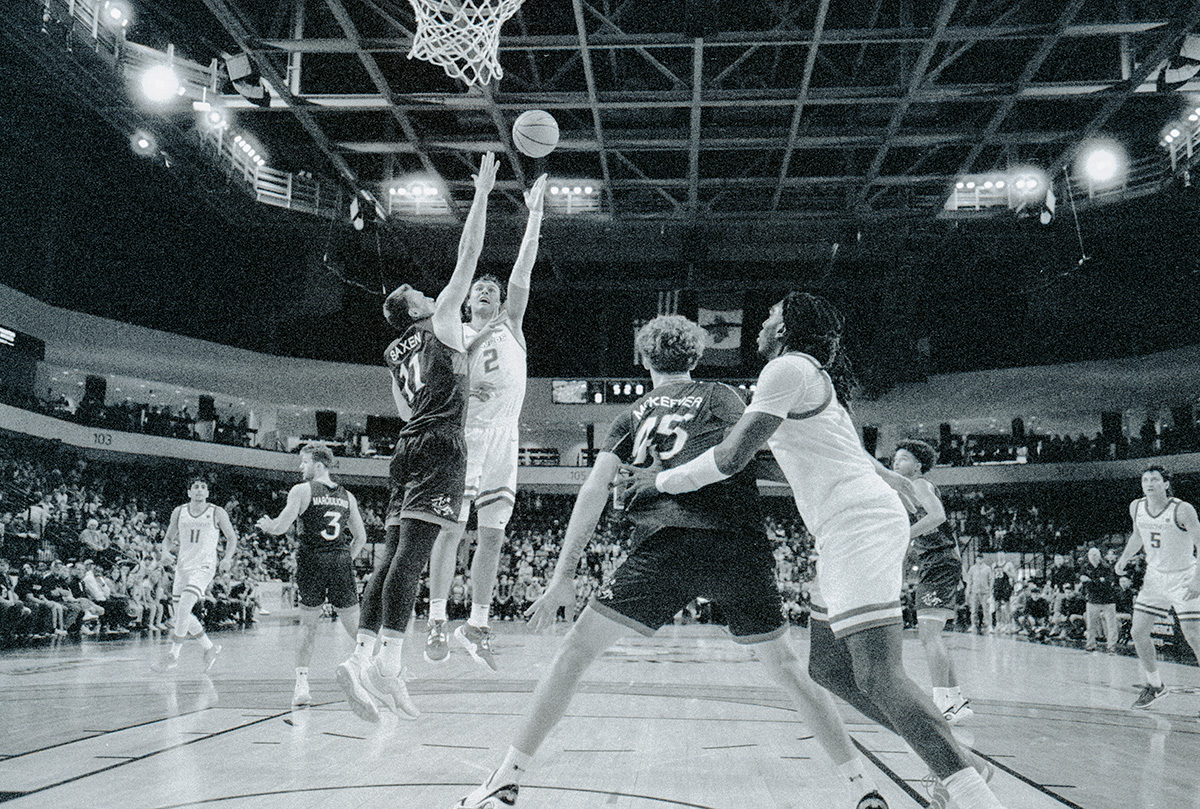
Ilford Delta 3200
Getting Started with Film
If you’ve never picked up a film camera before, the idea might seem intimidating. But it’s easier than you think. Ask yourself, “How could these images complement the work I’m already doing digitally?”
For instance, if you’re covering an event, will your film shots be used to capture behind-the-scenes moments, or will they integrate into the main body of your work? Knowing this will help you decide whether to start with a simple point-and-shoot or an SLR camera.
If you already use Nikon or Canon digital cameras, both brands have film cameras that use the same lens mounts as their DSLRs (Nikon F-mount and Canon EF-mount). This allows you to use the lenses you already have, making the transition to film much smoother.
For those starting from scratch, consider purchasing an entry-level camera from reputable resellers like KEH and MPB, or you might get lucky with eBay. I recommend KEH for beginners because of their competitive pricing, rigorous testing, and return policies.
Recommended Film Cameras for Beginners
Point-and-Shoot Cameras
- Ricoh GR1v: Compact, lightweight, with a sharp Ricoh GR 28mm f/3.5 lens.
- Yashica T4 or T5D: Simple design and equipped with a 35mm Zeiss f/3.5 lens.
- Leica Mini II: Affordable and portable, featuring a retractable 35mm f/3.5 lens.
- Minolta Hi-Matic AF2: A classic option with easy-to-use autofocus.
SLR Cameras
- Canon AE-1 (FD Mount): Beginner friendly with automatic exposure modes.
- Minolta X-700: Offers auto modes and manual controls, perfect for transitioning from digital.
- Nikon FM10 (F-Mount): Lightweight, fully manual, and reliable.
- Canon EOS 1N (EF Mount): Familiar for Canon users, with modern features like aperture priority and manual modes.
Troubleshooting Tips
Here are a few tips to avoid common technical issues.
Check the camera battery. Many film cameras won’t work properly if the battery is dead.
Load the film correctly. Double-check that the film is advancing. Look for the rewind knob to turn as you wind. If you are still unsure, there are plenty of tutorials online to show you how to load the film camera you are using.
Meter properly. Use the camera’s built-in light meter or an external meter for accurate exposure.
Identify the ISO. This is the most important step. Before I even load the film stock into my camera, I write the ISO on the film canister itself. This ensures that the lab and I both know how the film should be developed. Do you want to overexpose by one or two stops, or keep it at its base ISO? Set the ISO on your camera accordingly.
Cinestill 800T
Film Stocks and Development Services
Film Stocks for Low Light
- Cinestill 800T: Specifically designed for artificial and tungsten light, Cinestill 800T excels in low-light environments while delivering a cinematic look. With its unique halation effect and rich color tones, it creates dramatic and atmospheric images. You can push the ISO to 3200, which will produce higher grain and contrast.
- Kodak Portra 800: A versatile low-light film stock known for its beautiful color rendering and fine grain. Kodak Portra 800 handles mixed lighting conditions well, producing natural skin tones and exceptional detail, making it perfect for portraits, events, and nighttime photography.
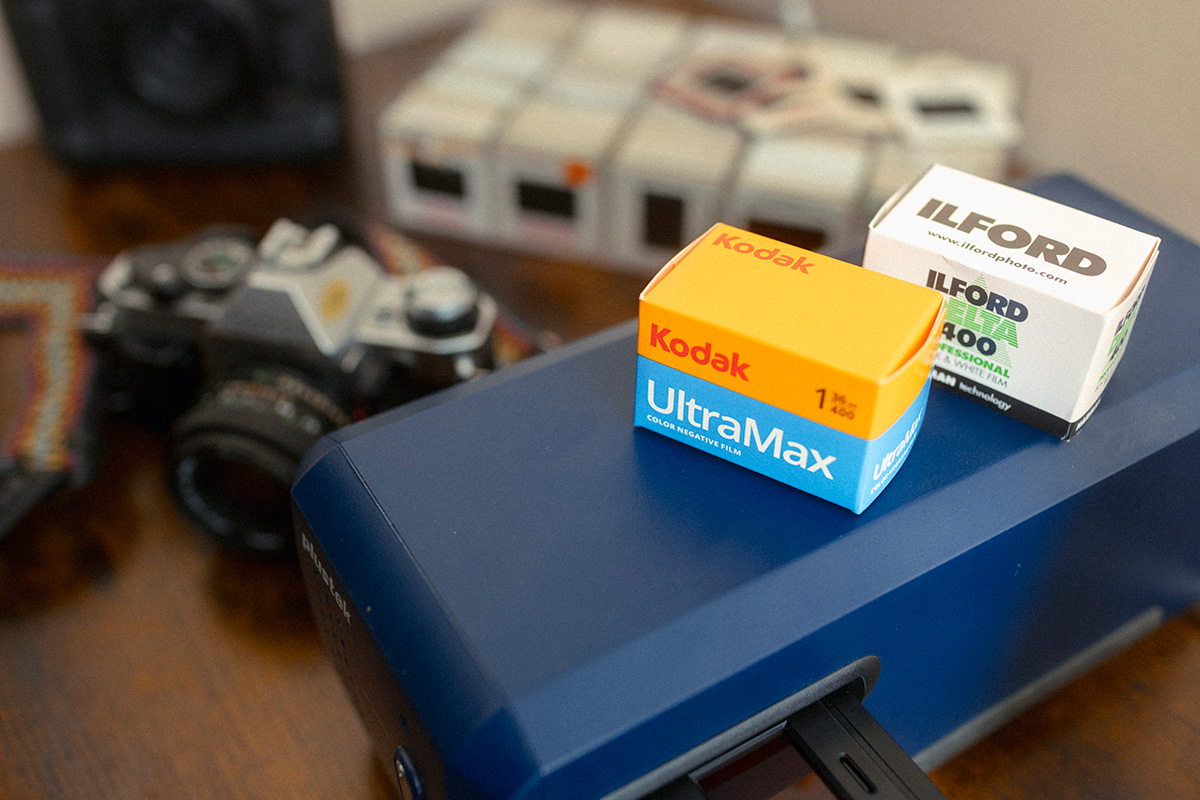
- Ilford Delta 3200: A high-speed black-and-white film that delivers excellent results in extremely low light. Ilford Delta 3200 features fine grain, deep blacks, and impressive highlight detail, making it ideal for capturing dramatic, high-contrast scenes or atmospheric indoor photography.

Film Stocks for General Use
- Kodak Ultramax 400: A versatile film stock with fine grain and vibrant, true-to-life color rendering. Ideal for everyday use, Ultramax 400 delivers consistent results in various lighting conditions and optimized skin tones.
- Fujifilm Superia X-Tra 400: This super fine grain film stock is known for its ease of use and reliable performance. Fujifilm Superia X-Tra 400 uses Fujifilm 4th Color Layer technology to produce vibrant, natural looking colors and smooth skin tones.
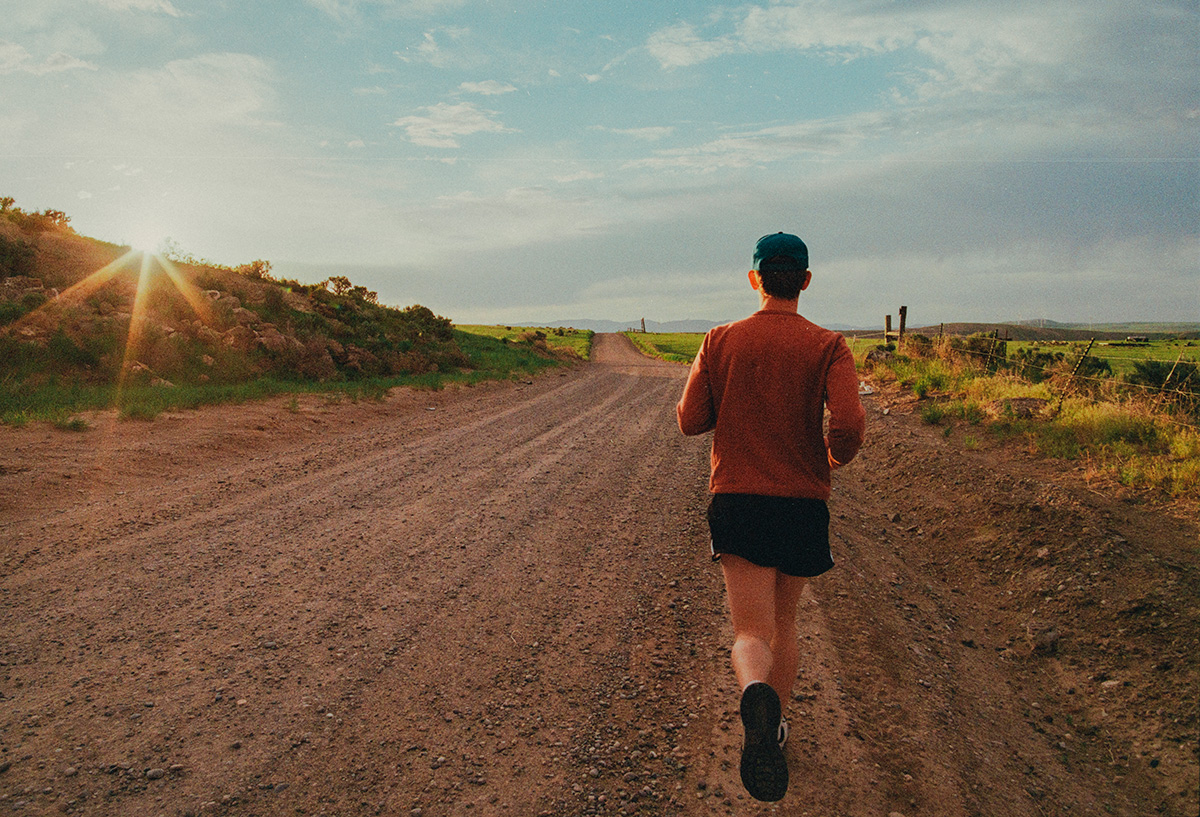
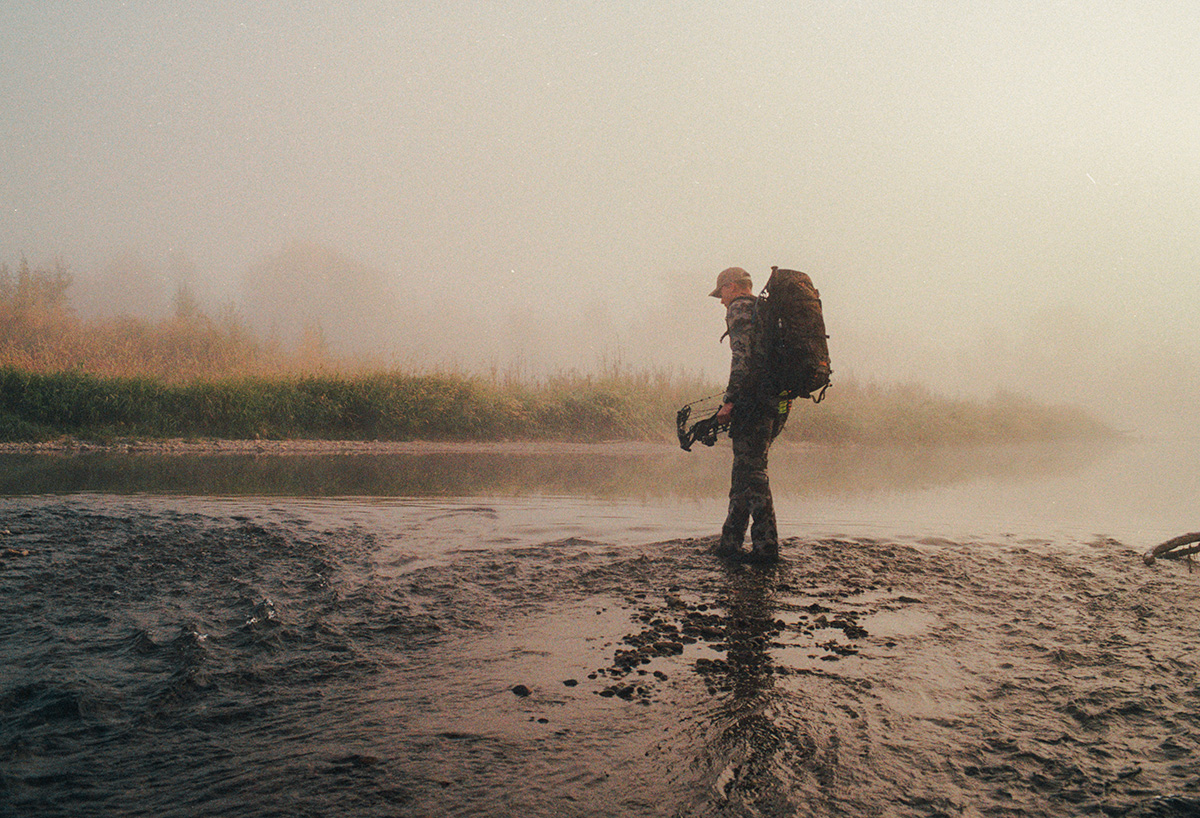
- Kodak Gold 200: A classic medium-speed Kodak film stock that offers fine grain, vivid color saturation and high image sharpness. Kodak Gold 200 can be exposed up to two stops under or three stops over for a wide variety of lighting conditions.
Film Stocks for Portraits
- Kodak Portra 400: Renowned for its exceptional color accuracy and fine grain, Kodak Portra 400 is a favorite among portrait and wedding photographers. Its wide exposure latitude makes it incredibly forgiving, delivering soft, natural skin tones, and stunning detail in highlights and shadows.
- Cinestill 400D: Derived from motion picture film, Cinestill 400D offers cinematic color rendering with vibrant yet balanced tones. With its wide dynamic range, it’s versatile across various lighting conditions with exceptional highlight retention, perfect for creating dramatic, storytelling images in natural or artificial light.
Cinestill 800T
Labs
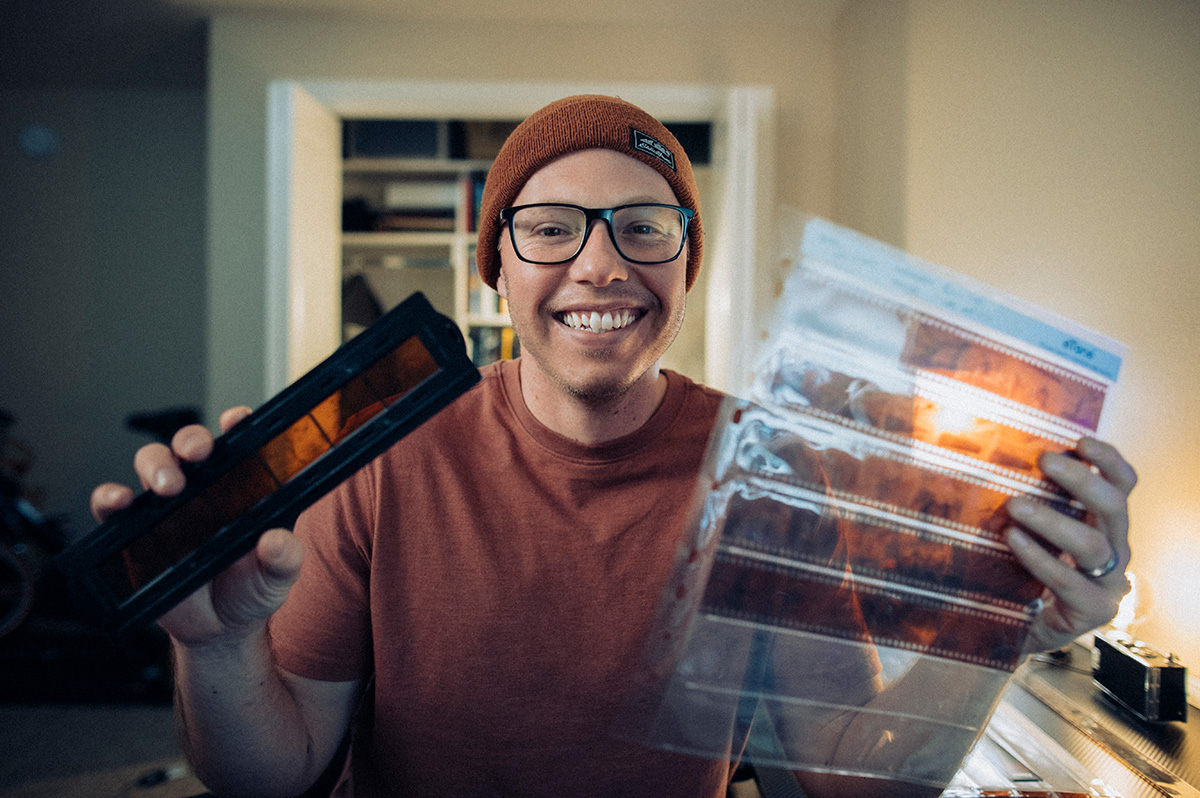
- State Film Lab (Kentucky): An affordable and reliable option for developing film, State Film Lab offers development-only services for just $7 per roll. Their quick turnaround time and consistent quality make them an excellent choice for photographers who prefer to scan their own negatives.
- The Darkroom Lab (California): A full-service lab specializing in high-quality scans, prints, and developing. The Darkroom Lab is an excellent option for those who want their negatives digitized and ready to use. They offer various scan sizes, color corrections, and prints.
- The FIND Lab (Utah): Known for its exceptional high-quality scans, The FIND Lab provides a boutique-level service that caters to professional photographers. They offer personalized options like exposure corrections and color adjustments, ensuring your scans are optimized for both print and digital use.
Scanning Tips for Better Results
If you’re planning to scan your negatives at home, here are some tips to get the best results.
Use a good scanner. The Plustek OpticFilm or Epson V600 (possibly hard to find) are excellent options. The Epson V850 Perfection Pro Photo Scanner is a higher-end scanner that is in production and readily available.
Clean your negatives. Use an anti-static brush or blower to remove dust before scanning.
Experiment with software. SilverFast and VueScan give you greater control over tones and resolution.

Kodak Gold 200
The Artistic Edge
In a digital-driven world, hashtags like #lookslikefilm and film presets have become popular, but nothing replicates the magic of actual film—grain, light leaks, and all.
After the basketball game, I sent my scanned negatives to the marketing director at the Mountain America Center. A few days later, I received this email:
“These pics are AMAZING! Absolutely love what you captured on the 35mm. Incredible footage! You are clearly quite talented. I’ve sent these along to my contact at the BSU Athletics marketing department. We have the Idaho Falls PBR coming in April, and I feel like that event would lend itself super well to your medium. Do you have any interest in shooting that?”
This is the power of film: it stands out in a saturated market. It makes your work intentional and memorable, offering clients something that digital can’t always replicate.
Is Film Making a Comeback?
I know from speaking with professional photographer Dave Black, who was one of the first to embrace digital photography when it was introduced, that digital plays a huge role in photography, especially in sports. In today’s fast-paced world, especially in photojournalism, the immediacy of digital is indispensable. But does film still have a unique place? Absolutely.
Film creates a feeling and emotion that’s nearly impossible to replicate in the digital space. Its imperfections—grain, light leaks, and subtle variations—are what make it so special. As much as we try to emulate film with presets or editing techniques, we’ll never truly capture its one-of-a-kind characteristics.
So, instead of trying to fake it, we can accept it for what it is. And if film is making a comeback, why not embrace it?
Tyler Rickenbach is a filmmaker and photographer based in Idaho.
Tags: film photography