
Design Serenity
Kenny Richard photographs spaces with purpose
Known colloquially as “Cowtown,” Fort Worth, Texas, got its start as a stop along the Chisholm Trail, used in the post-Civil War era to drive cattle to stockyards and rail stops in Kansas, where they could be sold and shipped east. Today, the city balances its cattle-driving history with modernity, hosting rodeos at the Fort Worth Stock Show & Rodeo as well as modern art exhibitions at the Kimbell Art Museum. It is a city straddling two distinct personalities, and where photographer Kenny Richard, M.Photog.Cr., CPP, is proud to hang his hat.
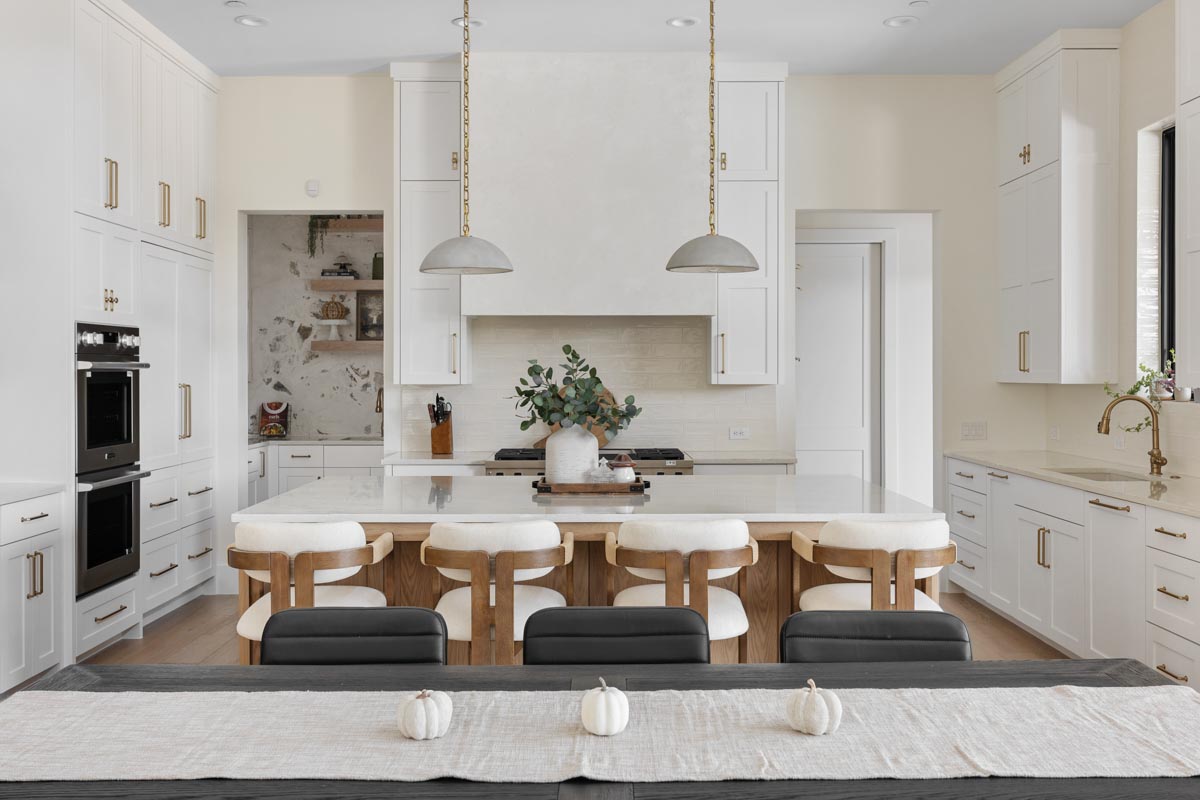
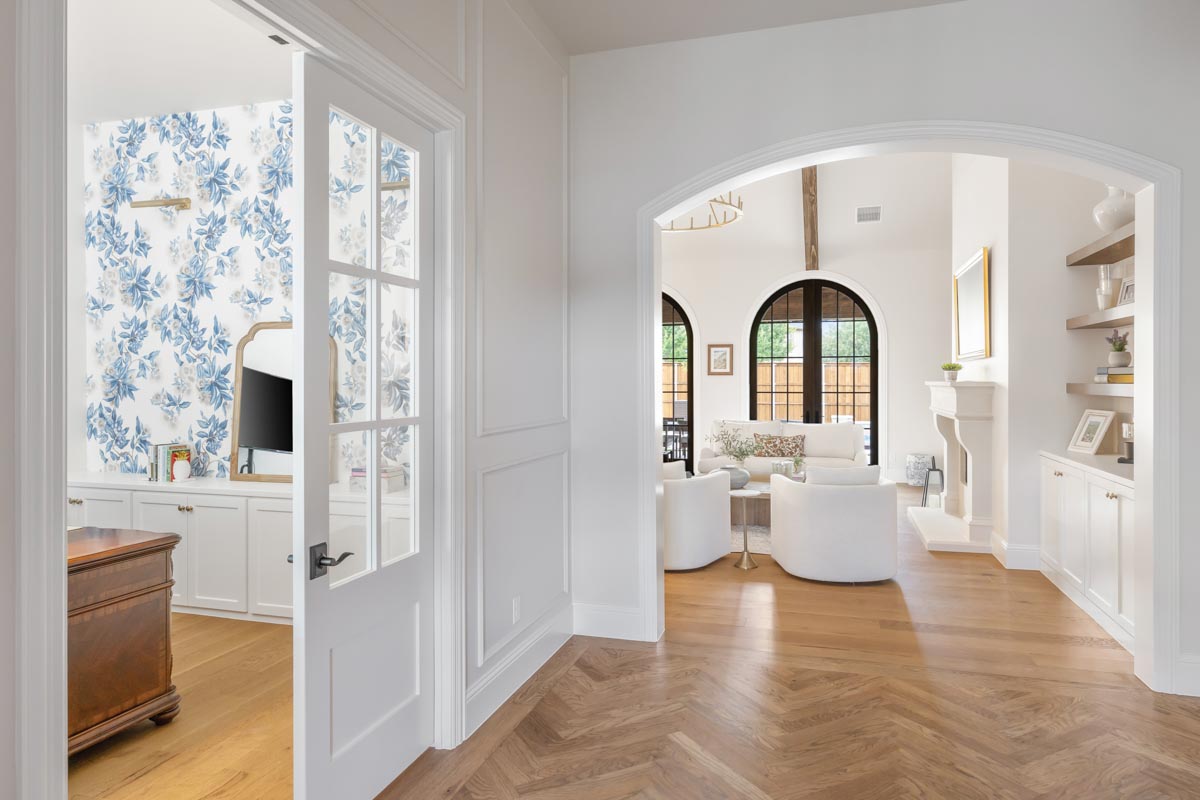
Much like his city, Richard engages in a kind of duality, delving into both real estate photography and interior/architectural design photography. Outwardly, the two niches may seem the same, but the approach to each is entirely different. Photographing a space that’s for sale or for short term rental requires a different creative lens than capturing the emotion and vibe of a carefully curated interior. The former is an inviting skeleton awaiting the viewer’s narrative, while the latter simply is the story.
“It’s hard for me to narrow down which genre I prefer, real estate or interior design,” says Richard. “One is selling the space and its possibilities, and the other is selling art, furniture, and emotion. They’re related, but not at all the same.”
 View Gallery
SELLING A SPACE
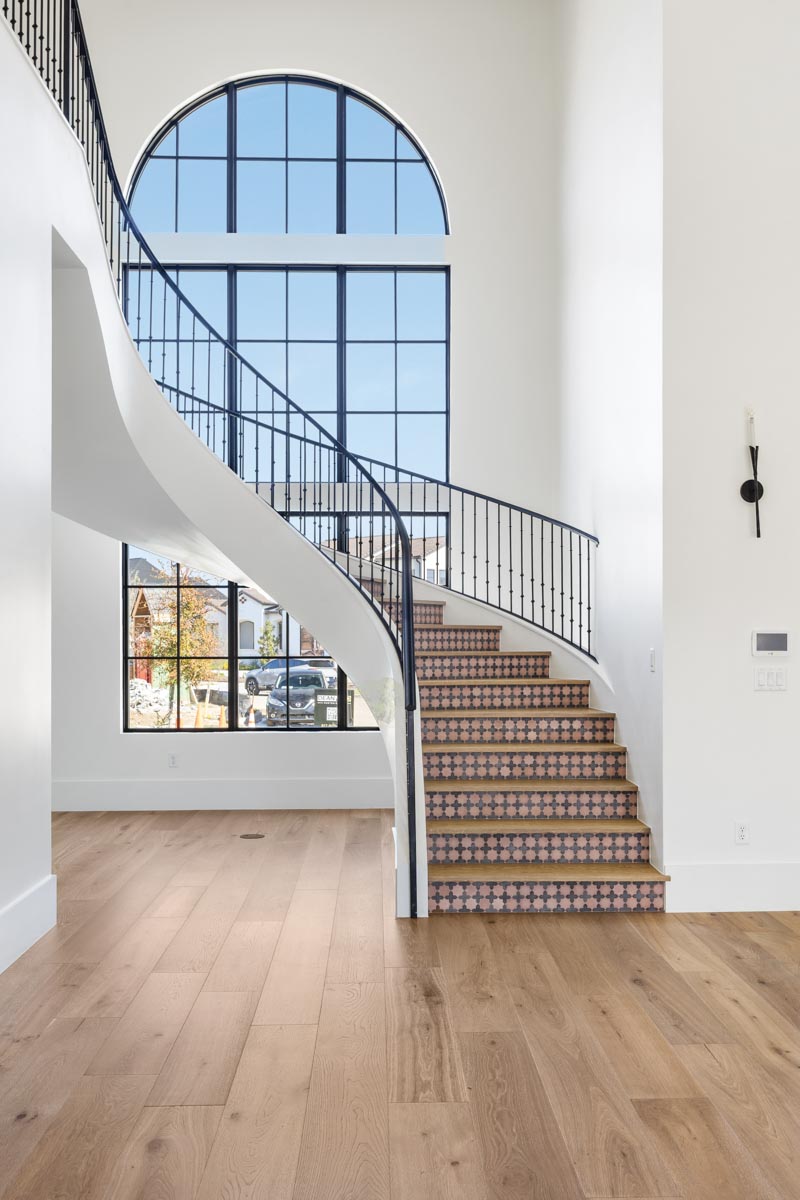
Whether the client is marketing a home for rent or for sale, the end goal is to ensure viewers can visualize themselves in the space. Light, bright, airy rooms with minimal distractions invite viewers in. While a real estate photography assignment may seem like a quick and easy in-and-out job, there’s much more to it than wide-angle lenses and bright lighting, Richard notes.
Richard has spent years photographing spaces for Airbnb, which is where he got his start as a side gig before pursuing photography full time. His primary goal for photographing an Airbnb rental is to create images that feel inviting and warm, with just enough detail to evoke a sense of comfort. Similarly, with a house listing, it’s all about creating enough of a story for a viewer to build on and visualize themselves in the space, he says.
The first thing Richard does at a property is set his camera gear by the front door and walk through the space with the client. In many cases, he adds, they’ve already attempted to stage the home but haven’t considered how that staging translates into photographs. So, he’ll suggest moving furniture and décor, and explain along the way why and how it will improve the final images. What might seem decorative and inviting to the client may read as cluttered and chaotic to the viewer, he explains.
“I make it feel chatty and light as we walk through, and what that promotes to the client is that I know what I’m doing and I’m paying attention to the details,” he says. “My clients know I want the space to look the best that it can so they get more bookings or make the sale.”
Richard uses the bracketing technique to capture images for real estate listings. He captures an initial image, then two incrementally overexposed and two more incrementally underexposed images. Part of this is for precision, and part of it is for equipment simplicity, as he typically brings just a tripod, camera, and circular polarizer filter with him to these jobs.
“Most of my clients would not be willing to have me bring in a ton of gear and spend 15 minutes capturing one shot when I can connect five bracketed exposures later,” he explains. “It’s just a choice I’ve made that allows me to create time for more jobs and create great results for my clients.”
When photographing larger commercial buildings, though, Richard keeps an added goal in mind. “Commercial buildings are usually immaculate and dramatic because the goal is to capture people’s attention immediately when they walk in,” he says. “So, I’m always on the lookout for something I can use for competition. I also share that with my client, which helps them know I will spend the extra time shooting and that it will benefit us both.”
That instinct has paid off. In both genres, Richard has earned many accolades, including images that earned Imaging Excellence in PPA’s Merit Image Review. Richard also has advanced in the International Photographic Competition to the top 32 ranking and higher, including a Diamond award, as well as won an award from Texas Professional Photographers Association for best architecture image.
SELLING A MOOD
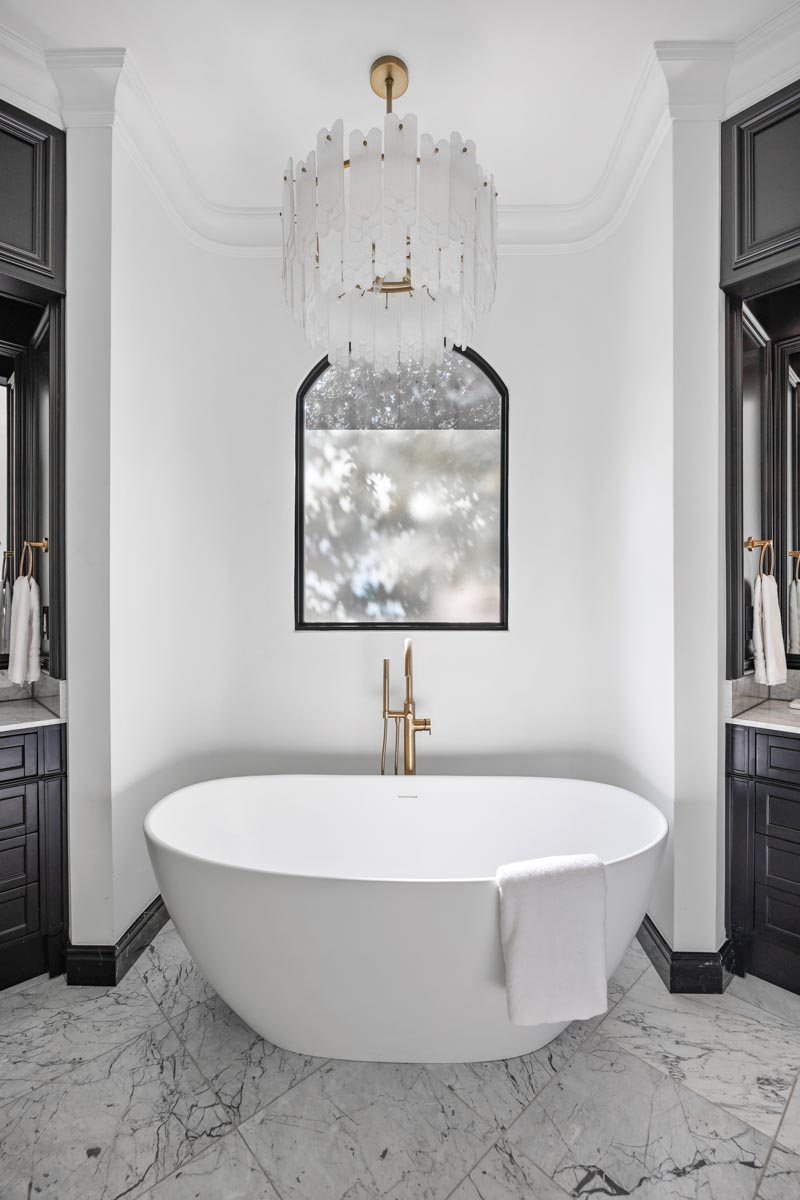
Richard takes a different approach when he works with interior designers. Capturing a designed room is about the emotion the designer wants to evoke, whether that is connected to a design element such as a sofa or lamp, or as part of an overall sense of styling, he explains. These images are about eliciting desire within the viewer, an emotional need to recreate the mood of the image in their own home.
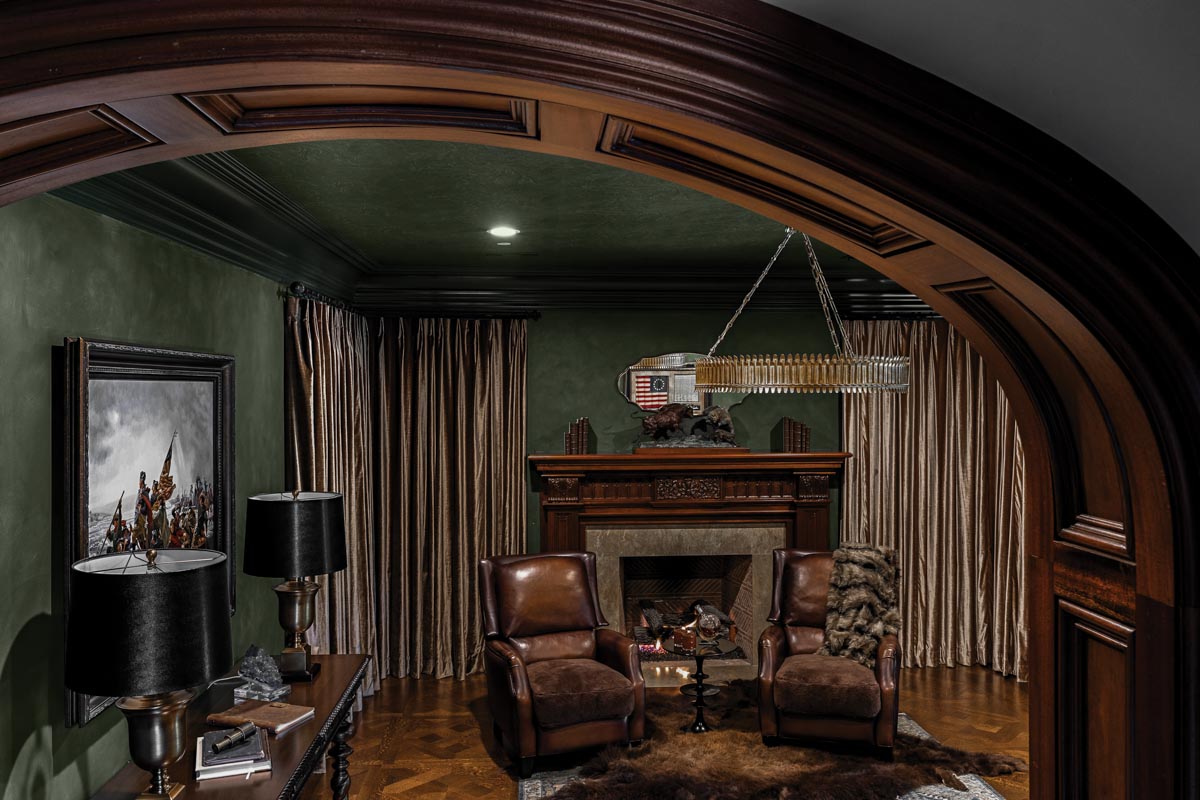
Often, capturing that mood means working with dark color schemes and dramatic lighting, according to Richard. For example, in a recent session, he was photographing a room with deep green walls and moldings, a dark green and gold wallpapered ceiling, and richly toned furniture with a dark cherry finish (below). His job was to capture the emotional essence of the space without skewing the color and lighting. Given the darkness of the room, it would have been easy to blow out the windows or lighting with long exposures, he explains.
“The intended impression was that this is a room where people can sit and be in their own thoughts, or be reading by the fire,” says Richard. “We had to be very strategic to ensure there was no light spill from the windows that would contaminate what the client envisioned.” To combat the intrusive daylight, Richard covered the windows with a black backdrop and took long exposures to ensure he wasn’t losing any details in the shadows. True to his bracketing process, he captured five images of each setup, noting where light spilled from adjacent rooms.
In tricky setups, Richard says he verifies the actual paint colors with his clients and secures the RGB info, so he can select the exact color in the palette in Adobe Photoshop and paint the appropriate areas to ensure they read correctly. He also uses Lightroom.
“I want that color to be spot-on,” he says. “A lot of designers are working with whites and earth tones, which are of course much easier to shoot. But there’s been a trend toward dark, moodier rooms in new builds and staged houses with deep blues, charcoals, even black walls.”
To correct light spill and remove glare, he uses a flash or strobe. He pops the flash into a window to create what he calls a “flambient exposure.” Recessed lighting can also pose lighting challenges by changing the color of the surrounding ceiling or creating glare. Like with the dark walls and trim, Richard will ask for the paint color of the ceiling, so he can correct it if needed later in editing.
SELLING YOURSELF
Creating meaningful and lasting client connections is Richard’s iron-clad marketing tool. “The novelty of customer service has really gone by the wayside,” he says. “I establish a relationship with everyone I come into contact with and follow up regularly. My clients know they are more to me than a dollar sign. It’s not transactional; it’s relational.”
Richard seeks opportunities to have authentic conversations with his clients and reinforces his connection by checking in on them in a non-salesy manner. It’s important to him that his clients know he will take care of them, he says. Building that relationship and following up with solid work that meets—and hopefully exceeds—a client’s expectations is what keeps him front of mind and high on their recommendation list, he adds.
“If I haven’t done the relationship right, it almost doesn’t matter what the images do,” he says. “It becomes a lost job down the road, lost word of mouth, a lost tag on social media.”
Stephanie Boozer is a writer in Charleston, South Carolina.