
Big Glass Action
Olympic lessons in long lens techniques
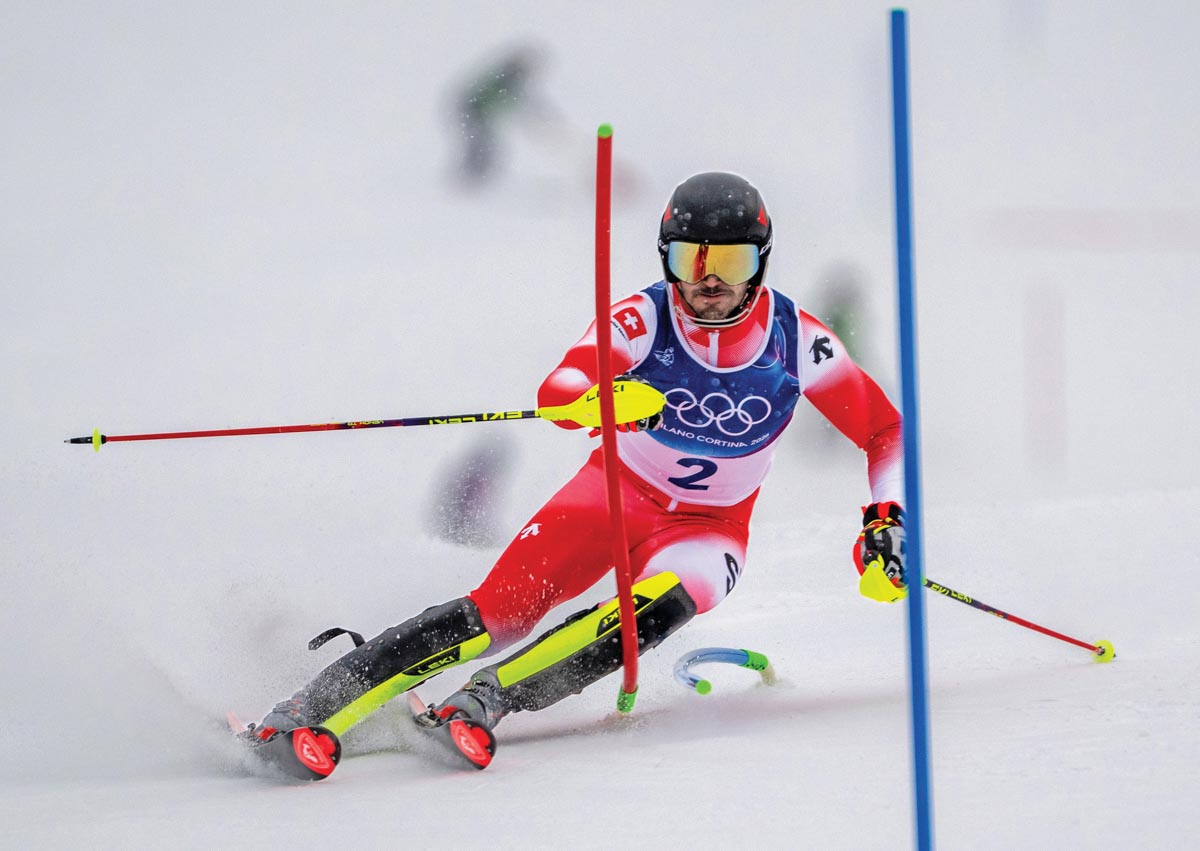
Whether the action is taking place on a pitch, a piste, a track, or in a ring, photographing Olympic sports typically requires long lenses and a variety of techniques. These same basic techniques can be applied to both other sports and other photography genres.
The competition in the Olympic photographers’ pit can be as tough as what’s going on in front of the Nikons, Canons, and Sonys directed at the athletes. So, being at the top of your game as a credentialed photographer is imperative. With photographers often pinned into relatively tight photo positions, getting the gold, photographically speaking, and not making it onto the podium can be measured in fractions of a second or the slightest degrees of an angle.
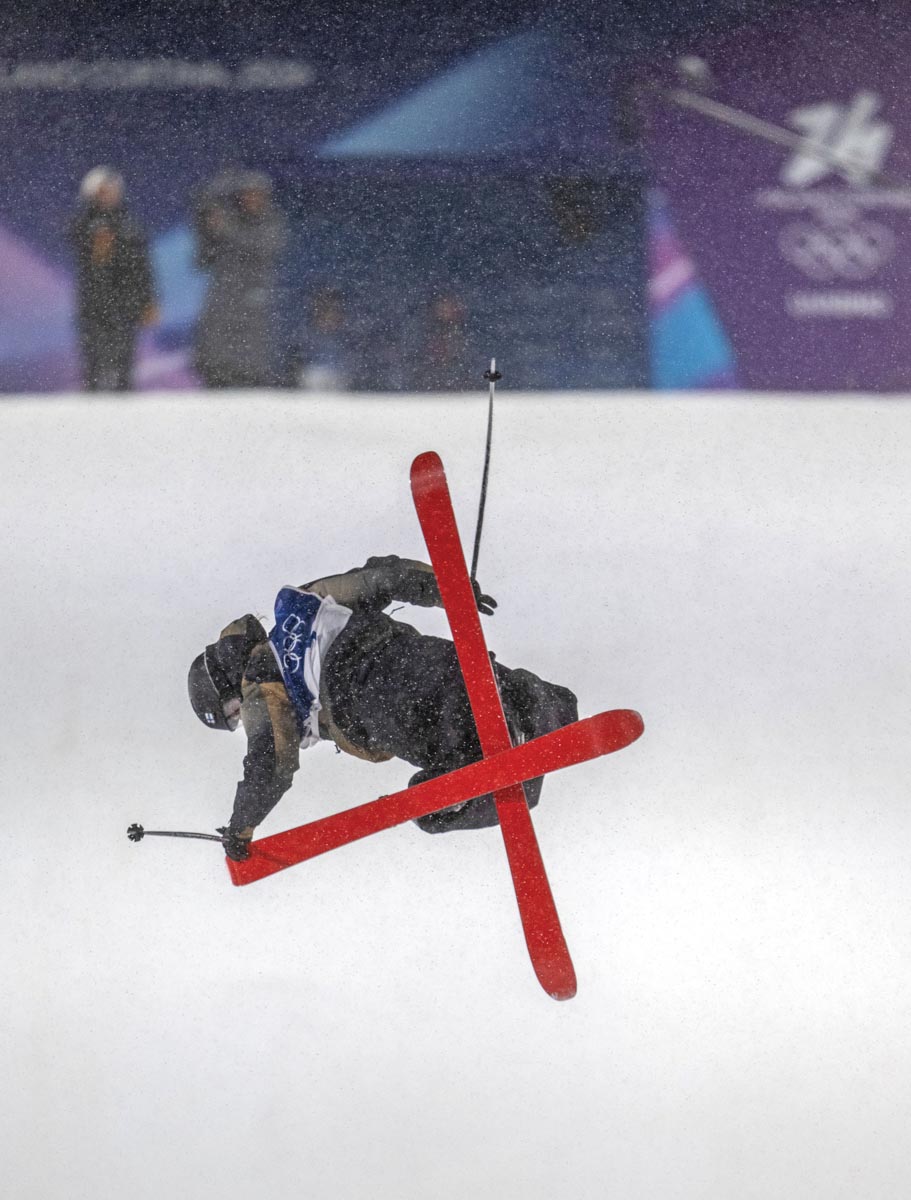
In events such as big air (above) where it’s not as easy to predict where an athlete will be, I like a Wide-area AF (L) or (S) shooting mode. If it’s snowing, 3D-tracking set on People can help focus stay on the athlete.
At the 2026 Winter Olympics in Milan Cortina, Italy, I covered several competitions, including hockey, and figure and speed skating in Milan, downhill skiing in Cortina, slalom in Bormio, and freeski big air in Livigno.
Photographing during heavy snowfall can be particularly challenging, but I was able to track competitors with both my Nikkor Z 400mm f/2.8 TC VR S and Nikkor Z 600mm f/4 TC VR S lenses using the 3D-tracking focusing mode with People selected for subject detection on my Nikon Z 9. Most of the other focusing modes would have accidentally focused on the snowflakes. In the case of slalom, even on a clear day, non-3D autofocusing modes might accidentally lock in on the red and blue gate poles, though using People subject detection will lessen those odds. In the old days I would manually prefocus on a red or blue gate pole and engage my motor drive just before the skier came into my composition, keeping my finger depressed on the shutter until just after they departed the frame. I knew in advance that shooting at a high FPS rate in raw to capture just the right moment would mean that most of the images would end up in the digital waste bin.
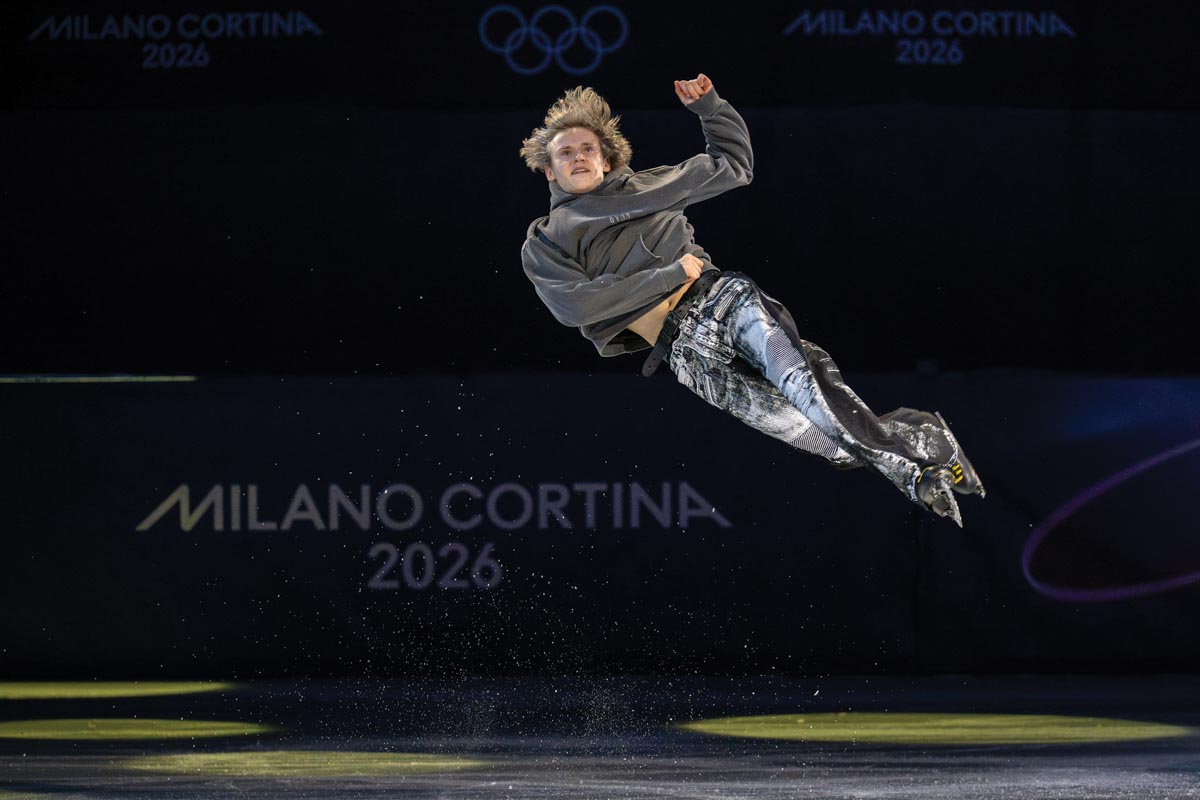
I set my exposure compensation to -1 for the dark costume and backdrop of Ilia Malinin’s exhibition gala performance.
The 3D-tracking mode can be an issue when an athlete temporarily goes out of frame, so each competition has to be analyzed and quickly tested to increase the odds of success. The Dynamic-area AF (M), with a medium area of coverage, can be a valuable tool when athletes are moving unpredictably, whereas if they are following a clear, predictable course, Dynamic-area AF (S), small, could be the right selection. Speed skaters moving around a rink is one such scenario for the latter. The camera focuses on a point selected by the user. If the subject briefly leaves the selected point, the camera will focus based on surrounding points. While I work with Nikons for my sports photography, all camera manufacturers have similar settings.
Tripods are not allowed at Olympic venues, so monopods are a must. I use a carbon fiber Benro SuperDupa, which extends to 72 inches, yet can collapse down to 19 inches, making it ideal for travel. Its optional tilt head is valuable for long lenses. Because big glass outweighs camera bodies, the monopod is attached to the lens foot. Besides reducing the weight in our hands, monopods help with framing. With a long lens, the slightest movement can accidentally cut off a pair of feet, skis, or skates, so anything that can add stability is an asset. This can include utilizing vibration reduction, but most sports require shutter speeds fast enough to freeze the action without the need for it. Once I establish the position to photograph from and a composition that will work based on the anticipated action, I dial in the correct settings.
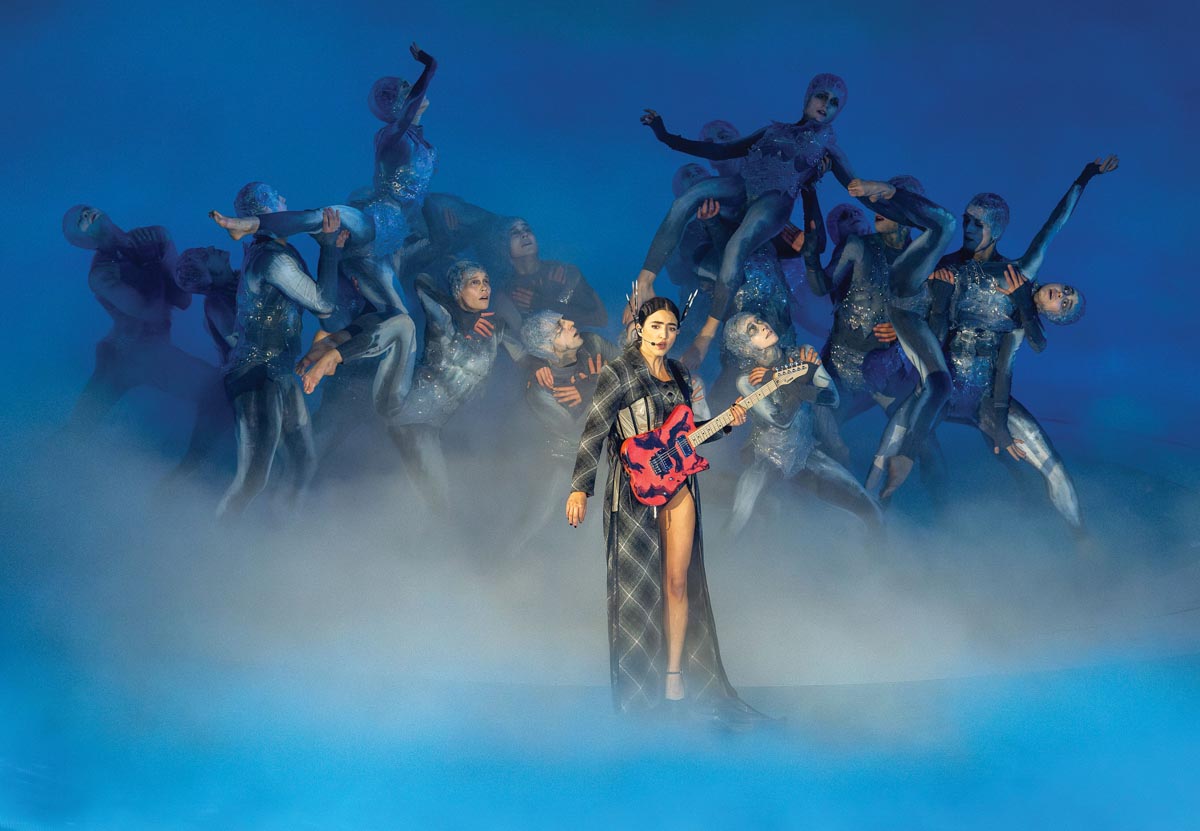
During the Olympic closing ceremony, I crept toward my self-determined ISO limit with this exposure at 1/1,000 second at f/4, ISO 5600, EV -0.33.
A complete understanding of the exposure triangle—shutter speed, aperture, ISO—is a must. At the top is shutter speed. If it’s set too slow and the goal is to freeze the action, you could miss a once-in-a-lifetime moment. It’s always better to err on the side of having too fast a shutter speed. An advantage of my go-to long lens—the Nikkor Z 400mm f/2.8 TC VR S with a built-in teleconverter—is besides rendering a magnificent bokeh, I can photograph wide to keep my ISOs down. Noise reduction software has also given photographers higher thresholds for their ISOs. That said, I set an ISO limit at 10,000 on my Nikon Z 9 and Z 8 cameras but try to stay far below that. Ideally, I don’t want to go above ISO 3200. Indoor events at the Olympics are brightly lit, so I don’t have to push too close to my self-imposed limit.
At the Olympics and other sporting events, I’m surrounded by photographers working mostly with long zoom lenses. This gives them more flexibility in terms of in-camera framing. I’m not anti-zoom; I just know the quality of my Z 400mm f/2.8 is unbeatable, especially in terms of bokeh. I have my Nikkor Z 70-200mm f/2.8 VR S on another body if I get close to the action.
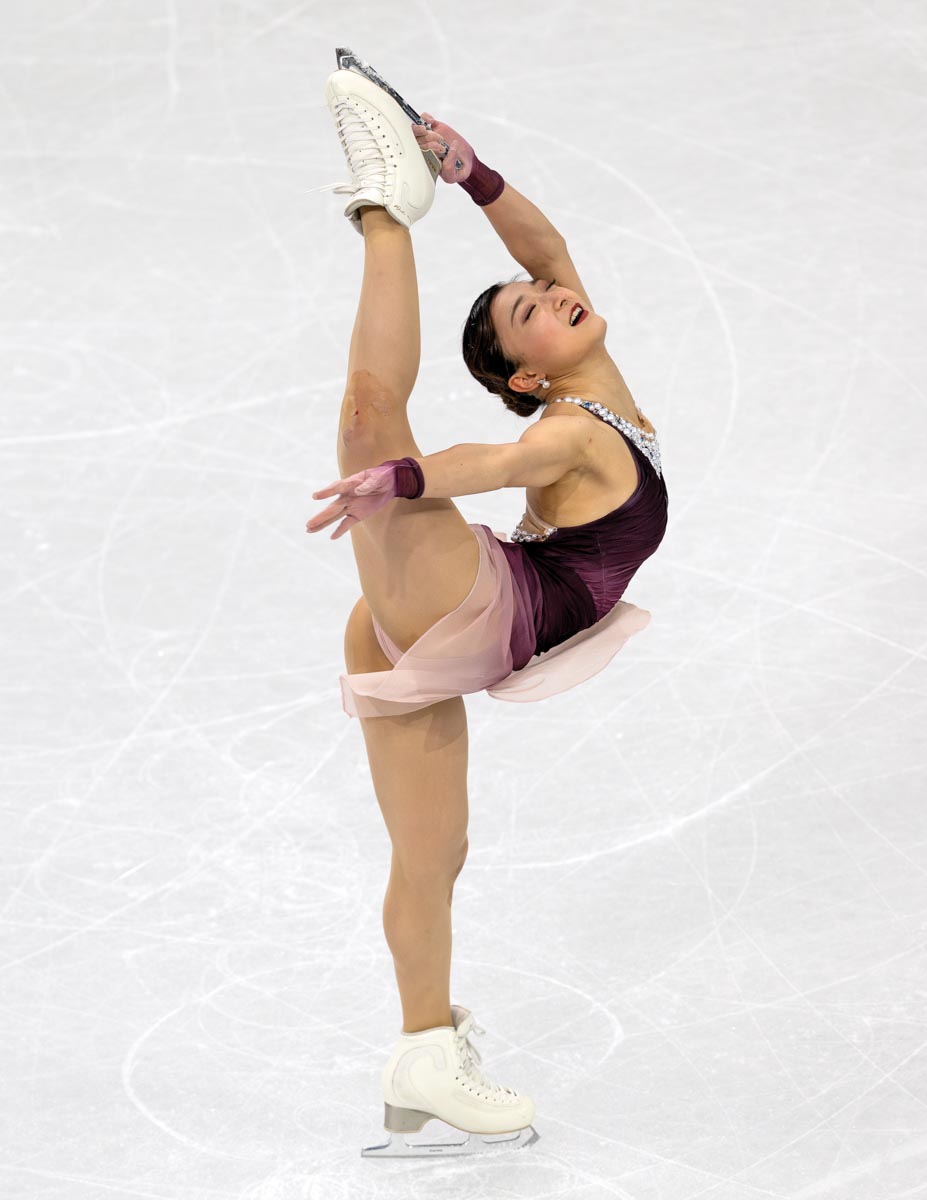
An exposure setting at 1/1,600 at f/4, ISO 2000, EV +0.33 perfectly froze the motion and nailed focus from fingertip to fingertip in this stunning image of Kaori Sakamoto of Japan.
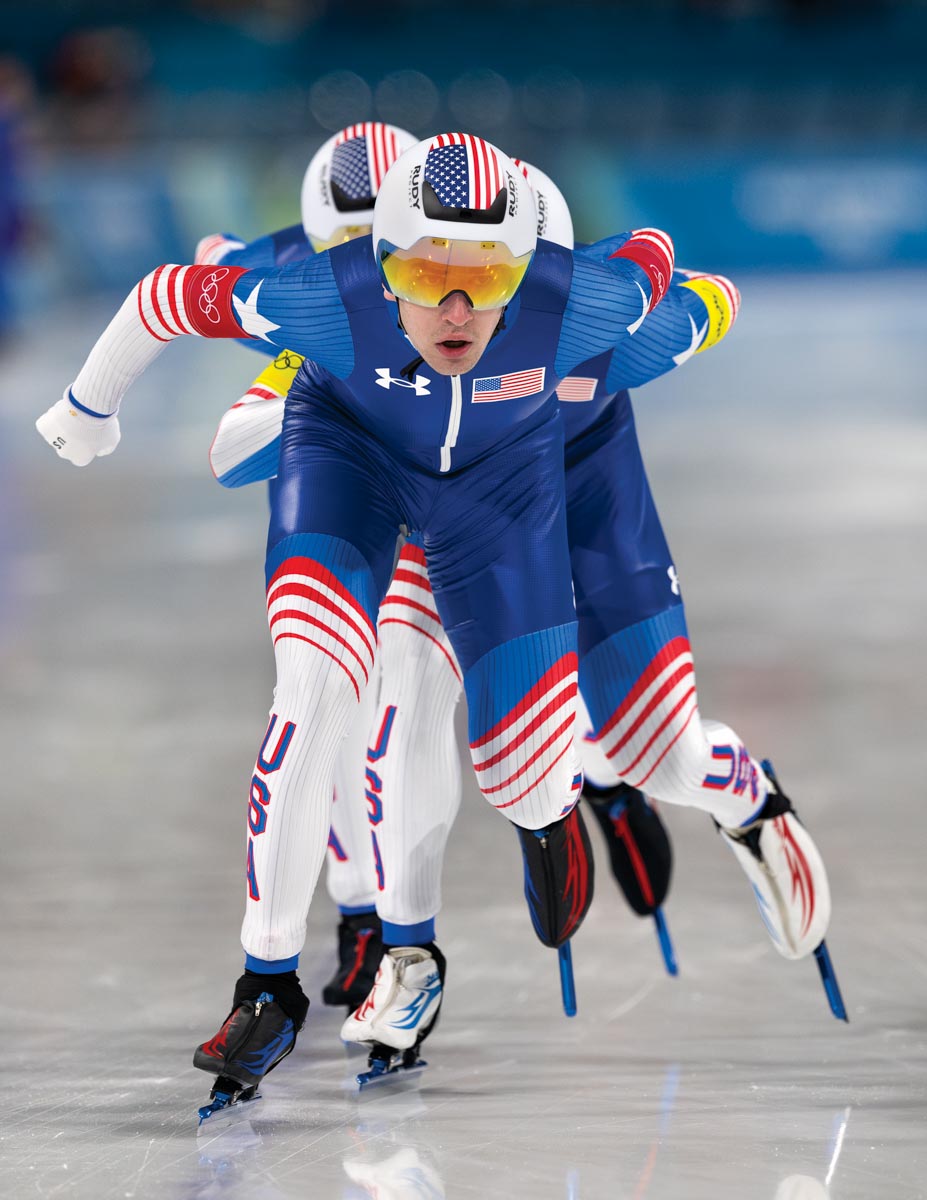
Anticipating where the action is can help determine shooting modes. For the downhill non-slalom skiing events, athletes have more flexibility as to where on the piste they’ll be. Wide-area AF (L) or (S) are my typical settings. The 3D-tracking mode is a possibility with People detection selected. If it’s snowing, this can be particularly helpful so the focus doesn’t shift to the snowflakes. With groups of athletes packed tightly together, the 3D mode can jump around, so shooting in other focusing modes can be a better option.
Fellow Zuma Press photographer David McIntyre advised me to “trust the technology” while we were covering the 2022 Winter Olympics in Beijing, China. Those three words completely changed how I work outdoors. He had suggested that I use Auto ISO to cover skiing on a day where the light was constantly changing. I manually set my shutter speed and aperture on my Z 9 and set my ISO to Auto. After checking the exposures on the first skiers down the mountain, I was sold. Because the whole area was blanketed with snow, I set my exposure compensation to +.7. This may seem counterintuitive, but remember, the camera meter uses 18% gray as its baseline, which will make snow look gray.
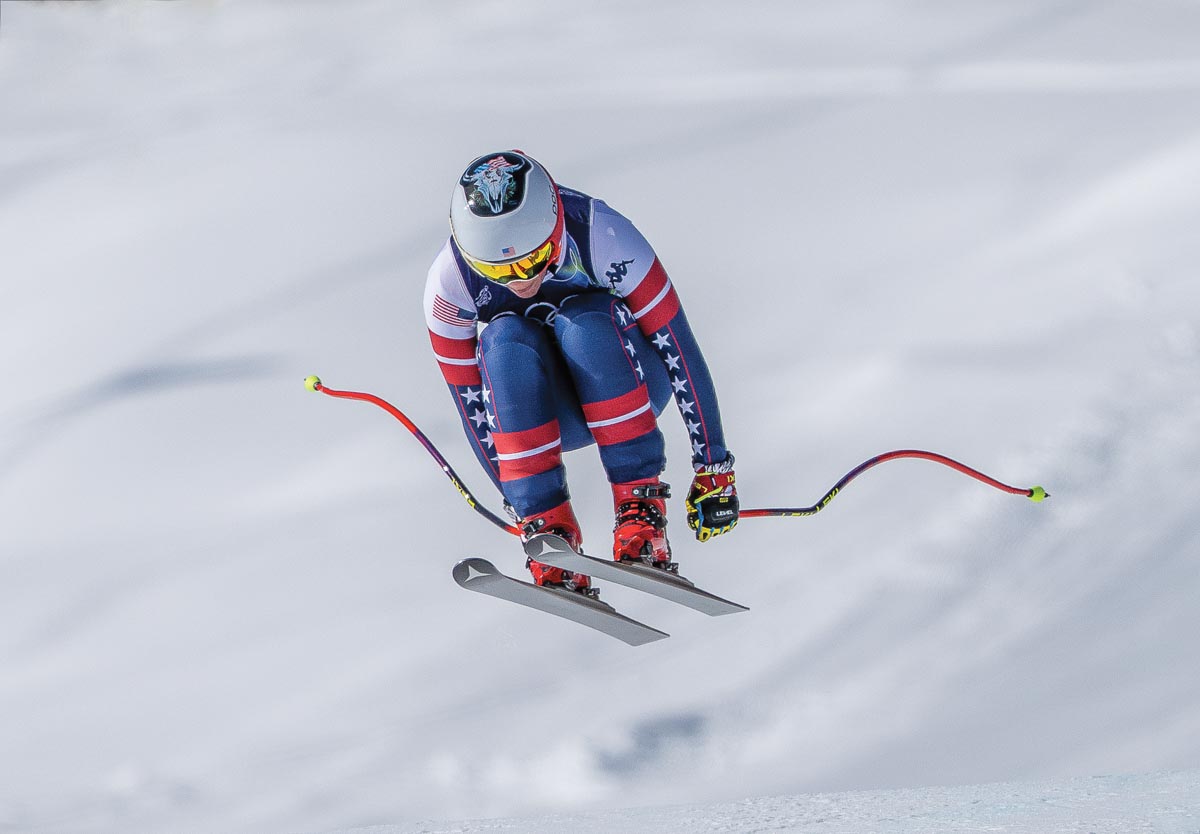
Team USA's Breezy Johnson wins Alpine skiing women’s downhill gold in a time of 1:36.10. at the Tofane Alpine Skiing Centre. on February 8, 2026. Exposure: 1/5,000 second at f/5.6, ISO 160, matrix metering with a Nikon Z 9 and Nikkor 400mm f/2.8 TC VR S
While athletes do intense stretches to stay limber, photographers covering the Olympics and other sporting events must be mentally flexible. Adjusting quickly to a wide variety of circumstances and having the technical knowledge to stay on track, especially when working with longer lenses, is the name of the game.
Mark Edward Harris is an award-winning photographer and writer based in Los Angeles.