
Architecture by Design
Learn some tricks to taking the best architecture images when you travel, or at home
• June 2025 Issue
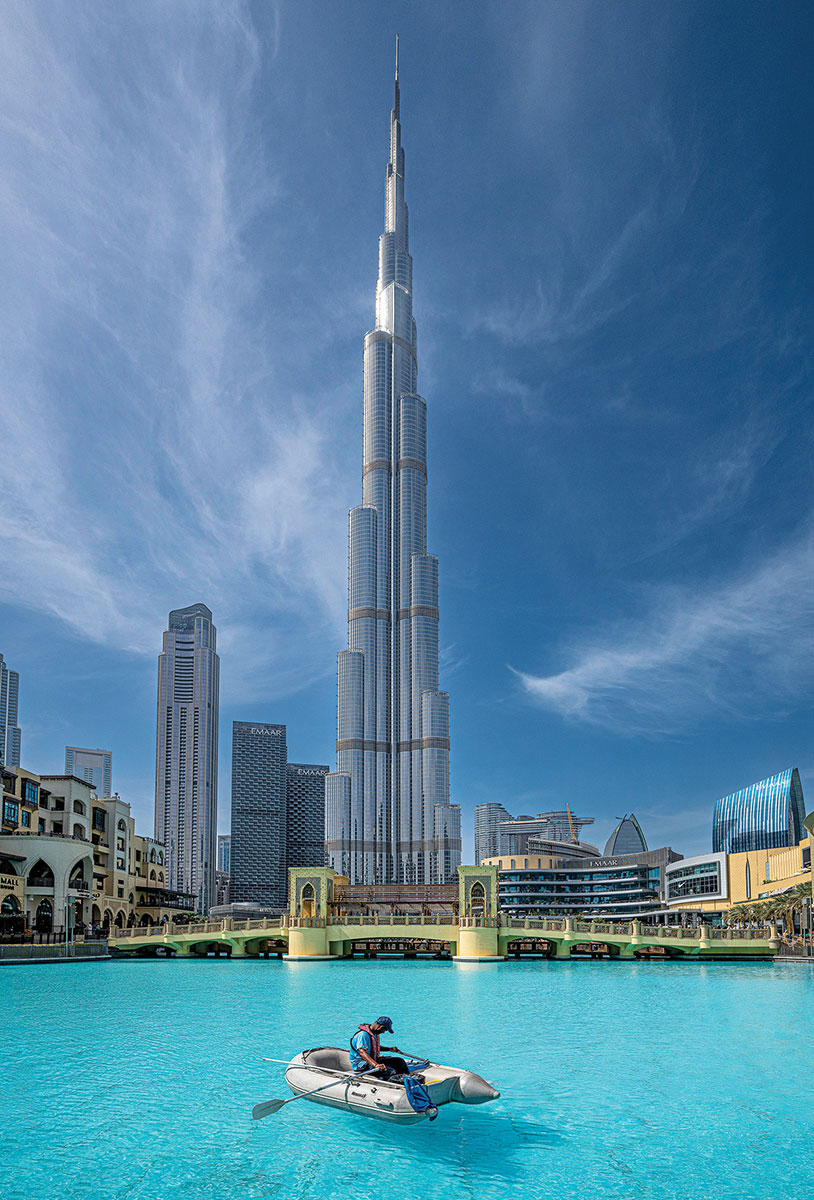
When photographing architecture or featuring it in a composition, the position of the sun is of the upmost importance, especially for building exteriors. I learned this lesson at the beginning of my career while shooting real estate photos and plotting where to be and when. The norm was to photograph structures on the west side of the street in the morning and those on the east side in the afternoon for direct sunlight. If there were tall buildings around the structure on my shot list, I would have to calculate for the shadows they cast. This meant sometimes working just before or after midday. Houses and commercial structures on the north and south sides of the street needed additional consideration for the times of year when the sun’s path is closer to the horizon. Though it’s been decades since I used my film camera to take my last real estate photograph, I still incorporate those lessons in my current assignments around the globe.
In Dubai, the 2,717-foot tall Burj Khalifa, the world’s tallest building (above), towers over the city as a shining example of the importance of being aware of the time of day when photographing buildings. Once you’ve established the time frame for optimal light, the next step is to scout for an interesting foreground far enough away from the structure that it doesn’t appear to bend backwards. In the old days, skilled architectural photographers like Julius Shulman used swings and tilts on their large-format cameras to correct distortion. When I came into photography, tilt-shift lenses for 35mm cameras were available. These days, Adobe Lightroom, Photoshop, and other applications have fantastic tools to correct distortions, but starting with the best in-camera capture is still the ideal.
Once on site, I look around and mentally picture what an image would look like from alternate locations, scouting for the best vantage point. You can work to get permission to photograph a structure from another building nearby, from a rooftop, or on a floor that offers an interesting foreground and view of your subject. This approach adds a height advantage and therefore more drama to your composition. Photographing through unopened windows can be tricky, but using a silicone lens hood can eliminate reflections off the glass. I use one manufactured by JJC that fits lenses within the 73-88mm body diameter range.
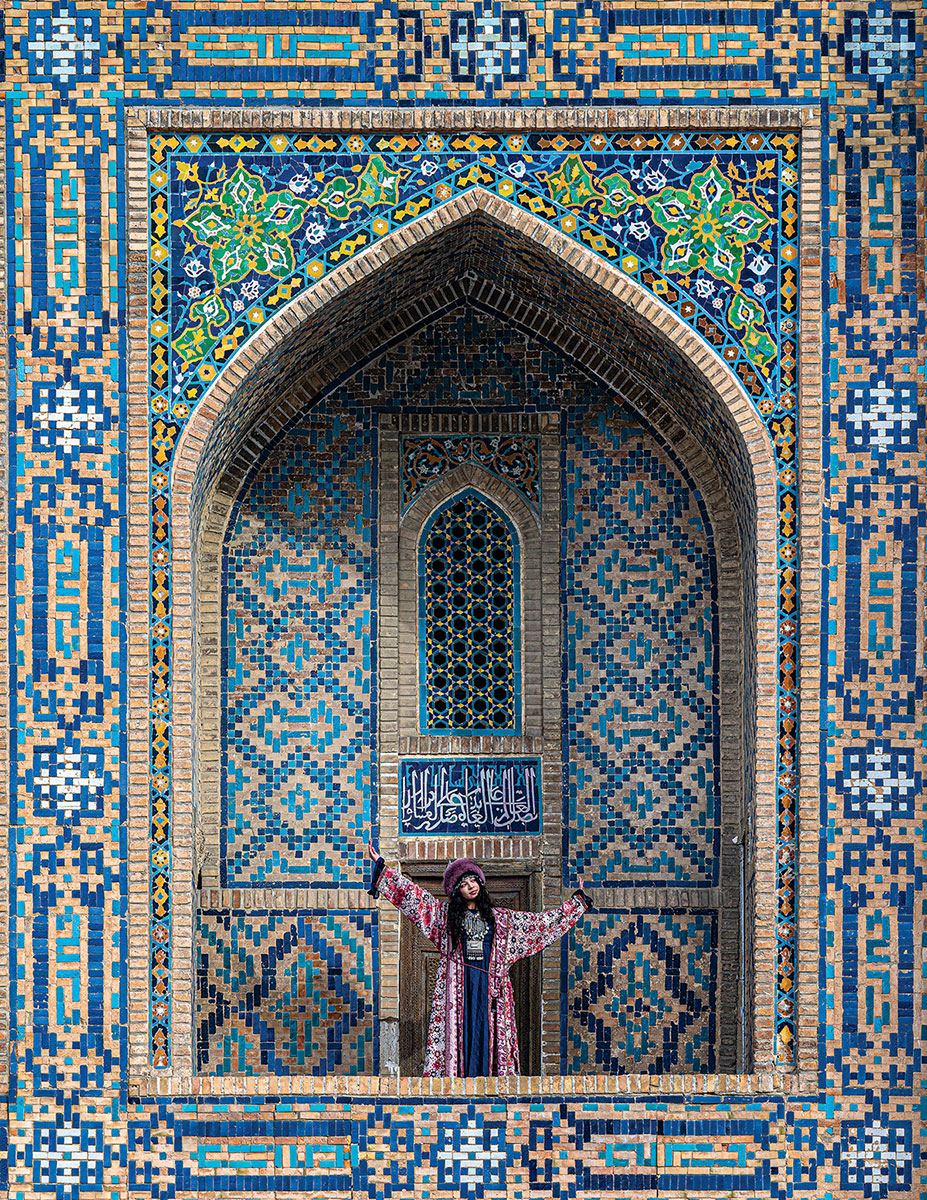
Model and actress Fariza, Registan Square in Samarkand, Uzbekistan
In Uzbekistan, I used a Nikon Z 8 with a Nikkor Z 70-200mm f/2.8 lens and the incredible architecture around Samarkand’s Registan Square to photograph model/actress Fariza during a workshop I co-taught with Sandro Miller and Himanshuu Sheth. By backing up, climbing some stairs, and using the lens at the 120mm focal length, I was able to avoid the distortion that would have resulted by being closer and shooting up with a wider angle to the second-floor balcony where Fariza was perched (above).
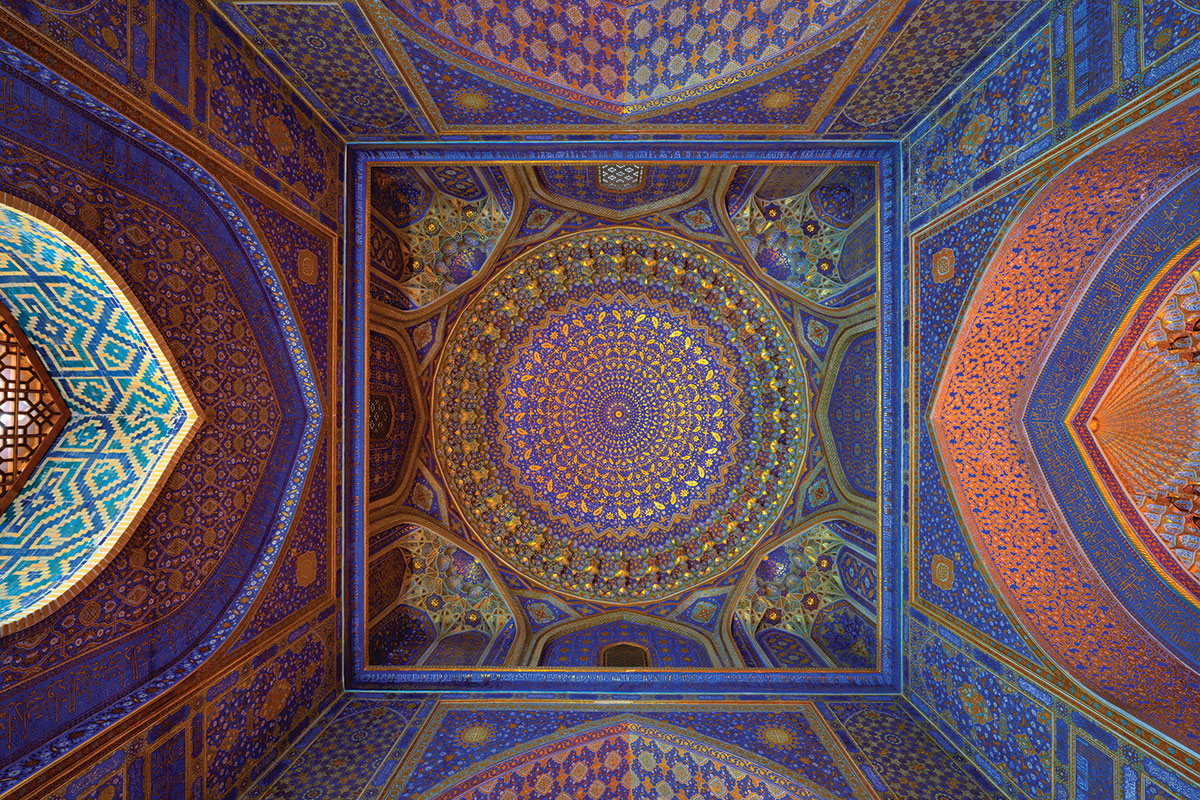
Mosque, Registan Square
Interior architectural photography is best when the photographer is aware of when daylight will enter the windows and from what angles. While in the Registan Square complex, I entered a mosque to photograph its magnificent domed ceiling using a Nikon Z 8 and a 14-24mm f/2.8 lens (above). Using a tripod would have distracted the worshippers, so instead I set the camera exposure to 2.5 seconds at f/20, ISO 160, placed it on the floor, and triggered the shutter using the camera’s timer set to five seconds. A cable release would have also worked, but depressing the shutter button would have caused some noticeable camera shake in this relatively short exposure. In a longer exposure—say, 30 seconds—a brief instant of camera movement is such a short percentage of the exposure time it might go unnoticed. But why take the chance?
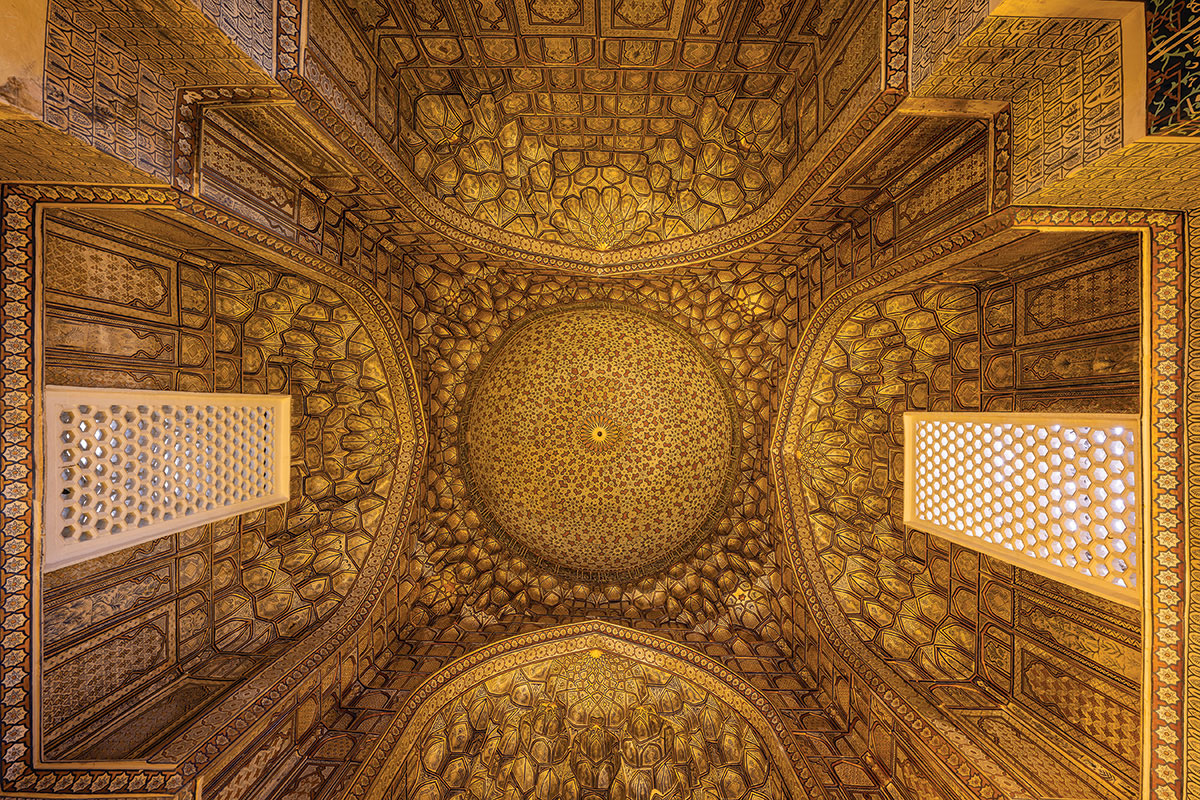
Gur-i Amir mausoleum, Samarkand, Uzbekistan
In the less-crowded Amir Temur Mausoleum Gur-i Amir Complex, I used my tripod and Nikon Z9 with a 14-24mm f/2.8 lens to photograph one of its domed ceilings (above). With the exposure set to two seconds at f/18, ISO 100, I put the Z9’s LCD screen at an angle to compose my frame. Then, I maneuvered my Really Right Stuff ball head to compose the image and triggered the shutter with the timer set to five seconds.
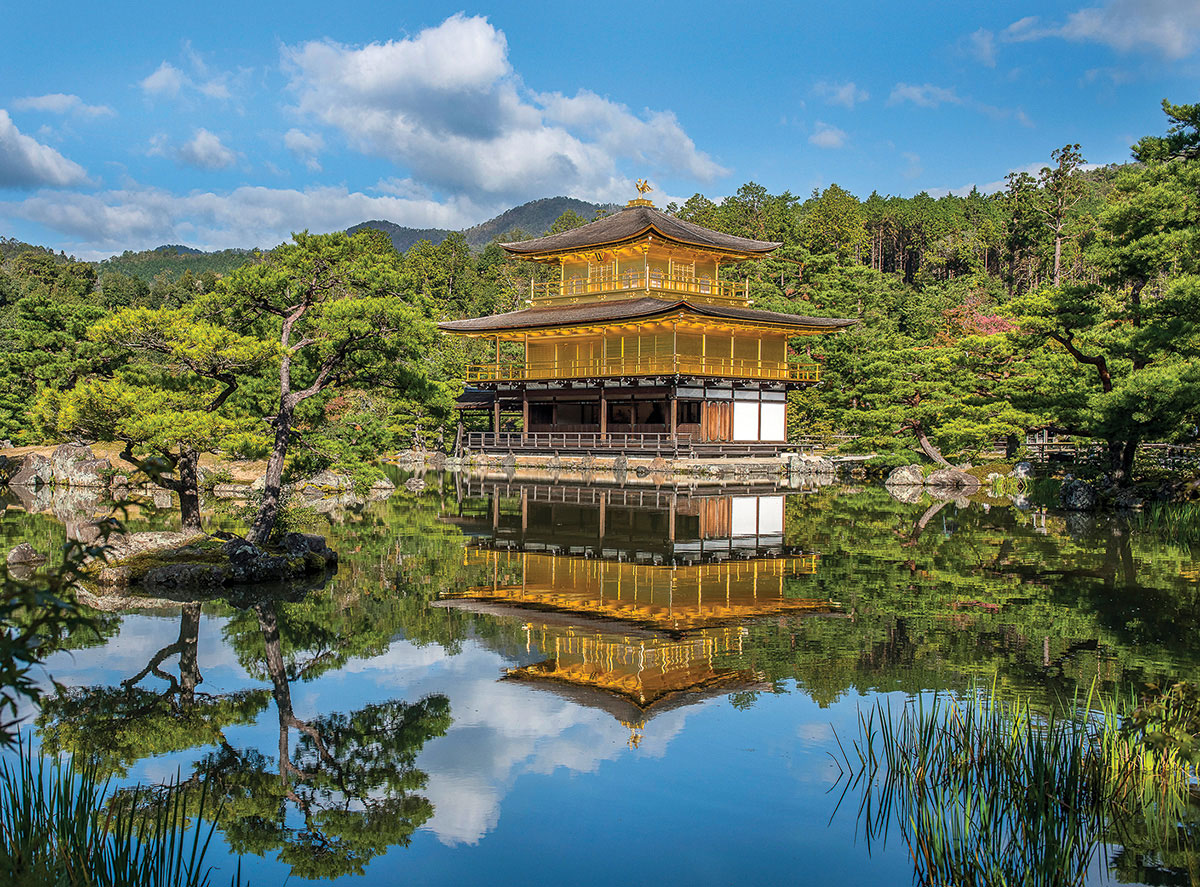
Kinkaku-ji, Kyoto, Japan
Some historic sites do not allow tri-pods, such as Kyoto’s Kinkaku-ji, also known as the Golden Pavilion (above). I knew the best time of day for photography there would be 9 a.m. With a polarizer on my lens, I captured the temple and cumulus clouds at a dramatic angle with a beautiful foreground. When there is water in the scene, I often reach for a neutral density filter, but that was not an option without a tripod.
I’ve found that preparation, and a few simple tools and techniques, can keep photographers creating images that showcase the world’s diverse and inspiring architectural styles in the best way.
Mark Edward Harris is an award-winning photographer and writer in Los Angeles.