
It came to him in a dream. It was winter. There was a great flood. All his belongings had been strewn about by the raging waters, and by the time he got back to his home, everything had frozen. “There was ice everywhere, just everything was encased in ice, including my photographs,” explains Asheville, North Carolina-based photographer Parker Pfister, Cr.Photog. And that’s when the dream morphed from angst to enlightenment. “As I looked through the ice to see these photographs … my heart just opened up,” he says. In the dream, he felt his works had become “so much more than what they were intended for,” he explains, “more than the route I had in store for them.”
When Pfister woke up, he jotted down the dream. “I keep a book that I write in or my phone next to my bed at all times,” he says, “because it’s a weekly occurrence—at least—that I’m waking up and writing something down.” Often, he doesn’t even recall recording his dreams until he sees his notes the next day. “Some of them are just ridiculous,” he laughs. “Like, what does this mean? No, I’m not going to be doing that.” But some of them are gold, sparking ideas that he carries through in his photographic work.
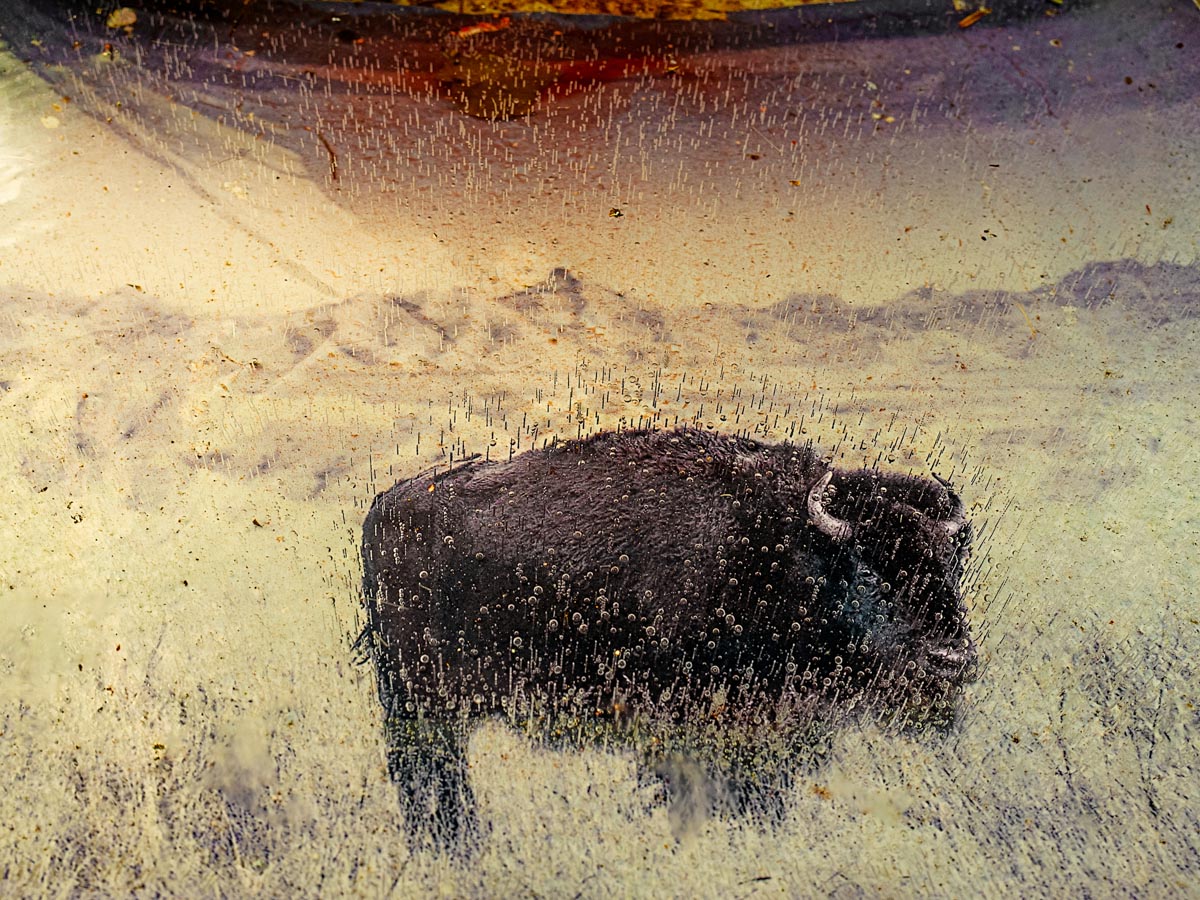
Such was the case with the frozen photographs dream. “That one struck me,” he says, “and that morning I woke up and started playing around with ideas.” During winter in the North Carolina mountains, temperatures can fall to 20 degrees Fahrenheit at night and warm up into the 50s during the daytime. He began taping his print photographs to the bottom of stainless developing pans, filling the pans with liquid—he’s experimented with mixes of water, coffee, milk, wine—and leaving them to freeze overnight. In the morning, as the liquid thaws, “the little bubbles create these columns in the ice,” he explains, and that’s when he begins making photographs of his thawing photographs (above). He thinks of the project as a collaboration. “I bring the art to Mother Nature, and then we kind of come up with this agreement of, like, OK, I’m gonna do this, and you just do your thing.”
Pfister has created a series of these large-scale, five-foot-wide photos, with a thick layer of acrylic poured over the print to appear encased in ice—just as in his dream. “They are something to behold,” he says.
A WAY OF UNDERSTANDING
Pfister’s talent has touched a variety of photographic niches. Wedding photography, documentary, photojournalism, commercial work, portraiture, fine art—“I’ve done it all,” he says. What he doesn’t do is a job, he says. “Once it becomes work, I’m out,” he says. “I’ll shoot weddings until I find them work. And once I find them work, I’m out, and I want to go do something else.” Lately his focus has shifted to fine art photography.
“Photography, for me, is a way of understanding the world,” Pfister says. Besides his dreams, Pfister draws inspiration by “living an artful life,” he says, by taking one of his beloved Ricoh pocket cameras out every day and “not really looking for anything but being open to find whatever you find.” This visual journaling of the world inevitably leads to series. For example, perhaps he makes a photo of a hair tie on the black pavement of a parking lot. “I have no idea why I made that photo,” he says, “but I did because it interested me, and before I know it, I have 50, 60, 70 of those kinds of photographs that start to become a collection.” Perhaps that collection begins to speak to some greater understanding of the human condition, he says. “You can get really existential with a simple thing like that, once you start collecting and being curious.”
Pfister doesn’t believe photographic style can be taught. “Your style is something you grow into,” he explains, by being curious, practicing the craft, and, most importantly, being yourself. When Pfister leads photography workshops and mentors others, he helps photographers tap into their unique points of view. For example, at a workshop, he might ask students to write the story of a painting on the wall. “Through the writing of that story of the painting, they start to understand—because it all comes from them—that that’s their story. And it starts unpacking all this stuff that they carry around with them that they didn’t even know they had, for the most part. Most people don’t. And once they get to that place, they can really open up and start writing about themselves in particular.” As an artist, it’s good to keep an eye on yourself, he notes. “We’ve only got one of us. We best know it—how we operate, how we feel.” And that informs each individual’s art.
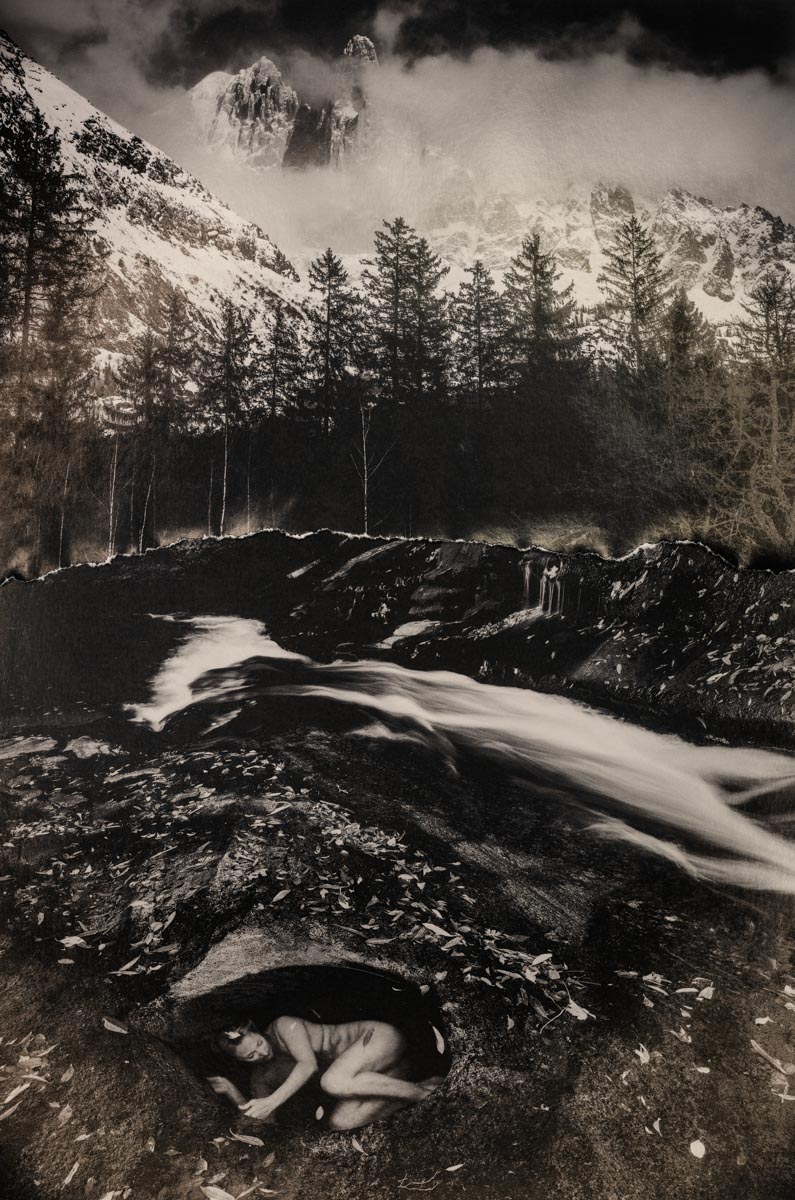
GO GUERRILLA
Getting fine art photography placed into galleries and shows is difficult. “You can’t be bashful at all,” Pfister advises. “Just go guerrilla,” be vigilant, and push your work through all means, including passing out flyers, knocking on gallery doors, or setting up appointments to show your work and receive critiques. Pfister recommends submitting to portfolio reviews in cities like New York; Santa Fe, New Mexico; Palm Springs, California; and Houston, where a knowledgeable panel from the art world looks at your work and offers advice and critiques.
“My biggest break in the art world was at a review in New York,” says Pfister, in 2014. One of the panelists was so moved by a photo in his portfolio that she told him on the spot she wanted it to be the face of a show for COP 21, a climate change conference at the United Nations in Paris. Pfister didn’t even have business cards, he recalls, laughing, so he drew a picture of himself on a piece of paper with his name and address. His reviewer still is a close contact and heads a prestigious photography foundation.
_ParkerPfister.jpg)
NATURE’S FURY
Pfister’s dream five years ago about a great flood now seems prophetic. His community is still reeling from Hurricane Helene, which barreled through Asheville, North Carolina, and the surrounding mountain towns of Western North Carolina in September 2024 and caused massive flooding from the French Broad River. During the storm, a tornado ripped through Pfister’s property and a pine tree crushed his vehicle. Up the hill from his neighborhood, homes were decimated. The community was without cell coverage, electricity, and water. “We had no idea what was going on until we got out of here,” he recalls.
From the minute disaster struck, Pfister did what he always does: He made photographs. For the first couple of months after the hurricane, he was out every day photographing the aftermath. Today, he still captures those images at least twice a week. He estimates he has about 1,000 edited photographs of the destruction. “It is just a documentation of nature’s fury that we all take for granted,” he says, “and how susceptible we are to massive ecological change at the drop of a hat.”
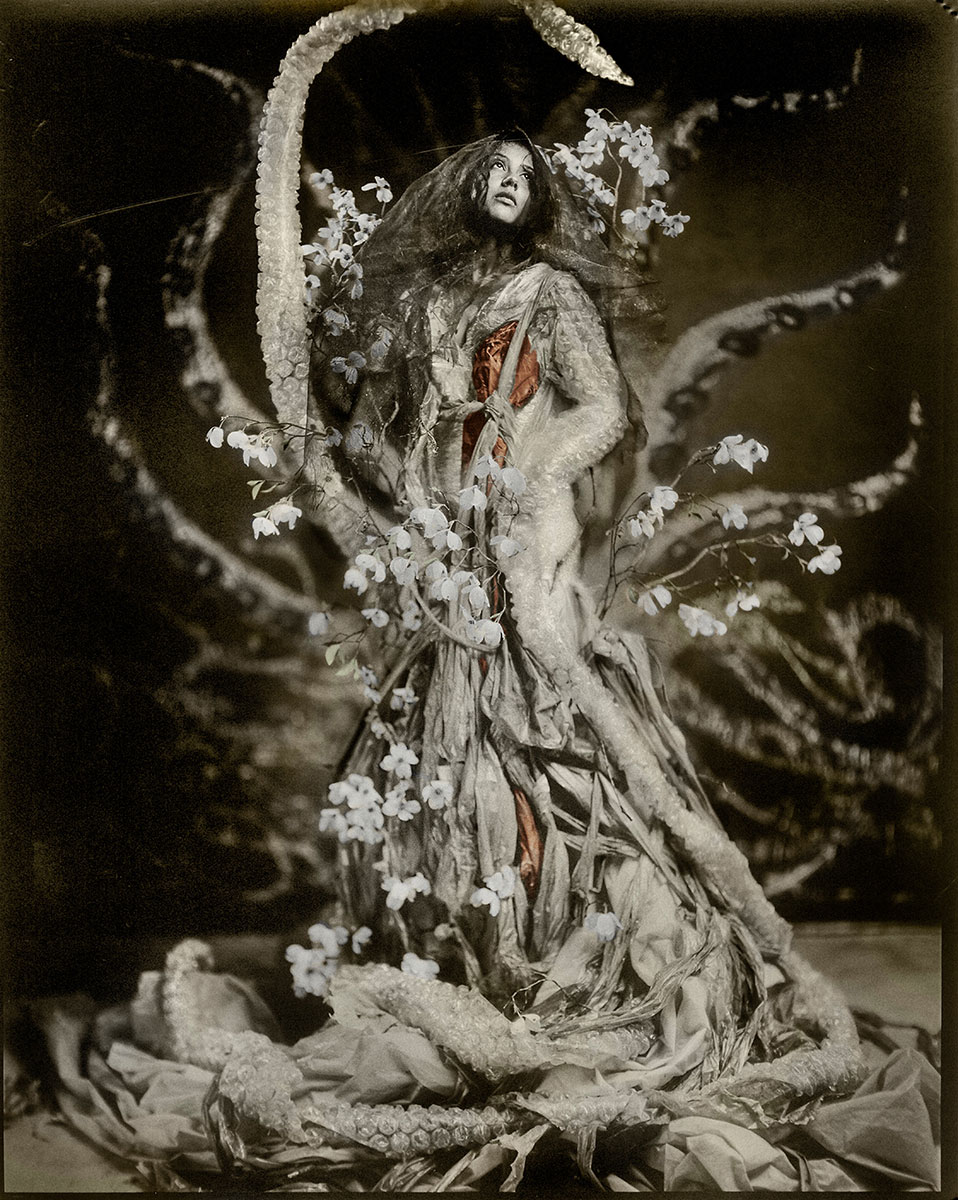
Lately, Pfister’s been pondering the spiritual aspects of the disaster, inspiring new conceptual portraits meant to “personify or give a face to what we went through ... and what can emerge from it,” he explains. His work “Queen Helene” (above), which incorporates plastic debris from the storm, is one such example: During the storm, the flood waters obliterated building structures. Rolls of plastic from those businesses are washed up hundreds of feet from the riverbanks, covering the trees. In April, as spring settled into mountains and the dogwood trees began to blossom, Pfister was struck by a poignant scene that felt like a symbol of resilience: A dogwood encased in that plastic wrap had managed to sprout some blooms.
Amanda Arnold is a senior editor.
Tags: alternative process photography black & white photography fine art photography