
Achieving a New Level
Tyler Rickenbach tests the high-resolution Sony a7R VI in the wild to see if the high speed and high resolution capabilities can come through in low light.
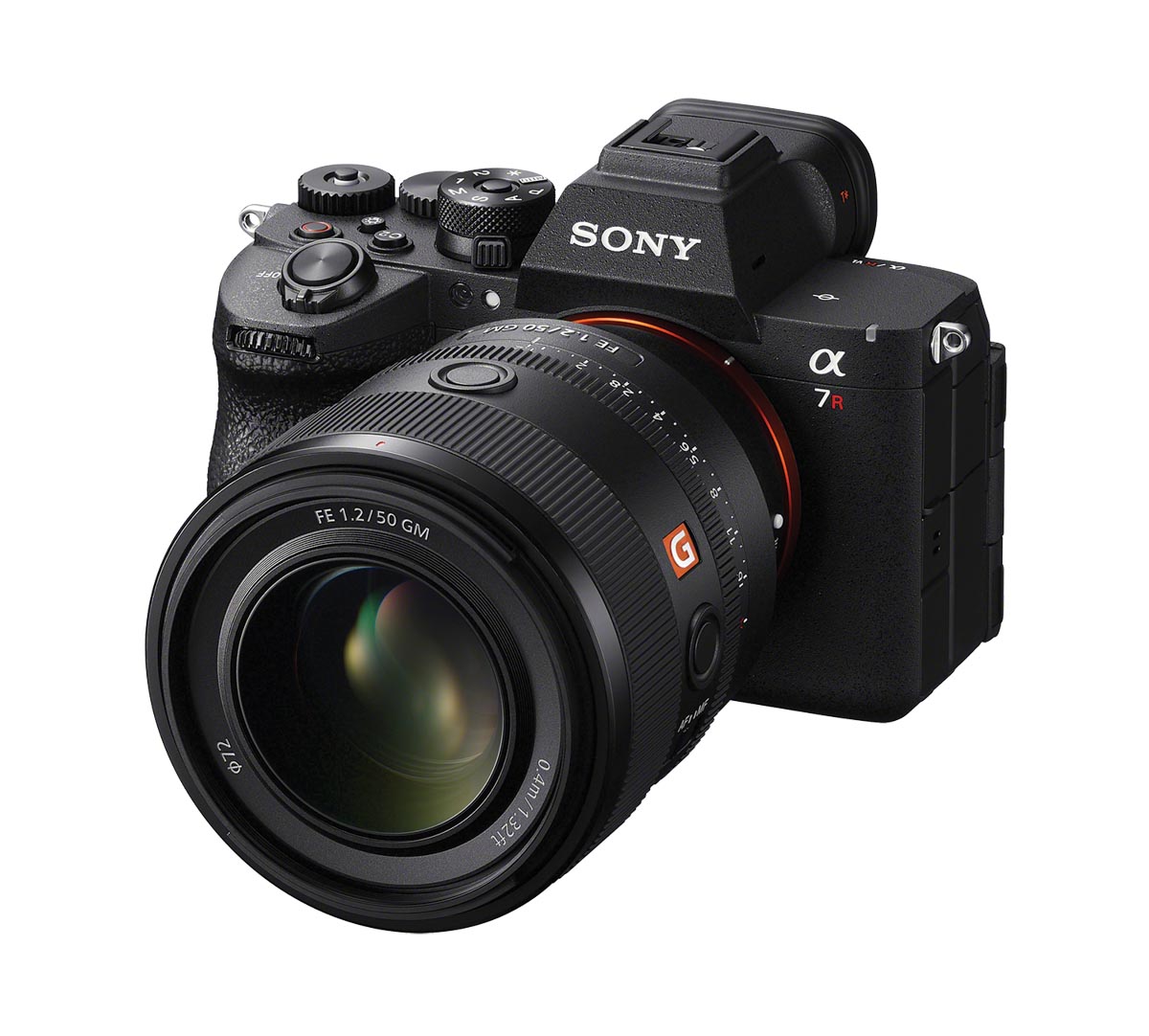
What first intrigued me about the Sony a7R VI camera is that it can capture 30 frames per second at 66.8 megapixels, which is remarkable. Add pre-capture to the equation and it becomes something else entirely. Say you’re photographing a bird or other animal. You’re waiting for that decisive moment when the best image reveals itself and timing is everything. Pre-capture lets you essentially capture frames before you fully press the shutter.
That speaks to what Sony is trying to achieve with this camera. Until now, there hasn’t been a model that delivered both that speed and that file size, which makes the Sony a7R VI special. Can the camera use speed and deliver the resolution exceptionally well while shooting at a high ISO—say, 12,800—and still hand you usable files you can push further in post? Let’s see.
For this review I used only one lens, the Sony 200-600mm f/5.6-6.3 G. In the early mornings and late nights, I needed to push the ISO to 12,800 to hold a sharp image with a shutter speed around 1/400 to 1/500 second.
The Coyote
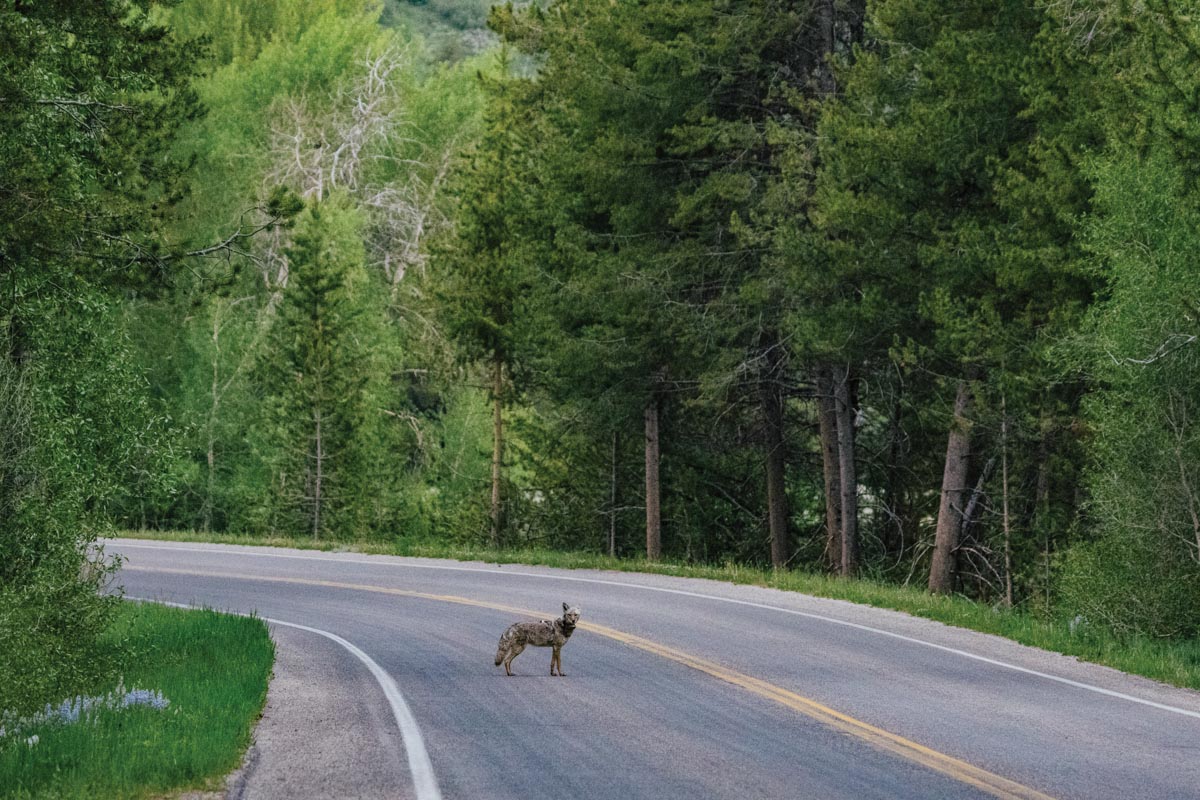
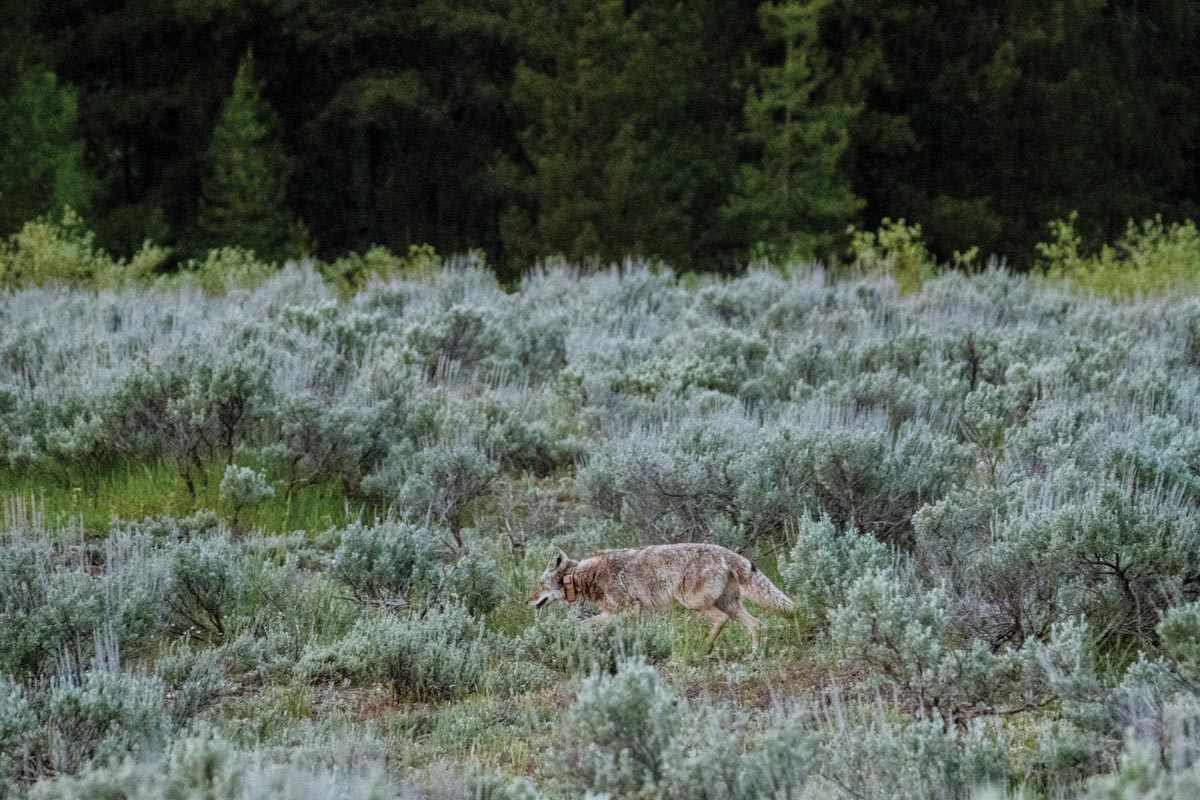
Grand Teton National Park is one of those places where I wouldn’t call the wildlife predictable, but there are certain spots where it’s almost guaranteed you’ll see something. What I wasn’t expecting was a coyote. This was the first time I’d seen one there. It was around six in the morning on an overcast day. As the coyote slipped through the brush, I caught a few glimpses where everything aligned for a second. Before the animal vanished into the brush, as it was crossing the road, it stopped and just looked at me. The moment felt surreal.
That’s the frame I kept coming back to. It was shot in Super 35 mode, which on this body still lands a little north of 24 megapixels, far more than enough for printing, and it was captured at ISO 12,800. I was astounded. I couldn’t believe how clean the files were, and I hadn’t applied any noise reduction in Lightroom. To achieve this image, I switched to continuous autofocus. The a7R VI gives you several frame-rate options: low, mid, high, and high plus. I had it set to mid, which still put me somewhere around 10 to 15 frames per second. That’s a lot of frames when shooting full-frame raw uncompressed.
Shooting in the Dark
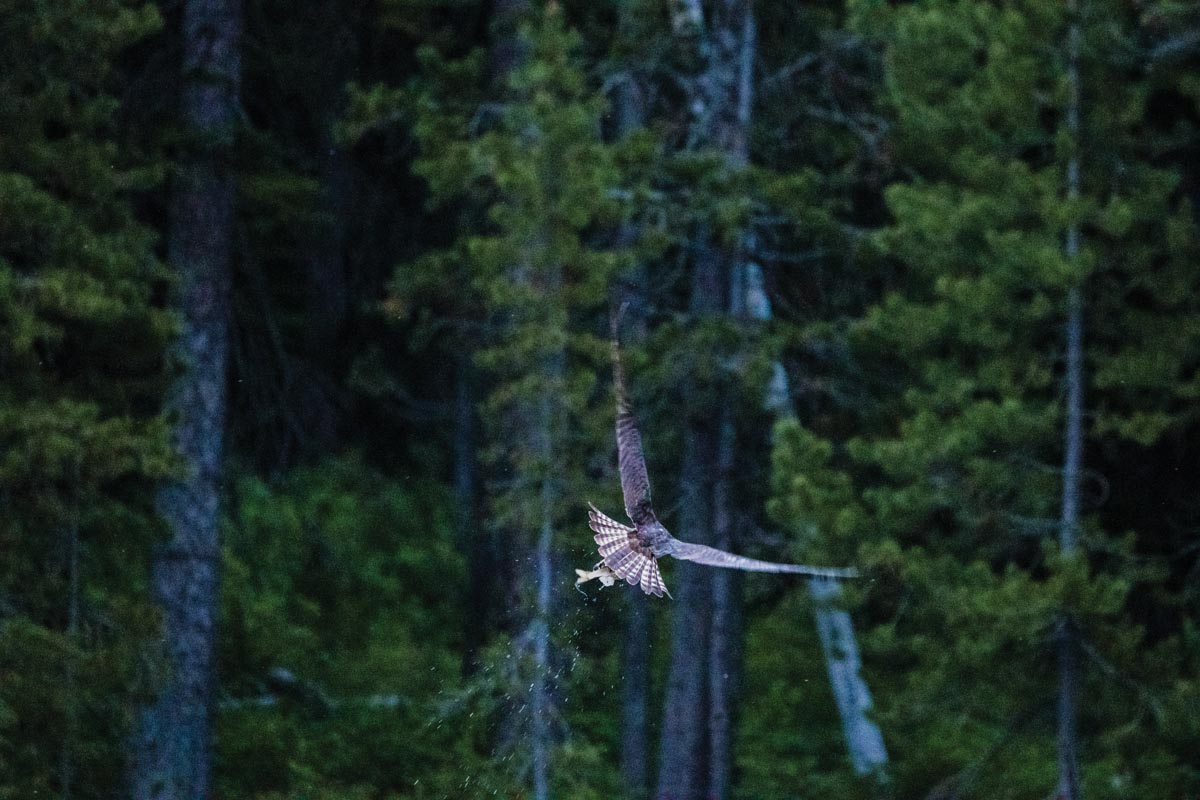
I was sitting on the beach at Colter Bay where an osprey was perched in a tree. If you photograph birds, you learn to read their body language. Head bobs signal that something’s about to happen. This osprey was doing exactly that, so I knew it could launch at any moment.
The Sony a7R VI has an animal recognition autofocus feature, and when it gets a good read, it will lock onto the eyes. If you have a clean composition lined up and the camera identifies the subject as an animal, the eye-detection box appears in the viewfinder.
The instant the osprey leapt from the tree, I started firing. Comically—though not at the time—a little girl on the beach stepped right in front of me just as the bird hit the water and came up with a fish. Did I get the shot I wanted? Absolutely not (see above). But I have kids, so I understand.
What the moment taught me about this camera is that it can practically see in the dark. It was around nine o’clock at night, and there was very little light left in the sky except what lingered in the clouds. I was, in effect, shooting in the dark, so the fact that the camera found the bird, found focus, and pulled out a decent frame far exceeded my expectations. Even shooting with the 200-600mm at f/6.3, you can still walk away with very usable images.
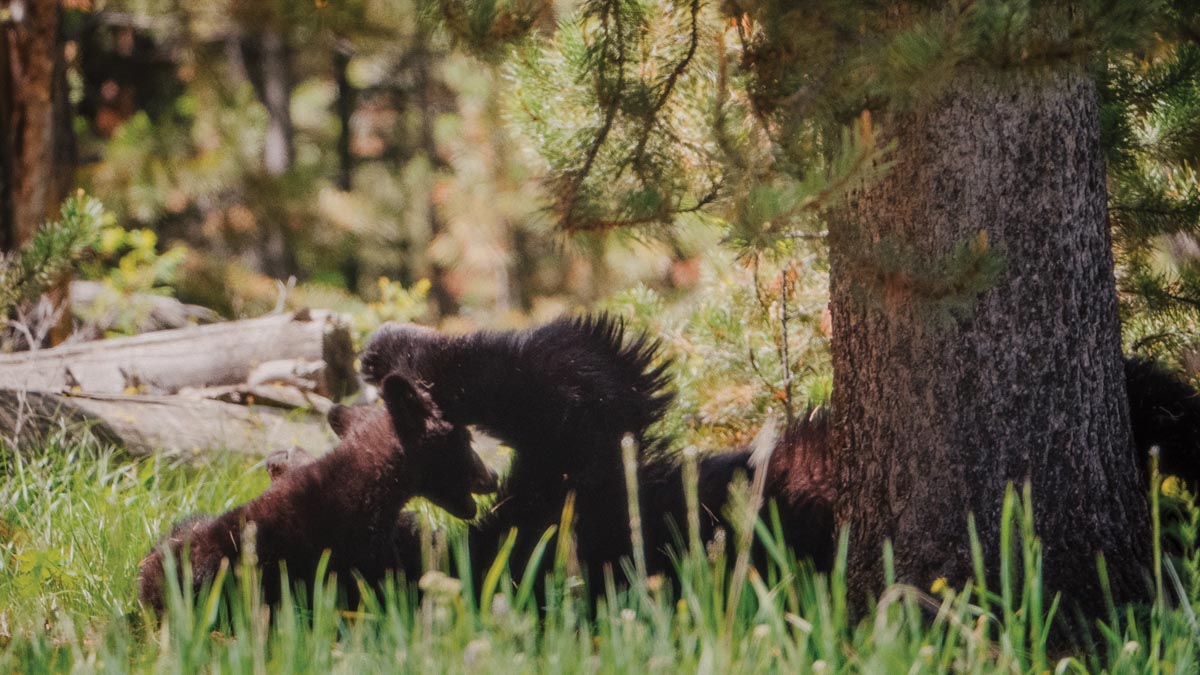
The Sony a7R VI had difficulty locking focus in this high contrast scene of a bear playing with her cub, as seen in this frame taken from video captured with the Sony a7R VI.
A Study in Contrast
I faced a challenge with the a7R VI due to a combination of things, but it’s worth noting, because the contrast between two subjects, a mother black bear and her cub in Yellowstone, couldn’t have been more extreme.
This was one of the most adorable things I’ve ever witnessed in the wild, a mom playing with her cub, the two of them rolling around in the grass. The reason it was so hard for the camera and lens to land a sharp image came down to contrast.
They were tucked behind a tree, poking their heads out every so often, and the camera never really caught focus on the mother or the cub. The light was harsh, mid-afternoon sun with very little shade. The background was shaded, the foreground was blown out bright, and that split made it difficult for the camera to recognize the bear as a subject. It kept locking onto the bright foreground instead. It was discouraging to get back to my computer, comb through the images, and realize there was nothing usable.
When you want to capture an image that evokes what you saw and felt, it’s frustrating when the gear or the conditions don’t cooperate. This was one of those moments where my family and I got to be present and enjoy what we were seeing rather than walk away with a trophy photo for the wall.
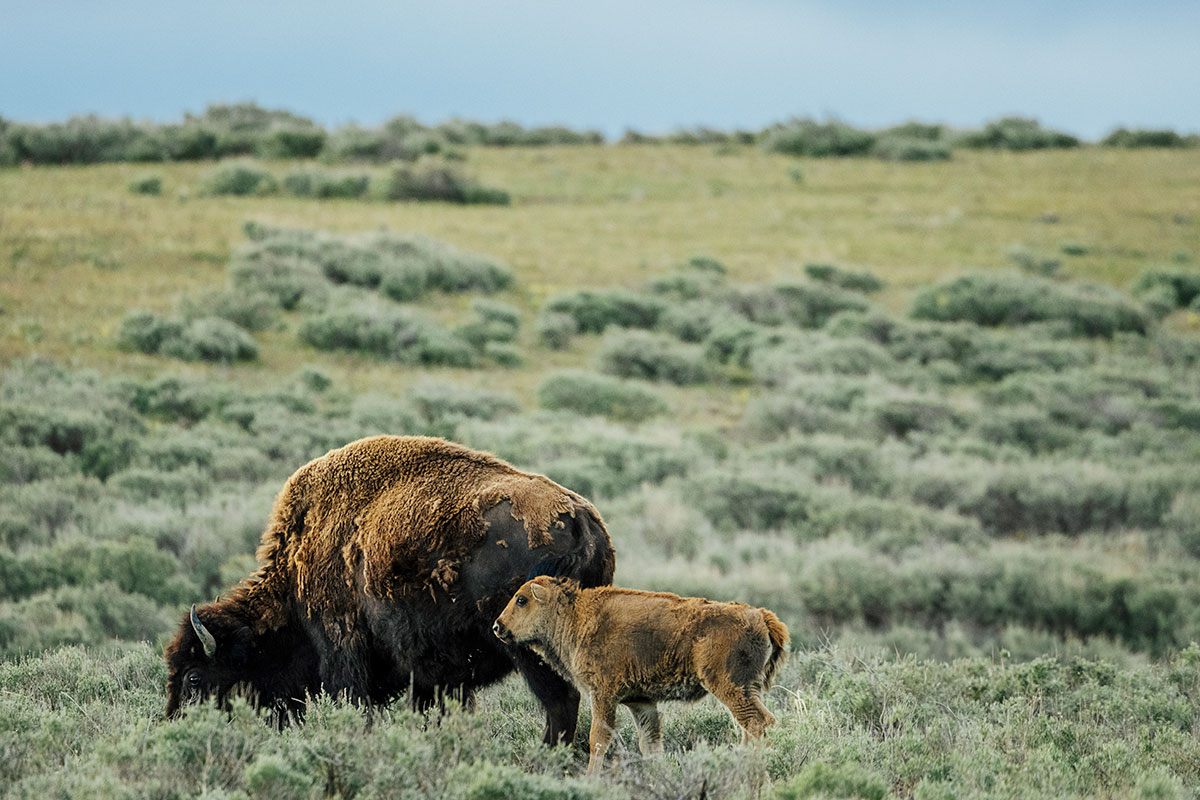
Exposure: 1/200 second at f/6.3, ISO 1250, EV -0.3
Three Images
I captured three frames in Yellowstone with the a7R VI and the Sony 200-600mm f/5.6-6.3 G that stand out to me. The first is a mother bison with her head down in the grass, but her eyes are up and vigilant because her newborn calf is beside her. That, to me, was a tender moment. The light was soft, and the camera recognized the bison’s eyes immediately, even though her face was partially obscured by grass. Bison are some of the hardest animals to photograph well because they almost always have their head down, and they’re either chewing, walking, or lying down.
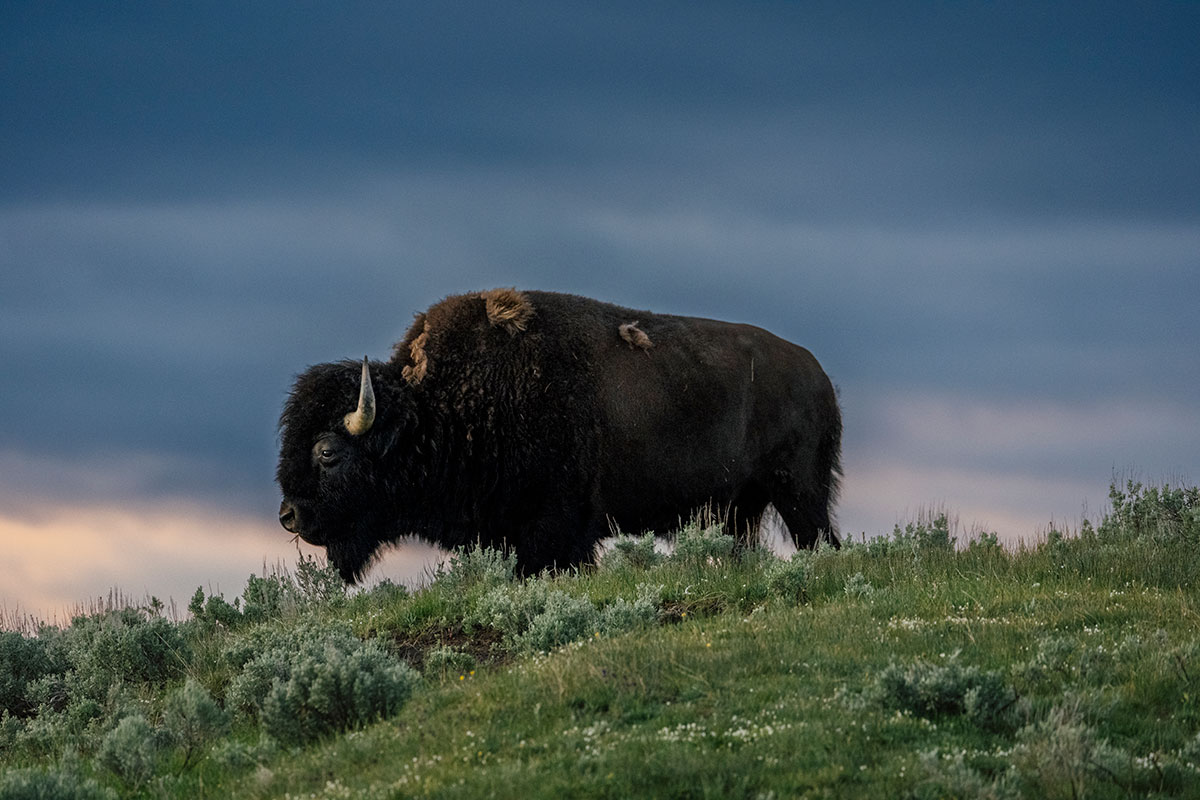
Exposure: 1/250 second at f/8, ISO 6400
The second image is of a bull bison walking across the horizon. It stands on top of a small hill, and behind it is a soft magenta sky. With such a minimalist background, the camera locked on immediately. I was photographing at a low burst rate because I had a feeling the bison wasn’t going to change much and I didn’t need the speed. Taking only two or three frames a second, I watched it move its head slightly and look up before heading down the hill.
With subjects like bison, it’s the little changes, the subtle movements, that make or break an image. The frame rate you choose plays directly into that. Having the ability to shoot at varied frame rates is extremely helpful.
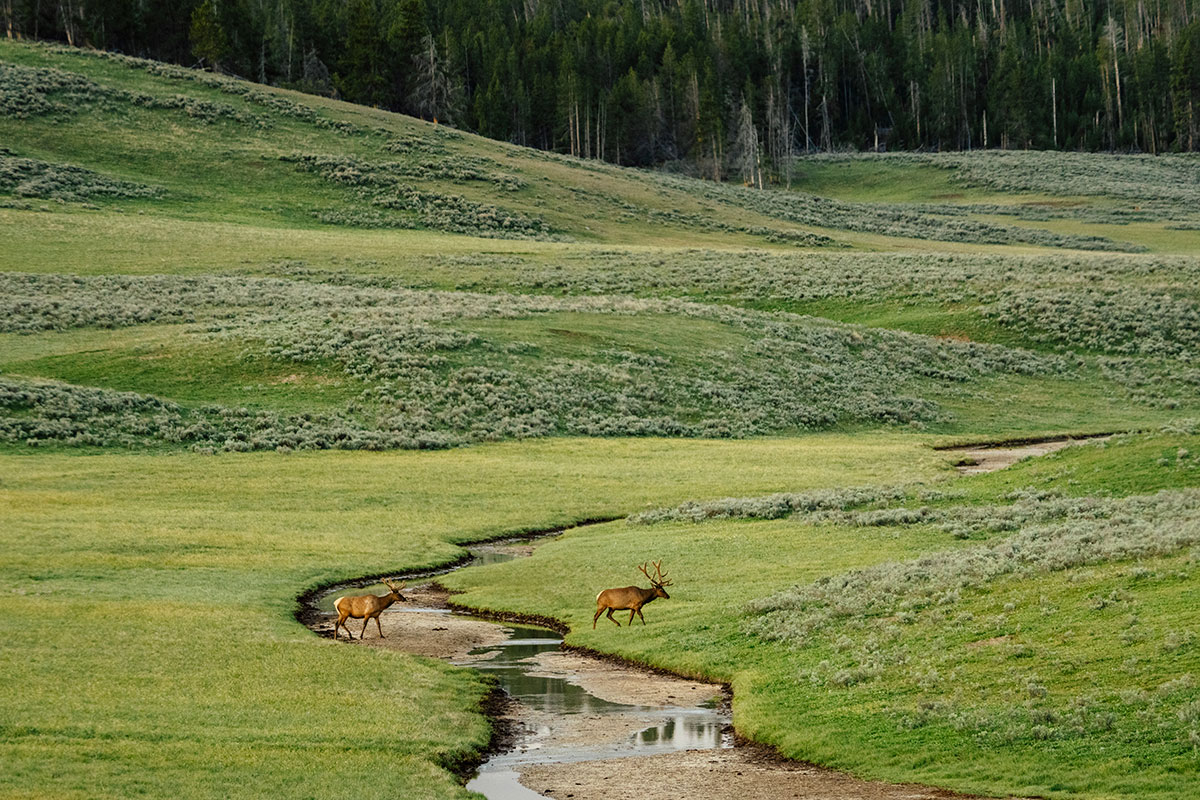
The third image is of two elk crossing a ravine. For this image, I was zoomed out at 200mm. Even at wide, landscape-scale framing, the camera locked onto the elk. It recognized that there were subjects moving in the frame and held focus on them. That’s one of the great features of the Sony a7R VI. Eye and facial recognition on humans makes sense, and most new mirrorless cameras can do it, but the autofocus’s ability to recognize animals and other subjects is remarkable, and it’s only going to get better.
If you need speed, you can have it. If you need the resolution at 66.8 mega-pixels, you can have it. If you want to photograph in Super 35 mode and still walk away with a large file to work with, you can have it. If you need a higher ISO to capture the last bit of light or freeze a subject’s motion, you can have it. Because of the Sony a7R VI, you don’t have to compromise. Everything you need to be successful is contained in one convenient, small package.
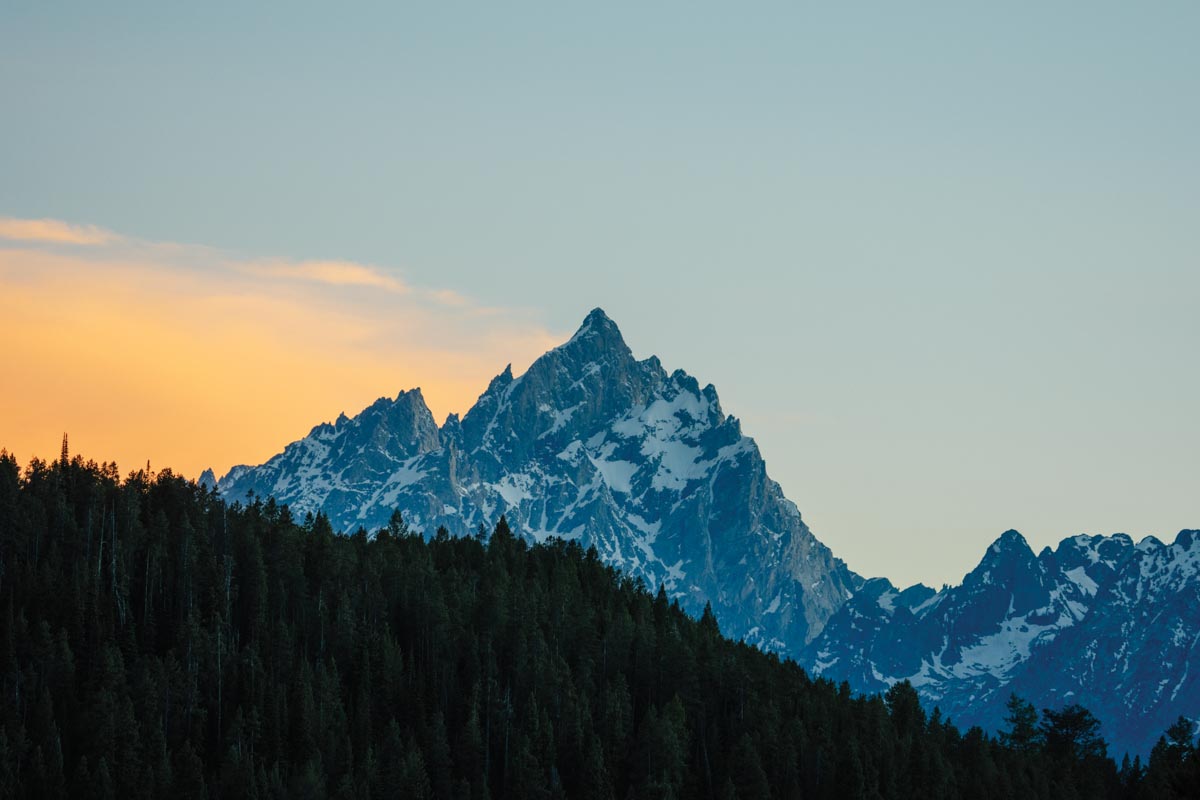
Exposure: 1/80 second at f/6.3, ISO 800
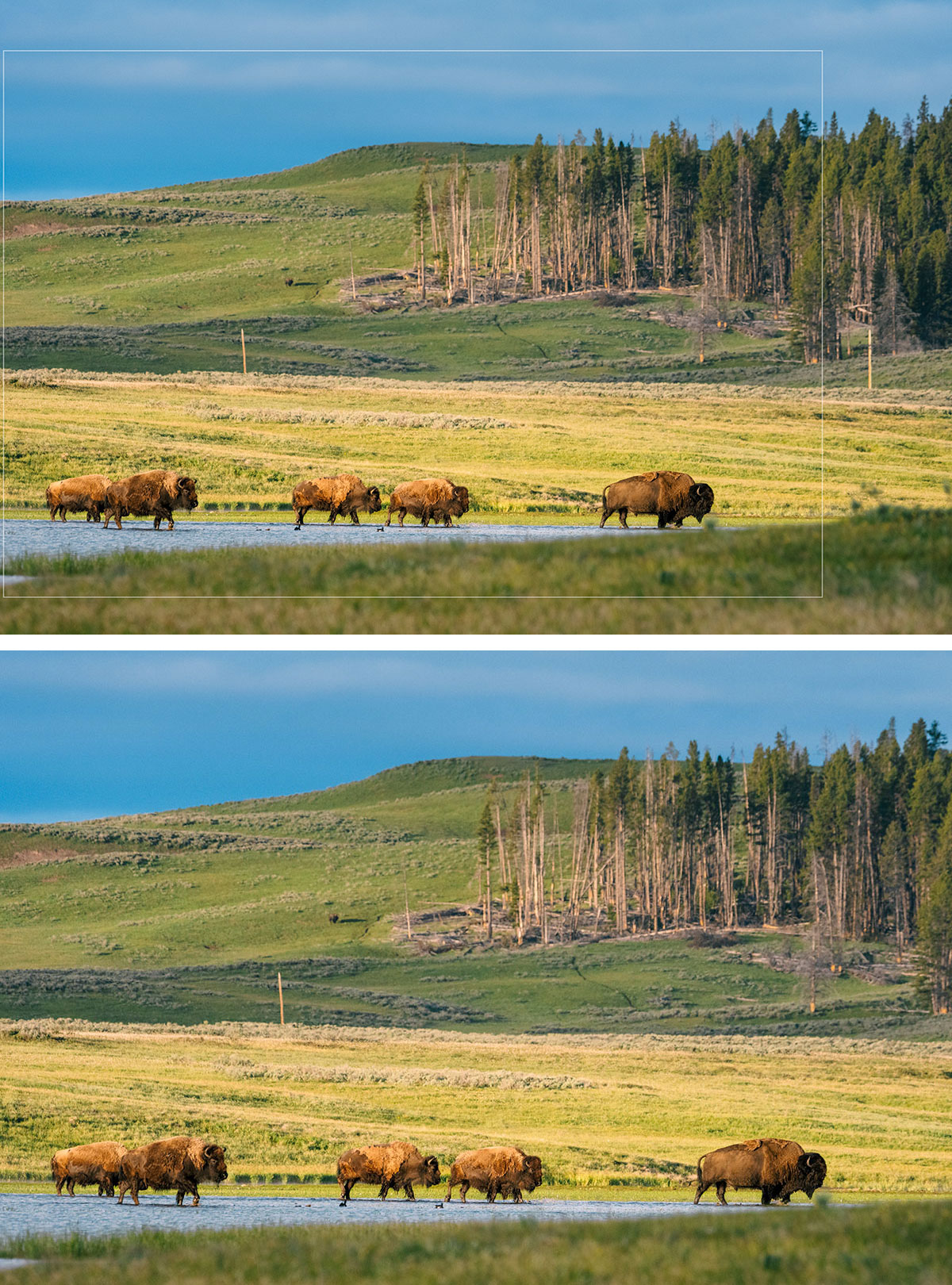
With 66.8-megapixels of resolution, you get the opportunity to refine the framing of your composition and retain adequate resolution for nearly any purpose.
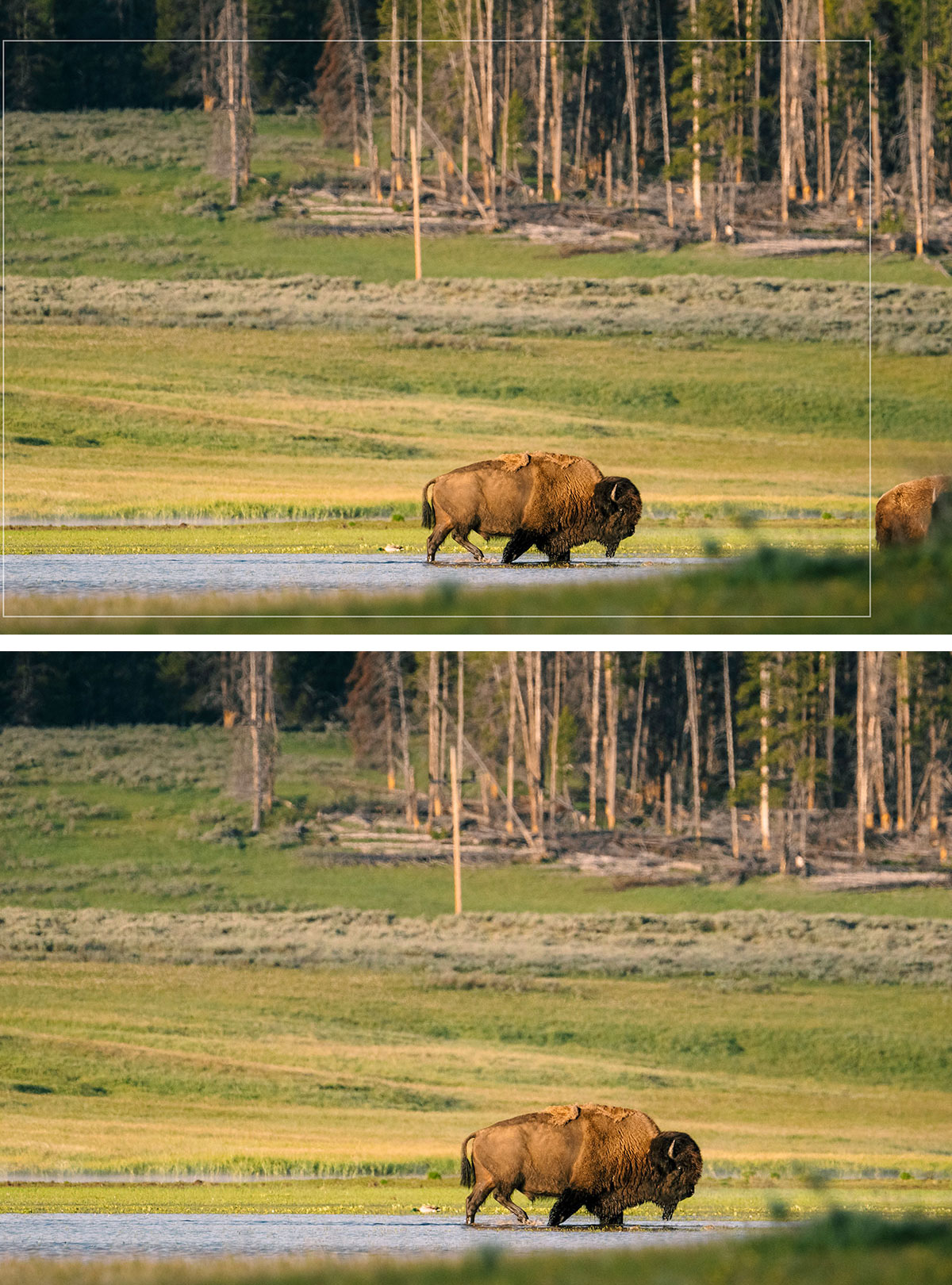
Consider This
If you’re a wildlife, event, or sports photographer who needs the best in resolution, speed, and the ability to perform—even when the ISO is pushed past 6,400—this is the Sony you should consider. It isn’t built like the Alpha 9 series or the A1 series, but it serves a role within the Sony lineup. The “R” stands for resolution, and that’s what this camera delivers. The file sizes deliver tons of information to work with, and the dynamic range is unheard of. When Sony says you’re getting 15 stops, in my experience, you really are. I haven’t tested this against charts or gone as in-depth as some reviewers have. However, from putting it through its paces, I know this is a camera I would confidently take back into the field. The Sony a7R VI body is priced at $4,499.
Tyler Rickenbach is a filmmaker and photographer based in Idaho.
Tags: gear sony technology