
A Huge Step Forward: Sony a7 V
Sony delivers a well-balanced, affordable hybrid camera
Historically, I’ve respected Sony cameras more than I’ve enjoyed using them. They are often ahead of the curve in autofocus, sensor technology, and video features, but using them sometimes felt clinical. Powerful, yes. Intuitive? Not always.
I found other reviewers who have felt similarly. Popular YouTube tech enthusiast Gerald Undone cites the Sony a7 V’s biggest strengths as its 33-megapixel sensor, improved rolling shutter performance from the a7 IV, full-frame oversampled 4K60p, stronger battery life, and a more capable photography feature set that now includes 30fps bursts and improved pre-capture mode. He also highlighted the updated screen, stronger stabilization modes, and Sony’s newer AI-assisted autofocus and processing features. He remains critical of Sony for lingering annoyances like no open gate, no 30p in H.265, HDMI quirks, and missing tools like shutter angle and false color. But his conclusion is clear: The a7 V is one of the strongest full-frame hybrid cameras in its class.
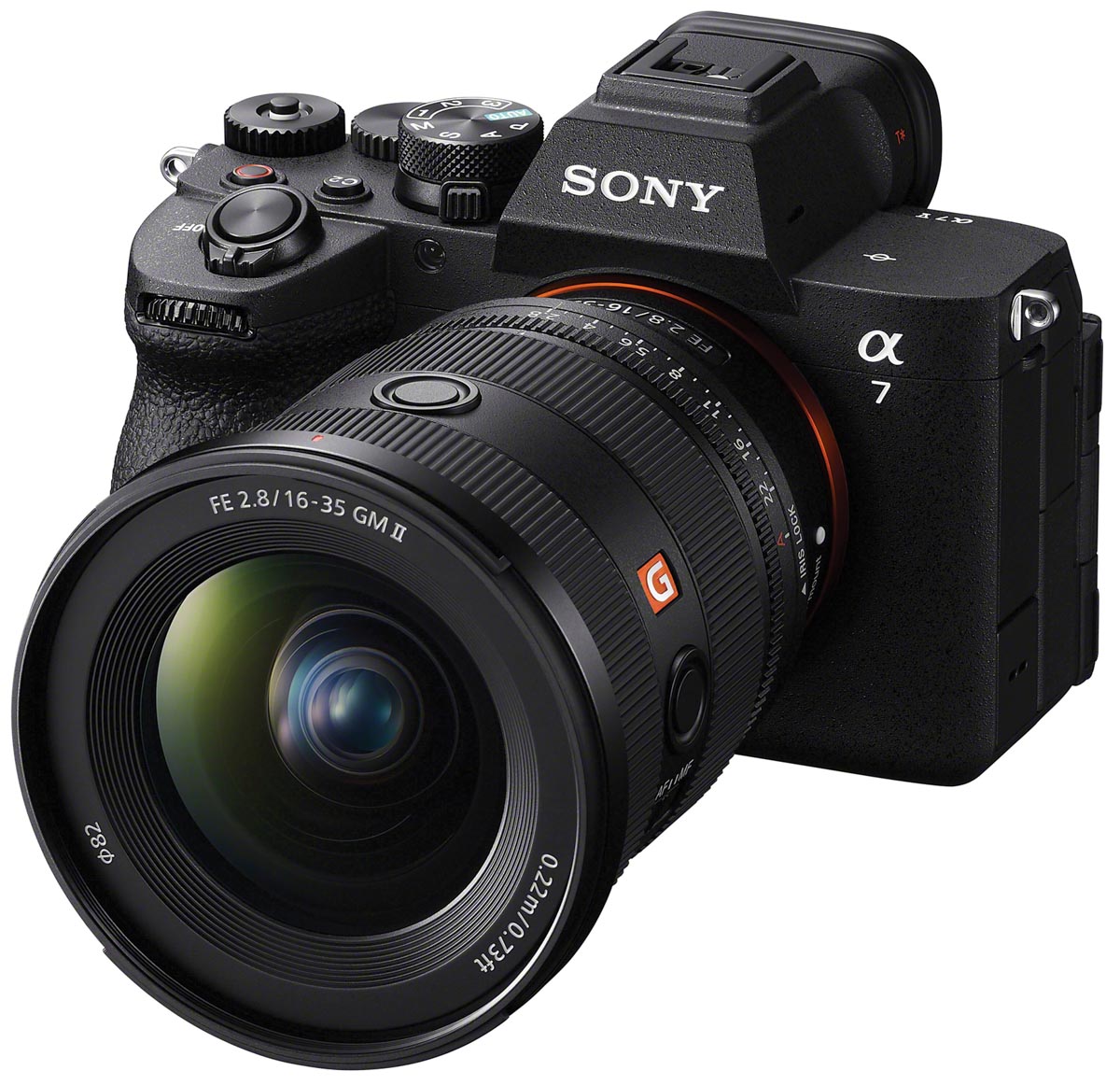
I agree. With the Sony a7 V, you’re getting many of the benefits of Sony’s higher-end bodies, with the same body as the Sony a1 II, which has strong weather sealing, reliable build quality, excellent autofocus, and long battery life, but without stepping into flagship territory.
 View Gallery
Where the camera really starts to make sense is in hybrid work. Because I practice both photography and videography, one of the first things I evaluate in a camera is how easy it is to move between those two modes. It’s not just about what a camera can do; it’s about how quickly it lets you react when the scene changes. For example, on a recent flight, I was sitting in the window seat as the sun began to set over Colorado and Utah. The light was incredible—soft, directional, and constantly changing as the plane moved across the landscape. I wanted to capture both still images and video before the moment disappeared (see below).
Those situations reveal a lot about a camera.
Like many photographers, I tend to shoot still images in aperture priority. It allows me to adjust exposure quickly using exposure compensation while keeping my attention on the scene rather than the camera. But when switching to video, I generally prefer full manual control.
On the a7 V, moving between those two approaches requires two steps: switching the mode dial from photo to video and then adjusting the exposure mode from aperture priority to manual. In practice, it only takes a second. Most people would argue it’s not a big deal. But moments like that sunset (left) remind me how precious a second can feel when trying to capture something fleeting.
That’s the reality of hybrid shooting. You’re constantly balancing speed, control, and intuition. And while the a7 V still requires that small shift in workflow, it’s clear Sony has put significant effort into making the overall experience more streamlined and practical.


Close-up segment of the image above
The Details Matter
One of the first things I did after picking up the Sony a7 V was jump into the menu system. The first Sony camera menus were clunky. With the a7 V, the menu system is clean, organized, and perhaps most important, it makes sense.
One detail that immediately stood out was how Sony handled S-Log. In previous Sony cameras, enabling S-Log meant navigating into picture profiles and remembering which profile corresponded to which log curve. Was it PP8 or PP9? Was that S-Log2 or S-Log3? With the a7 V, Sony simplifies that process. S-Log is now clearly labeled and accessible within the menu system. You can immediately see which log profile you’re selecting without relying on memory or digging through picture profile settings. It sounds like a small change, but it solves a real friction point. In the past, if you had been shooting in S-Log and then moved to still photography, you often had to jump back into the menu and disable the picture profile to get a clean, natural image straight out of camera. That extra step is now gone, so you can move seamlessly between video and stills.


Stabilization, Low Light, and Real-world Trade-offs
One feature I noticed while using the a7 V was its image stabilization. Sony rates the camera at over 7 stops of stabilization. While numbers on a spec sheet tell part of the story, the advantage of that number is obvious when you’re out photographing. Most of the time, for example when you’re out in the evening when the light starts to fall, you won’t have a tripod with you. Blue hour is one of my favorite times to capture a moment, but it’s also when shutter speeds get slower and sharp images become harder to maintain handheld. With the stabilization built into the a7 V, I was able to keep capturing images. That kind of flexibility allows you to stay nimble, react quickly, and keep working as the light changes.
Of course, stabilization only solves part of the problem. In low light, ISO is just as important as shutter speed. With its 33-megapixel sensor, the a7 V isn’t designed to be a low-light specialist like the a7S III, nor should it be expected to perform the same way. Higher resolution sensors naturally show more noise at elevated ISOs, and that’s the trade-off for the extra detail the camera provides. The a7 V does use dual base ISO values at ISO 800 and ISO 8000, which helps maintain dynamic range when working in darker conditions. In simple terms, those two base points allow the sensor to treat the signal one way when there is a lot of light and a different way when there is less light. Staying near those values tends to produce the best results, especially when you know you’ll need to push the files in post.
I found that noise becomes noticeable sooner with the a7 V than it does on cameras designed specifically for low-light work. At ISO 3200 and ISO 6400, there is more visible noise, which looks very much like film grain in images from the a7 V, than some users might expect, particularly when compared to lower-resolution bodies. The files are still usable, and modern noise reduction tools can clean them up, but the difference is there.
Like many aspects of photography, noise level comes down to personal preference. Some photographers are comfortable pushing files much further than others. What mattered to me wasn’t whether the image was perfectly clean, but whether it held enough detail and dynamic range to work with later. In that respect, the Sony a7 V performs well, even if it doesn’t match the specialized low-light bodies in Sony’s lineup.
Taken together, the stabilization, dual base ISO, and overall sensor performance make the a7 V a capable camera in changing light. It may not be the best choice if low-light performance is your only priority, but for a hybrid camera that balances resolution, speed, and versatility, it handles real-world conditions better than I expected.


The One
I often get asked, if you were buying a Sony camera today, which one would you get? Unless someone has a specific professional need, my answer is this camera. The a7 V is well balanced in Sony’s lineup. If you need the absolute speed and performance of the a9 III, you already know why. If you need the highest resolution and flagship-level build and features of the a1 II, that decision is just as clear. But for most photographers, filmmakers, and hybrid creators who want one affordable camera that can do it all well, at $2,499.99 MSRP, the a7 V makes sense.
It may not be the best low-light performer in Sony’s lineup like the a7S III, but it’s more than capable. It may not carry the full flagship feature set of the a1, but it shares much of the durability, weather sealing, autofocus performance, and overall reliability that professionals expect. And for most users, those are the features that matter day to day. What makes the a7 V compelling is that it checks nearly every box. It’s fast enough for action. It has more than enough resolution for professional still work. Its autofocus is excellent. Its video features are strong enough for serious hybrid use.
For most of my career, Sony hasn’t been the system I naturally reached for. But with the a7 V, it feels like Sony has removed much of the friction that used to come with their cameras.
Tyler Rickenbach is a filmmaker and photographer based in Idaho.