Relationship Driven Photography & Fine Art Portraiture with PhotoVision Instructor, Tim Walden
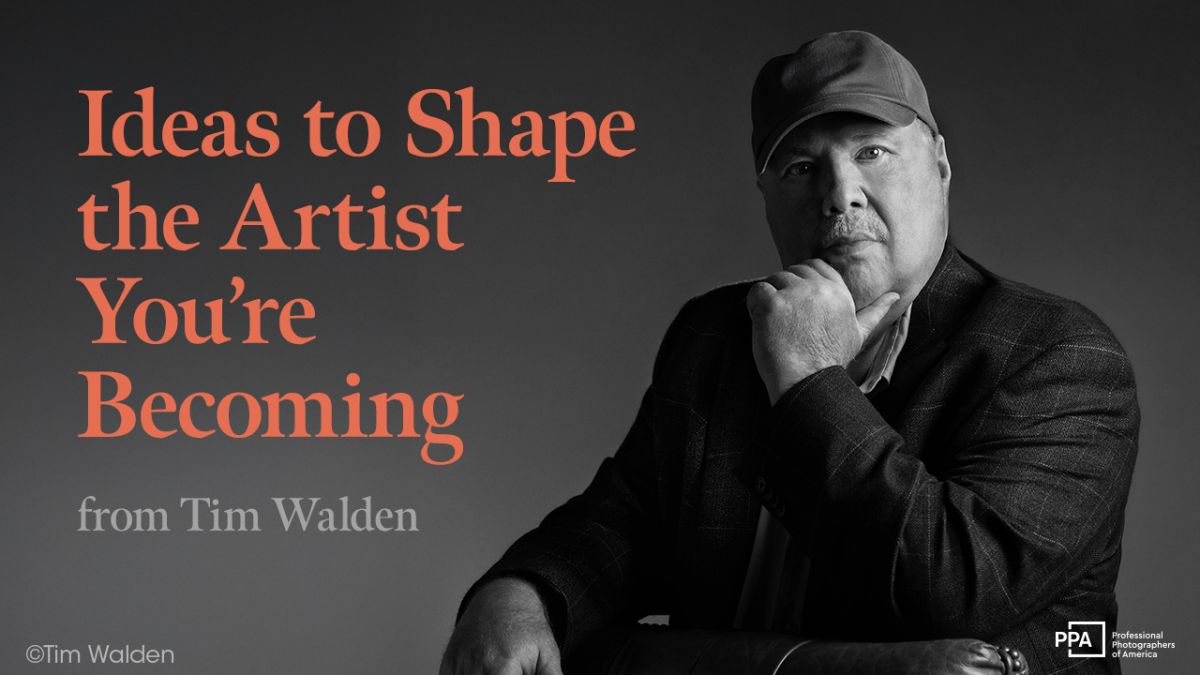
For photographers who want to build work that lasts—and a business clients return to—Tim Walden’s relationship-driven philosophy is a great place to start. Tim and his wife, Beverly, took over Walden’s Photography from Tim’s father in 1980 and intentionally redefined the studio with their signature Relationship black-and-white fine art portraiture.
Today, they run a high-end studio known for beautifully crafted portraits, an elevated client experience, and artwork designed to become family heirlooms. As a PhotoVision instructor, he teaches photographers how to translate real human connection into meaningful, investment-worthy art—and how that approach directly supports a stronger, more sustainable business.
Start here: Tim’s must-watch PhotoVision and podcast content
If you’re new to Tim’s teaching—or ready to go deeper—these two conversations are the best place to begin.
Imaging USA podcast interview with Tim Walden
In this episode, Tim explores relationship photography as a storytelling discipline—not just a technical process. He shares how personal conversations and emotional awareness guide posing, lighting, and composition, and how treating clients like family changes both the creative outcome and the business experience.
You’ll learn how to:
- Make the camera “disappear” during sessions
- Translate a client’s life story into visual language
- Elevate your portraits beyond aesthetics and into meaning
Purpose-driven photography business podcast
In his second interview on the podcast, Tim Walden walks Pat Miller through his journey of rebuilding a struggling family studio into a highly respected, emotionally resonant brand.
This episode is especially valuable if you’re navigating the tension between:
- Creative integrity
- Financial stability
- Brand differentiation in a competitive market
Why relationship-driven photography works—according to consumers
Tim’s philosophy aligns closely with research from PPA. When photographers struggle, it’s often not because of their images—it’s because they don’t fully understand what today’s clients expect from the experience.
PPA’s Consumer Research reveals that:
- Excellent customer service drives both loyalty and referrals
- 73% of consumers say they are likely to hire a photographer multiple times in the future
- 79% of consumers are very likely to recommend their photographer to others
In other words, your client experience and the relationship you build plays a huge role in repeat business and growth.
To help photographers better understand buyer behavior, PPA’s Family Portrait Photography Report, compiled using third-party survey data. The report explores:
- What consumers value most in a professional photographer
- How expectations shape purchasing decisions
- Why experience often outweighs technical factors
Ideas to shape the artist you’re becoming — from Tim Walden
Define who you are as an artist
- Carve out clarity. Who are you? What do you do?
- When we define who we are, the people who love it will come.
- When we try to be everything to everyone, we’re never truly exceptional in any one area.
Never photograph a stranger
- Ask your client: If this portrait were a chapter in your life, what would the bold print be?
- Look for the story, not the perfect expression.
- Notice the nuances and allow it to guide your creativity.
Create investment-worthy art
- Technical accuracy does not equal style.
- Technical excellence is simply the vehicle that carries story and meaning in a way that can stand the test of time.
- Successful photographers don’t sell photographs—they sell the result of a photograph.
Turn relationship-driven artistry into a stronger business strategy
Great storytelling must be supported by smart business decisions. PPA’s Benchmark Business Guide complements Tim’s creative philosophy by helping photographers build pricing and strategy around real market expectations.
Success planning: how do you approach pricing?
The guide recommends balancing three methods:
- Cost-based pricing – pricing built on your costs plus markup
- Competitive-based pricing – adjusting based on your local market
- Demand-based pricing – charging what your brand and experience support
Using all three creates a more stable, profitable model aligned with your goals, your clients, and your brand positioning. Explore the guide and learn more today! If you’re in the process of creating a success family portrait photography brand, dive into Tim’s videos on technique, lighting, relationship building, mindset and more!