Photograph What Feels True: 5 Portrait Lessons from Anj Olson on Creative Play and Emotional Connection
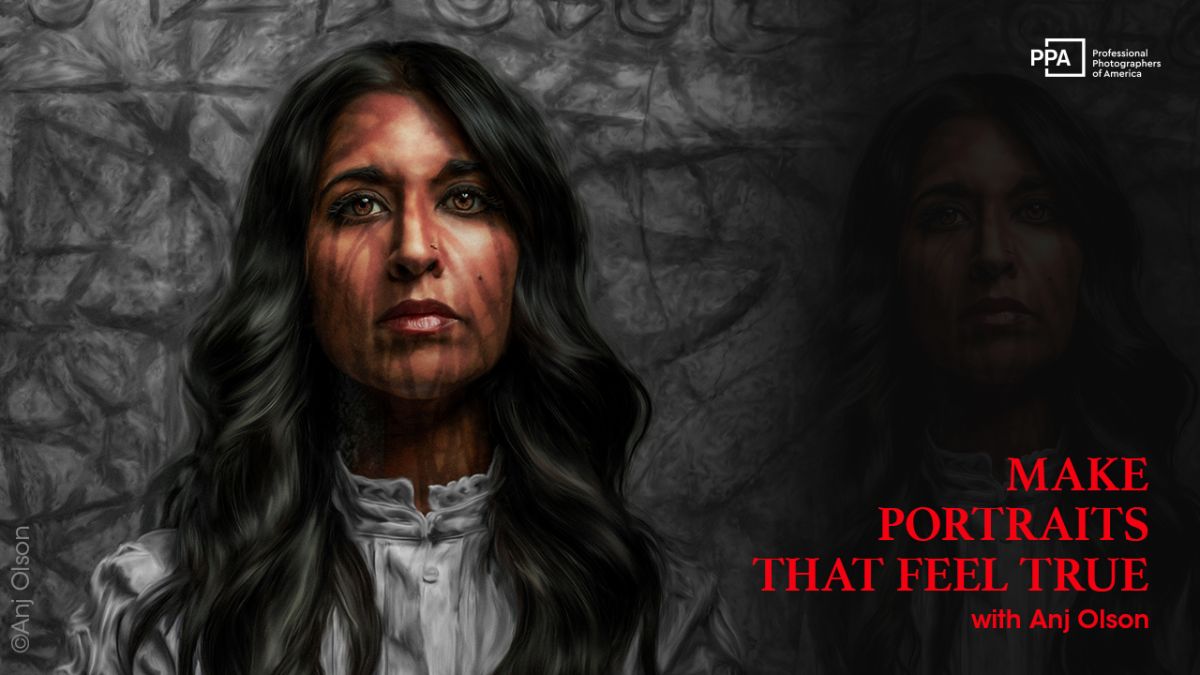
Great portrait photography helps subjects recognize themselves instead of focusing on how they look.
That idea runs through the work of Anjana “Anj” Olson, owner and photographer at Anj Portrait Studio serving Des Moines, Iowa and surrounding states. She specializes in children and family portrait photography, printed artwork, personal branding and emotionally driven creative work. Her portraits are colorful, thoughtful, and deeply personal, but the foundation of her process is connection.
Whether she is photographing a child, a branding client, a family, or herself through self-portraiture, Anj’s work asks a simple but powerful question: What feels true?
In her PhotoVision lessons, Anj shows photographers how to move beyond stiff posing and surface-level direction by blending play, movement, emotion, curiosity and trust. This approach allows clients to relax into the session and reveal something real.
Here are five lessons photographers can take from Anj Olson’s methodology.
1. Start With the Story
Before thinking about the pose, background, or final product, start with the person in front of you.
For Anj, portrait photography isn’t about making someone look polished. Instead, it is about understanding what the image should hold. That might be a child’s personality, a family’s connection, a business owner’s brand or an emotion that is difficult to say out loud.
Instead of leading with logistics, ask questions that open the door to meaning:
- What matters most to you right now?
- What do you want to remember?
- What makes you feel like yourself?
- What feels uncomfortable?
- What brings you joy?
Those questions may not sound like photography questions, but they shape the final image. They help you understand what the session is really about before you start directing the client.
For branding work, this can reveal the story behind the business. For family portraits, it can uncover what parents love most about this stage of life. For children, it can help you see what sparks their curiosity. The more clearly you understand the story, the more intentional your creative choices become.
2. Make Room for Play
Play is the path to serious photography, not a break from it.
Anj’s children’s photography shows how powerful play can be when the goal is authentic expression. Instead of asking children to perform for the camera, she gives them something to do. A prop, a game, a job, a question, or a small moment of ownership can shift the session from control to collaboration. A child may need permission to explore before they are ready to be photographed.
That same idea works with adults, too. A branding client may need movement, music, a personal object, or a prompt that helps them stop thinking about how they look, while a family may need a small activity that encourages connection instead of stiff smiles.
Play helps people lower their guard, gives the session energy and creates space for surprise. This is where some of the strongest portraits happen.
Anj’s approach reminds photographers to guide the session and leave room for the unexpected. Powerful moments can happen when you say “Yes!” and let clients participate. A portrait session should feel directed, but not over-controlled.
3. Keep People Moving
Stillness can be powerful, but forcing someone to stay still too soon can make them feel self-conscious.
Anj often uses movement to help clients relax into the camera. Walking, turning, swaying, sitting, reaching, looking away, and looking back can all help a person stop “posing” and start responding by giving clients something to focus on besides themselves.
This is especially useful for people who feel nervous in front of the camera. When clients are asked to hold a pose for too long, they may start analyzing every part of their body, face and expression. But when they are invited to move, they can settle into something more natural.
Movement also gives the photographer more opportunities. A turn of the head may reveal better light, a small shift in posture may create a stronger line, or a laugh between directions may become the image that feels most like the client.
The goal of movement is to help the client feel unposed, present and comfortable enough for something honest to appear.
4. Let Emotion Lead Your Creative Choices
Anj’s self-portraiture is one of the clearest examples of how emotion can guide the creative process.
In her own creative work, she uses self-portraiture to explore feelings that may be hard to put into words. Color, fabric, light, movement, props and composition become tools for expressing what is happening internally. Sometimes that work begins with a clear concept, while the meaning reveals itself during the process at others.
That kind of creative practice can strengthen client work, too.
When photographers explore emotion in their personal projects, they become more sensitive to what clients may feel during a session by learning what discomfort looks like. This vulnerability can affect posture, expression and trust, allowing the photographer to more easily recognize when to encourage, when to pause and when to let the client lead.
In practical terms, letting emotion lead means choosing creative elements with purpose. You can ask:
- What should this light feel like?
- What does this color say?
- Does this prop deepen the story or distract from it?
- Does this pose support the emotion, or is it just something I know how to do?
Technical skill matters, but it should serve the feeling behind the image.
5. Choose Honest Over Perfect
The most meaningful portraits don’t have to be technically perfect.
Anj’s work makes room for images that feel alive, even when they are not perfectly polished in the traditional sense. The smallest moments can bring a whole new level of emotion to a portrait: a child’s real expression, a quiet look between family members, an evident burst of self-confidence. For branding, this magic is captured when a portrait feels like the person behind the business matters more than a flawless smile.
This by no means requires the photographer to abandon craft. Rather, it’s a reminder of what the craft is for.
Lighting, posing, styling and composition should help reveal the subject, not hide them behind perfection. When photographers focus only on control, they can miss the small moments that make a portrait personal.
Anj describes the reward of this process as the moment when someone sees an image and recognizes themselves. For a parent, it may be seeing their child exactly as they are. For a branding client, it may be seeing a portrait that finally reflects their personality.
For the photographer, it is the reminder that portraits are made of trust just as much as light and pose.
Why Authentic Storytelling Matters to Clients
PPA consumer research reinforces what Anj’s work exemplifies: people value photography because it preserves what matters. Family portrait clients are often motivated by milestones, life events and regularly timed portraits, and PPA’s family portrait research notes that style is the most important attribute consumers consider when choosing a photographer.
The same report also emphasizes the value of building relationships, helping clients visualize your style and nurturing the first point of contact. This is because one successful family portrait client can lead to repeat bookings and referrals.
That insight fits Anj’s approach. A meaningful portrait experience is about helping clients feel understood throughout the process just as much as the finished image. When clients feel seen, guided and connected, the images become more than files or prints as they record personality, growth and feeling.
Watch Anj Olson’s PhotoVision videos to explore the kind of storytelling that helps clients recognize themselves in the final image.
Watch Anj's videos on creative play and authentic storytelling on PhotoVision.